
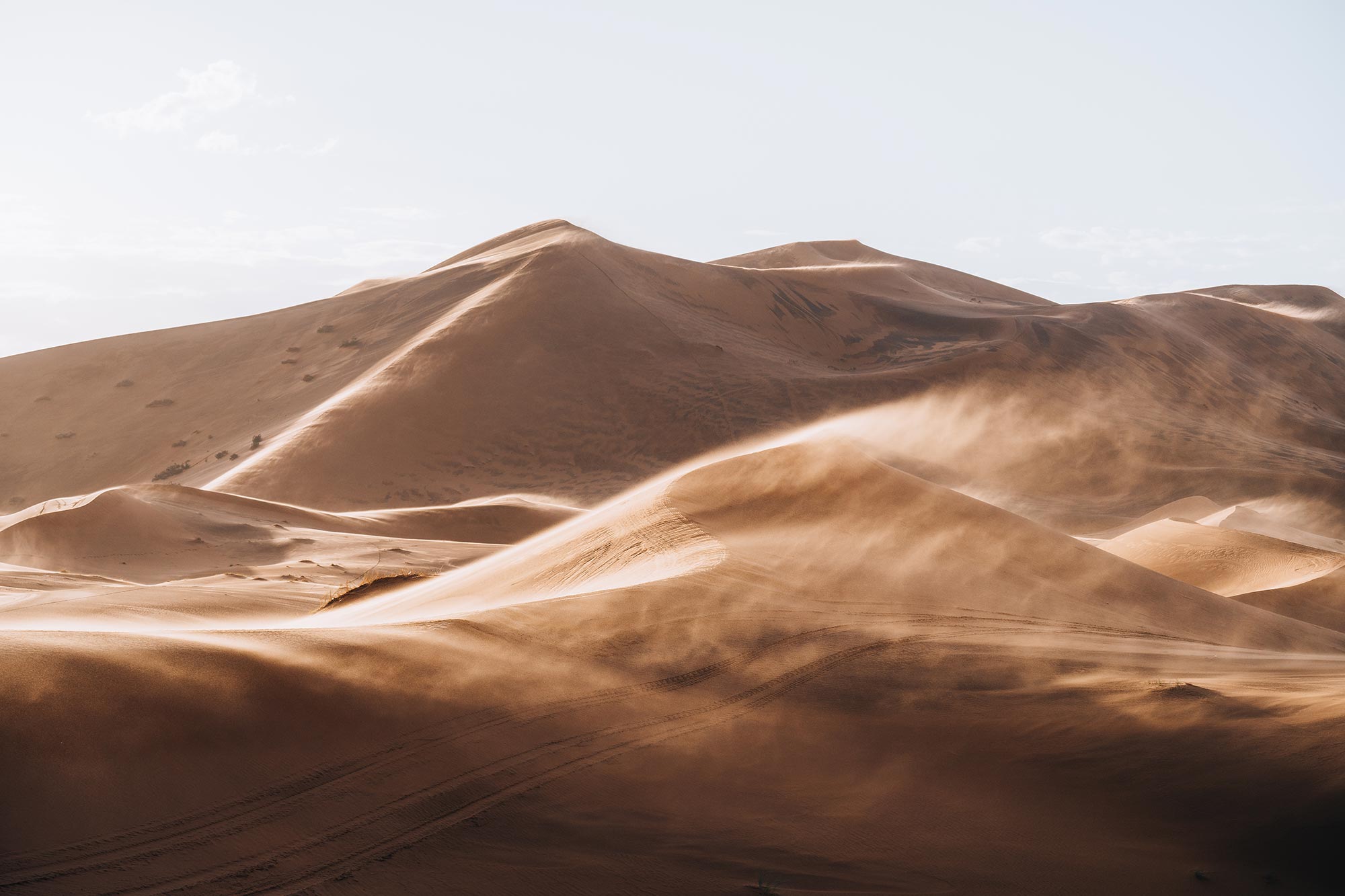
Scientists have discovered a surprising connection between sand grain size and the winds that shape dunes on Earth and Mars.
The size of a sand grain could reveal how fast the wind was blowing when a desert dune formed, even billions of years ago. Stanford University researchers have discovered that dunes on Earth and Mars are primarily shaped by winds traveling just above the minimum speed needed to move sand. Their findings offer a way to reconstruct ancient winds using sediment preserved in planetary landscapes.
Windblown dunes and ripples have been identified on Venus, Mars, Saturn’s moon Titan, and even a comet orbiting the sun. Their shapes and patterns provide evidence of prevailing wind directions and how consistently winds have blown, but determining wind speeds has been much more difficult.
How Sand Grains Record Wind Speeds
In a study published November 16 in Proceedings of the National Academy of Sciences, researchers demonstrated that the wind speeds responsible for most dune formation are closely linked to the median size of the sand grains. Stronger winds can transport larger particles, while finer grains generally require less force to move.
The relationship depends on a critical threshold: the wind must be strong enough to set sand grains in motion along the ground. Although faster winds can transport more sediment, the researchers found that winds only modestly exceeding this threshold account for much of the sand movement that builds dunes.
Testing a Theory Across Earth’s Deserts
The research builds on a hypothesis proposed by University of Pennsylvania scientists in 2010, suggesting that dunes develop mainly under winds slightly stronger than those needed to initiate sand transport. “Since then, nobody’s really looked at this idea, even though it’s really powerful because it tells you something about the environmental conditions that formed the dune fields that we see on not just Earth and Mars, but on a variety of other planetary bodies,” said lead author Colin Marvin, who conducted the research as a PhD student at Stanford.
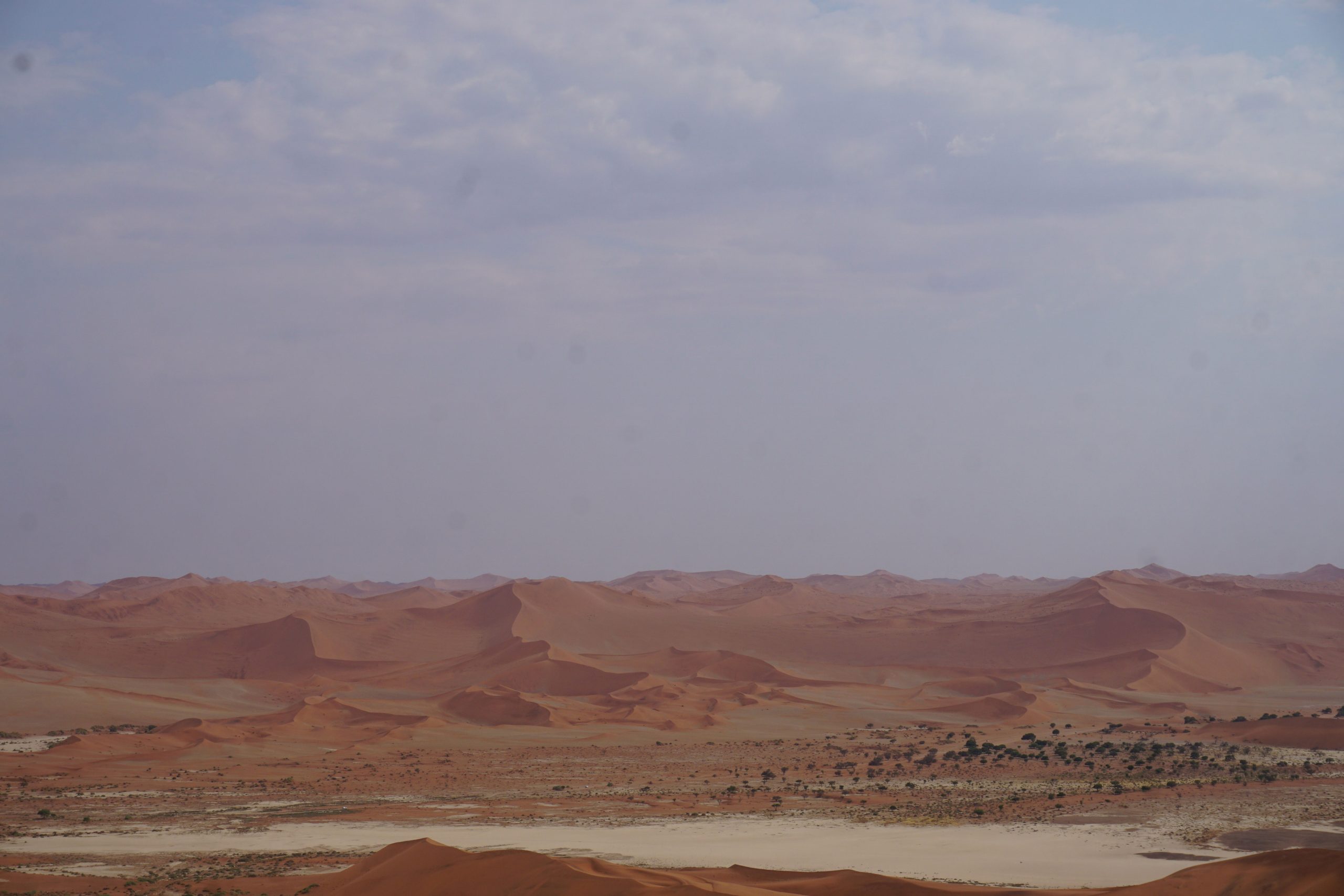
To test the idea, the team examined 30 years of wind observations alongside sand grain measurements from 24 dune fields worldwide. The sites encompassed different dune shapes, sizes, and environments, including Coral Pink Sand Dunes State Park in Utah and the ancient desert landscapes of Namibia.
For each location, the researchers calculated which wind speed transported the greatest amount of sand over time. Across all 24 fields, that speed was closely associated with grain size and remained only slightly above the threshold required to move the sediment.
The Same Relationship Appears on Mars
The team next examined measurements from a Martian dune field, where the relationship between sand size and the winds responsible for dune formation was similar to that observed on Earth. This held despite major differences in atmospheric pressure, gravity, and sediment density between the two planets.
The results suggest that the same basic process may govern dune formation on other worlds, provided loose sediment is abundant and stronger winds become progressively less frequent. Marvin described dunes as a “great recorder of what happens on a planet’s surface, and particularly the interactions between what’s happening in the atmosphere of a planet and what’s happening on the surface.”
Reconstructing Winds From Billions of Years Ago
Because sand grains can survive long after the winds that transported them have disappeared, the relationship could help scientists estimate ancient wind speeds from sedimentary rocks. It may also provide a way to test models of atmospheric circulation during periods when Earth’s atmosphere differed substantially from its present state.
The discovery could help researchers “better reconstruct winds and climates through time, on Earth and beyond,” said senior author Mathieu Lapôtre, associate professor of Earth and planetary sciences at the Stanford Doerr School of Sustainability. “It works for modern dunes and for sandstones dating back three billion years.”
Such reconstructions could be used to investigate the atmospheric histories of both Earth and Mars. According to Lapôtre, the research is already moving in that direction. “Colin is actively working on that, actually. He’s already pushing on to the next steps.”
The study was supported by a National Science Foundation CAREER grant.
Never miss a breakthrough: Join the SciTechDaily newsletter.
Follow us on Google and Google News.