
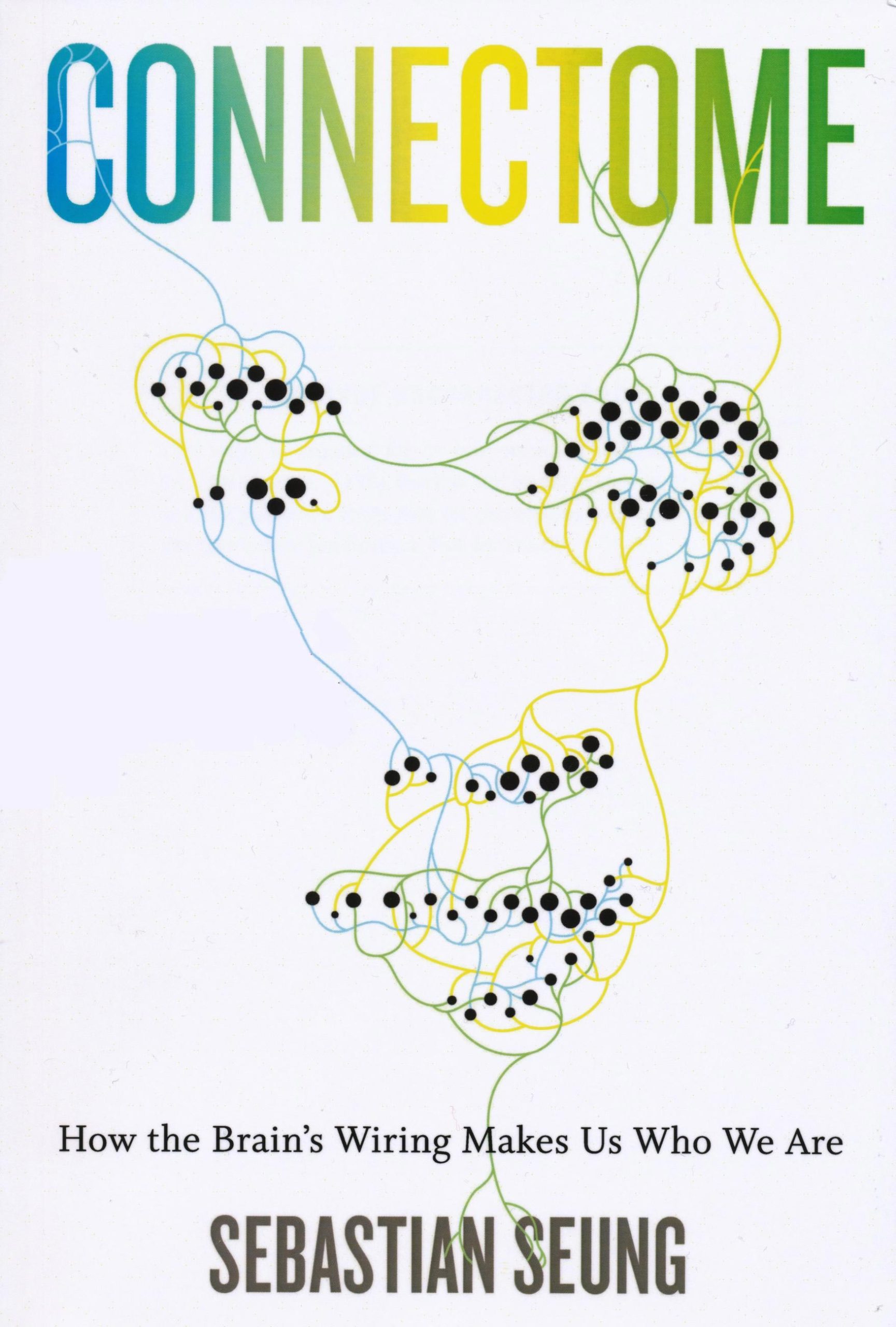
Neuroscientists are studying the connections between the billions of neurons in the brain and believe they hold the key to our memories, personality and even mental disorders. To speed up the research process, these scientists have developed an artificial intelligence (AI) system and have enlisted the help of the general public through a website. By understanding individual connectomes, they hope to gain a better understanding of how people become who they are.
The human brain has 100 billion neurons, each of which is connected to many others. Neuroscientists believe these connections hold the key to our memories, personality, and even mental disorders such as schizophrenia. By unraveling them, we may be able to learn more about how we become our unique selves, and possibly even how to alter those selves.
Mapping all those connections may sound like a daunting task, but MIT neuroscientist Sebastian Seung believes it can be done — one cubic millimeter of brain tissue at a time.
“When you start to explain how difficult it would be to find the connectome of an entire brain, people ask, ‘What’s the point? That seems too far off.’ But even finding or mapping the connections in a small piece of brain can tell you a lot,” says Seung, a professor of computational neuroscience and physics at MIT.
Even more than our genome, our connectome shapes who we are, says Seung, who outlines his vision for connectome research in a new book, Connectome, published this month by Houghton Mifflin Harcourt. “Clearly genes are very important, but because they don’t change after the moment of conception, they can’t really account for the effects of experience,” he says.
A streambed of consciousness
Seung envisions the brain’s connections as the “streambed” through which our consciousness flows. At a molecular level, that streambed consists of billions of synapses, in which one neuron sends signals to the next via chemical neurotransmitters. While scientists once believed that synapses could not be changed after formation, they now know that synapses are continuously strengthening, weakening, disappearing, and reforming, as we learn new things and have new experiences.
While neuroscientists have long hypothesized that the key to our unique selves lies in those connections, this has proven impossible to test because the technology to map the connections did not exist. That is now changing, due to the efforts of Seung and a handful of other neuroscientists around the world.
At the Max Planck Institute for Medical Research in Heidelberg, Germany, neuroscientists in the laboratory of Winfried Denk have taken extremely thin slices of brain tissue and generated electron-microscope images of all the neural connections within each slice. However, the next step — mapping those connections — is extremely time-consuming. Seung estimates that it would take 100,000 years for a lone worker to trace the connections in one cubic millimeter of brain tissue.
To help speed that up, Seung and his colleagues have developed an artificial intelligence (AI) system, which they presented at the International Conference on Computer Vision and the Neural Information Processing Systems Conference in 2009. However, the system still requires human guidance, so the researchers are enlisting the help of the general public through a website called eyewire.org. “The brain is like a vast jungle of neurons,” Seung says. “They’re like trees that are all tangled up together, and people can help us explore that.”
Participants in the Eyewire project will help guide the computer program when it loses track of where a neuronal extension goes amidst the tangle of neurons.
“The person can click the mouse and say color here, and the computer starts coloring again, and keeps going, and then stops again when it’s uncertain. So you’re guiding the computer,” Seung says. Furthermore, the AI system becomes “smarter” as people guide it, so it will need less and less help as it goes on.
Rather than tackling the human brain right away, the researchers are beginning with a 300- by 350- by 80-micron slice of mouse retinal tissue. Images of just this small piece of tissue take up a terabyte of data, or enough to hold 220 million pages of text.
In a review published in New Scientist, Terrence Sejnowski, the Francis Crick Professor of Computational Neurobiology at the Salk Institute, says the book “gives a sense of the excitement on the cutting edge of neuroscience.” Sejnowski points out that connectomics, just like genomics, will be aided by the rapid advance of technology. “Once a certain threshold has been achieved, something that seemed impossible becomes possible, and soon becomes routine,” he writes.
Miswired brains
While everyone’s connectomes are different, extreme differences may account for mental disorders such as autism and schizophrenia. Neuroscientists have long speculated that autism and schizophrenia are caused by problems in brain wiring, but haven’t been able to test that theory. Once a typical human connectome has been mapped, scientists will be able to compare it to the wiring diagrams of small chunks of the brains of mice engineered to express autism or schizophrenia symptoms, in the hopes of figuring out why those disorders arise and, potentially, how to treat them.
“Finding those differences, of course, is not a cure or treatment, it’s just a starting point. But I would argue that being able to see those differences would be a huge step forward,” Seung says. “Imagine studying infectious diseases before there were microscopes. You could see the symptoms, but you couldn’t see the microbes. That’s why, for a long time, people didn’t believe schizophrenia had a biological basis, because they looked at the brain and there was nothing obviously wrong.”
In the last section of Connectome, Seung addresses some futuristic applications of connectomics, drawn directly from science fiction — ideas such as uploading human brains into computers or freezing bodies to preserve them until technology is developed to bring them back to life.
“My goal in those chapters is to point out that we can start to examine those dreams in a critical way,” Seung says. For example, he suggests that cryogenics is only a feasible plan if it can be shown that the connectome survives the freezing and thawing intact. “My point in those chapters is to introduce a dose of science into science fiction.”
Never miss a breakthrough: Join the SciTechDaily newsletter.
Follow us on Google and Google News.