
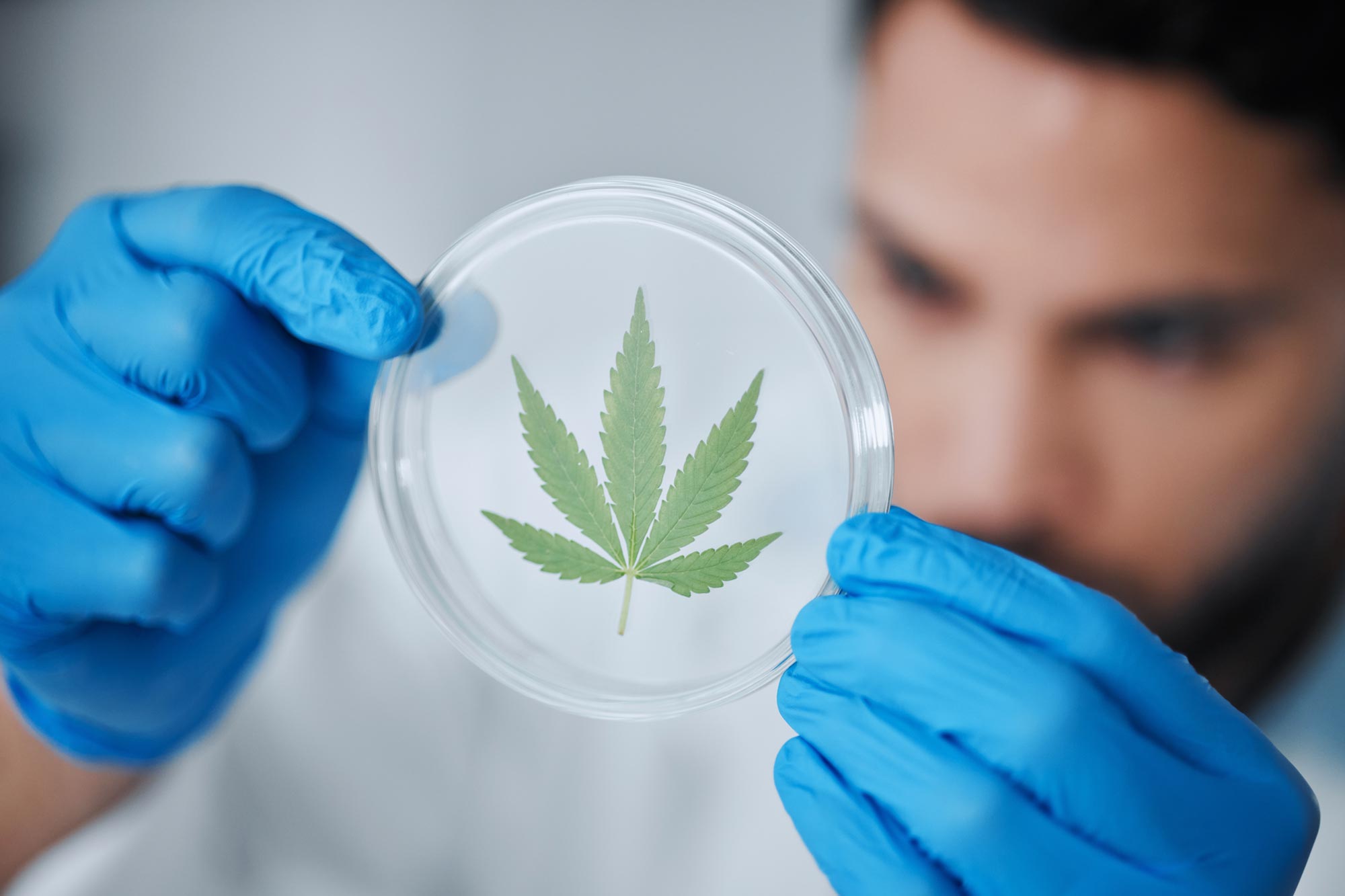
In studies where psychosis typically emerged at age 30 or later, cannabis users experienced it more than six years earlier, raising questions about cannabis use throughout adulthood.
Most discussions about cannabis and mental health focus on teenagers, but new research suggests the conversation should extend into adulthood. A large analysis found that among people who developed psychosis, cannabis users experienced their first episode an average of two and a half years earlier than non-users. The findings reveal a consistent association, although they do not prove that cannabis caused the difference.
Researchers at UNSW Sydney examined 149 studies involving more than 71,000 people, largely conducted in Europe, North America, and Australia since 2011. The analysis, published in Biological Psychiatry, focused mostly on people with schizophrenia.
Psychosis can involve hallucinations, delusions, disordered thinking, and changes in behavior. It is associated with schizophrenia and other mental illnesses and typically emerges in late adolescence or early adulthood. According to Psychosis Australia, up to 3% of adults experience a diagnosed disorder involving psychosis during their lifetime.
The psychosis onset gap grows with age
The researchers found that the age difference between cannabis users and non-users grew in studies where psychosis developed later in life. When the average age of onset was between 20 and 24, cannabis users experienced their first episode 1.6 years earlier. That difference increased to 4.43 years in studies with an average onset between ages 25 and 29, reaching 6.3 years when the average onset was 30 or older.
Chief investigator Matthew Large, a psychiatrist and Conjoint Professor at UNSW’s School of Clinical Medicine, said the findings suggest that the effects of cannabis use may accumulate over time.
“We’ve tended to focus on the dangers of using cannabis in adolescence, when the brain is still developing, but the risk doesn’t disappear once you’re in your 20s,” Prof. Large said. “What we’re seeing suggests a cumulative effect, where harm builds up over time, a bit like alcohol or nicotine.”
Interestingly, the researchers found no statistically significant difference in the age of psychosis onset between teenagers who used cannabis and those who did not. However, because psychosis rarely develops before the mid-teens, there is a limited window in which researchers could detect an earlier onset.
“There may be a biological floor, in that there is only so much earlier that onset can be shifted. In younger groups, strong development, genetic or other psychosis risk factors may dominate, making any cannabis-related age shift harder to detect,” Prof. Large said.
The analysis builds on previous research led by Large. A smaller 2011 meta-analysis found that psychosis began 2.7 years earlier among cannabis users, while a 2015 analysis found that psychosis typically developed 6.3 years after cannabis use began. Those earlier studies lacked sufficient data to compare different age groups.
Lead author Carly Stevens, from UNSW’s School of Biomedical Sciences, said the new age comparisons challenge the idea that delaying cannabis use until adulthood necessarily avoids its potential psychiatric risks.
“What we’ve found challenges the assumption that you’ll be fine if you wait to smoke weed until your mid-20s; that’s just not the case,” Ms Stevens said.
“There’s been so much emphasis on adolescents not smoking cannabis, which is important, but we need to broaden the warnings for everyone.”
An important limitation is that the research cannot establish whether cannabis directly causes psychosis or makes it develop earlier. Doing so would require experiments that deliberately expose people to potential harm, which Large said would be unethical. The findings also do not establish how likely an individual cannabis user is to develop psychosis.
“But the consistency of the evidence, particularly the strong effect in older adults who likely have been using cannabis for longer, does support the theory that cannabis plays a causal role in the timing of psychosis onset, and possibly the onset of some cases among people who would not have otherwise developed psychosis.”
Earlier psychosis can disrupt life milestones
For people who do develop psychosis, the timing of their first episode can affect important stages of life. Stevens noted that even a difference of a few years could interfere with opportunities that might otherwise shape someone’s future.
“People may miss out on study, job opportunities, travel and relationships in those years, and treatment can come with physical side effects that can make life harder as well,” she said.
Large believes reducing or stopping cannabis use could offer meaningful benefits if it helps delay psychosis, although the analysis did not directly test that possibility.
“It’s a major illness, which robs you of your shared reality with family, friends and all those around you,” he said. “If we can delay psychosis by even a few years, people will be more likely to reach crucial milestones in education and training, and develop strong support networks, which can protect against psychosocial decline.”
Delaying the onset of psychosis could also ease pressure on healthcare systems. According to Large, psychotic disorders account for up to 3% of health-related expenditure in developed nations.
The researchers believe their findings support clearer public health warnings about the potential psychiatric consequences of cannabis use, even while questions about causation remain unresolved.
“We can’t run direct experiments, so we have to go with the best evidence available,” Prof. Large said. “In my view, the threshold for health warnings about cannabis and psychosis has definitely been met.”
Medical cannabis and edibles raise concerns
One concern is the expanding use of medical cannabis. Large said he has treated a growing number of people with psychosis who had been prescribed cannabis for conditions where evidence of benefit remains limited. He worries that its medical applications can lead people to underestimate potential risks.
“It’s got this therapeutic halo around it, which blinds people to the risk.”
The increasing popularity of cannabis edibles raises additional questions. Some products can contain higher concentrations of tetrahydrocannabinol (THC), the main compound responsible for cannabis’s psychoactive effects.
Large also sees opportunities for harm reduction through cannabis legalization. Although legalization could increase access, government oversight could allow authorities to regulate THC potency, improve consumer education, and introduce requirements aimed at helping buyers understand potential health risks.
“You could tax it, regulate it, and require people to show they understand the risks before buying,” Prof. Large said.
For now, the researchers want to better understand the biological mechanisms that might connect prolonged cannabis exposure with the timing of psychosis. They are calling for more research involving older cannabis users, particularly as medical cannabis and high-potency products become more widely available.
Future studies will also need clearer, standardized measures of cannabis exposure to determine how different patterns and durations of use relate to psychosis onset.
Reference: “Cannabis Use and Age-Related Acceleration of Psychosis Onset: A Meta-Analysis” by Carly Stevens, Hannah Pincham and Matthew Large, 18 August 2026, Biological Psychiatry.
DOI: 10.1016/j.biopsych.2026.06.025
Never miss a breakthrough: Join the SciTechDaily newsletter.
Follow us on Google and Google News.