
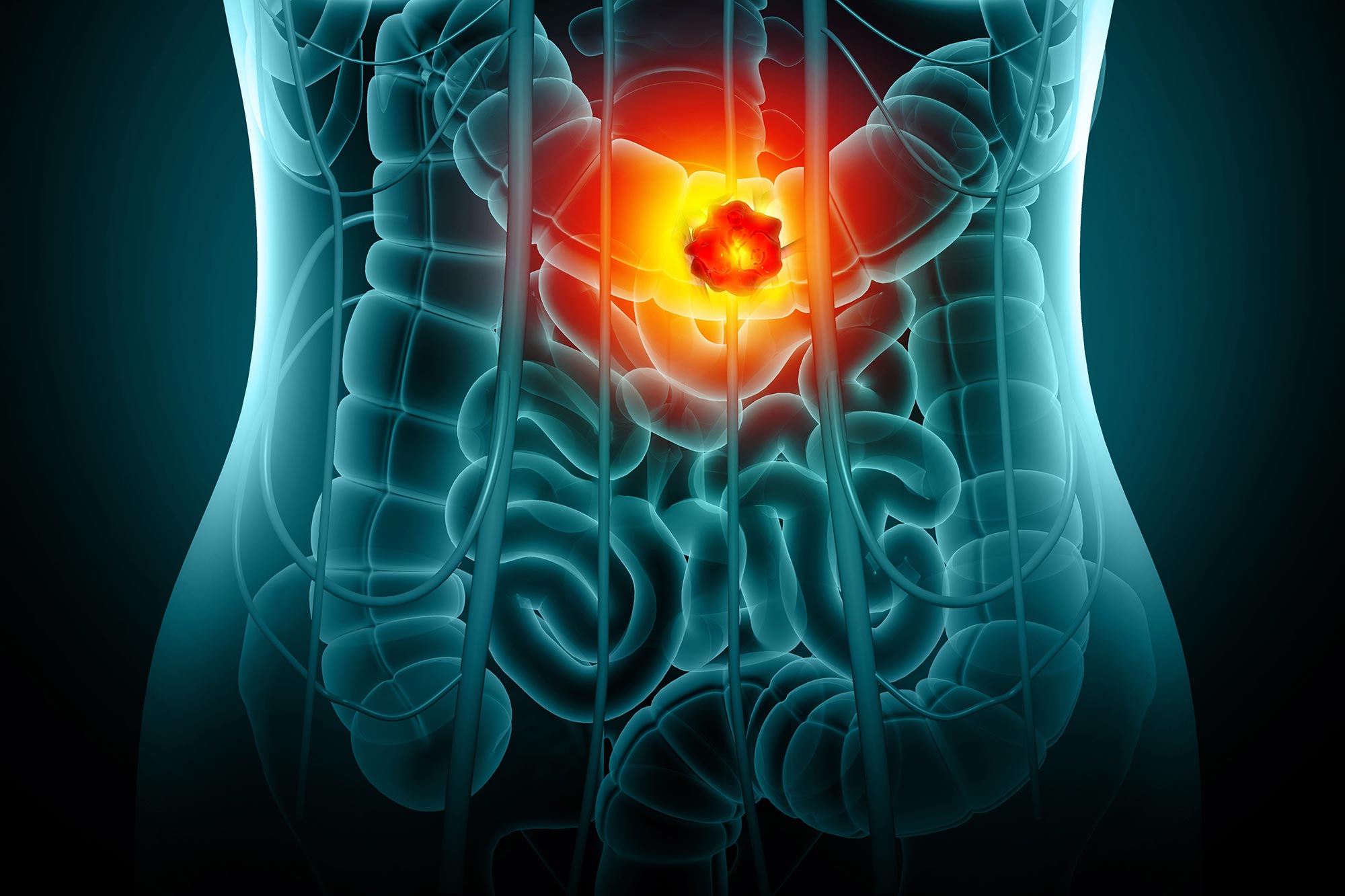
People who lack a common gut antibody face higher colorectal cancer risk, and experiments in mice are beginning to explain how that missing protection may matter.
Long before colon cancer develops, cells lining the intestine can begin dividing too quickly. Scientists at Rockefeller University have discovered that a common gut antibody helps keep this growth under control in mice, raising the possibility of preventing tumors before they form.
In a study published in Nature, mice lacking immunoglobulin A (IgA) developed more than twice as many colon tumors as mice with normal antibody levels. Giving the deficient mice IgA by mouth eliminated their increased cancer risk.
The findings may help explain why people with IgA deficiency, which affects about 1 in 500 Americans, face a higher risk of colorectal cancer.
“One intriguing aspect of this work is that it shows how a natural defense in the gut restrains the cell division that can lead to cancer,” says senior author Daniel Mucida, head of Rockefeller’s Laboratory of Mucosal Immunology. “Most cancer research focuses on trying to destroy a tumor that already exists, but what if we could intervene before tumors form?”
An unexpected role for gut antibodies
IgA is one of the immune system’s first lines of defense. Unlike antibodies that target specific pathogens, it can bind to many kinds of gut bacteria and even some healthy human cells. Scientists have long known that these antibodies are abundant in the digestive system, although their full purpose has remained unclear.
Gregory Donaldson, a former Rockefeller postdoctoral fellow who is now an assistant professor at UCLA, investigated whether IgA’s interactions with gut bacteria could explain its connection to cancer. He compared mice lacking IgA with normal mice raised alongside them, ensuring both groups encountered the same food and germs.
The increased cancer risk appeared across several different models of colon cancer. More importantly, the researchers found changes in genes controlling cell division before any tumors developed, suggesting that IgA influences cancer risk at an early stage.
How IgA puts the brakes on cell growth
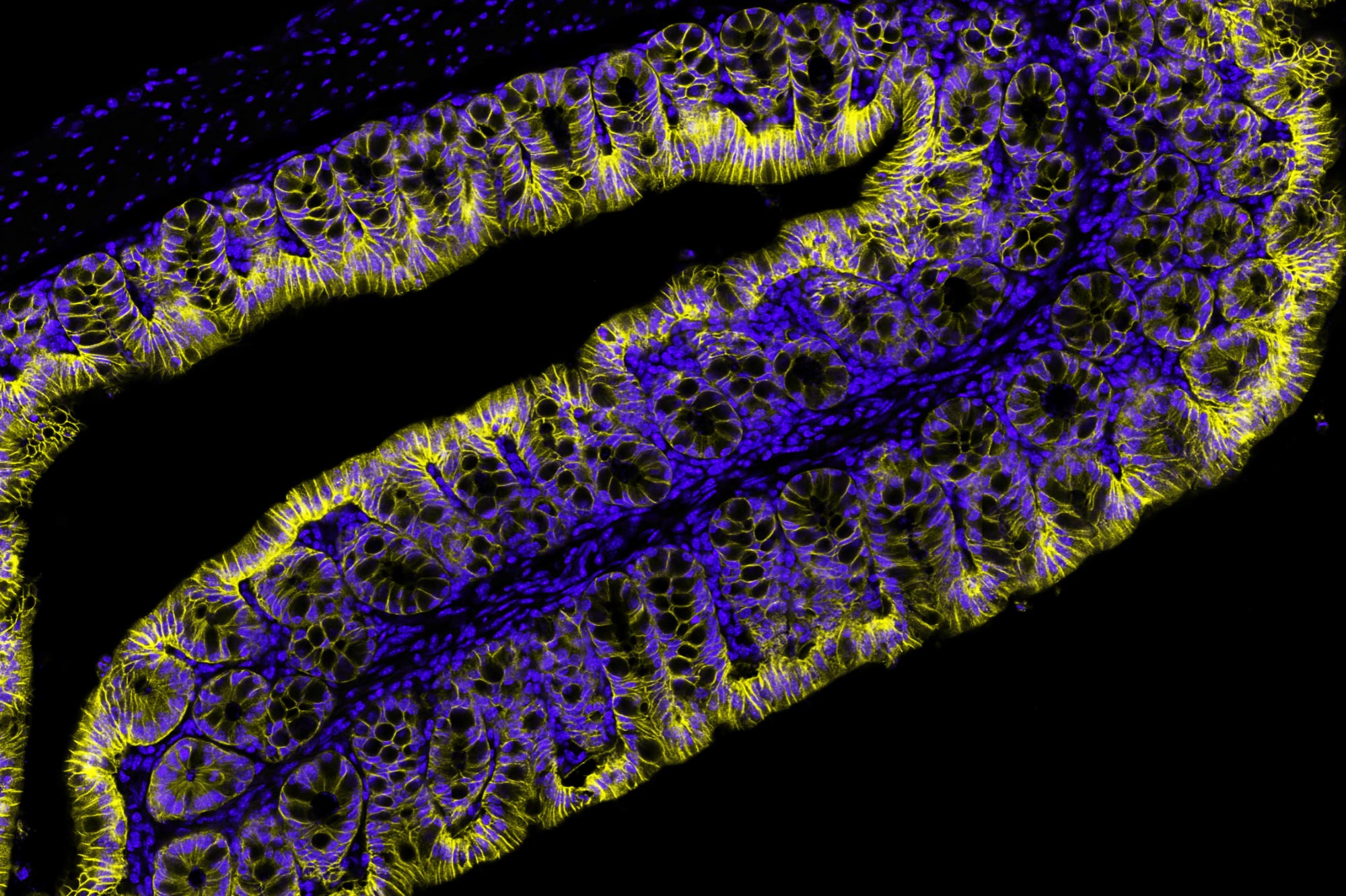
The team traced this effect to DMBT1, a receptor on the surface of intestinal cells. Gabriella Lima dos Reis, a graduate student in Gabriel Victora’s laboratory, helped identify its role.
In the presence of gut bacteria, DMBT1 encourages intestinal cells to multiply. IgA acts like a brake by binding to the receptor and limiting that growth. Without IgA, the signal can become overactive, allowing cells to divide excessively and form tumors. The researchers found that removing gut bacteria or DMBT1 signaling also prevented this uncontrolled growth.
“If IgA is missing, epithelial cells that are performing their normal function—responding to bacteria by producing new cells—can keep dividing unchecked, leading to cancer,” Mucida says. “We think this homeostatic effect is IgA’s main function. This was a big surprise.”
New possibilities for preventing colon cancer
The discovery could eventually lead to new ways of reducing colon cancer risk, particularly for people who have had polyps removed. Polyps increase the likelihood of developing colon cancer, and Mucida believes targeting this pathway could offer a way to lower that risk.
Donaldson also sees potential in beneficial gut bacteria. Although much research has focused on microbes that encourage tumor growth, some bacteria may help protect intestinal cells. One possibility is developing probiotics that stimulate protective IgA responses.
Both approaches remain speculative, and the findings have not established a cancer-prevention treatment for humans. However, the study suggests that understanding how gut bacteria, antibodies, and intestinal cells interact could reveal new opportunities to prevent cancer before it starts.
Reference: “Suppression of epithelial proliferation and tumorigenesis by IgA” by Gregory P. Donaldson, Gabriella Lima dos Reis, Marwa Saad, Christopher Wichmann, Izabela Mamede, Guo Chen, Caroline E. Harrer, Nicole L. DelGaudio, Dayu Zhang, Begüm Aydin, Tiago B. R. Castro, Sergei I. Grivennikov, Bernardo S. Reis, Elise G. Liu, Stephanie C. Eisenbarth, Kivanç Birsoy, Sohail F. Tavazoie, Beth M. Stadtmueller, Gabriel D. Victora and Daniel Mucida, 11 November 2026, Nature.
DOI: 10.1038/s41586-026-11264-2
The overall project was funded by grants from the NIH to S.I.G. (R01CA218133), to B.M.S. (R01AI165570), to G.D.V. and D.M. (R01AI157137) and to D.M. (U54CA261701).
Never miss a breakthrough: Join the SciTechDaily newsletter.
Follow us on Google and Google News.