

A new study explains how pancreatic tumors use a sugar coating to hide from the immune system and shows that a newly developed antibody can restore immune responses in mice.
Pancreatic cancer remains one of the most difficult cancers to treat and frequently does not respond to even the latest immunotherapy approaches.
Researchers at Northwestern Medicine have now identified a previously unknown reason for this resistance. They found that pancreatic tumors shield themselves from immune attack by using a sugar-based signal that effectively tells immune cells not to respond. The team also developed an antibody treatment designed to interrupt this protective signal.
In a study published in Cancer Research, the researchers detailed this mechanism for the first time and demonstrated that blocking it with a monoclonal antibody restores immune activity against pancreatic cancer cells in preclinical mouse models.
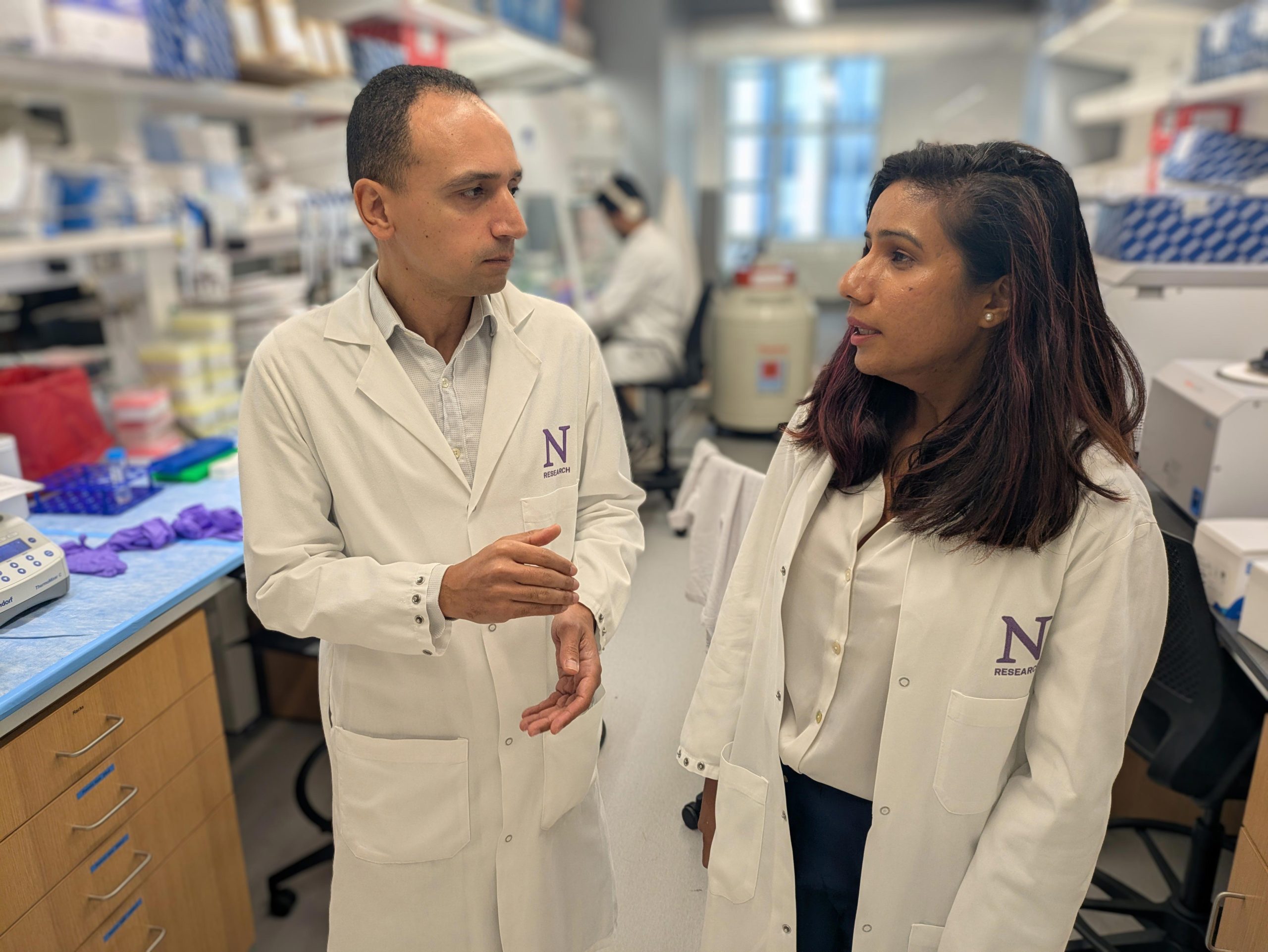
“It took our team about six years to uncover this novel mechanism, develop the right antibodies and test them,” said study senior author Mohamed Abdel-Mohsen, associate professor of medicine in the division of infectious diseases at Northwestern University Feinberg School of Medicine.
“Seeing it work was a major breakthrough.” The study was recently published in the journal Cancer Research.
Turning the immune system back on
Pancreatic cancer is one of the most lethal forms of cancer. It is frequently detected at an advanced stage, has limited treatment options, and carries a five year survival rate of only 13%. Unlike several other cancers, it also shows strong resistance to immunotherapies that are effective elsewhere.
Within pancreatic tumors, immune responses are unusually dampened. “We set out to learn why, and whether we could flip that environment, so immune cells attack tumor cells instead of ignoring or even helping them,” Abdel-Mohsen said.
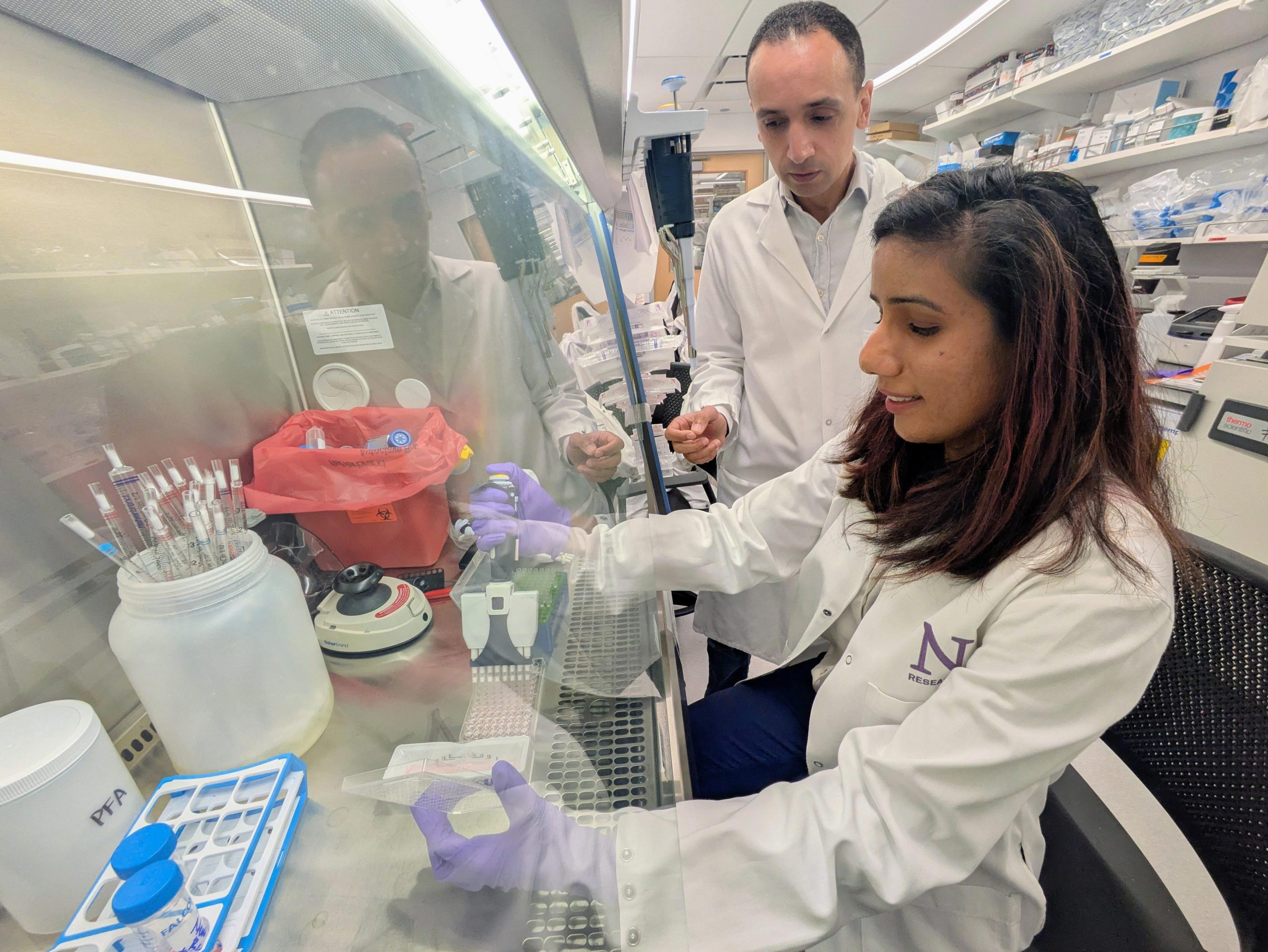
The researchers discovered that pancreatic tumors take advantage of a natural protective mechanism used by healthy cells. Under normal circumstances, cells display a sugar called sialic acid on their surface to signal to the immune system, “don’t harm me.”
The team found that pancreatic tumors misuse this system by attaching the same type of sugar to a surface protein known as integrin α3β1. This sugar-coated protein can then bind to a receptor on immune cells called Siglec-10, effectively delivering a misleading signal that tells immune cells to stand down.
“In short, the tumor sugar-coats itself — a classic wolf-in-sheep’s-clothing move — to escape immune surveillance,” Abdel-Mohsen explained.
Creating a new antibody
Once they discovered this novel hiding mechanism, the Northwestern scientists developed monoclonal antibodies that blocked it. When they used those antibodies in the lab and in two animal models, immune cells woke up and began eating cancer cells. Tumors in treated mice grew significantly slower than in untreated controls.
Making those antibodies was no small feat. “When you make an antibody, you test what are called hybridomas, cells that produce antibodies. We screened thousands before finding the one that worked,” Abdel-Mohsen said.
The next step, he said, is to combine the antibody with current chemotherapy and immunotherapy treatments. “There’s a strong scientific rationale to believe combination therapy will allow us to reach our ultimate goal: a full remission,” he said. “We don’t want only a 40% tumor reduction or slowing down. We want to remove the cancer altogether.”
Moving toward clinical testing
Abdel-Mohsen said his team is now fine-tuning the antibody for human use and moving toward early safety and dosing studies. In parallel, they’re testing it in combination with chemotherapy and immunotherapy and developing a companion test to identify which patients’ tumors rely on this sugar-based pathway so clinicians can match the right people to the right therapy.
Abdel-Mohsen estimates it might take about five years before such a therapy could be available to patients if progress continues as planned.
Beyond pancreatic cancer, the findings could have broader implications, he said. “We’re now asking whether the same sugar-coat trick shows up in other hard-to-treat cancers, such as glioblastoma, and in non-cancer diseases where the immune system is misled.”
Abdel-Mohsen’s lab focuses on the growing field of glyco-immunology, which studies how sugars regulate the immune system. “We’re just scratching the surface of this field,” he said. “Here at Northwestern, we’re positioned to turn these sugar-based insights into real treatments for cancer, infectious diseases, and aging-related conditions.”
Reference: “Targeting Interactions Between Siglec-10 and α3β1 Integrin Enhances Macrophage-Mediated Phagocytosis of Pancreatic Cancer” by Pratima Saini, Gauri Mirji, S.M. Shamsul Islam, Lacy M. Simons, Sajad Ahmad Bhat, Amanda P. Bonfanti, Kar Muthumani, Priyesh Agrawal, Joel Cassel, Hsin-Yao Tang, Hiroaki Tateno, Rugang Zhang, Judd F. Hultquist, Rahul S. Shinde and Mohamed Abdel-Mohsen, 3 November 2025, Cancer Research.
DOI: 10.1158/0008-5472.CAN-25-0977
This paper was supported in part by Northwestern University’s Center for Human Immunobiology Pilot Award, 2025–2026 to Abdel-Mohsen. Abdel-Mohsen is also supported by National Institutes of Health grants R01AG092241, R01AI165079, R01AA029859, R01DK123733 R01AI189353 and R01NS117458 and the NIH-funded BEAT-HIV Martin Delaney Collaboratory to Cure HIV-1 Infection (1UM1AI126620).
Never miss a breakthrough: Join the SciTechDaily newsletter.
Follow us on Google and Google News.
8 Comments
The Problem with Current Treatments
Today’s cancer treatments—chemotherapy and radiotherapy—attack cancer cells but also severely weaken the patient’s body. From the moment of diagnosis, stress hormones (like cortisol) reduce the patient’s strength. By the first chemotherapy session, patients are already vulnerable. Treatment then delivers heavy damage not only to cancer but to the patient’s resilience. This often leads to faster decline instead of recovery.
My Solution
I have developed a nature-based, patient-strength–preserving approach that addresses this flaw. Instead of weakening the patient while fighting the disease, my method supports the body’s natural defenses and resilience throughout treatment.
This innovation could open a new chapter in oncology by combining effectiveness against cancer with protection of the patient’s overall health.📧[email protected]
Delete/remove this comment. Gtfo of here with your pseudoscience BS. “I have developed…” my ass. Pandering it on STD comment sections. Get real.
I came here to say I know someone that is past 5 years out from stage 4 inoperable pancan that had shrunk his tumors and stayed healthy the whole time using supplements and off label drugs….you are late to the game and I bet the cost is just like chemo!
That is both wonderful and amazing! And to be clear, this is without medical intervention? What supplements and off-label drugs were used, if you don’t mind sharing some. I am wondering what the physicians response was if/when they were told of this, if they were.
Congrats and I pray that no recurrence occurs!
Yeah I would like to know what they took to my dad is recently diagnosed with pancan and he goes in three weeks to see where he stands, and I would like to hear of your persons uses of aid in the hope he has as much chances in making it himself. If you would be open to provide. Thanks and yeah this post is Al good but this is still probably five to ten yrs before they are even going to start use on people, it is here to act like oh here’s a way that looks like it is doing something but then is never talked about again or used. To show like they actually are trying to find cures and not just scamming us in money and false hope. I hate reading this stuff. Yrs ago a college was use nano reflective bots to inject to the tumor and they could shine a laser from the outside and hitting the bots and heating and desolving the tumor. And it was a working method but that was just swept under the rug. They want remedies not a cure to provide to us. Bs
Would you be willing and if you know the name off your friends drugs that was used? And where they white or brown just saying cause of the types of problems that are more prevelant in each nationality like immune systems are more weaker or prone to weaker immune system problems already and things like that that varies between all life. if you know what I mean. Really don’t know if that matters but I think it would, maybe. My father was just recently diagnosed and goes in a few weeks to see what they can do? No offense ment just wanting to find as much of alt ways to give him a better chance in surviving
So he’s in the 16% that survive past 5 years. It doesn’t mean that whatever products he took is what did it.
Wife has pancreatic Cancer a small chance to shrink then surgery starting chemo soon any truthful info would be appreciated