
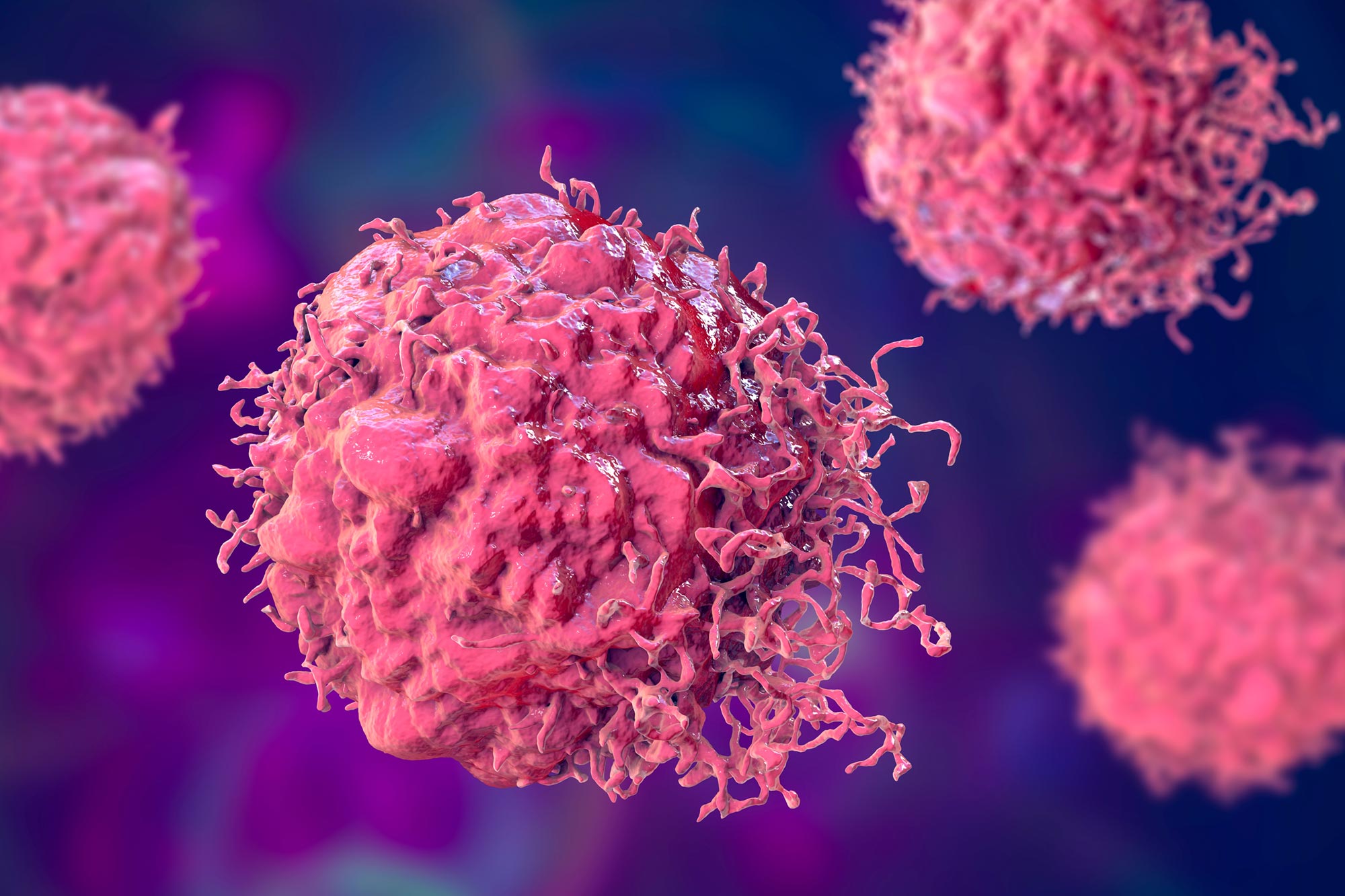
Researchers have found that tumors can rewire neutrophils to promote cancer growth rather than suppress it.
Forecasting whether a tumor will stay contained or accelerate is still one of oncology’s biggest unknowns. A team at the University of Geneva (UNIGE) and the Ludwig Institute for Cancer Research reports that one of the immune system’s most common cell types, the neutrophil, can be flipped into a tumor helper after it enters the tumor’s surrounding environment. The study, published in Cancer Cell, points to a single chemical signal, CCL3, as a key feature of that switch and a possible clue to how a cancer is likely to behave.
Tumors do not operate in isolation. They grow inside a busy neighborhood of immune cells, connective tissue, and chemical signals, and small changes in that neighborhood can tilt the balance toward control or expansion.
“One of the difficulties lies in identifying, in an environment we are only now beginning to understand, the elements that truly influence the tumor’s ability to grow,” explains Mikaël Pittet, full professor in the Department of Pathology and Immunology and at the Translational Research Centre in Onco-Haematology (CRTOH) at the UNIGE Faculty of Medicine, and member of the Lausanne Branch of the Ludwig Institute for Cancer Research, who led this work.
“In 2023, we showed that the expression of two genes in macrophages is strongly linked to disease progression. This constitutes a simple but informative variable for understanding tumors and anticipating their trajectory. Our new study highlights a second variable, this time involving another population of immune cells: neutrophils.”
A deleterious reprogramming
Neutrophils are everywhere in the bloodstream and are built for speed, rushing to sites of injury or infection to contain damage. In many cancers, though, their presence has long been linked with poorer outlooks, and this study offers a clearer explanation of what might be happening after they arrive.
“We discovered that neutrophils recruited by the tumor undergo a reprogramming of their activity: they begin producing a molecule locally—the chemokine CCL3—which promotes tumor growth,” explains Mikaël Pittet.
An experimental and bioinformatics challenge
Proving that CCL3 was the key required careful engineering. Neutrophils are notoriously tricky to study because they are short-lived and do not behave well in many lab setups, which makes it difficult to isolate cause and effect.
“Neutrophils are particularly difficult to study and to manipulate genetically,” explains Evangelia Bolli, co-lead author of the study and responsible for its experimental component, then a postdoctoral researcher in the Department of Pathology and Immunology at the UNIGE Faculty of Medicine, now a postdoctoral researcher at the Broad Institute of MIT and Harvard. “We combined different approaches to control the expression of the CCL3 gene specifically in neutrophils, without inhibiting it in other cells. A delicate exercise!”
The result? Without CCL3, neutrophils lose their pro-tumor action. They continued to function normally in the bloodstream and were still able to gather inside tumors, but they no longer showed the harmful reprogramming seen previously.
To complete their analysis, the research team re-examined data from numerous independent studies. “We had to innovate to detect neutrophils more accurately,” explains Pratyaksha Wirapati, co-first author and bioinformatics specialist. “Their low genetic activity often makes them invisible using standard analysis tools. By developing a new method, we have been able to show that, in many cancers, these cells share a common trajectory: they produce large amounts of CCL3, which is associated with pro-tumor activity.”
Toward a potential prognostic marker
With CCL3, Mikaël Pittet’s team has now identified a new variable likely to provide information on tumor progression. “We are deciphering the ‘identity card’ of tumors by identifying, one by one, the key variables that determine the evolution of the disease,” explains the researcher. “Our work suggests that there is a limited number of these variables. Once they are properly identified, they could help better tailor the management of each patient and, ultimately, offer more effective and personalized care.”
Reference: “CCL3 is produced by aged neutrophils across cancers and promotes tumor growth” by Evangelia Bolli, Pratyaksha Wirapati, Mehdi Hicham, Yuxuan Xie, Marie Siwicki, Florent Duval, Anne-Gaëlle Goubet, Máté Kiss, Béatrice Zitti, Thomas Zwahlen, Sheri Mcdowell, Ruben Bill, Simona Angerani, Camilla Engblom, Seth Anderson, Aiping Jiang, Oliver Hartley, David B. Sykes, Maja Jankovic, Nadine Fournier and Mikaël J. Pittet, 5 February 2026, Cancer Cell.
DOI: 10.1016/j.ccell.2026.01.006
Never miss a breakthrough: Join the SciTechDaily newsletter.
Follow us on Google and Google News.
1 Comment
My very close friend was diagnosed with Non Small Cell Lung Cancer in 2018. After several weeks/months of misdiagnosis she was eventually told she had stage 4 NSCLC cancer. After a full hip replacement femur removal and several other life threatening complications which should have taken her life finally a gruelling course of Chemotherapy combined with Immunotherapy was administered. Now 2026 she is still here. She lives with several discomforting issues. I more than happy to have her here. She never complains. So how did she survive a life ending diagnosis? Her words “I don’t live with this thing. I lives with me”