
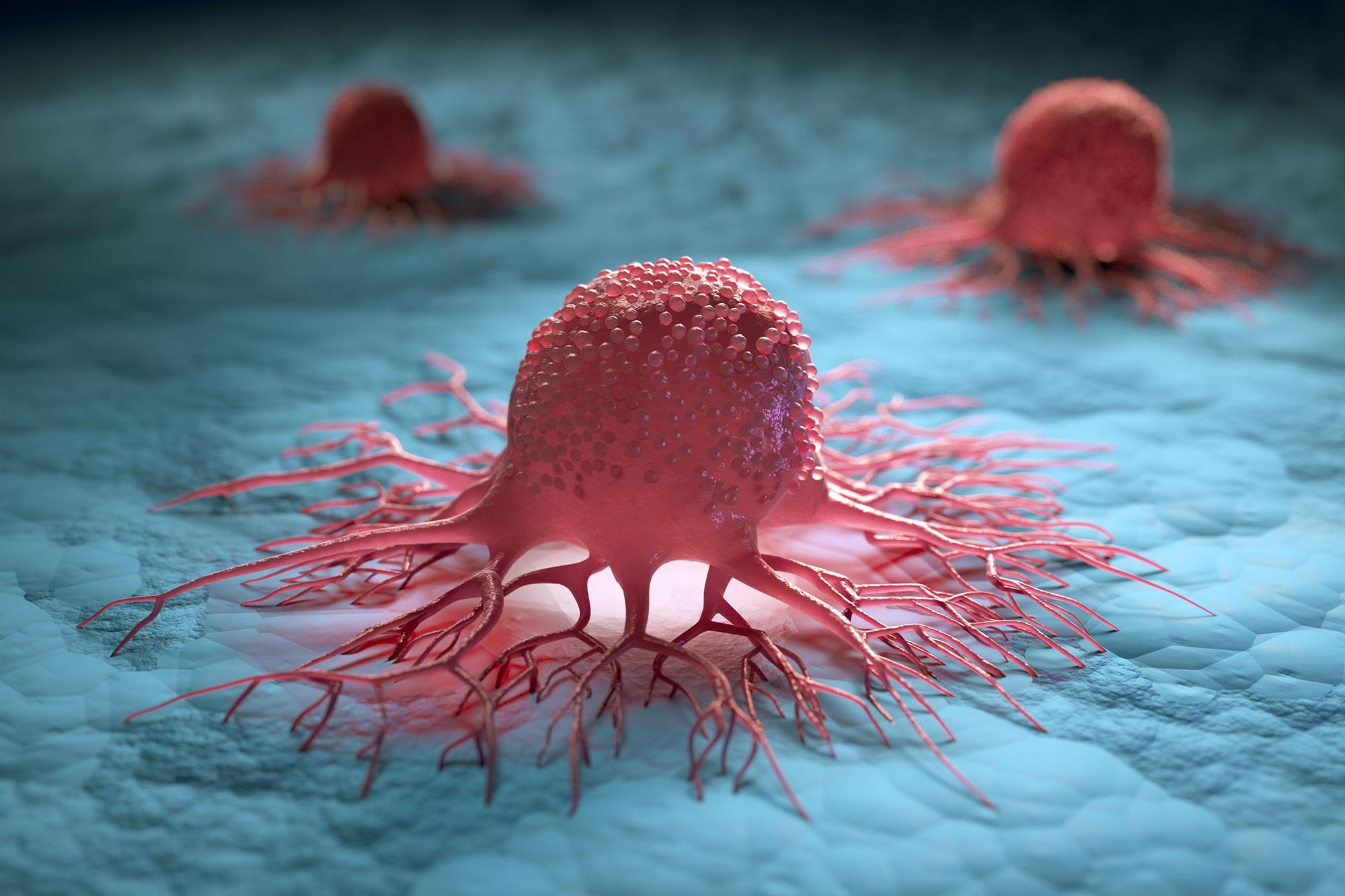
Scientists have uncovered how a vitamin A metabolite can suppress anti-cancer immunity.
Scientists at the Princeton University Branch of the Ludwig Institute for Cancer Research have uncovered new ways in which a vitamin A-derived molecule, all-trans retinoic acid, interferes with the immune system’s ability to fight cancer. Their work shows that this compound can weaken natural anti-cancer immune responses and, under certain conditions, reduce the effectiveness of a promising class of cancer vaccines.
Vitamin A metabolites, also called retinoids, have long been the subject of debate in medicine, with studies pointing to both beneficial and harmful effects. Reported across two separate studies, the new findings help clarify this long-standing controversy. They also mark an important step toward developing the first drug candidates capable of shutting down the cellular signaling pathway triggered by retinoic acid.
Two Complementary Studies
One of the studies, published in Nature Immunology and led by Ludwig Princeton researcher Yibin Kang and graduate student Cao Fang, focuses on retinoic acid produced by dendritic cells (DCs) within the immune system. The team found that this molecule alters DC behavior in a way that promotes immune tolerance toward tumors. As a result, immune responses that would normally attack cancer cells become muted.
This immune tolerance directly undermines dendritic cell vaccines, a type of immunotherapy designed to stimulate strong anti-tumor responses. The researchers also describe the creation and preclinical testing of a new compound that blocks retinoic acid production in both cancer cells and DCs. Known as KyA33, the drug significantly improves the performance of DC vaccines in animal studies and may also function as a standalone cancer immunotherapy.
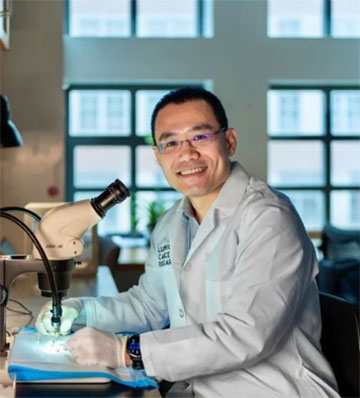
The second study, led by former Kang lab graduate student Mark Esposito and published in iScience, describes how researchers systematically designed and tested drugs that prevent retinoic acid from being produced, effectively silencing retinoid signaling inside cells.
Although retinoids have been studied for more than a hundred years, attempts to create drugs that safely and effectively block their signaling have repeatedly fallen short. The drug discovery strategy outlined in this study overcame those challenges and served as the foundation for developing KyA33.
“Taken together, our findings reveal the broad influence retinoic acid has in attenuating vitally important immune responses to cancer,” said Kang. “In exploring this phenomenon, we also solved a longstanding challenge in pharmacology by developing safe and selective inhibitors of retinoic acid signaling and established preclinical proof of concept for their use in cancer immunotherapy.”
A deadly tolerance
Retinoic acid is generated by an enzyme called ALDH1a3, which is frequently present at high levels in human cancer cells. A closely related enzyme, ALDH1a2, produces the same molecule in certain types of DCs.
Once produced, retinoic acid binds to receptors in the cell nucleus and triggers a chain of molecular events that change how genes are expressed. In the gut, retinoic acid made by DCs is known to promote the formation of regulatory T cells (Tregs), which help prevent harmful autoimmune reactions. Until now, however, scientists did not fully understand how retinoic acid affected the dendritic cells themselves.
Dendritic cells play a central role in coordinating immune defenses. They constantly survey the body for signs of infection or cancer. When they encounter danger, they break down disease-related proteins, known as antigens, and present them to T cells. This process activates T cells, enabling them to seek out and destroy infected or cancerous cells.
Why DC Vaccines Often Fall Short
Dendritic cell vaccines are made by collecting immature immune cells from a patient’s blood and growing them in the laboratory. These cells are exposed to cancer antigens taken from the patient’s own tumor, with the goal of training them to recognize and attack cancer once they are returned to the body.
In theory, this approach should trigger a powerful immune response. In reality, DC vaccines have often produced disappointing results, even as scientists have improved their ability to identify the most relevant cancer antigens. Fang, Kang, and their colleagues, including Esposito and Princeton Branch Director Joshua Rabinowitz, uncovered a key reason for this problem.
“We discovered that under conditions commonly employed to produce DC vaccines, differentiating dendritic cells begin expressing ALDH1a2, producing high levels of retinoic acid,” said Fang. “The nuclear signaling pathway it activates then suppresses DC maturation, diminishing the ability of these cells to trigger anti-tumor immunity. This previously unknown mechanism likely contributes to the largely suboptimal performance of DC and other cancer vaccines that has been repeatedly seen in clinical trials.”
The situation is further complicated by the fact that retinoic acid released by DCs also encourages the formation of macrophages. These immune cells are less effective than DCs at mounting anti-cancer responses. As macrophages accumulate in place of dendritic cells, the overall effectiveness of DC vaccines declines even more.
The researchers demonstrated that blocking ALDH1a2, either by disrupting the gene or by using KyA33, restores normal dendritic cell development and function. DC vaccines prepared in the presence of KyA33 generated strong, antigen-specific immune responses in mouse models of melanoma. These responses delayed tumor formation and slowed disease progression. When administered directly, KyA33 also acted on its own as an immunotherapy, reducing tumor growth in mice.
Resolving an old paradox
The development of these ALDH1a2/3 inhibitors itself is a notable accomplishment. Of the dozen classic nuclear receptor signaling pathways, the one activated by retinoic acid was the first such pathway discovered but remains the only one that has not yet been successfully targeted by a drug.

The iScience paper describes a hybrid computational and large-scale drug screening approach Esposito, Kang and colleagues took to develop their inhibitors. With the unique tool offered by these novel compounds, the researchers were able to solve the apparent paradox of retinoid nuclear signaling in cancer.
Retinoic acid has been shown to induce the growth arrest and death of cancer cells in laboratory cell cultures, a finding that has imbued vitamin A with anti-cancer agency in the popular imagination. On the other hand, multiple lines of evidence, including the findings of major clinical trials, indicate that high intake of vitamin A actually increases the incidence of cancer (and cardiovascular disease) and related mortality. Moreover, elevated expression of ALDH1A enzymes in tumors is associated with poor survival across multiple types of cancer. To resolve this paradox, much research has attempted, with little success, to dissociate the role of ALDH1A enzymes in cells from retinoic acid production.
“Our study reveals the mechanistic basis for this paradox,” said Esposito. “We’ve shown that ALDH1a3 is overexpressed in diverse cancers to generate retinoic acid, but that cancer cells lose their responsiveness to retinoid receptor signaling, avoiding its potential anti-proliferative or differentiating effects. This explains, in part, the paradox of vitamin A’s effects on cancer growth.”
Targeting the Tumor Microenvironment
The other part, Esposito, Kang, and colleagues found, is that retinoic acid does not influence the cancer cells themselves but is rather secreted into the tumor microenvironment to suppress the anti-cancer immune response. One way it does so is by disrupting T cell responses to cancer.
To demonstrate this, the researchers showed that these novel ALDH1a3 inhibitors serve as a potent immunotherapy in mouse models of cancer by stimulating the immune system to attack tumors.
“By developing candidate drugs that safely and specifically inhibit nuclear signaling through the retinoic acid pathway, we are paving the way for a novel therapeutic approach to cancer,” said Kang.
Esposito and Kang have launched a biotechnology company, Kayothera, to bring their novel ALDH1A inhibitors to the clinic for multiple diseases known to be driven by retinoic acid, including cancer, diabetes, and cardiovascular disease.
References: “Targeting autocrine retinoic acid signaling by ALDH1A2 inhibition enhances antitumor dendritic cell vaccine efficacy” by Cao Fang, Mark Esposito, Ulrike Hars, Robert T. Byrne, Bokai Song, Jian Huang, Asael Roichman, Lawrence Shue, Xiaobing Cheng, John Proudfoot, Demin Zhao, Yong Wei, Ileana M. Cristea, Joshua D. Rabinowitz and Yibin Kang, 5 January 2026, Nature Immunology.
DOI: 10.1038/s41590-025-02376-4
“Development of retinoid nuclear receptor pathway antagonists through targeting aldehyde dehydrogenase 1A3” by Mark Esposito, Cao Fang, Yong Wei, Alfonso Pozzan, Claudia Beato, Xiaoyang Su, Josiah E. Hutton, Tavis Reed, Xiang Hang, Enrico D. Perini, Wen Wang, Xiaobing Cheng, Yan Pan, Jianshi Yu, Maureen Kane, Malini Manoharan, John Proudfoot, Ileana M. Cristea and Yibin Kang, 3 October 2025, iScience.
DOI: 10.1016/j.isci.2025.113675
The study reported in Nature Immunology was supported by the Ludwig Institute for Cancer Research, the Brewster Foundation, the Susan Komen Foundation, Metavivor Breast Cancer Research, the Breast Cancer Research Foundation and the American Cancer Society.
The study reported in iScience was supported by the Ludwig Institute for Cancer Research, the New Jersey Health Foundation, the Brewster Foundation, the Susan Komen Foundation, the Breast Cancer Research Foundation, the American Cancer Society and the National Science Foundation.
Never miss a breakthrough: Join the SciTechDaily newsletter.
Follow us on Google and Google News.
13 Comments
Does this mean carrots containing vit A is good as a juice to use in cancer treatment.?
The way I read the article my answer would be no. Vitamin A creates a safe environment for cancer cells to grow. Originally we thought it was a helpful vitamin, now we think it is not.
I consume a lot of foods daily rich in vitamin A. Carrots, broccoli, mango, eggs. I think I’ll cut down. Also, I have used retinol cream on my face for 15 yrs.Can this enter my blood stream?
Carrots don’t contain Vitamin A. They contain beta-carotene, which your body may convert into Vitamin A. I would want to ask if that is safer than eating foods that do contain Vitamin A.
Carrots, oranges and almond milk make for a good smoothie
Shame they’re not as open minded about the covid injectables.
Does this mean cooked liver is actually bad for people often called super food as in spain it is eaten regularly and the major cause of death in spain is hearth problems not cancer and spanish diet has been touted as the healthist diet in the world.
Copied & pasted from article:
“On the other hand, multiple lines of evidence, including the findings of major clinical trials, indicate that high intake of vitamin A actually increases the incidence of cancer (and cardiovascular disease) and related mortality.”
Looks like high vitamin A can cause heart problems, too.
The article states that “high vitamin A intake” is the problem but doesn’t specify if that is from supplements or diet, and doesn’t say how much you should be getting vs. how much is considered “high intake”. I take a vitamin A supplement twice a week. I guess that’s OK…?
Hi Jennifer, supplements are harshest, and also follow brand recs for dosage, with your doctor’s approval. Natural is best for general wellness. Also, your whole diet needs to work in sync, don’t supplement a multivitamin with more vitamins unless acutely ordered to by your doctor. U can get a blood and lipid lab test to have your levels reviewed, 🫡. Best of luck…
On one hand it is probably safer. On the other hand some people have difficulty converting beta-carotene into Vitamin A. For example it has been suggested that those with diabetes might be missing the link that helps to convert beta-carotene into Vitamin A.
This is such a new, enlightening, detailed and thorough article, haha wow!! Thank you💛
Vitamin A is fat soluble so is not flushed out of the body like Vitamin C. It is dangerous to take if you are likely to be pregnant. Having said this I took a high dose of Vitamin A for years together with Vitamin C. It definitely helped my lungs and asthma to recover from infections. At one stage, I was having a lot of problems with asthma. I upped my dose of Vitamin A to a mega dose. Within 2 weeks I was running up stairs with no problems whereas I had had difficulty and pain in my legs for months before that. I am no longer on the mega dose of Vitamin A but it has transformed my life for the better. I am aware of the dangers and monitor myself constantly for any clues (including blood tests) that I might be overdosing. So far my blood has never shown high Vitamin A. I believe different people and different diseases have specific needs regarding vitamins and minerals.