
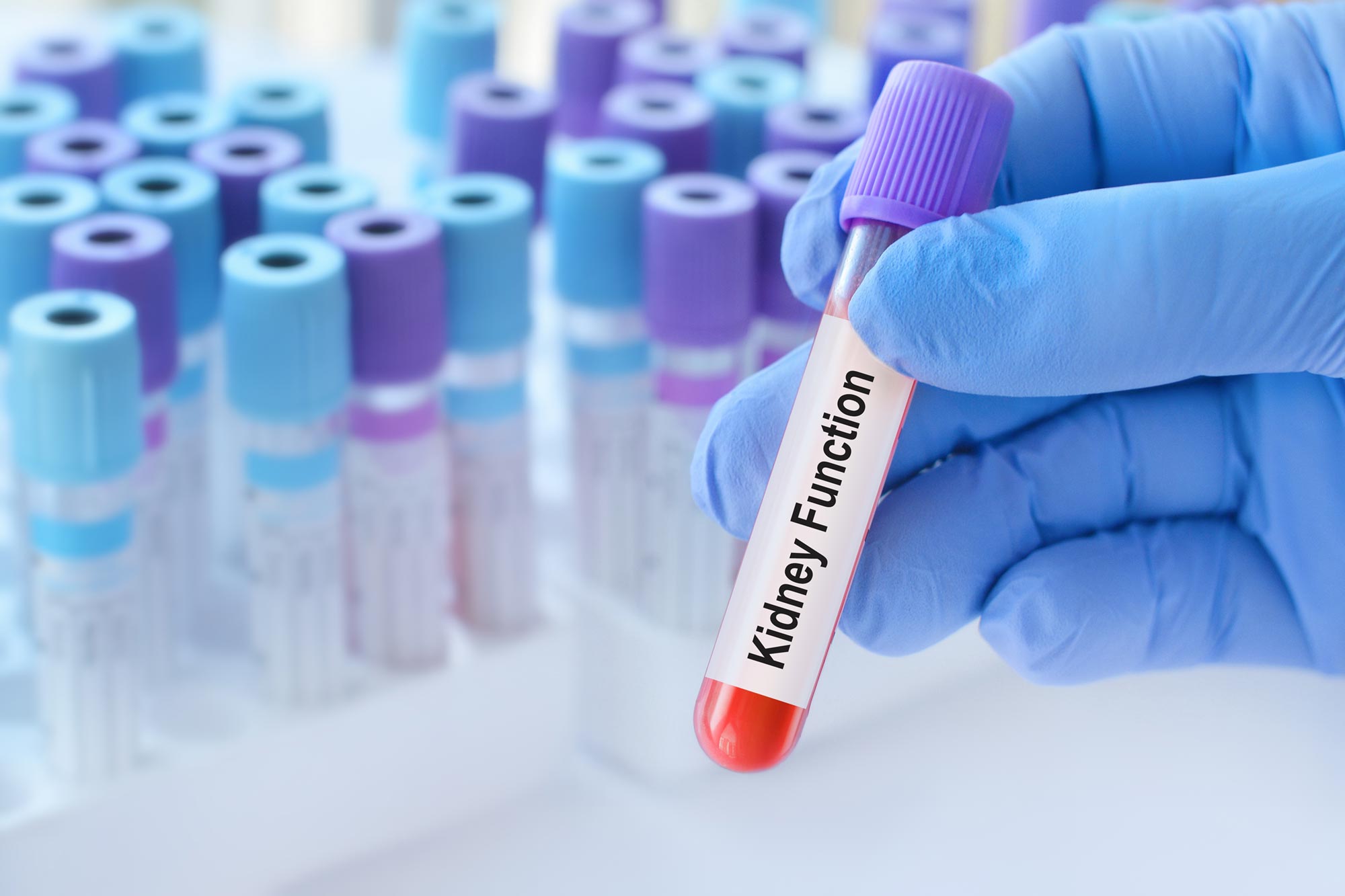
A kidney test result that appears perfectly normal may still reveal hidden danger, according to a major new study involving more than a million adults.
Even small differences in kidney function, including values that still fall within the normal range, may reveal who is at greater risk of developing chronic kidney disease. That is the conclusion of a new study from Karolinska Institutet published in Kidney International. Based on the findings, researchers have created a web-based tool designed to support earlier detection and help prevent disease before it progresses.
Chronic kidney disease affects an estimated 10-15 percent of adults worldwide and is becoming an increasingly serious public health challenge. By 2040, it is expected to rank among the five leading causes of years of life lost globally. One major problem is that there are no widely adopted screening programs, meaning many people are diagnosed only after losing more than half of their kidney function.
New Approach to Measuring Kidney Disease Risk
To improve early detection, the research team developed population-based reference charts for estimated glomerular filtration rate (eGFR), the most commonly used indicator of kidney function. The goal is to give physicians a better way to recognize patients who may be at elevated risk and intervene sooner.
“We were inspired by the growth and weight charts used in pediatrics, which intuitively help clinicians identify children at risk of obesity or undergrowth,” says the first author of the study, Yuanhang Yang, postdoctoral researcher at the Department of Clinical Science and Education, Södersjukhuset, Karolinska Institutet.
Web-Based eGFR Calculator for Doctors
The researchers have made the eGFR reference charts publicly available to healthcare professionals. They also developed an online calculator, created by PhD student Antoine Creon, that allows clinicians to compare a patient’s eGFR with expected values for people of the same age.
The study analyzed data from more than 1.1 million adults in the Stockholm region of Sweden, representing about 80 percent of residents between the ages of 40 and 100. Researchers used nearly seven million eGFR test results collected from 2006 through 2021 to build age- and sex-specific reference distributions.
Lower Percentile Kidney Function Linked to Higher Risk
The results showed that kidney function levels that fall well below the average for a person’s age and sex are associated with poorer health outcomes. People whose eGFR ranked below the 25th percentile faced a significantly greater risk of developing kidney failure that required dialysis or a kidney transplant.
Researchers also observed a U-shaped relationship between eGFR percentiles and mortality risk. Individuals at both the low and high ends of the distribution were more likely to die than those closer to the middle range.
Opportunity for Earlier Detection
According to the researchers, the findings highlight a gap in current clinical practice. Among people with an eGFR above 60 ml/min/1.73 m2, a value generally considered normal, but below the 25th percentile for their age and sex, only about one in four had undergone additional urinary albumin testing. This test can help identify early kidney damage.
“For example, consider a 55-year-old woman with an eGFR of 80. Most clinicians would not react to such a seemingly normal value. However, our charts show that this corresponds to the 10th percentile for women of that age, and that she has a three-fold higher risk of starting dialysis in the future. This signals an opportunity to act earlier,” says Juan Jesús Carrero, professor at the Department of Medical Epidemiology and Biostatistics, Karolinska Institutet.
Reference: “Population-based estimated Glomerular Filtration Rate distributions and associated health outcomes provide opportunities for early identification of and primary prevention of chronic kidney disease” by Yuanhang Yang, Antoine Creon, Andrew S. Levey, Anne-Laure Faucon, Aurora Caldinelli, Marie Evans, Arvid Sjölander, Alberto Ortiz, Edouard L. Fu and Juan Jesus Carrero, 16 January 2026, Kidney International.
DOI: 10.1016/j.kint.2025.11.009
The research was conducted as part of the SCREAM project and received funding from the Swedish Research Council, the Swedish Heart-Lung Foundation, Region Stockholm, and the Swedish Kidney Foundation, among other organizations. The researchers report no conflicts of interest related to the study.
Never miss a breakthrough: Join the SciTechDaily newsletter.
Follow us on Google and Google News.