
Close Menu
    Facebook X (Twitter) Instagram
    SciTechDaily
    • Biology
    • Chemistry
    • Earth
    • Health
    • Physics
    • Science
    • Space
    • Technology
    Facebook X (Twitter) Pinterest YouTube RSS
    SciTechDaily
    Home»Health»Sleep Strengthens Memories, but Epilepsy Can Break the Connection
    Health

    Sleep Strengthens Memories, but Epilepsy Can Break the Connection

    By Kennedy Krieger InstituteAugust 5, 2026No Comments3 Mins Read
    Facebook Twitter Pinterest Telegram LinkedIn WhatsApp Email Reddit
    Share
    Facebook Twitter LinkedIn Pinterest Telegram Email Reddit
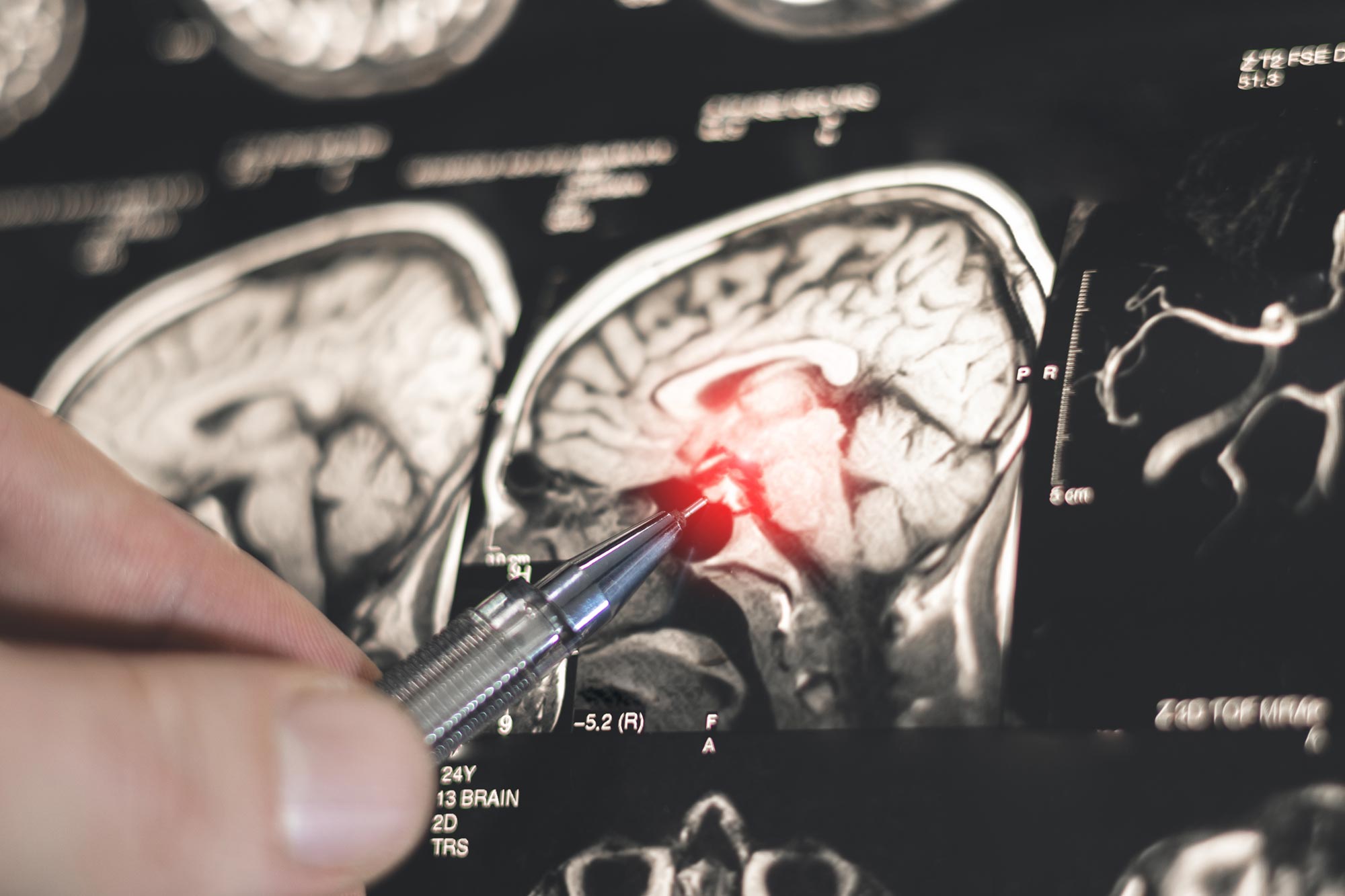
    Doctor Examines Human Brain X-Ray Disease Treatment
    During sleep, three interconnected brain regions appear to coordinate their electrical activity to preserve new memories. Credit: Shutterstock

    During sleep, three brain regions work together to strengthen memories, but epilepsy can disrupt that process.

    While the brain sleeps, three regions appear to synchronize their activity to strengthen newly formed memories. Researchers at Kennedy Krieger Institute and Johns Hopkins Medicine found that disturbances in this coordination were associated with poorer memory performance in people with epilepsy.

    The work is the first human study to directly connect interactions among the orbitofrontal cortex, thalamus, and hippocampus with memory consolidation during sleep. The findings provide a clearer view of how the brain preserves memories overnight and how epileptic activity may interfere with that process.

    Sleep links three memory regions

    The results offer the first direct evidence that these memory-related regions communicate during sleep in ways that support memory formation. They also show that epileptic spikes can interrupt this coordinated activity, which may eventually help guide efforts to identify, monitor, and treat cognitive problems associated with epilepsy.

    “We haven’t understood why patients with epilepsy have problems with memory,” said Dr. Catherine Chu, study co-author and vice president of neurology at Kennedy Krieger and director of child neurology and pediatric epilepsy at Johns Hopkins University. “This helps to close that gap.”

    Epileptic spikes interrupt memory coordination

    The researchers recorded activity from the orbitofrontal cortex, thalamus, and hippocampus in patients with epilepsy. They examined how several rhythmic patterns of electrical activity, including neural oscillations, sleep spindles, and hippocampal ripples, synchronized across the three regions during sleep.

    They then compared the strength of that coordination with each patient’s memory performance. Stronger synchronization was associated with better memory, while epileptic spikes disrupted the activity and coincided with reduced performance.

    “Each brain recording contains an extraordinary amount of information, and we use tools from mathematics and statistics to turn that complexity into clear patterns with clinical relevance,” said Mark Kramer, study co-author and professor of applied mathematics and statistics at Johns Hopkins University. “These discoveries are possible only because of our interdisciplinary team, no single discipline could have revealed the whole story.”

    Reference: “A hierarchical cascade of sleep rhythms supports motor memory and is hijacked by epileptic spikes in human epilepsy” by Anirudh Wodeyar, Dhinakaran Chinappen, Hunki Kwon, Wen Shi, R. Mark Richardson, Mark A. Kramer and Catherine J. Chu, 30 June 2026, Proceedings of the National Academy of Sciences.
    DOI: 10.1073/pnas.2517454123

    Supported by NIH NINDS R01NS115868 and the Epilepsy Foundation New England Blue Skies Award.

    Never miss a breakthrough: Join the SciTechDaily newsletter.
    Follow us on Google and Google News.

    Cognitive Science Epilepsy Memory Neurology Sleep Science
    Share. Facebook Twitter Pinterest LinkedIn Email Reddit

    Related Articles

    MIT Neuroscientists Identify Neurons Responsible for Routine Habits

    Harvard Study Casts Doubt on the Prevailing Model of Fixed Memory Formation

    Blocking HDAC2 Enzyme May Reverse Memory Loss Caused by Alzheimer’s Disease

    Neuroscientists Reveal That the Ventral Pre-Arcuate Holds “Attentional Template”

    MIT Scientists Use Optogenetics to Trigger REM Sleep

    Dietary Cocoa Flavanols Reverse Age-Related Memory Decline in Older Adults

    Researchers Find a Link between Poor Sleep, Memory Loss and Brain Deterioration

    Disrupted Sleep Patterns Linked to Alzheimer’s

    Examining the Relationship Between Diabetes and Cognitive Decline

    Leave A Reply Cancel Reply

    • Facebook
    • Twitter
    • Pinterest
    • YouTube

    Don't Miss a Discovery

    Subscribe for the Latest in Science & Tech!

    Trending News

    JWST Finds a “Star” 100 Billion Times Brighter Than Any Star Should Be

    Scientists Find a Hidden Biological Link Across Different Forms of Autism

    Astronomers Discover a Ghostly River of Stars That Could Reveal Dark Matter

    Why Is Colorectal Cancer Rising in People Under 50? New Clues Point to the Environment

    Quantum Fluctuations Break a Crystal’s Symmetry Rules

    Why Does an Irregular Heartbeat Strike 40 Years Early in Some People?

    Scientists Reveal How ADHD Could Fuel Creative Thinking

    Scientists Find Just 3 Minutes of Sprinting Can Transform Blood Chemistry

    Follow SciTechDaily
    • Facebook
    • Twitter
    • YouTube
    • Pinterest
    • Newsletter
    • RSS
    SciTech News
    • Biology News
    • Chemistry News
    • Earth News
    • Health News
    • Physics News
    • Science News
    • Space News
    • Technology News
    Recent Posts
    • AI Decodes a Hidden DNA Signal Linked to Disease-Causing Mutations
    • Billions of Invasive Fish Have Taken Over the Great Lakes. Scientists Say We Can Still Stop Their Next Invasion
    • Scientists Turn Red Strawberries White With a Single Gene Edit
    • NASA’s Artemis II Crew Flew Farther Than Any Humans Ever. Now They’re Being Honored
    • The Sun’s Corona Usually Looks White. In Spain, It Turned Gold
    Copyright © 1998 - 2026 SciTechDaily. All Rights Reserved.
    • Science News
    • About
    • Contact
    • Editorial Board
    • Privacy Policy
    • Terms of Use

    Type above and press Enter to search. Press Esc to cancel.