
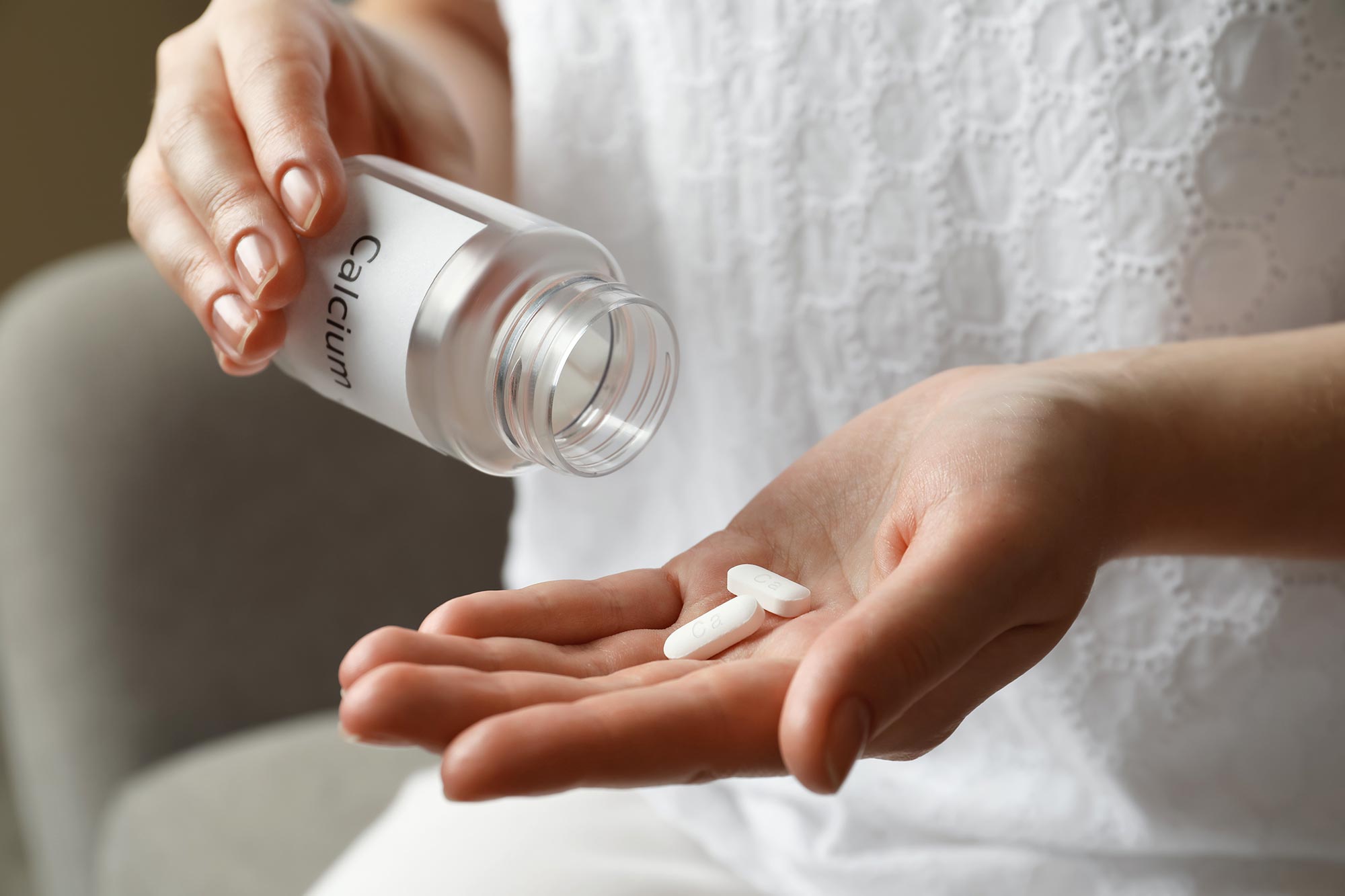
New evidence suggests calcium and vitamin D supplements may do far less to prevent fractures and falls than widely believed.
Calcium and vitamin D supplements, whether taken separately or together, provide little to no meaningful benefit in preventing fractures or falls in most older adults, according to a major review published in The BMJ.
Nearly one in three adults age 65 and older experiences a fall each year. Many of these falls lead to fractures, which can cause pain, lower quality of life, and increase the need for assisted living or residential care. As a result, reducing falls and fractures remains a major public health goal worldwide.
Earlier reviews have also found little evidence that calcium or vitamin D supplements reduce fracture risk, and findings on combined supplementation have been inconsistent. The role of vitamin D in preventing falls has also remained uncertain.
Even so, many doctors, health guidelines, and regulatory agencies continue to recommend vitamin D supplements, with or without calcium, to support bone health. Prescriptions for these supplements have also risen significantly in recent years.
Large Review Examines Fracture and Fall Prevention Evidence
To better understand the issue, researchers in Canada analyzed data from 69 randomized controlled trials involving 153,902 adults. The studies examined whether calcium supplements, vitamin D supplements, or a combination of both could reduce fractures and falls compared with placebo or no treatment.
Although the quality of the trials varied, researchers evaluated the risk of bias and the reliability of the evidence using established scientific methods.
After setting thresholds for what would count as a clinically meaningful benefit, the team found little to no reduction in overall fracture risk from calcium supplements (moderate certainty evidence from 11 trials; 9,067 participants), vitamin D supplements (high certainty evidence from 36 trials; 92,045 participants), or combined supplementation (high certainty evidence from 15 trials; 51,126 participants).
The analysis also found little to no benefit for preventing specific fractures, including hip fractures, or reducing falls. These conclusions were supported by mostly moderate to high certainty evidence.
Findings Consistent Across Different Groups
The researchers noted that some analyses included relatively few studies and participants, meaning the findings should be interpreted carefully. They also said the results may not apply to people with certain bone disorders or those receiving medication for osteoporosis.
Still, additional analyses showed consistent results across different groups, including variations in age, sex, history of fractures or falls, and average calcium intake through diet. This strengthened confidence in the overall findings.
The researchers concluded that the evidence “does not support routine supplementation with calcium or vitamin D, or combined supplementation to prevent fractures and falls.” They added that clinicians, guideline panels, and regulatory agencies “should re-evaluate their general recommendations for calcium and vitamin D supplementation in light of current evidence.”
Experts Call for Better Fall Prevention Strategies
Researchers writing in a related editorial said more large, high-quality trials are needed to determine whether supplementation could help people at higher risk.
For now, they recommend shifting attention and funding toward strategies proven to reduce falls and fall-related injuries. These include balance training, resistance exercise, and combined approaches that may involve exercise, home hazard assessment, or education tailored to an individual’s level of risk.
Reference: “Calcium, vitamin D, or combined supplementation to prevent fractures and falls: systematic review and meta-analysis” by Olivier Massé, Claudia Mei Mercurio, Sébastien Dupuis, Maya Al Sahwi, Alexandra Arruda, Gabriel Dallaire, Katherine Desforges, Nicolas Dugré and David Williamson, 20 May 2026, BMJ.
DOI: 10.1136/bmj-2025-088050
Never miss a breakthrough: Join the SciTechDaily newsletter.
Follow us on Google and Google News.
18 Comments
سلام بابت مصرف مکمل ویتامین های باید گفت هر نوع مصرف ویتامین یک رساننده یعنی به آن نقطه که میخواهید برسد نیز مصرف شود یعنی یک حمل کننده.
CDC indicates 1 of 4, not 1 of 3
But it causes kidney stones. The stones are vet painful.
Hello? MK-7 taken with D3 is how you get calcium into the bones to strengthen them. Why even post this article and mislead people?
Yup, add vitamin K2 for synergistic effects and it changes the picture completely. Hpw pld is research? This os common knowledge for at least 10-15 years.
“The researchers concluded that the evidence “does not support routine supplementation with calcium or vitamin D, or combined supplementation to prevent fractures and falls.”
Supplementation *only* was tested to see if it prevented falls? Any evidence that supplementation decreased the severity of the effects of the fall, or not? Difficult to test probably, but doable?
K-2 (MK-7)
They forgot to give them Vitamin K-2 MK-7 with the Vitamin D, it’s the K-2 that activates the osteocalcin to deposit the Calcium in the Bone. Poorly designed study.
Exactly.. K2 is what directs the calcium into hard tissues and out of soft tissues. You would think they would know this by now.
Dr Eric Berg says that in fact , the amount of vitamin D recommended by OMS is too.low, and their studies are not updated. What Dr Berg recommends to take is 5 to 6 times more vitamin D ( that you can take also if you expose yourself to Sun during early morning or afternoon ( avoid midday). More info in Dr Berg’s YouTube Channel
I am 63. I already split wood today, and rode a mountain bike to work. While nutrients are essential, looking at the nature of man, and his activities since he appeared on Earth should not be a strange concept. Hard, physical labor, pounding of the joints, friction of the muscles and so on is necessary, I believe for healthy aging. I got no grant for that, but the fact that peasants and farmers world wide tend not to suffering stooping posture as they age is anecdotally intriguing. So, get a grant or use your eyes. Be my guest
This article is highly misleading.
The claim that the dominant reason to care about Vitamin D is because of falls and bone frailty leading to injury, is a flat out straw-man mis-representation of the reason doctors advise supplementation. Proving the straw many false, and suggesting that therefore supplementation is pointless, is HARMFUL. There is little evidence Vitamin D supplements prevent FALLS… In reality, careful supplementation including D3 can make falls less dangerous, recovery faster, bones stronger. We can reduce the impact of chronic and infectious disease that may lead to falls among many other things.
Encouraging people to discard the broad benefits based on a strawman is harmful.
Statistically the flawed meta-study is Cherrypicking at both ends, data selection bias, and effect bias. It conflates various types of supplementation that include the various forms of Vitamin D. How did this pass peer review?
Vitamin D influences over 2000 genes. It’s a hormone. It’s acts as steroid deployed by the body (when available) with extreme care. Vitamin D2 can reduce the essential available D3 when it’s needed. The D hormone’s signalling is modulating the immune system and orchestrating the energy-efficient repair and rejuvenation of the body. Without it, things fall apart. Healing and recovery don’t happen.
Hospitals often fail to measure and supplement D3 and denying patients sunlight and their usual food supply can cause an avoidable rapid decline. This sort of paper is a distraction from the prevailing increasing awareness of the importance of protecting patients.
It’s sad that we don’t have a real study of this question– just a sloppy meta study.
D3 and related supplements are cheap, and our government should devote serious effort to testing them. But we only test drugs with private money. No institution will “throw money away” making us healthy, without a profit motive. Blame Congress for prioritizing industry’s Wall St returns, over human health.
To help good regulators work in the common interest– start out by making sure they are taxpayer funded, not user-fee funded. We can’t expect the police to work for tips.
Agreed
Balance exercise is the way to prevent falls. Not a pill.
Agreed and as older people have issues with balance , muscle weakness , diminished vision , different types of ambulatory aids should be employed to prevent falls .
Helping an elder accept a change in their body and accepting walkers or other aid’s as prevention , overcoming perceived embarrassment of needing these is a huge step !
Vit D and D3 and K2 do more for the body than this article suggests the focus of the topic is very narrow .
Fall prevention is an entirely different subject
Most people’s D3 level from a lab draw are deficient overall.
D3 with K2 helps more than D3 alone .
D3 helps more things than just bones .
This article would be very different if it looked at the big picture. Vitamin D is vital to more than calcium absorption. Vitamin D helps absorb calcium into the soft tissue, Vitamin K2 helps move it from soft tissue into bones. On the mainland USA, half the year or more the sun is too low in the sky to generate Vitamin D from sunlight. Vitamin D/K2 is a must.
Jeanine Ireland
I believe you meant Vitamin K₂ MK-7 taken with Vitamin D₃ and calcium.
They don’t even mention what quantities of Vitamin D were used in the trials. I have come across many publications on trial results, in which they used pathetic amounts of vitamin D such as 500 iu or 1000 iu, almost enough to just get a test subject out of severe deficiency range but not into the a beneficial range.