
But Protective Effects Seen Only Among Women
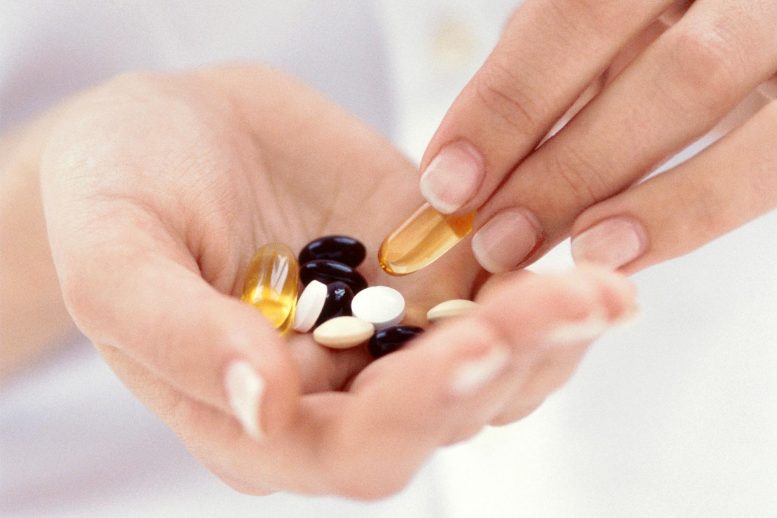
Taking multivitamins, omega-3, probiotics, or vitamin D supplements may lessen the risk of testing positive for SARS-CoV-2, the virus responsible for COVID-19 infection — at least among women — indicates a large population study, published online in the journal BMJ Nutrition Prevention & Health.
But taking any of vitamin C, zinc, or garlic supplements wasn’t associated with a lower risk of testing positive for the virus, the findings show.
Pandemic Hype Drove Supplement Sales
There has been plenty of celebrity endorsement of the use of dietary supplements to both ward off and treat COVID-19 infection since the start of the pandemic, note the researchers.
In the UK alone, market share rose by 19.5% in the period leading up to the first national ‘lockdown’ on March 23 last year, with sales of vitamin C rising by 110% and those of multivitamins by 93%.
Similarly, zinc supplement sales rose by 415% in the first week of March, at the height of COVID-19 fears in the USA.
Dietary supplements can help to support a healthy immune system, but whether specific supplements might be associated with a lower risk of catching SARS-CoV-2 isn’t known.
In a bid to plug this knowledge gap, the researchers drew on adult users of the COVID-19 Symptom Study app to see if regular supplement users were less likely to test positive for SARS-CoV-2.
The app was launched in the UK, the US, and Sweden in March 2020 to capture self-reported information on the evolution of the pandemic.
Initially, it recorded the location, age, and core health risk factors of its users. But as time went on, subscribers were asked to provide daily updates on a range of issues, including symptoms, coronavirus test results, and healthcare. People without obvious symptoms were also encouraged to use it.
Supplement Use Correlated with Lower Infection Rates in Women
For the purposes of this study, the researchers analyzed information supplied by 372,720 UK subscribers to the app about their regular use of dietary supplements throughout May, June, and July 2020 during the first wave of the pandemic as well as any coronavirus swab test results.
Between May and July,175,652 UK subscribers regularly took dietary supplements;197,068 didn’t. Around two thirds (67%) were women and over half were overweight (BMI of 27).
In all, 23,521 people tested positive for SARS-CoV-2 and 349,199 tested negative between May and July.
Taking probiotics, omega-3 fatty acids, multivitamins, or vitamin D was associated with a lower risk of SARS-CoV-2 infection: by 14%, 12%, 13%, and 9%, respectively, after accounting for potentially influential factors, including underlying conditions and usual diet.
No such effects were observed among those taking vitamin C, zinc, or garlic supplements.
Protective Effects Found Only in Women
And when the researchers looked specifically at sex, age and weight (BMI), the protective associations for probiotics, omega-3 fatty acids, multivitamins, and vitamin D were observed only in women of all ages and weights. No such clear associations were seen in men.
Despite some differences, the same overall patterns were mirrored in both the US (45,757) and Swedish (27,373) subscribers.
The equivalent figures for the US and Sweden were a reduced risk of:18% and 37%, respectively for probiotics; 21% and 16%, respectively, for omega-3 fatty acids; 12% and 22%, respectively for multivitamins; and 24% and 19%, respectively, for vitamin D supplements.
This is an observational study, and as such, can’t establish cause. The researchers also acknowledge several limitations, including that the study relied on self reported data and a self selected group. No information was collected on supplement doses or ingredients either.
But although the observed effects were modest, they were significant, note the researchers, who call for large clinical trials to inform evidence-based therapeutic recommendations.
“We know that a range of micronutrients, including vitamin D, are essential for a healthy functioning immune system. This, in turn, is key to prevention of, and recovery from, infections.
“But to date, there is little convincing evidence that taking nutritional supplements has any therapeutic value beyond maintaining the body’s normal immune response,” comments Professor Sumantra Ray, Executive Director, NNEdPro Global Centre for Nutrition and Health, which co-owns the journal.
“What’s more, this study wasn’t primarily designed to answer questions about the role of nutritional supplements in COVID-19. This is still an emerging area of research that warrants further rigorous study before firm conclusions can be drawn about whether specific nutritional supplements might lessen the risk of COVID-19 infection,” he cautions.
Reference: “Modest effects of dietary supplements during the COVID-19 pandemic: insights from 445 850 users of the COVID-19 Symptom Study app” by Panayiotis Louca, Benjamin Murray, Kerstin Klaser, Mark S Graham, Mohsen Mazidi, Emily R Leeming, Ellen Thompson, Ruth Bowyer, David A Drew, Long H Nguyen, Jordi Merino, Maria Gomez, Olatz Mompeo, Ricardo Costeira, Carole H Sudre, Rachel Gibson, Claire J Steves, Jonathan Wolf, Paul W Franks, Sebastien Ourselin, Andrew T Chan, Sarah E Berry, Ana M Valdes, Philip C Calder, Tim D Spector and Cristina Menni, 20 April 2021, BMJ Nutrition Prevention & Health.
DOI: 10.1136/bmjnph-2021-000250
Never miss a breakthrough: Join the SciTechDaily newsletter.
Follow us on Google and Google News.
3 Comments
Yeah, again and again… Now a cocktail.
… how about that wild oregano thyngy it will kill of some bad ones…
… “oregano oil 80 carvacrol” ??? .///