
Study indicates that some vitamins, steroids and antivirals could bind to the Spike protein, and may inhibit virus infectivity, whereas high cholesterol may enable the virus.
Evidence is emerging that vitamin D — and possibly vitamins K and A — might help combat COVID-19. A new study from the University of Bristol published in the journal of the German Chemical Society Angewandte Chemie has shown how they — and other antiviral drugs — might work. The research indicates that these dietary supplements and compounds could bind to the viral spike protein and so might reduce SARS-CoV-2 infectivity. In contrast, cholesterol may increase infectivity, which could explain why having high cholesterol is considered a risk factor for serious disease.
Recently, Bristol researchers showed that linoleic acid binds to a specific site in the viral spike protein, and that by doing so, it locks the spike into a closed, less infective form. Now, a research team has used computational methods to search for other compounds that might have the same effect, as potential treatments. They hope to prevent human cells becoming infected by preventing the viral spike protein from opening enough to interact with a human protein (ACE2). New anti-viral drugs can take years to design, develop and test, so the researchers looked through a library of approved drugs and vitamins to identify those which might bind to this recently discovered ‘druggable pocket’ inside the SARS-CoV-2 spike protein.
Simulating Drug Interactions
The team first studied the effects of linoleic acid on the spike, using computational simulations to show that it stabilizes the closed form. Further simulations showed that dexamethasone — which is an effective treatment for COVID-19 — might also bind to this site and help reduce viral infectivity in addition to its effects on the human immune system.
The team then conducted simulations to see which other compounds bind to the fatty acid site. This identified some drugs that have been found by experiments to be active against the virus, suggesting that this may be one mechanism by which they prevent viral replication, such as by locking the spike structure in the same way as linoleic acid.
The findings suggested several drug candidates among available pharmaceuticals and dietary components, including some that have been found to slow SARS-CoV-2 reproduction in the laboratory. These have the potential to bind to the SARS-CoV-2 spike protein and may help to prevent cell entry.
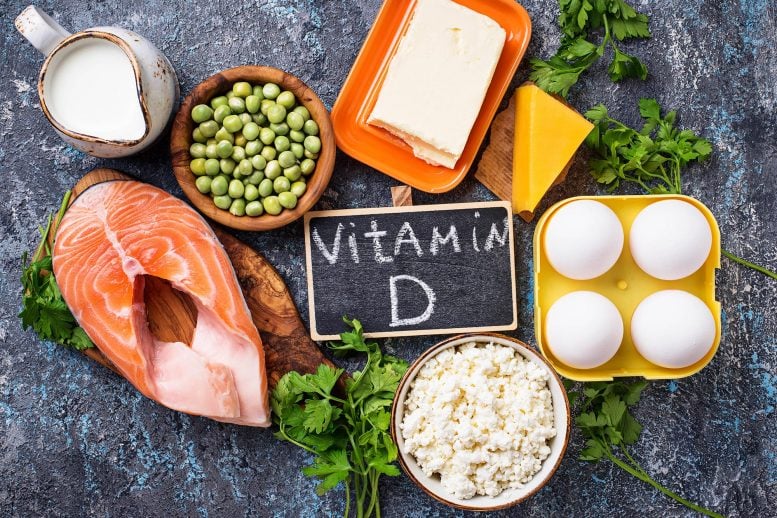
The simulations also predicted that the fat-soluble vitamins D, K, and A bind to the spike in the same way making the spikeless able to infect cells.
Vitamin Deficiencies and Infection Risk
Dr Deborah Shoemark, Senior Research Associate (Biomolecular Modelling) in the School of Biochemistry, who modeled the spike, explained: “Our findings help explain how some vitamins may play a more direct role in combating COVID than their conventional support of the human immune system.
“Obesity is a major risk factor for severe COVID. Vitamin D is fat-soluble and tends to accumulate in fatty tissue. This can lower the amount of vitamin D available to obese individuals. Countries in which some of these vitamin deficiencies are more common have also suffered badly during the course of the pandemic. Our research suggests that some essential vitamins and fatty acids, including linoleic acid may contribute to impeding the spike/ACE2 interaction. Deficiency in any one of them may make it easier for the virus to infect.”
Cholesterol’s Role in Viral Infectivity
Pre-existing high cholesterol levels have been associated with increased risk for severe COVID-19. Reports that the SARS-CoV-2 spike protein binds cholesterol led the team to investigate whether it could bind at the fatty acid-binding site. Their simulations indicate that it could bind, but that it may have a destabilizing effect on the spike’s locked conformation, and favor the open, more infectious conformation.
Dr. Shoemark continued: “We know that the use of cholesterol-lowering statins reduces the risk of developing severe COVID and shortens recovery time in less severe cases. Whether cholesterol de-stabilizes the “benign”, closed conformation or not, our results suggest that by directly interacting with the spike, the virus could sequester cholesterol to achieve the local concentrations required to facilitate cell entry and this may also account for the observed loss of circulating cholesterol post-infection.”
Professor Adrian Mulholland, of Bristol’s School of Chemistry, added: “Our simulations show how some molecules binding at the linoleic acid site affect the spike’s dynamics and lock it closed. They also show that drugs and vitamins active against the virus may work in the same way. Targeting this site may be a route to new anti-viral drugs. A next step would be to look at effects of dietary supplements and test viral replication in cells.”
Alison Derbenwick Miller, Vice President, Oracle for Research, said: “It’s incredibly exciting that researchers are gaining new insights into how SARS-CoV-2 interacts with human cells, which ultimately will lead to new ways to fight COVID-19. We are delighted that Oracle’s high-performance cloud infrastructure is helping to advance this kind of world-changing research. Growing a globally-connected community of cloud-powered researchers is exactly what Oracle for Research is designed to do.”
Reference: “Molecular Simulations suggest Vitamins, Retinoids and Steroids as Ligands of the Free Fatty Acid Pocket of the SARS‐CoV‐2 Spike Protein” by Deborah Karen Shoemark, Charlotte K. Colenso, Christine Toelzer, Kapil Gupta, Richard B. Sessions, Andrew D. Davidson, Imre Berger, Christiane Schaffitzel, James Spencer and Adrian J. Mulholland, 19 January 2021, Angewandte Chemie International.
DOI: 10.1002/anie.202015639
The team included experts from Bristol UNCOVER Group, including Bristol’s Schools of Chemistry, Biochemistry, Cellular and Molecular Medicine, and Max Planck Bristol Centre for Minimal Biology, and Bristol Synthetic Biology Centre, using Bristol’s high performance computers and the UK supercomputer, ARCHER, as well as Oracle cloud computing. The study was supported by grants from the EPSRC and the BBSRC.
Never miss a breakthrough: Join the SciTechDaily newsletter.
Follow us on Google and Google News.