
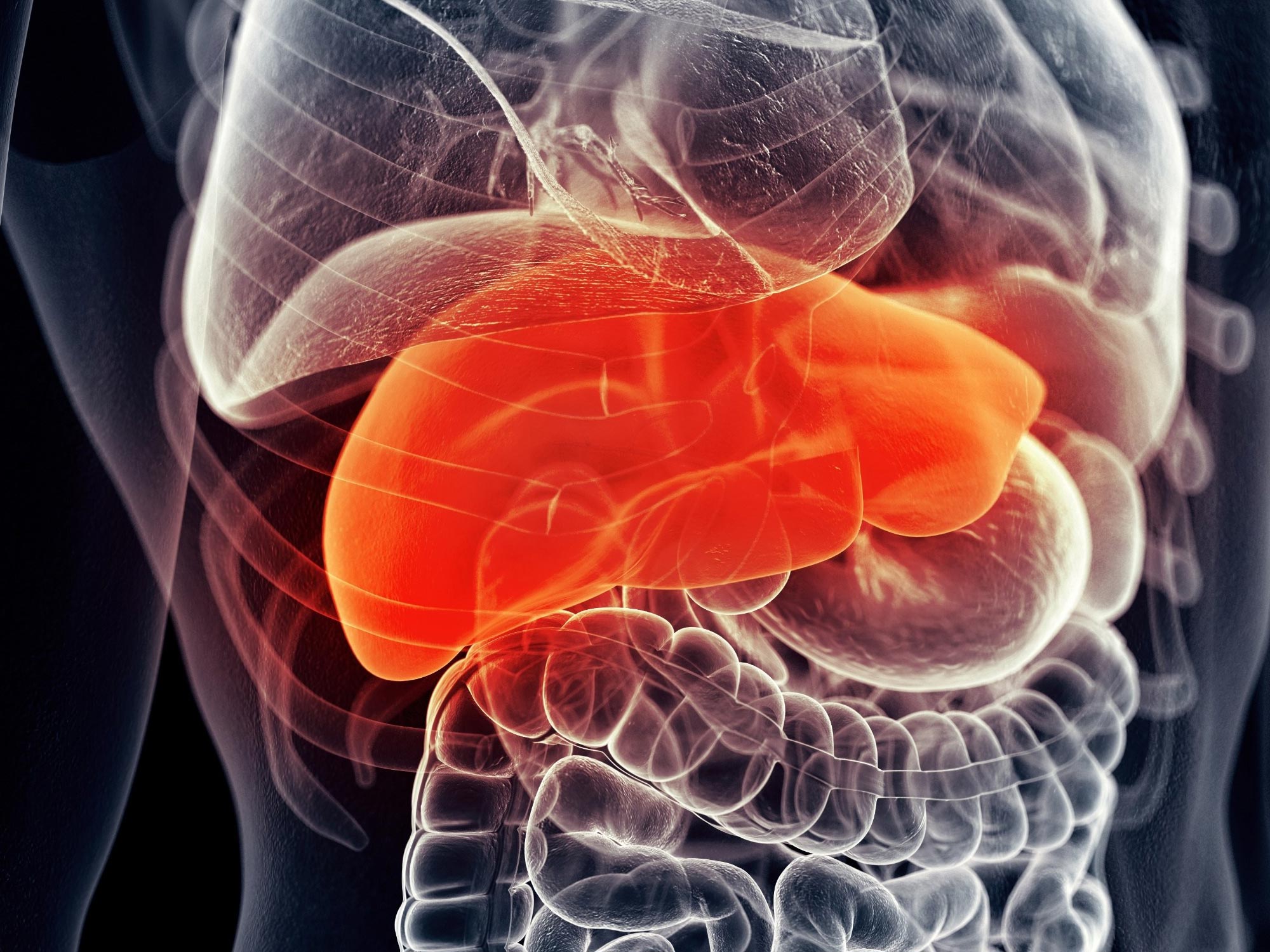
A new immune structure found in liver tumors could improve treatment for liver cancer patients. These structures are linked to better responses to immunotherapy and lower recurrence rates.
A recently identified stage of lymph node-like structures found in liver tumors following pre-surgical immunotherapy may play a crucial role in effectively treating patients with hepatocellular carcinoma, according to researchers at the Johns Hopkins Kimmel Cancer Center.
The study, published Oct. 25 in Nature Immunology, provides new information about lymph node-like structures called tertiary lymphoid structures. These structures, which are highly organized collections of immune B and T cells, are found in some patients treated with immune checkpoint inhibitors — substances that reactivate the body’s natural anti-cancer immunity — and are associated with greater treatment response. However, researchers are still trying to fully understand what these structures contribute to immune responses to cancer, how they change over time, and what finding them in tumors means for patients.
The study identifies a previously unknown form of these structures. Patients who have more of these structures are less likely to have a recurrence of their cancer after surgery, the investigators found.
“We identified the life cycle of tertiary lymphoid structures in patients with liver cancer, and the takeaway is that these structures may be very important in the generation of anti-tumor immunity and may increase the likelihood of curing the cancer,” says Mark Yarchoan, M.D., an associate professor of oncology at the Johns Hopkins Kimmel Cancer Center.
Tertiary Lymphoid Structures and Treatment Response
Yarchoan and his colleagues previously conducted the first clinical trials of immunotherapy before surgery for hepatocellular carcinoma. Only some of the patients were cured with this approach, and the investigators have been trying to understand why.
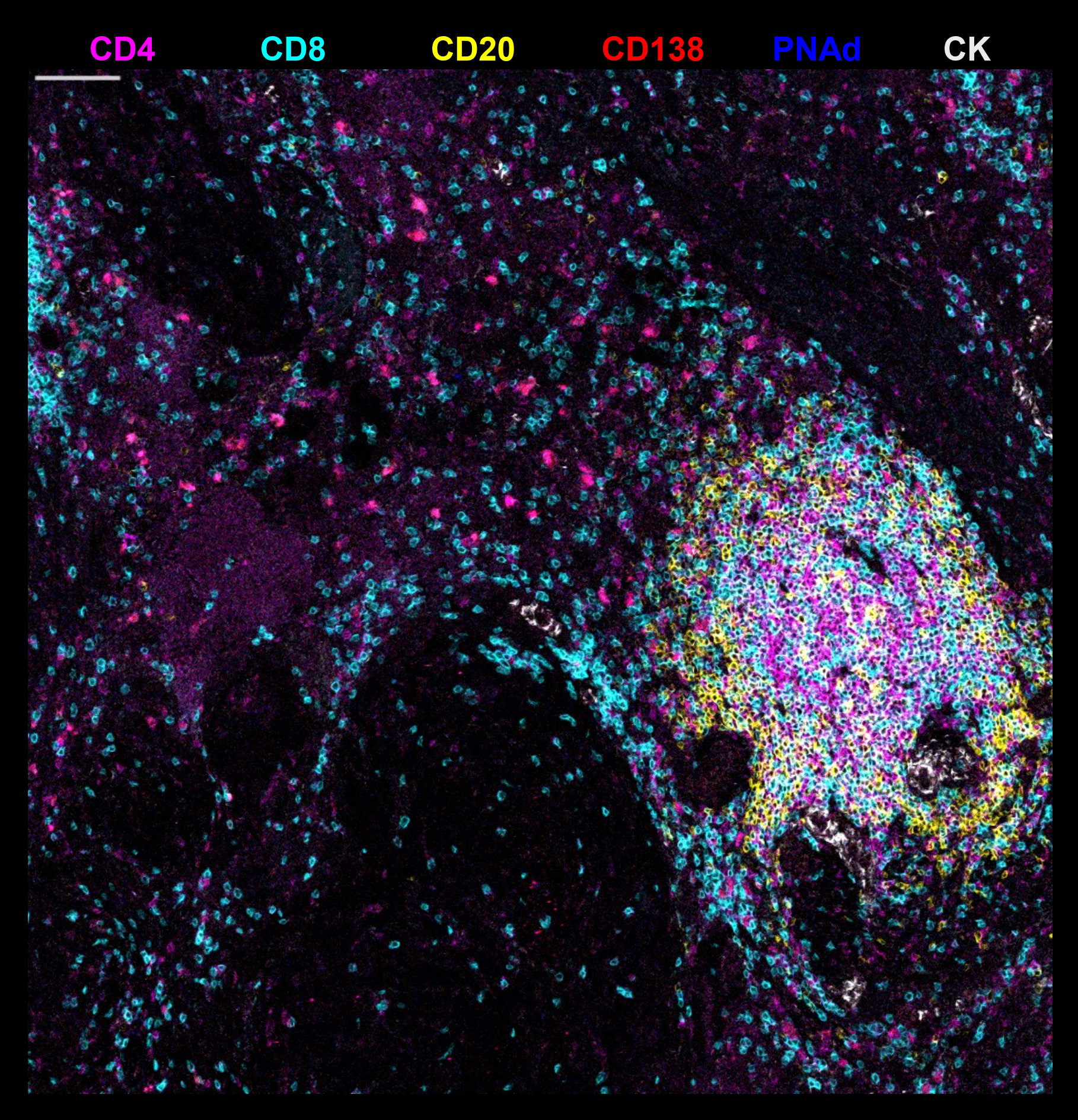
“One of the things that struck us when we looked at these tumors was that patients who were responding to immunotherapy had tertiary lymphoid structures,” he says. Like lymph nodes, the structures have infection-fighting immune B cells in the middle and tumor-killing immune T cells on the outside. “We wanted to learn what these structures are doing.”
They found that tumors with more tertiary lymphoid structures after immunotherapy shrunk more and were less likely to reoccur after surgical removal. Tumors without these structures, by contrast, didn’t shrink and were more likely to come back after surgery. Tertiary lymphoid structures that grew in the center of tumors rather than around the edges were particularly beneficial.
Observing the Structures’ Evolution During Treatment
When the investigators looked at biopsies taken before and after immunotherapy, they found that patients who developed these structures had what looked like precursors of tertiary lymphoid structures prior to beginning therapy. When the study’s lead author, Daniel Shu, M.D., then a medical oncology fellow at Johns Hopkins, examined sites where the patients’ tumors had been eliminated, he discovered a transformation in the tertiary lymphoid structures remaining at the site.
“In tumors where immunotherapy had the greatest effect, we found another form of tertiary lymphoid structure that has not been seen before. In this form, there was dispersion of B cells and apparent retention of so-called T cell zones, where T cells are primed to identify antigens,” says Shu, now at the University of Maryland School of Medicine. “These same patients tend to have the greatest benefit from immunotherapy given in this way. While a lot more work needs to be done, our hypothesis is that this form is a late stage of tertiary lymphoid structure that may contribute to long-term benefit we are seeing in these patients.”
The next step for the team is to determine if they can induce the formation of tertiary lymphoid structures in patients who don’t develop them on their own after starting immunotherapy. They also plan to look at how different combinations of immunotherapies or other presurgical therapies affect tertiary lymphoid structure formation and patient outcomes. The discovery also may have implications for other types of cancer, since the new form of tertiary lymphoid structure reported here was also seen by the authors in two other types of tumors known to respond to immunotherapy.
Reference: “Immunotherapy response induces divergent tertiary lymphoid structure morphologies in hepatocellular carcinoma” by Daniel H. Shu, Won Jin Ho, Luciane T. Kagohara, Alexander Girgis, Sarah M. Shin, Ludmila Danilova, Jae W. Lee, Dimitrios N. Sidiropoulos, Sarah Mitchell, Kabeer Munjal, Kathryn Howe, Kayla J. Bendinelli, Emma Kartalia, Hanfei Qi, Guanglan Mo, Janelle Montagne, James M. Leatherman, Tamara Y. Lopez-Vidal, Qingfeng Zhu, Amanda L. Huff, Xuan Yuan, Alexei Hernandez, Erin M. Coyne, Neeha Zaidi, Daniel J. Zabransky, Logan L. Engle, Aleksandra Ogurtsova, Marina Baretti, Daniel Laheru, Jennifer N. Durham, Hao Wang, Joel C. Sunshine, Robert J. Johnston, Julie Stein Deutsch, Janis M. Taube, Robert A. Anders, Elizabeth M. Jaffee, Elana J. Fertig and Mark Yarchoan, 25 October 2024, Nature Immunology.
DOI: 10.1038/s41590-024-01992-w
The study was supported by F. Hoffmann-La Roche, the Johns Hopkins SPORE in Gastrointestinal Cancer, the National Institutes of Health, the Breeden-Adams Foundation, Conquer Cancer, the Johns Hopkins University School of Medicine J. Mario Molina Physician Scientist Fund, and the Maryland Cancer Moonshot.
Yarchoan received funding or consulting fees from AstraZeneca, Exelixis, Genentech, Replimune, Hepion, Lantheus, Bristol-Myers Squibb, Exelixis and Incyte. He also co-founded and has equity in Adventris Pharmaceuticals. Fertig is on the scientific advisory board of Viosera/Resistance Bio, is a paid consultant for Merck and Mestag Therapeutics, and receives research funds from Abbvie. Ho has received patent royalties from Rodeo/Amgen and grants or honoraria from Sanofi, NeoTX, CirclePharma, Exelixis and Standard BioTools. Jaffee reports grant/research support or honoraria from the Lustgarten Foundation, Break Through Cancer, Roche/Genentech, Bristol-Meyers Squibb, Achilles, DragonFly, Parker Institute, Cancer Prevention and Research Institute of Texas, Surge, HDT Bio, Mestag Therapeutics and Medical Home Group. She also has equity in AbMeta Therapeutics and Adventris Pharmaceuticals. Zabransky reports grant/research support from Roche/Genentech. Taube reports research funding from BMS and Akoya Biosciences. She also serves as a consultant for BMS, Merck, Astra Zeneca, Genentech, Regeneron, Elephas, Lunaphore, Compugen and Akoya Biosciences and holds stock in Akoya Biosciences. These relationships are managed by The Johns Hopkins University in accordance with its conflict-of-interest policies.
Never miss a breakthrough: Join the SciTechDaily newsletter.
Follow us on Google and Google News.