
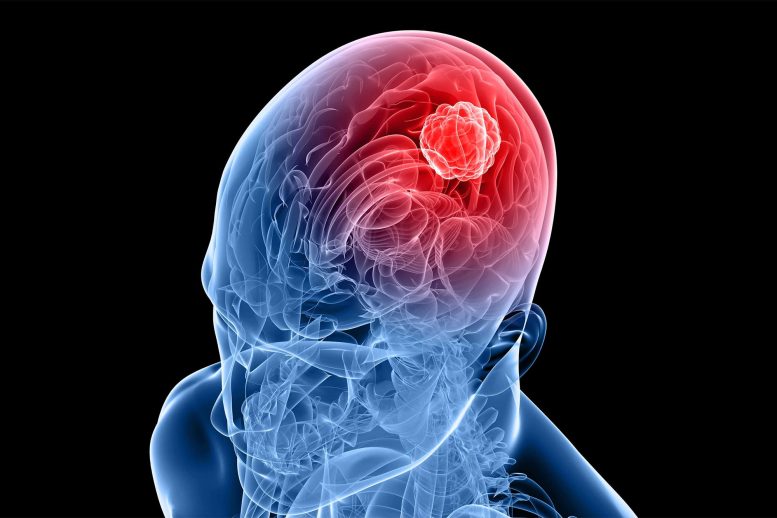
In mouse studies, the drug was found to delay the growth of tumors and enhance the sensitivity of glioblastoma cells to anticancer treatments.
Due to its highly aggressive and lethal nature, glioblastoma, a type of brain cancer, is often resistant to traditional treatments. As a result, researchers are seeking out characteristics of glioblastoma cells that could point to potential targets for drug development.
One such characteristic is the dependence of the cells on de novo lipid synthesis, also known as the conversion of carbohydrates to fats, to meet their energy needs.
New research led by scientists at Massachusetts General Hospital (MGH), a founding member of Mass General Brigham, reveals that a drug that inhibits the enzyme stearoyl CoA Desaturase 1 (SCD) interferes with this process, and when administered to mice with glioblastoma, the drug delays tumor growth and increases glioblastoma cells’ sensitivity to anticancer therapies. The findings, which are published in Science Translational Medicine, may lead to new treatment options for patients.
Lipotoxicity and Sensitivity
During one step of de novo lipid synthesis, SCD converts saturated fatty acids to monounsaturated fatty acids. Previously, Christian Badr, Ph.D., an assistant in Neuroscience at MGH and an assistant professor of Neurology at Harvard Medical School, and his colleagues showed that glioblastoma cells depend on the activation of SCD and the availability of monounsaturated fatty acids.
In this new research, the team tested the anti-glioblastoma potential of an SCD inhibitor, YTX-7739, that can cross the blood-brain barrier and is being evaluated as an oral drug in phase I clinical trials for the treatment of patients with Parkinson’s disease.
The investigators found that YTX-7739 was toxic to patient-derived glioblastoma stem cells. By blocking SCD, the cells accumulated too many saturated fatty acids, a process referred to as lipotoxicity. Also, when administered to mice with tumors, YTX-7739 inhibited processes involved in fatty acid metabolism in glioblastoma cells and increased the cells’ sensitivity to conventional glioblastoma chemotherapy.
When examining the detailed mechanisms behind YTX-7739’s effects on cells, the scientists found that the MEK/ERK signaling pathway renders glioblastoma cells particularly vulnerable to YTX-7739, whereas the AMPK signaling pathway acts to protect glioblastoma cells and can make them resistant to the loss of de novo lipid synthesis that occurs when YTX-7739 is present.
Therapeutic Implications
“Based on our results, we propose that MEK/ERK and AMPK activities, which can be detected in tumor biopsies, could be predictive biomarkers to guide patient selection and stratification,” says Badr.
In other words, patients whose tumors have robust MEK/ERK activity would likely benefit from therapies such as YTX-7739, whereas those with high AMPK activity likely would not. “Our findings should also help tailor treatment paradigms to maximize therapeutic efficacy.
For instance, some widely used drugs, such as the anti-inflammatory agent salicylate or the anti-diabetic compound metformin, are potent activators of AMPK and could be detrimental to the efficacy of YTX-7739 or other de novo lipid synthesis–targeting therapies,” says Badr.
Reference: “Targeting de novo lipid synthesis induces lipotoxicity and impairs DNA damage repair in glioblastoma mouse models” by Katharina M. Eyme, Alessandro Sammarco, Roshani Jha, Hayk Mnatsakanyan, Caline Pechdimaljian, Litia Carvalho, Rudolph Neustadt, Charlotte Moses, Ahmad Alnasser, Daniel F. Tardiff, Baolong Su, Kevin J. Williams, Steven J. Bensinger, Chee Yeun Chung and Christian E. Badr, 18 January 2023, Science Translational Medicine.
DOI: 10.1126/scitranslmed.abq6288
This work was supported by the National Institutes of Health, the Department of Defense, the American Brain Tumor Association, and the Concern Foundation.
Never miss a breakthrough: Join the SciTechDaily newsletter.
Follow us on Google and Google News.