
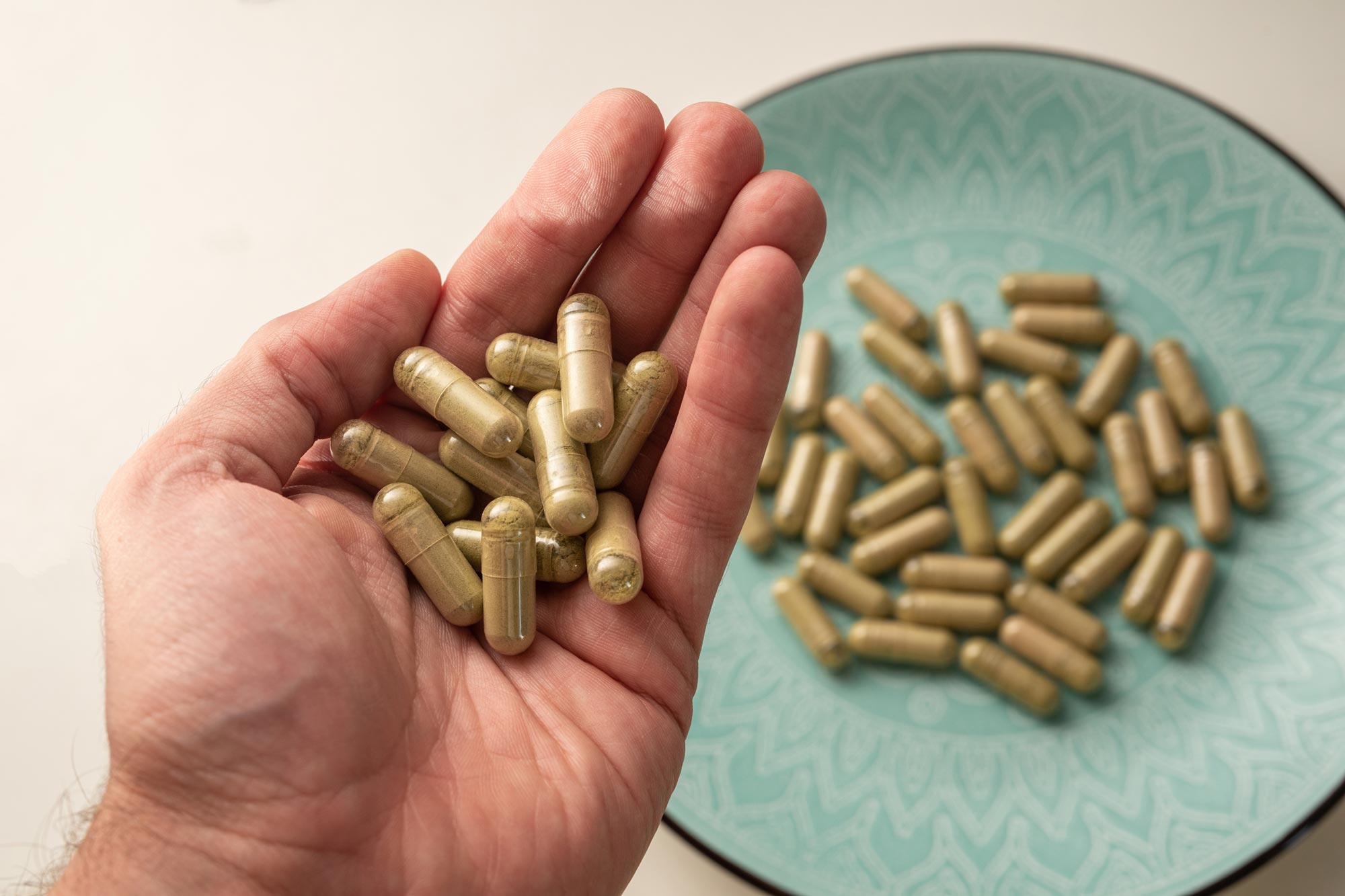
Kratom exposures and severe cases are rapidly increasing in the US, with stricter regulations linked to better outcomes. Significant health risks and limited research complicate policy decisions.
Kratom has quietly moved from a niche herbal product to a widely used substance in the United States, drawing increasing scrutiny from scientists and regulators.
Derived from a Southeast Asian tree, it is often marketed for pain relief or mood enhancement, but at higher doses, it can act on the body in ways similar to opioids. Now, a study published in Addiction suggests that as kratom’s popularity has grown, so too have reports of harm, with poison center data revealing a sharp rise in exposures and serious health complications over the past decade.
According to the findings, reported kratom exposures surged from just 19 cases in 2010 to 1,242 in 2023, an increase of more than 65-fold (6,500%), highlighting the substance’s expanding reach.
Surge in Poison Center Reports and Cases
Cases involving severe outcomes also grew significantly. There were no such cases reported in 2010, and the first appeared in 2012. By 2023, that number had reached 158. Researchers defined a severe outcome as one involving life-threatening conditions, lasting disability, or death.
States that have banned kratom consistently recorded lower exposure rates, fewer severe cases, and reduced healthcare use compared with states that rely on consumer protection measures or have no regulations.
Health Risks and Policy Debate Intensify
Senior author Dr. Ryan Feldman of the Medical College of Wisconsin explains, “Kratom is not scheduled under the US Controlled Substances Act or approved for medical use by the FDA, which leaves US states to set their own regulations. Or not: several US states do not regulate kratom at all, and they consistently had worse outcomes in this study than states that banned kratom use.
“Evidence shows kratom can cause serious health effects like seizures, irregular heart rhythms, liver damage, and breathing problems. Nearly one in seven cases reported to a poison center with a single-substance kratom exposure were admitted to a hospital, and one in 16 were admitted to a critical care unit. If kratom is used in combination with other drugs, as it often is, kratom’s tendency to interfere with metabolic pathways can heighten the risks of the accompanying drugs.
“As kratom use rises and concerns over kratom and its risks increase, legislatures across the country are debating the best ways to regulate its use. Ongoing policy debates reflect limited high‑quality evidence, highlighting the need for more rigorous, unbiased research to guide legislation. As our research here shows, the kratom problem is not going away anytime soon.”
Reference: “Association between state-level kratom regulations and poison center-reported severe medical outcomes and healthcare use: A United States national analysis” by Grant Comstock, Anthony P. Gulotta, Lisa E. Rein and Ryan Feldman, 6 March 2026, Addiction.
DOI:10.1111/add.70416
Never miss a breakthrough: Join the SciTechDaily newsletter.
Follow us on Google and Google News.
13 Comments
Thank you for this article. I used a potent form of kratom for a year and ended up in a Surgical ICU agter forming a blood clot that was linked to Kratom usage. It almost killed me. My doctors asked to write a research paper on my case as it was new to them. Please be careful with this drug!
it would be nice to educate us about the problems implied. You just say there are problems, increasing over time.. but i don’t see you informing us what those problems are, just pushing the sensational headlines.
Thank you.
I cab tell you why kratom use is increasing, particularly among chronic pain suffers. It’s because Dr’s won’t prescribe decent pain relief anymore.
There are several chronic pain subs on reddit, people say their Dr has stopped their opioid meds or refuse to prescribe anything that actually helps and they’re met with hundreds of people saying to try kratom. While many will say to avoid anything not produced by companies that make sure it’s the better stuff, many don’t and then people will buy it from anywhere. Then there is the many more people who recommend 7-HO, which from my understanding is them most addictive and dangerous form.
I live in the UK and I’m lucky enough to have Dr’s that understand pain and that sometimes opiates are the best solution, unfortunately the US doesn’t have that luxury and likes to treat chronic pain sufferers as addicts, I’ve seen too many people have their meds stopped and the person is expected to go cold turkey and simply suck it up… Which I find baffling as that would never happen in this country.
But other than recreational use that’s why more people are turning to it because they’ve reached their limits and Dr’s aren’t helping them. Maybe if it was actually regulated and prescribed safely under medical supervision then there wouldn’t be a huge problem in the making.
Your 100% right, I live in the USA and we with pain have on hope for pain meds, our doctors are all scared to death to write out Any pain meds at all, they tell us to take aspirin for our pain, yeah right.
Correct in every measure. As chronic and palliative pain patients have been abandoned in staggering numbers in the US, these patients’ quality of life is at such a risk they’re often driven to desperate measures to be able to function – to keep their jobs, care for family, or even get out of bed.
Kratom is basically the only solution that isn’t buying illegal opiates or opioids on the street or darknet. However, the sheer quantity of kratom plant matter one must consume in order to reach effective (therapeutic levels) equivalency with their previously prescribed opiate/opioid is so high, dangers from exposure to other chemicals and alkaloids contained in the raw plant becomes a real problem. Kratom isn’t a refined drug product, after all – it’s just a powdered plant. And it’s VERY weak, compared to opiates (ie derived from opium poppies). The sheer amount of plant matter requiring ingestion alone can cause all kinds of gut issues – nausea, vomiting, etc.
I was in Florida and went to a Kratom bar. The drink was delicious and before I knew it I was in the best mood, talking to everyone. I felt fantastic. After about 30 minutes I was having some wheezing (I have Asthma) breathing got worse and worse until I had to take 60MG of Prednisone. I felt lousy and regretted drinking it and I envied all the people at the bar still having a great time.
This drug is highly addictive. I am a registered nurse who worked in a drug and alcohol rehabilitation. I promise I have had many patients admitted with severe withdrawal from Kratom. Kratom causes just as severe withdrawal symptoms as opioids. Kratom should be illegal.
No. We should end the failed War on Drugs and use that money to help addicts, and stop destroying lives via needless and ineffective incarceration.
I cab tell you why kratom use is increasing, particularly among chronic pain suffers. It’s because Dr’s won’t prescribe decent pain relief anymore.
There are several chronic pain subs on reddit, people say their Dr has stopped their opioid meds or refuse to prescribe anything that actually helps and they’re met with hundreds of people saying to try kratom. While many will say to avoid anything not produced by companies that make sure it’s the better stuff, many don’t and then people will buy it from anywhere. Then there is the many more people who recommend 7-HO, which from my understanding is them most addictive and dangerous form.
I live in the UK and I’m lucky enough to have Dr’s that understand pain and that sometimes opiates are the best solution, unfortunately the US doesn’t have that luxury and likes to treat chronic pain sufferers as addicts, I’ve seen too many people have their meds stopped and the person is expected to go cold turkey and simply suck it up… Which I find baffling as that would never happen in this country.
But other than recreational use that’s why more people are turning to it because they’ve reached their limits and Dr’s aren’t helping them. Maybe if it was actually regulated and prescribed safely under medical supervision then there wouldn’t be a huge problem in the making.
“Dr’s won’t prescribe decent pain relief anymore.” That’s because pain is nearly impossible to diagnose. Also pain comes in many forms which includes neuropathy which is unaffected by opiates. It’s possible your pain diagnosis is a misdiagnosis and you are given opiates or other drugs unnecessarily, and as a patient increases their dosage, which is the typical case, they become more and more dependent while getting less and less relief as tolerance increases.
That whole “never ending increase in tolerance” deal is NOT A REAL THING. That’s anti-opiate propaganda that’s been spread by a bunch of people who are either ignorant or who have financial stake in recovery drugs / rehab facilities.
Yes, it’s true that at the beginning a patient has to titrate to the correct therapeutic dose to achieve a tolerable (2-3 on the pain scale) level. If you have chronic pain, you’re never gonna be 100% pain-free. But getting to 2-3 generally allows patients to be able to go about their daily lives. And that is typically what responsible doctors are going for.
But once that level of pain relief is achieved, it’s exceedingly rare for ever-increasing doses to be required. I know an awful lot of chronic pain and palliative pain patients, a number well into the hundreds, and almost without exception they titrated to a steady dose early on in their treatment, and unless some further physical catastrophe happened, they stayed on that same dose for 20 years (or longer) without increase. These are pain and palliative care, patients, not addicts. And this is one of the primary measurable differences between the two.
I have taken Keaton before any yes the 07 also, it sure works for pain, Never gave me any trouble at all, NONE. I think a whole lot of this bad news on Keaton is just Fake News, so people won’t use something that will help with their pain, our government wants people to hurt they don’t care about us at all, but, I bet their medicine cabinets are full of pain meds that we citizens pay for but we are not allowed to have. And doctors take an (Oath To Do NO Harm) yeah right.
Too many personal opinions!!
I suffered chronic back pain for 10 years and what was really needed was a surgery from the offset.
Yet insurance companies rather pay a prescription eternally. I was on opioids for 10 years before the restrictions rolled out.
Insurance Companies and their profit margin is the problem.
I can say much about the secondary consequences- which I have personally experienced but the bottom line is what I already stated.
The health of patients placed first is what the medical industrial complex should place FIRST- not profits.
My 10 years treatment eventually landed me on a surgery that cost me 40G’s for a permanent solution.
Those 10 years were a waste of
Money, time and unnecessary anguish.
That said: personal responsibility cannot be downplayed by virtue signaling.
The people that decide to destroy their personal lives made their choice.
Should we help?
Yes!!! But it must start with personal responsibility- not the stupidity of mental illness that was self imposed by stupid decisions.
That’s not mental illness- that’s self destructive decisions.