
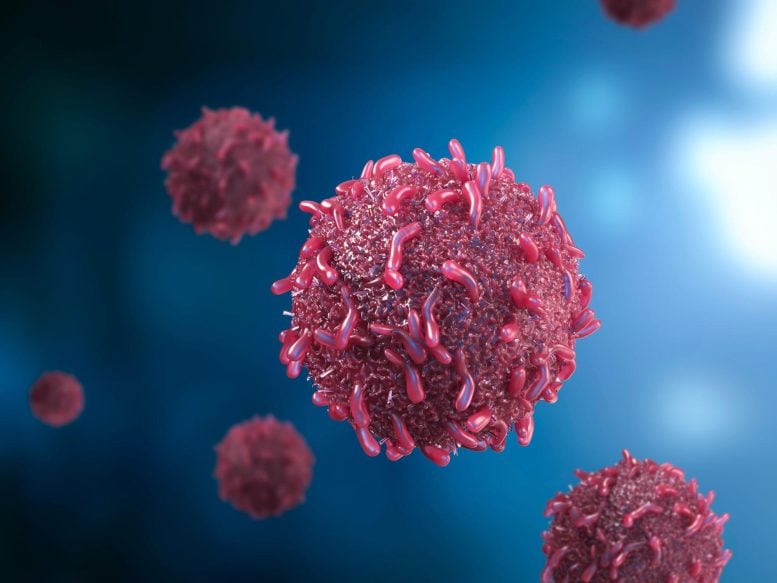
Gender-specific immune cells affect pancreatic cancer outcomes, prompting research into tailored therapies for men and women.
Immunotherapy has proven to be a successful treatment approach for various cancer types, but its efficacy in pancreatic cancer is limited and exhibits disparities between men and women. Scientists at the Karolinska Institute have potentially uncovered the reason behind this gender discrepancy. Their study, published in Cancer Research, identifies an immune cell present in women with pancreatic cancer that hinders the body’s immune response. These findings could lead to the development of more tailored, gender-specific treatments.
“More and more evidence is coming in that male and female hormones affect our immune system, but much remains to be done before sex can be included as a self-evident biological factor in medical research and therapy,” says the paper’s first author Fei He, a former visiting researcher at the Department of Laboratory Medicine, Karolinska Institute. “Our results provide new perspectives that can have a high impact on the treatment of cancer.”
In recent years, immunotherapy, which stimulates the immune system to attack cancer cells, has contributed significantly to the treatment of different kinds of cancer, such as melanoma and lung, kidney, and liver cancer. However, it is much less effective against pancreatic cancer, which remains one of the deadliest kinds of cancer that leaves patients, on average, with four to six months left to live after diagnosis.
Sex-Biased Differences in the Immune Response
Previous studies have shown that there are sex-bound biological differences in the male and female immune systems that, amongst other effects, determine how tumors grow and the body’s ability to defend itself against them. A collaborative study involving researchers at Karolinska Institute in Sweden has now addressed what might cause such sex-related disparities in the immune response to pancreatic cancer.
The study demonstrated a crucial difference in tumor properties in men and women with pancreatic cancer. There is a type of immune cell present in women that protects the tumor and prevents the immune system’s T cells from infiltrating the tumor and attacking the cancer cells.
“This sub-group of immune cells correlates with poor survival exclusively in female cancer patients,” says the study’s corresponding author and principal investigator Dhifaf Sarhan. “Our results show that the immune cells express a specific protein called FPR2 and can serve both as a sex-specific prognostic factor and a therapeutic target.” Sarhan is assistant professor at the Department of Laboratory Medicine, Karolinska Institute.
New Target for Immunotherapy in Women
The results can be useful to the development of diagnostic tools and immunotherapy for pancreatic cancer that take into account biological differences between men and women. The study was based on a combination of methods including single-cell RNA sequencing, proteomics, test tube and patient validation, and treatments of 3D pancreatic cancer models and mice.
“The next step is to follow up our new immunotherapy target for women,” says Dr. Sarhan. “We’re also performing extensive analyses to understand how immunological sex differences drive tumor development in different ways in male and female cancer patients with the goal to find and develop immunotherapy targets for each group.”
Reference: “FPR2 shapes an immune-excluded pancreatic tumor microenvironment and drives T-cell exhaustion in a sex-dependent manner” by Fei He, Apple H.M. Tay, Ahmed Calandigary, Enana Malki, Sayaka Suzuki, Tianjie Liu, Qi Wang, Carlos Fernández-Moro, Marina Kaisso, Peter Olofsson‐Sahl, Marit Melssen, Siu Kwan Sze, Mikael Björnstedt, Matthias J. Löhr, Mikael C.I. Karlsson, Rainer Heuchel and Dhifaf Sarhan, 15 March 2023, Cancer Research.
DOI: 10.1158/0008-5472.CAN-22-2932
The study is the result of a close collaboration between Dr. Sarhan’s research group and researchers at Karolinska Institute, Karolinska University Hospital, Pronoxis AB, and Uppsala University in Sweden and universities in Canada, Singapore, and China.
The study was funded by the Swedish Cancer Society, Karolinska Institute (KI Funds), the Centre for Innovative Medicine (CIMED) and the Cancer Research Funds of Radiumhemmet (see paper for full list). Peter Olofsson‐Sahl works at Pronoxis, which develops antagonists for FPR1 and FPR2. The other researchers report no conflicts of interest.
Never miss a breakthrough: Join the SciTechDaily newsletter.
Follow us on Google and Google News.