
Close Menu
    Facebook X (Twitter) Instagram
    SciTechDaily
    • Biology
    • Chemistry
    • Earth
    • Health
    • Physics
    • Science
    • Space
    • Technology
    Facebook X (Twitter) Pinterest YouTube RSS
    SciTechDaily
    Home»Chemistry»“Glow-in-the-Dark” Proteins: The Future of Viral Disease Detection?
    Chemistry

    “Glow-in-the-Dark” Proteins: The Future of Viral Disease Detection?

    By American Chemical SocietyMarch 21, 2023No Comments3 Mins Read
    Facebook Twitter Pinterest Telegram LinkedIn WhatsApp Email Reddit
    Share
    Facebook Twitter LinkedIn Pinterest Telegram Email Reddit
    Glow in the Dark Proteins
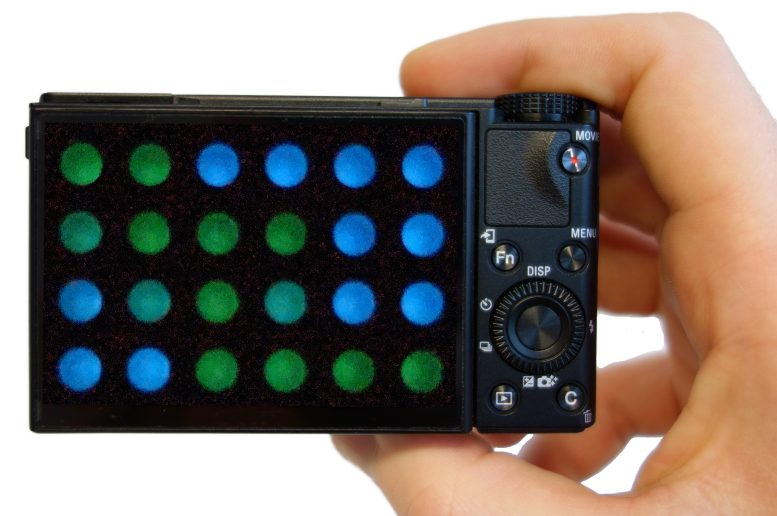
    Proteins that glow bright blue or green, as pictured here, could make disease diagnosis quicker and easier. Credit: Maarten Merkx

    A new diagnostic test, LUNAS, uses CRISPR and glowing proteins to detect viruses like SARS-CoV-2 in just 20 minutes, showcasing its potential for rapid, resource-friendly diagnostics.

    Although there have been significant advancements in diagnostic tests for viral diseases, many highly sensitive tests still rely on complex sample preparation and result interpretation methods, rendering them unsuitable for point-of-care settings or resource-limited areas. However, in the journal ACS Central Science, researchers have now revealed a novel, sensitive technique that can analyze viral nucleic acids in just 20 minutes using a one-step process with “glow-in-the-dark” proteins.

    Bioluminescence, the scientific phenomenon behind the firefly’s glow, the anglerfish’s radiant lure, and the ghostly blue of phytoplankton-laden shores, is powered by a chemical reaction involving the luciferase protein. This luminescent protein has been integrated into sensors that emit visible light when detecting their target, making them ideal for straightforward point-of-care testing. However, until now, these sensors have not achieved the exceptional sensitivity necessary for clinical diagnostic tests.

    Combining CRISPR with Bioluminescence for Simplicity

    The gene-editing technique known as CRISPR could provide this ability, but it requires many steps and additional specialized equipment to detect what can be a low signal in a complex, noisy sample. So, Maarten Merkx and colleagues wanted to use CRISPR-related proteins, but combine them with a bioluminescence technique whose signal could be detected with just a digital camera.

    To make sure there was enough sample RNA or DNA to analyze, the researchers performed recombinase polymerase amplification (RPA), a simple method that works at a constant temperature of about 100 F. With the new technique, called LUNAS (luminescent nucleic acid sensor), two CRISPR/Cas9 proteins specific for different neighboring parts of a viral genome each have a distinct fragment of luciferase attached to them.

    If a specific viral genome that the researchers were testing for was present, the two CRISPR/Cas9 proteins would bind to the targeted nucleic acid sequences and come close to each other, allowing the complete luciferase protein to form and shine blue light in the presence of a chemical substrate. To account for this substrate being used up, the researchers used a control reaction that shined green. A tube that changed from green to blue indicated a positive result.

    When tested on clinical samples collected from nasal swabs, RPA-LUNAS successfully detected SARS-CoV-2 RNA within 20 minutes, even at concentrations as low as 200 copies per microliter. The researchers say that the LUNAS assay has great potential for detecting many other viruses effectively and easily.

    Reference: “Glow-in-the-Dark Infectious Disease Diagnostics Using CRISPR-Cas9-Based Split Luciferase Complementation” by Harmen J. van der Veer, Eva A. van Aalen, Claire M. S. Michielsen, Eva T. L. Hanckmann, Jeroen Deckers, Marcel M. G. J. van Borren, Jacky Flipse, Anne J. M. Loonen, Joost P. H. Schoeber and Maarten Merkx, 15 March 2023, ACS Central Science.
    DOI: 10.1021/acscentsci.2c01467

    The study was funded by the Dutch Research Council | Nationaal Regieorgaan Praktijkgericht Onderzoek SIA (NRPO-SIA) and the Eindhoven University Fund.

    Never miss a breakthrough: Join the SciTechDaily newsletter.
    Follow us on Google and Google News.

    American Chemical Society Bioluminescence COVID-19 CRISPR Disease Protein
    Share. Facebook Twitter Pinterest LinkedIn Email Reddit

    Related Articles

    Small Molecule Identified That Targets Genes of COVID-19 Virus for Destruction

    Scientists Discover Sugar Molecules in SARS-CoV-2 Coronavirus Spike Protein Play Active Role in Infection

    You’re Using Disinfectants Wrong. Here’s How to Destroy 99.9% of Viruses/Coronaviruses and Bacteria [Video]

    Diagnostic Biosensor Detects SARS-CoV-2 From Nasopharyngeal Swab in Less Than a Minute

    Does Soap Actually ‘Kill’ the Coronavirus? Here’s the Chemistry [Video]

    Chemists Design New Compounds That Thwart Viruses – Blocks Replication of Coronavirus

    MIT Chemist Investigates How Diseases Are Linked to Flawed Protein Folding

    Human Cells Made Magnetic With Engineered Protein Crystals

    Sustainable Organic Batteries for Safer, Environmentally Friendly Power Storage

    Leave A Reply Cancel Reply

    • Facebook
    • Twitter
    • Pinterest
    • YouTube

    Don't Miss a Discovery

    Subscribe for the Latest in Science & Tech!

    Trending News

    The Universe Is Expanding Too Fast and Scientists Can’t Explain Why

    “Like Liquid Metal”: Scientists Create Strange Shape-Shifting Material

    Early Warning Signals of Esophageal Cancer May Be Hiding in Plain Sight

    Common Blood Pressure Drug Shows Surprising Power Against Deadly Antibiotic-Resistant Superbug

    Scientists Uncover Dangerous Connection Between Serotonin and Heart Valve Disease

    Scientists Discover a “Protector” Protein That Could Help Reverse Hair Loss

    Bone-Strengthening Discovery Could Reverse Osteoporosis

    Scientists Uncover Hidden Trigger Behind Stem Cell Aging

    Follow SciTechDaily
    • Facebook
    • Twitter
    • YouTube
    • Pinterest
    • Newsletter
    • RSS
    SciTech News
    • Biology News
    • Chemistry News
    • Earth News
    • Health News
    • Physics News
    • Science News
    • Space News
    • Technology News
    Recent Posts
    • Scientists Overcome Major Quantum Bottleneck, Potentially Transforming Teleportation and Computing
    • Quantum Physics’ Strangest Problem May Hold the Key to Time Itself
    • Scientists Create “Liquid Gears” That Spin Without Touching
    • The Simple Habit That Could Help Prevent Cancer
    • Forgotten Medicinal Plant Shows Promise in Fighting Dangerous Superbugs
    Copyright © 1998 - 2026 SciTechDaily. All Rights Reserved.
    • Science News
    • About
    • Contact
    • Editorial Board
    • Privacy Policy
    • Terms of Use

    Type above and press Enter to search. Press Esc to cancel.