
Close Menu
    Facebook X (Twitter) Instagram
    SciTechDaily
    • Biology
    • Chemistry
    • Earth
    • Health
    • Physics
    • Science
    • Space
    • Technology
    Facebook X (Twitter) Pinterest YouTube RSS
    SciTechDaily
    Home»Science»A Massive Volcanic Eruption Devastated Japan 7,300 Years Ago – but Survivors Found a Way To Thrive
    Science

    A Massive Volcanic Eruption Devastated Japan 7,300 Years Ago – but Survivors Found a Way To Thrive

    By Lund UniversityOctober 21, 2026No Comments4 Mins Read
    Facebook Twitter Pinterest Telegram LinkedIn WhatsApp Email Reddit
    Share
    Facebook Twitter LinkedIn Pinterest Telegram Email Reddit
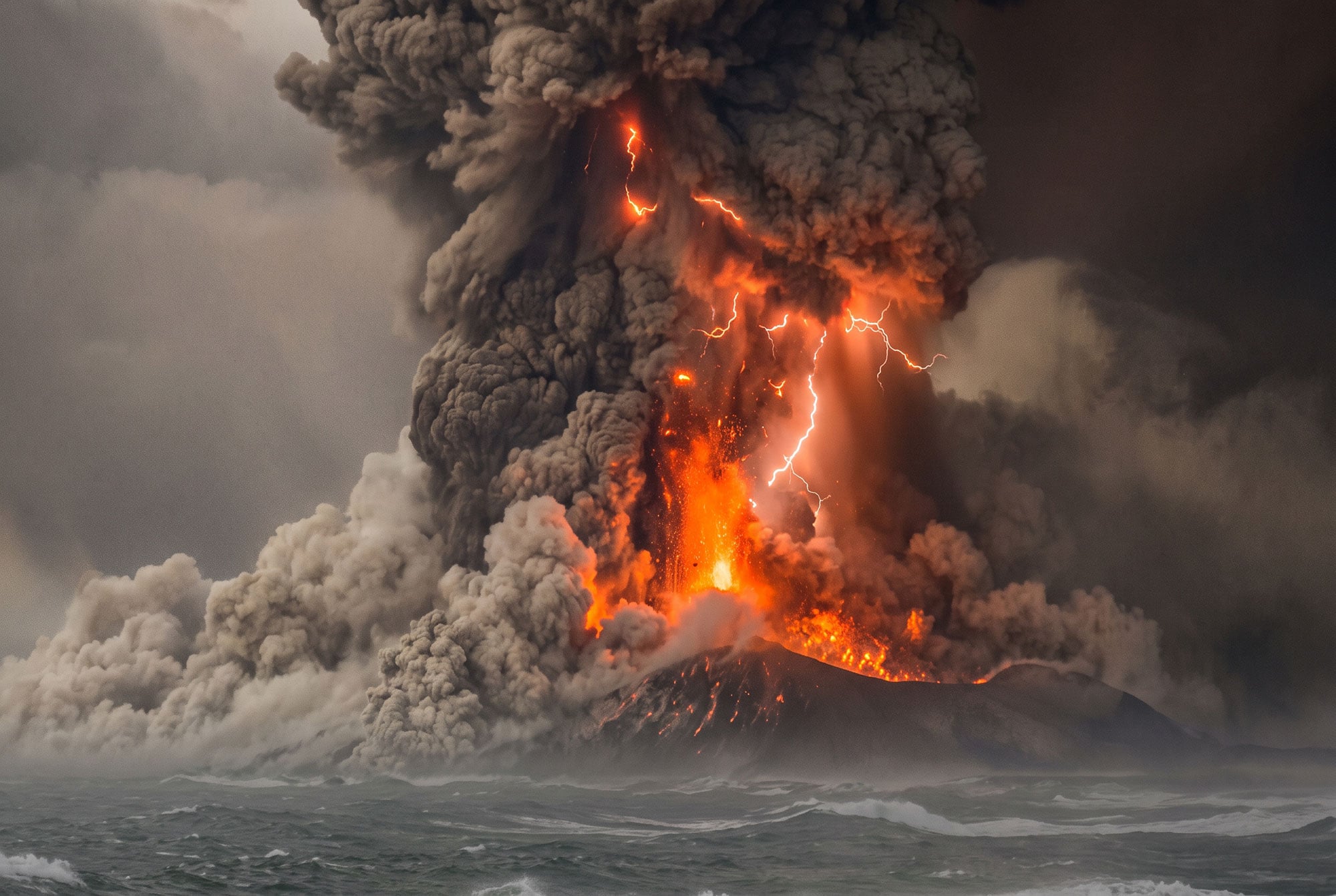
    Coastal Volcano Eruption
    A catastrophic volcanic eruption 7,300 years ago devastated parts of Japan, but its impact on ancient Jomon communities was surprisingly uneven (Artist’s concept). Credit: SciTechDaily.com

    Survivors of Japan’s ancient volcanic catastrophe may have found a lifeline along the coast, where communities grew even as more distant populations faltered.

    Around 7,300 years ago, the Kikai-Akahoya eruption damaged ecosystems and made parts of Japan uninhabitable for the Jomon people, who lived there by hunting and gathering. Yet some Jomon populations continued to grow through the disaster and its aftermath, while population growth stalled or reversed in more distant areas.

    For decades, archaeologists have debated whether the eruption brought an “apocalypse” that abruptly ended all human life closest to its epicenter or whether local populations survived even relatively nearby. A new international study led by Lund University finds that neither total collapse nor simple continuity fully explains what happened.

    “This eruption must have been devastating, exploding out of the sea bed with little warning. It battered the Japanese islands with powerful earthquakes and enormous tsunamis, and then blanketed the landscape with meters of volcanic ash,” explains senior author Peter Jordan, professor of archaeology at Lund University.

    Northern Kyushu grew through the disaster

    The researchers found that populations declined as ecosystems deteriorated and areas became uninhabitable. In southern Kyushu, however, Jomon populations had been shrinking long before the eruption. The disaster struck a region that was already sparsely populated and visited only by highly mobile groups.

    Northern Kyushu had a different population history. Its population was growing before the eruption, and that trend continued through the disaster and its aftermath despite extensive, lasting ecosystem damage. The authors suggest that “refugees” moving out of the worst-hit areas immediately after the eruption may have helped sustain that growth.

    Survivors from inland areas appear to have moved away and clustered along northern coastlines, where marine ecosystems recovered quickly. New ways of drawing on the sea’s abundant resources may also have accelerated population growth.

    “The disaster caused major loss of life. However, survivors migrated, forged new social relations, innovated new kinds of economy, and appear to have found creative ways to exist and later thrive in the new post-disaster conditions,” says lead author Enrico Crema, professor at Cambridge University.

    Population declines farther from the eruption

    In more distant parts of Japan, populations that had been growing before the eruption stagnated or declined afterward. These far-reaching effects had not previously been identified. They may have been linked to short-term climate change triggered by the eruption or to extreme tooth wear in the deer and boar that Jomon communities relied on for food. The animals may have suffered that dental damage while grazing in ash-covered landscapes. Other volcanic effects on human health and well-being could also have contributed.
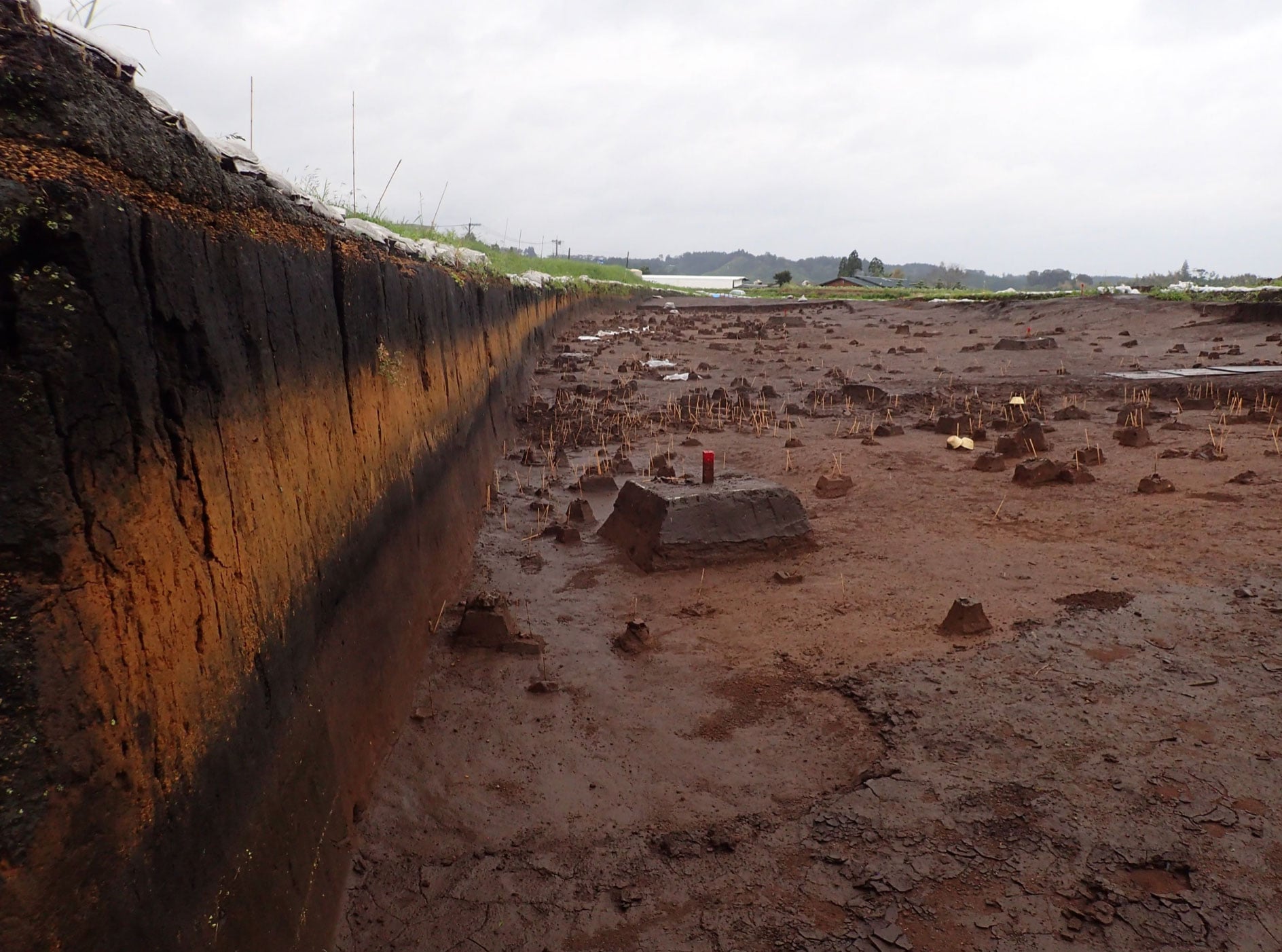
    Kikai Akahoya Volcanic Deposit in Southern Kyushu
    Kikai-Akahoya volcanic deposit in southern Kyushu. This is the “disaster layer” of volcanic ash that runs across the landscape. Archaeologists look at what life was like below this line and also above it to understand human impacts and responses. Credit: Lund University

    For Jordan, the contrasting outcomes demonstrate how complex and unpredictable the aftermath of a major disaster can be.

    “This study helps in creating a deeper understanding of the contingent ways in which cultures and societies cope with sudden shocks and catastrophes. Even in the most impossible situations, survivors and communities have choices, however limited: they need to act and make decisions, they need to adjust, collaborate and find new connections and social networks,” he concludes.

    Reference: “Divergent demographic responses to the Kikai-Akahoya volcanic catastrophe in mid-Holocene Japan” by Enrico R. Crema, Mitsuhiro Kuwahata, Junzo Uchiyama, Ari Junno, Felix Riede and Peter D. Jordan, 14 October 2026, Science Advances.
    DOI: 10.1126/sciadv.aeh7197

    This work was supported by the Swedish Research Council (grant no. 2024-00822) (P.D.J.), JSPS KAKENHI (grant nos. JP25K00523) (M.K.), and the European Research Council (grant no. 101224035) (E.R.C. and P.D.J.).

    Never miss a breakthrough: Join the SciTechDaily newsletter.
    Follow us on Google and Google News.

    Anthropology Archaeology Japan Lund University Prehistory
    Share. Facebook Twitter Pinterest LinkedIn Email Reddit

    Related Articles

    New Study Rewrites the Story of Humanity’s Leap to Farming

    Oldest Known Bone Tools Challenge Our Understanding of Human Evolution

    Discovery of 1.5-Million-Year-Old Bone Tools Rewrites Our Understanding of Early Human Technology

    6,000-Year-Old Mesopotamian Artifacts Unlock the Secrets of Writing’s Origins

    Ancient Walrus DNA Reveals Mysteries of Viking Ivory Trade

    900 Years Ago, One of the Largest Civilizations in the World Was Abandoned – Archaeologists Have Now Discovered New Clues

    New Research Shatters the Myth of Men As Hunters and Women As Gatherers

    Combat or Climate: The Real Cause of Small-Scale Societies’ Collapse

    Surprising Research Reveals Rampant Violence in Early Farming Societies

    Leave A Reply Cancel Reply

    • Facebook
    • Twitter
    • Pinterest
    • YouTube

    Don't Miss a Discovery

    Subscribe for the Latest in Science & Tech!

    Trending News

    Scientists Simulated the Universe – And Discovered the Milky Way May Be One of the Best Places for Life

    “Something out of Science Fiction” – Astronomers Discover a Star That Glows a Bizarre Shade of Green

    Scientists Discover a Surprising New Effect of a Popular Blood Pressure Drug

    Scientists Discover a 99-Million-Year-Old Insect With a Bizarre Feature Never Seen in Living Species

    Scientists Discover an Unexpected Problem With a Cancer Drug Already in Human Trials

    NASA Is About to Investigate What Lies Beneath a Giant Hole on the Moon

    NASA Captures a Strange Formation on Earth With a Surprising Lunar Connection

    Scientists Discover a Surprising Shortcut to Nuclear Fusion

    Follow SciTechDaily
    • Facebook
    • Twitter
    • YouTube
    • Pinterest
    • Newsletter
    • RSS
    SciTech News
    • Biology News
    • Chemistry News
    • Earth News
    • Health News
    • Physics News
    • Science News
    • Space News
    • Technology News
    Recent Posts
    • A Massive Volcanic Eruption Devastated Japan 7,300 Years Ago – but Survivors Found a Way To Thrive
    • James Webb Finds a Tiny World’s Rings Changing in Opposite Ways
    • SpaceX Rocket Creates a Spectacular Glowing “Jellyfish” in the Sky
    • New Research Reveals a Hidden Weakness Inside Electric Vehicle Batteries
    • A 58-Million-Year-Old Mammal Is Challenging Long-Held Assumptions About Evolution
    Copyright © 1998 - 2026 SciTechDaily. All Rights Reserved.
    • Science News
    • About
    • Contact
    • Editorial Board
    • Privacy Policy
    • Terms of Use

    Type above and press Enter to search. Press Esc to cancel.