
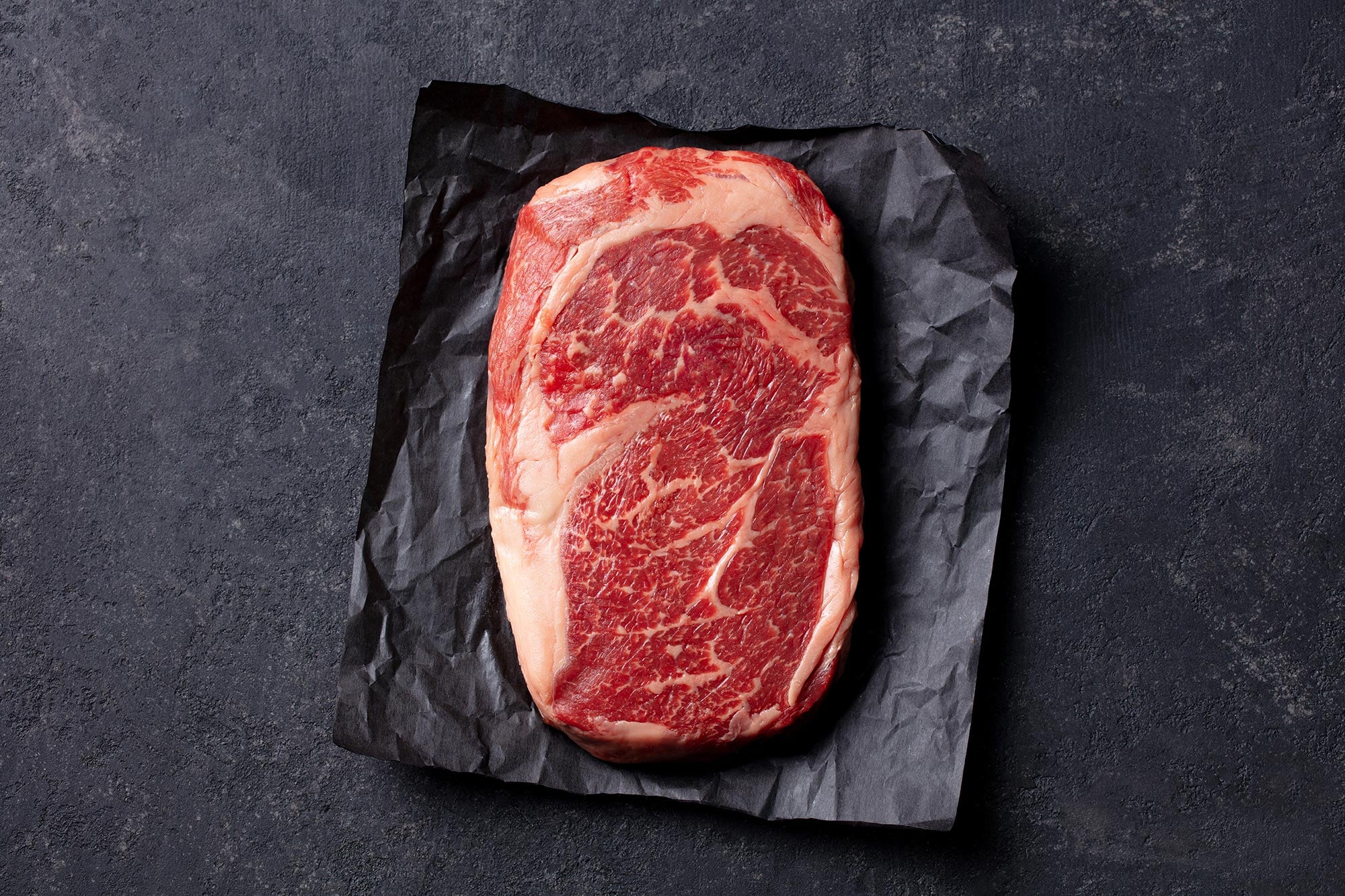
A diet’s protein source may influence how severely the gut becomes inflamed, with mouse experiments offering clues for more tailored dietary guidance for people with inflammatory bowel disease.
The protein on your plate may do more than build muscle. Growing evidence suggests that where dietary protein comes from could influence inflammation in the gut, raising important questions about how food choices might affect people living with inflammatory bowel disease (IBD).
IBD includes Crohn’s disease and ulcerative colitis, two chronic conditions in which abnormal immune responses contribute to ongoing inflammation in the digestive tract. Symptoms can include persistent diarrhea, abdominal pain, fatigue, and intestinal bleeding, often alternating between periods of remission and unpredictable flare-ups. Although genetics, immune function, and gut microbes all play important roles, researchers are still working to understand how diet influences the disease.
IBD has also become increasingly common in the United States and worldwide over recent decades, alongside shifts in dietary habits that include greater consumption of animal protein. Despite these trends, scientists have yet to establish clear, evidence-based recommendations about which protein sources might be most beneficial for people with IBD.
As the authors explain, “Although diet is believed to be an important contributor to the pathogenesis of inflammatory bowel diseases, there are few evidence-based dietary recommendations for patients to lessen disease severity.”
Milder inflammation in mice fed pea protein
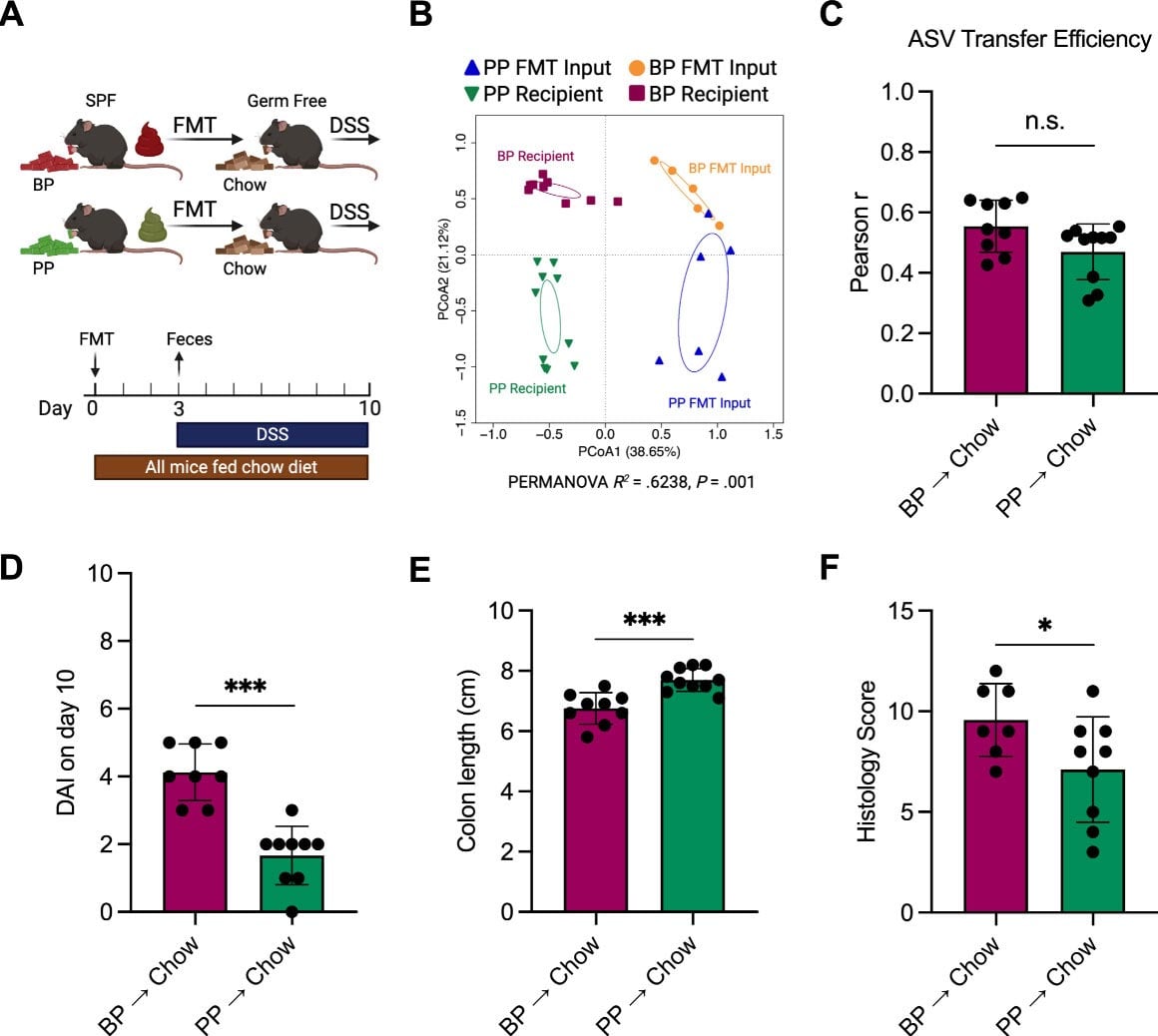
A new study in Cellular and Molecular Gastroenterology explored whether the source of dietary protein could change the severity of intestinal inflammation. Researchers compared diets containing beef, egg, dairy, soy, or pea protein across multiple mouse models of IBD.
Mice fed beef protein consistently developed the most severe intestinal inflammation, while those consuming pea protein experienced the least inflammation and only mild symptoms. The pattern remained consistent across the different models and in both male and female mice.
“Mice fed a beef protein diet exhibited the most severe colitis, whereas mice fed pea protein developed mild inflammation,” the authors say.
Importantly, beef protein alone did not cause overt intestinal inflammation in mice without a colitis trigger, suggesting that its effects depend on other factors involved in the disease.
Gut microbes may connect diet and inflammation
The findings point to interactions between gut microbes, the intestinal barrier, and bile acids as a possible explanation for the differences. The intestinal barrier helps separate the gut’s contents from surrounding tissue, while bile acids help digest fats. How microbes interact with that barrier and those acids appears to influence whether these processes promote or reduce inflammation.
“The colitis-promoting effects of beef protein were microbially mediated,” the authors say.
Further experiments revealed that beef protein altered the balance of intestinal bacteria and was associated with a thinner protective mucus layer and higher levels of certain bile acids linked to inflammation. In contrast, pea protein supported a different microbial balance and bile acid profile.
The authors also found that adding psyllium, a soluble dietary fiber, to the beef-protein diet reduced inflammation in mice, suggesting that other dietary components may help counteract some of these effects.
Protein choices could become a focus of future dietary guidance aimed at helping people manage IBD and reducing disease risk and severity.
“These findings provide a rationale for determining whether modifying dietary protein source could lessen the severity of disease in patients with inflammatory bowel diseases,” the authors say.
Reference: “Dietary Protein Source Mediates Colitis Pathogenesis Through Bacterial Modulation of Bile Acids” by Simon M. Gray, Michael C. Wood, Samantha C. Mulkeen, Sunjida Ahmed, Shrey D. Thaker, Bo Chen, William R. Sonder, Vladimir Bibeva, Xiaoyue Zhang, Jie Yang, Jeremy W. Herzog, Anh D. Moss, Shiying Zhang, Belgin Dogan, Kenneth W. Simpson, R. Balfour Sartor and David C. Montrose, 24 June 2026, Cellular and Molecular Gastroenterology and Hepatology.
DOI: 10.1016/j.jcmgh.2026.101825
Never miss a breakthrough: Join the SciTechDaily newsletter.
Follow us on Google and Google News.
11 Comments
That’s u billionaires trying get your 3d meat created.. the things you people get away with.
In my case if I do not eat beef for an extended period of time I will suffer irritable bowel. If I then eat a meal with beef my gut settles down. I have a hypothesis that my immune system starts treating my gut as a foreign body but introducing beef becomes the focus of the immune system. Note some years ago I displayed the symptoms of the autoimmune condition known as Lichen Planus.
I’m sure the mice are happy you figured that out.
As far as humans are concerned, you’ll have to explain the thousands of people whose IBS and colitis were CURED after switching to a keto or carnivore diet–starting with Nik Norwitz, PhD, MD.
Quick confirmation from the published full text itself — I just got that page read directly:
**Published version (CMGH, Vol 20, Issue 10, article 101825):**
– Conflicts section, verbatim: *”The authors disclose no conflicts.”*
– No author lists a company affiliation — all 9 affiliations are UNC Chapel Hill, Stony Brook, or Cornell.
– Funding is the same list I gave you, with one addition: NIH K08DK144596 for Simon M. Gray, on top of the American Pulse Association, NIH/NIDDK, Crohn’s & Colitis Foundation, and Stony Brook / UNC funds.
So that confirms the distinction I flagged: the Gleipnir Medical consulting for Montrose was only in the preprint declaration — the journal-published version drops it and declares no conflicts at all. The American Pulse Association funding remains in the published version, unchanged.
For this specific paper — “Dietary Protein Source Mediates Colitis Pathogenesis Through Bacterial Modulation of Bile Acids” by Simon M. Gray, Michael C. Wood, Samantha C. Mulkeen, Sunjida Ahmed, Shrey D. Thaker, Bo Chen, William R. Sonder, Vladimir Bibeva, Xiaoyue Zhang, Jie Yang, Jeremy W. Herzog, Anh D. Moss, Shiying Zhang, Belgin Dogan, Kenneth W. Simpson, R. Balfour Sartor and David C. Montrose, 24 June 2026, *Cellular and Molecular Gastroenterology and Hepatology* — there are **no author personal conflicts declared as relevant to the study** in the published version.
The journal’s own summary puts it bluntly:
> “The study was supported by the American Pulse Association, National Institutes of Health grants, the Crohn’s & Colitis Foundation Gnotobiotic Facility and institutional funding from Stony Brook University. **The authors reported having no relevant disclosures.**”
### The one personal disclosure that *was* in the preprint
In the bioRxiv / PMC preprint version, under Footnotes:
> “Declaration of interests: **D.C.M. has consulting arrangements with Gleipnir Medical. The authors have no other competing interests relevant to this study.**”
D.C.M. is David C. Montrose — the senior / corresponding author at Stony Brook. No detail is given on what Gleipnir Medical pays him for, or whether it has any product related to diet, IBD, bile acids or microbiome, and the published journal version treats it as *not relevant* to this paper.
All of the other authors are academics — UNC Chapel Hill, Stony Brook, and Cornell — with no company affiliations listed.
### The real structural conflict is the funding, not the authors
Funding listed in the paper:
> “This work was supported by **American Pulse Association** and startup funds from the Stony Brook Cancer Center and Bahl Center for Metabolomics and Imaging (D.C.M.), NIH/NIDDK T32DK007737 (S.M.G., R.B.S.), P01DK094779 (R.B.S.), P40OD010995 (R.B.S.), P30DK034987 (R.B.S.), Crohn’s & Colitis Foundation Gnotobiotic Facility (R.B.S.), UNC Physician Scientist Training Program Fellowship Award (S.M.G.)”
The NIH, Crohn’s & Colitis Foundation, and university startup funds are non-commercial.
**American Pulse Association is not.** It is, with the USA Dry Pea & Lentil Council:
> “a coalition of non-profit organizations **devoted to increasing the consumption of pulse crops (dry peas, lentils, chickpeas, and beans)**”
and
> “The American Pulse Association provides a unified coalition of pulse crop processors, warehouses, exporters, food manufacturers, producers and associate members representing the entire US pulse crop value chain from farm to fork. **The American Pulse Association works to fund research focused on the nutrition, functionality, and sustainability of pulse crops.**”
That’s directly relevant here, because the headline result was:
> “Mice fed beef protein consistently developed the most severe intestinal inflammation, while **those consuming pea protein experienced the least inflammation** and only mild symptoms.”
Pea *is* a pulse crop. A funder whose mission is to increase pea/pulse consumption funded a mouse study in which pea protein came out best and beef came out worst, and then got cited as a rationale for plant-protein dietary guidance for IBD.
The paper does not state that the American Pulse Association had a role in design, data collection, analysis, or writing — it only lists them as a funder — and there’s no beef-industry funding on the other side.
### Context, not declared for this paper
Senior author R. Balfour Sartor has, in *other* IBD papers, disclosed extensive microbiome/pharma consulting:
> “R. Balfour Sartor has consulted for and received grant support from Takeda, Janssen, Second Genome, Vedanta, BiomX, Biomica, SERES, and Artizan.”
None of those were disclosed as relevant to *this* protein study, and none are beef or pea-protein companies.
**Bottom line:** No author is employed by, or declared a relevant personal financial interest in, a pea, beef, or food company for this paper. The conflict to watch is funder-level: part of the money came from the US pulse industry trade group that promotes the exact food — peas — that won in the study.
If proteins contain different amino acids which they do, do mice which are mainly nuts eater not respond differently from humans to different amino acids in meat than peas and nut protein? Maybe the study should feed the mice with non essential and essential amino acids. By the way, would where the proteins come from not depend on the kind of food and possibly the conditions of the animal?
Comparing the digestive system of a mouse to that of a human—it’s enough to make you burst out laughing. As a former ulcerative colitis patient—someone who, according to professors, even required a stoma—I can state that homeopathy cured me. Many chronic illnesses are caused solely by meddling with animals, such as through the administration of vaccines or products like Bovaer. Add to that the junk injected into humans, which partially destroys the natural gut microbiome and throws it out of balance. Humans always think they know better than nature. It is patently obvious that this approach destroys lives, as the focus remains on consequences and symptoms rather than the root cause. Of course, there’s no money to be made in actual healing; there is, however, plenty of profit to be had in chronically disrupting human health and suppressing symptoms.
When a sensationalized headline boils down to a study funded by the pea industry, conducted on mice, and reliant on artificial chemical triggers just to get a result.
Science journalism often hypes up these highly specific, early-stage laboratory findings to generate clicks. For anyone looking for actual, actionable dietary guidance to manage gut health, this one definitely falls flat.
I’m 77 and have been Carnivore for over 7 years. I feel great. 99% of my blood numbers are optimal. My eyesight has been restored. My PTSD has diminished. I have a calmness that I never had before. I must be a fluke ? LOL
A great English adage states, ” One Man’s meat is another Man’s poison”, emphasizing contextuality.
Look at those pointy teeth in your compromised head. They are made for tearing meat.
Case closed. Go try to sell your fake meat and vegan lifestyle elsewhere.