

Protein patterns linked to TRL and Lp(a), two types of fat-carrying particles, suggest shared inflammatory pathways that could offer new targets for heart disease prevention.
Lowering “bad” cholesterol substantially reduces the risk of a heart attack, yet some people still develop coronary heart disease after treatment brings their LDL cholesterol down to a recommended level. Other particles that carry fats through the blood can contribute to the risk that remains. Understanding how they affect blood vessels could help researchers find more precise ways to prevent heart disease.
Coronary heart disease develops when cholesterol accumulates in the blood vessels supplying the heart and can lead to a heart attack if untreated. According to the World Health Organization (WHO), cardiovascular diseases kill nearly 17.9 million people worldwide each year, with heart attacks and strokes accounting for more than four out of five of those deaths.
Cholesterol carriers are not equally harmful
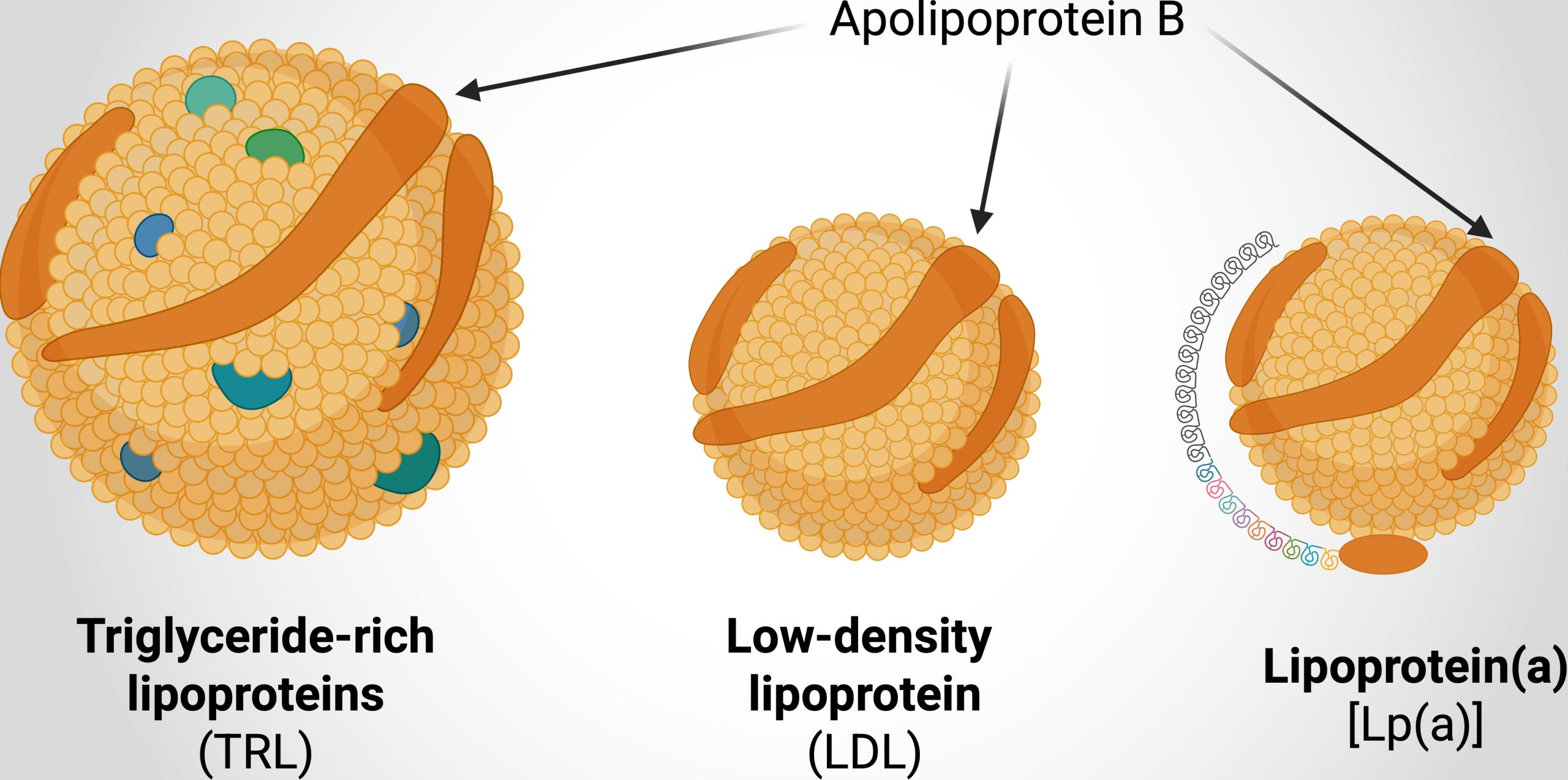
Researchers at Chalmers University of Technology in Sweden have now identified blood protein patterns that offer clues to what happens beyond cholesterol buildup. Two types of fat-carrying particles, triglyceride-rich lipoproteins (TRL) and lipoprotein(a), or Lp(a), shared many protein patterns and signs of potentially harmful biological effects. The pattern associated with LDL, or low-density lipoprotein, was mainly linked to cholesterol accumulating in artery walls.
All three types of particles can deposit cholesterol in artery walls, and LDL is the most abundant. But abundance does not tell the whole story. A previous study by the same research group found that counting these harmful particles was the most effective way to predict future heart disease risk. It also showed that TRL and Lp(a) were more harmful per particle than LDL. Researchers believe these two types account for much of the remaining risk after LDL cholesterol reaches a healthy level.

“For this study, we wanted to understand what happens beyond the accumulation of cholesterol in artery walls, whether different fat-carrying particles can damage the blood vessels differently and why the remaining risk of heart disease still occurs,” says Jakub Morze, lead author and a postdoctoral fellow at Chalmers University of Technology.
Protein patterns point to shared inflammation
The team used proteomics, the study of proteins, to examine how the three types of particles affect the body. Proteins carry out essential functions, and their levels can change with diet, stress, aging, or disease. Measuring them provides a snapshot of how the body is functioning at that moment. The researchers combined measurements of almost 3,000 blood proteins with genetic data and long-term health records to identify patterns that might help explain how the particles damage arteries.
The overlapping protein patterns associated with TRL and Lp(a) appeared to be linked to the later development of heart disease. These particles also contained proteins that attract immune cells, which could contribute to inflammation and changes in the structure of blood vessel walls. Although TRL and Lp(a) are different types of particles, the findings suggested that some of their harmful effects may involve shared biological pathways.
“The overlap for TRL and Lp(a) is one of the most interesting findings,” says Morze. “It suggests that these particles may affect some of the same inflammatory and vascular processes. This could help identify targets for more precisely directed prevention in the future.”
“Lowering LDL cholesterol remains a cornerstone of prevention,” says Clemens Wittenbecher, who led the study and is Assistant Professor of Precision Medicine and Diagnostics at Chalmers. “Our findings point to biological processes that may help explain some of the risk that remains beyond LDL. The next step is to establish whether measuring or targeting these processes can improve prevention alongside existing treatments.”
Reference: “Apolipoprotein B-containing lipoproteins: distinct roles in atherosclerosis revealed by plasma proteomic profiling” by Jakub Morze, Elias Björnson, Michael Y Mi, Martin Adiels, Giorgio E M Melloni, Gonçalo R da Silva, Andrzej Rynkiewicz, Nicholas A Marston, Marta Guasch-Ferré, Michael Y Tsai, Jerome I Rotter, Robert E Gerszten, Qi Sun, Frank B Hu, Rikard Landberg, Göran Bergström, Chris J Packard, Jan Borén and Clemens Wittenbecher, 31 August 2026, European Heart Journal.
DOI: 10.1093/eurheartj/ehag718
This work was supported by the Royal Swedish Academy of Sciences (grant number ME2024-0009), the SciLifeLab & Wallenberg Data Driven Life Science Program (grant number KAW 2020.0239), the Swedish Research Council (grant number 2022-01529), and the Swedish Heart and Lung Foundation (grant number 20241115).
Never miss a breakthrough: Join the SciTechDaily newsletter.
Follow us on Google and Google News.