
Scientists have identified the world’s oldest rock art—a 67,800-year-old hand stencil in Sulawesi—using uranium-series dating
A hand stencil discovered on the wall of a cave in Indonesia has been identified as the oldest-known example of rock art anywhere in the world. The artwork predates the previous oldest discovery in the same region by at least 15,000 years.
The find was made and dated by an international team co-led by researchers from Griffith University, Indonesia’s national research and innovation agency (BRIN), and Southern Cross University. Their analysis indicates that modern humans created cave paintings on the island of Sulawesi at least 67,800 years ago.
According to the researchers, the discovery deepens our understanding of when and how Australia was first settled. They believe the artists who created the Sulawesi paintings were likely closely related to the ancestors of Indigenous Australians.
Uranium-Series Dating Reveals 67,800-Year-Old Hand Stencil
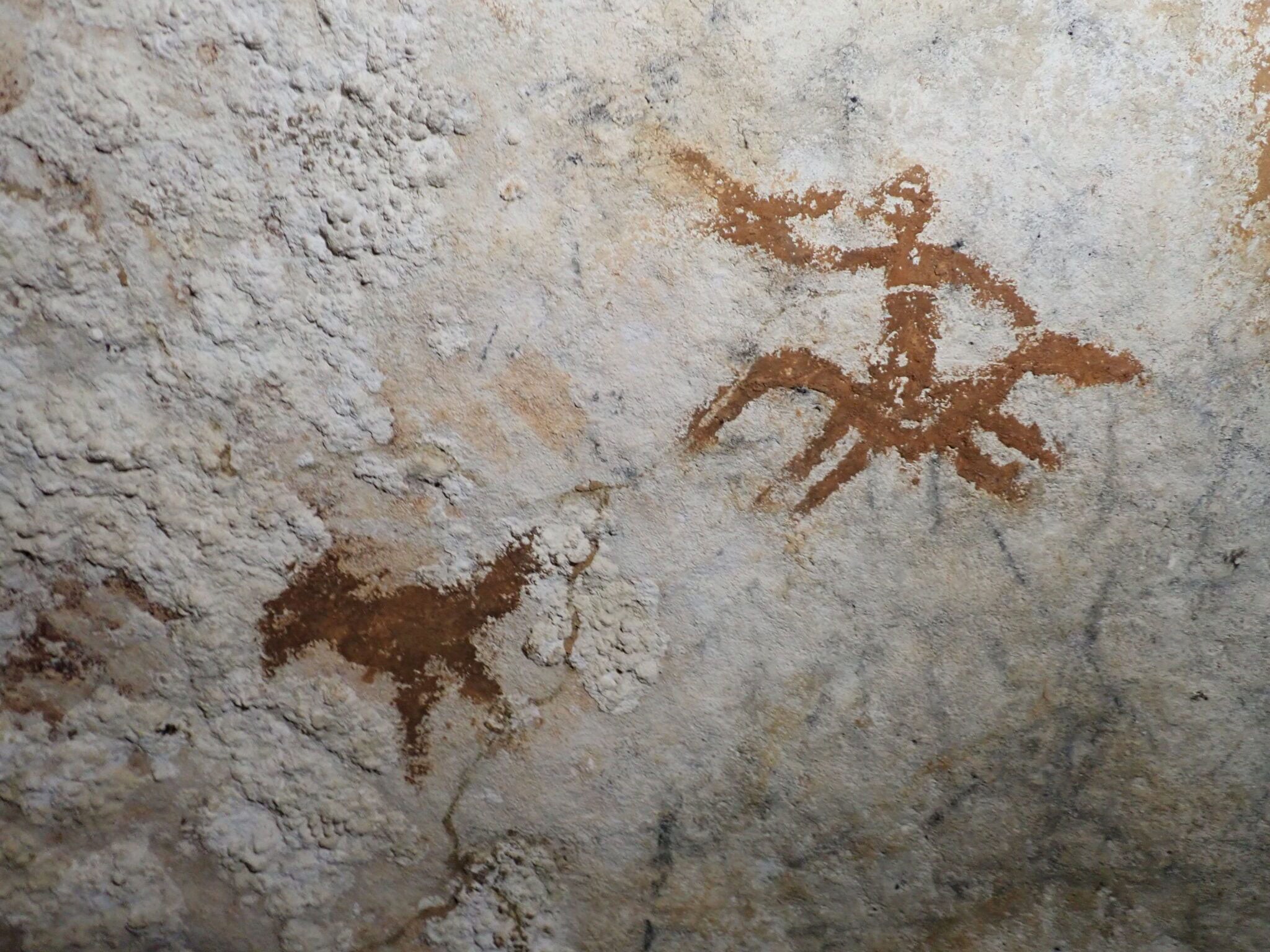
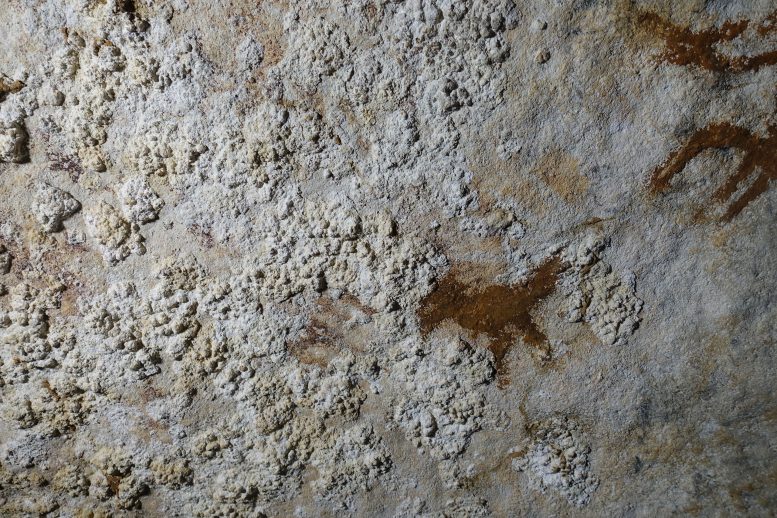
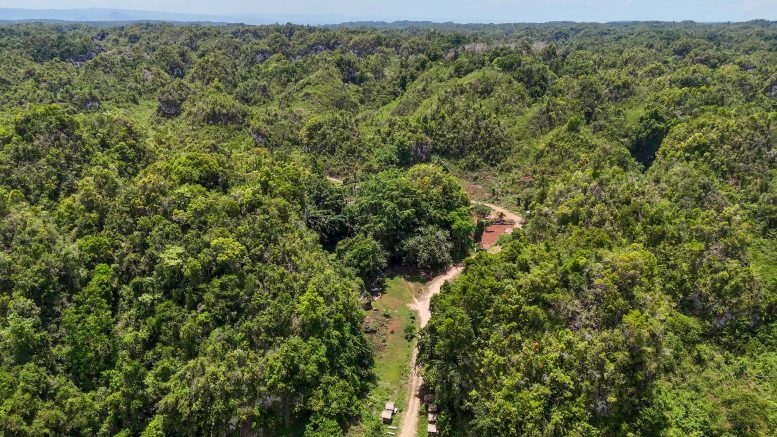
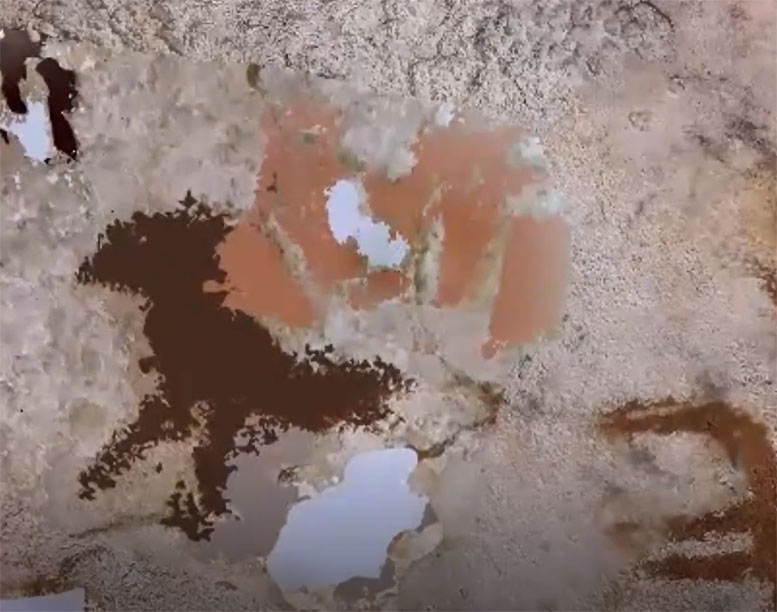
The hand stencil was preserved inside limestone caves in southeastern Sulawesi, on the satellite island of Muna. It was found alongside other painted images that were produced much later in time.
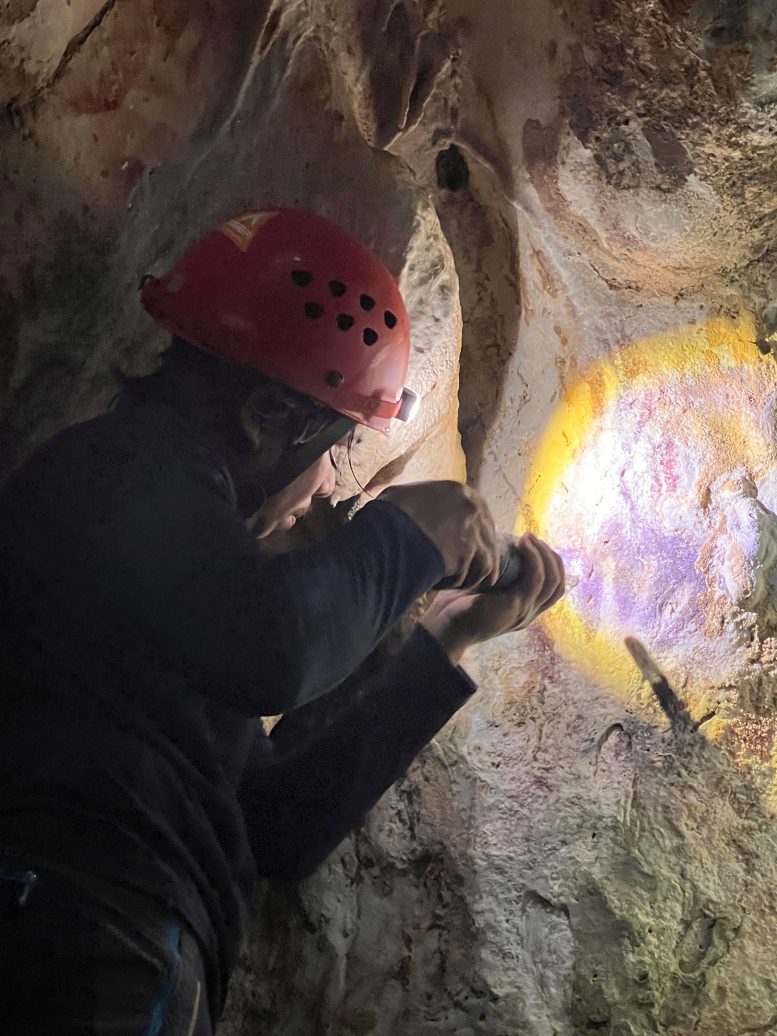
To determine the age of the art, the team used advanced uranium-series dating. They examined tiny mineral layers that had formed over and, in some cases, beneath the paintings in Liang Metanduno cave. These mineral deposits allowed researchers to establish the period during which the artwork was created.
Results showed the hand stencil is at least 67,800 years old. This makes it the oldest reliably dated cave art discovered so far and substantially older than the Sulawesi rock painting reported by the same team in 2024.
The findings also indicate that people returned to the Muna cave repeatedly to make art over an extended span of time. Painting activity continued for at least 35,000 years, lasting until around 20,000 years ago.
Unique Claw-Like Hand Motif and Symbolic Meaning
“It is now evident from our new phase of research that Sulawesi was home to one of the world’s richest and most longstanding artistic cultures, one with origins in the earliest history of human occupation of the island at least 67,800 years ago,” said Professor Maxime Aubert, an archaeologist and geochemist from the Griffith Centre for Social and Cultural Research (GCSCR), who co-led the study.
Researchers also noted that the stencil represents a rare variation of the hand motif. After the original stencil was made, the negative outlines of the fingers were intentionally narrowed. This alteration created the appearance of a claw-like hand, a design not previously documented elsewhere.
Professor Adam Brumm from Griffith University’s Australian Research Centre for Human Evolution (ARCHE), who also co-led the study, said the meaning behind the narrowed fingers remains uncertain.
“This art could symbolize the idea that humans and animals were closely connected, something we already seem to see in the very early painted art of Sulawesi, with at least one instance of a scene portraying figures that we interpret as representations of part-human, part-animal beings,” Professor Brumm said.
Unique Claw-Like Hand Motif and Symbolic Meaning
Dr. Adhi Agus Oktaviana, a rock art specialist at BRIN and a team leader whose doctoral research at Griffith University contributed to the study, said the discovery has important implications for understanding the deep-time history of Australian Aboriginal culture.
“It is very likely that the people who made these paintings in Sulawesi were part of the broader population that would later spread through the region and ultimately reach Australia,” Dr. Oktaviana said.
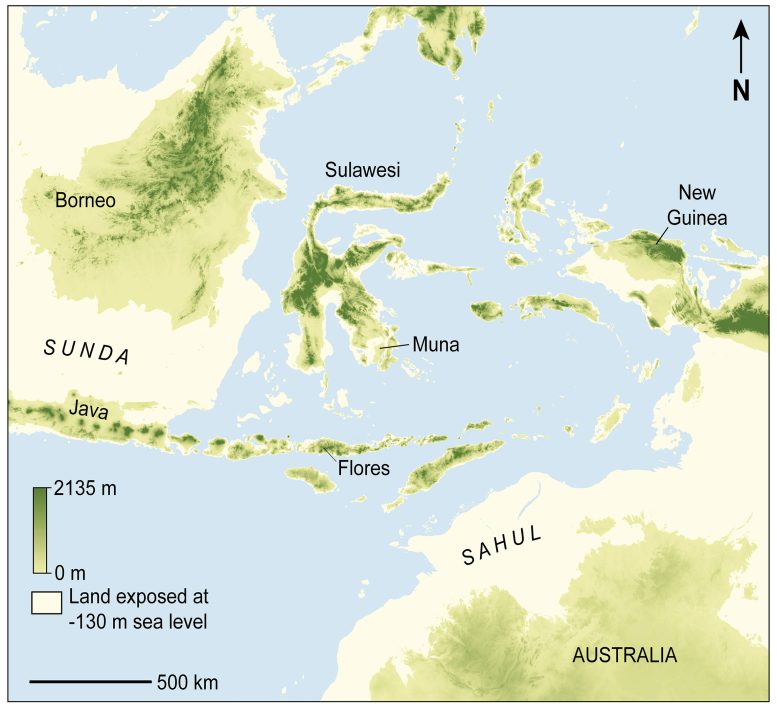
For years, archaeologists have debated when humans first arrived on the Pleistocene landmass known as Sahul, which once connected present-day Australia, Tasmania, and New Guinea.
Sahul Settlement Debate: Short vs. Long Chronology
Researchers have proposed two main timelines. The short chronology model suggests people reached the Sahul ‘supercontinent’ around 50,000 years ago. The competing long chronology model argues that humans arrived at least 65,000 years ago.
“This discovery strongly supports the idea that the ancestors of the First Australians were in Sahul by 65,000 years ago,” Dr. Oktaviana said.
Northern vs. Southern Migration Routes into Sahul
Scholars have also debated how early humans traveled into Sahul. One proposed path follows a northern route through Sulawesi and the ‘Spice Islands’ to the New Guinea portion of the landmass. Another suggests a more southerly journey that brought seafarers directly to mainland Australia via Timor or nearby islands.
Professor Renaud Joannes-Boyau of the Geoarchaeology and Archaeometry Research Group (GARG) at Southern Cross University, who co-led the research, said the dating of the Sulawesi art helps clarify which pathway was more likely taken.
“With the dating of this extremely ancient rock art in Sulawesi, we now have the oldest direct evidence for the presence of modern humans along this northern migration corridor into Sahul,” Professor Joannes-Boyau said.
“These discoveries underscore the archaeological importance of the many other Indonesian islands between Sulawesi and westernmost New Guinea,” said Professor Aubert. Together with Professors Brumm and Joannes-Boyau, he is continuing to investigate early human art and settlement along the northern route with support from the Australian Research Council (ARC).
Reference: “Rock art from at least 67,800 years ago in Sulawesi” by Adhi Agus Oktaviana, Renaud Joannes-Boyau, Budianto Hakim, Basran Burhan, Ratno Sardi, Shinatria Adhityatama, Andrea Jalandoni, Hamrullah, Iwan Sumantri, M. Tang, Rustan Lebe, Iswadi, Imran Ilyas, Abdullah Abbas, Andi Jusdi, Dewangga Eka Mahardian, Fadhlan S. Intan, Sofwan Noerwidi, Marlon N. R. Ririmasse, Irfan Mahmud, Akin Duli, Laode M. Aksa, M. Nur, Nasrullah Aziz, Sri Wigati, Iksam, Faiz, M. Sabri, Fardi Ali Syahdar, Eriani, N. A. Hidayatullah, Suryatman, Laode Darma, Nurmin, Laode Zulman, S. H. Sindara, Andi Muhammad Saiful, Pindi Setiawan, Adam Brumm and Maxime Aubert, 21 January 2026, Nature.
DOI: 10.1038/s41586-025-09968-y
The research was also supported by Google Arts & Culture and the National Geographic Society.
Never miss a breakthrough: Join the SciTechDaily newsletter.
Follow us on Google and Google News.
10 Comments
Living in Borneo and as a part of South East Asia, it’s amazing how your discoveries born out of hard work, excite us all!!! Thank you so much 😊👍
Looks to me like a bloke (assumed) riding a horse carrying on his arm a large bird of prey hunting some sort of smaller animal.
A Mongolian influence………….?
Mongolian influence… 67,000 years ago. Sure. Why not?
Looks like a person riding a crab with a airplane in one arm, amazing
If modern homo sapiens originated in Africa 50k years ago, couldn’t that mean that other hominids made those cave paintings?
The figure is riding a small native horse and is holding a boomerang, much more likely than a symbolism of a clawed hand! It literally shows them hunting prey.
Literally yes. There’s no hope for these academics
That’s what I was thinking, but humans riding horses apparently did not begin until only 5000 years ago
It’s a man holding a air craft standing behind a man flying. There is 4 legs four arms
That’s the later art work you are describing. Not the 67,000 year old hand print that is hard to see