

New research reveals that Flagstones in Dorset dates back to 3,200 BC, offering new insight into the origins of monumental architecture in the Neolithic period.
Archaeological research at the prehistoric Dorset burial site known as Flagstones has identified it as the earliest known large circular enclosure in Britain.
Located near Dorchester, the monument has been redated to around 3200 BC, approximately 200 years earlier than previously estimated, using advanced radiocarbon dating of materials found at the site, including human remains, red deer antlers, and charcoal.
The new analysis suggests that Flagstones may have served as a model for later ceremonial sites, including Stonehenge.
The findings, the result of a collaborative study by the University of Exeter and Historic England, are published in the latest issue of the journal Antiquity.
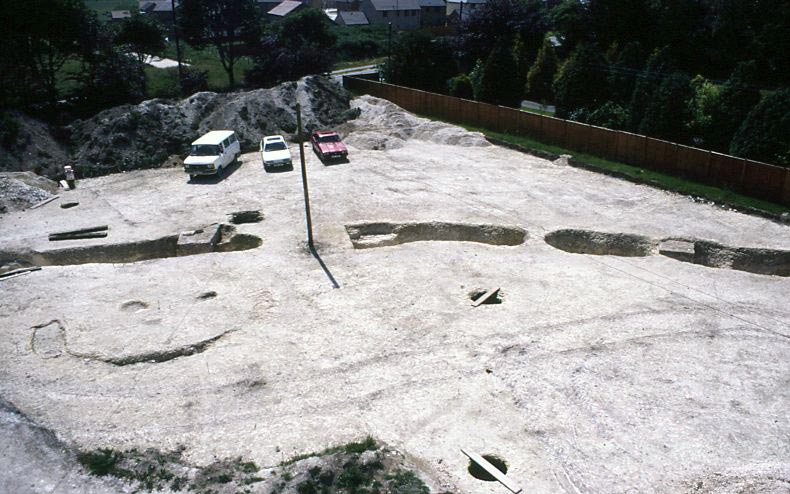
“Flagstones is an unusual monument; a perfectly circular ditched enclosure, with burials and cremations associated with it,” says Dr Susan Greaney, a specialist in Neolithic and Bronze Age monuments, in Exeter’s Department of Archaeology and History. “In some respects, it looks like monuments that come earlier, which we call causewayed enclosures, and in others, it looks a bit like things that come later that we call henges. But we didn’t know where it sat between these types of monuments – and the revised chronology places it in an earlier period than we expected.”
Discovery and Structure of the Site
Flagstones was discovered in the 1980s during the construction of the Dorchester bypass, with excavations revealing it was formed of a 100m diameter circular ditch made of intersecting pits, probably an earthwork bank. Today, half of the site lies beneath the bypass, with the remainder located beneath Max Gate, Thomas Hardy’s former home, now bequeathed to the National Trust. Flagstones is a scheduled monument with finds and excavation archives preserved at Dorset Museum.
At least four burials were found to have been placed in the enclosure pits – a cremated adult and three children who had not been cremated – and there were three further partial cremations of adults elsewhere. The similarity of this site to the first phase of Stonehenge, dated to around 2900 BC, led to the assumption that Flagstones must be of a similar date.
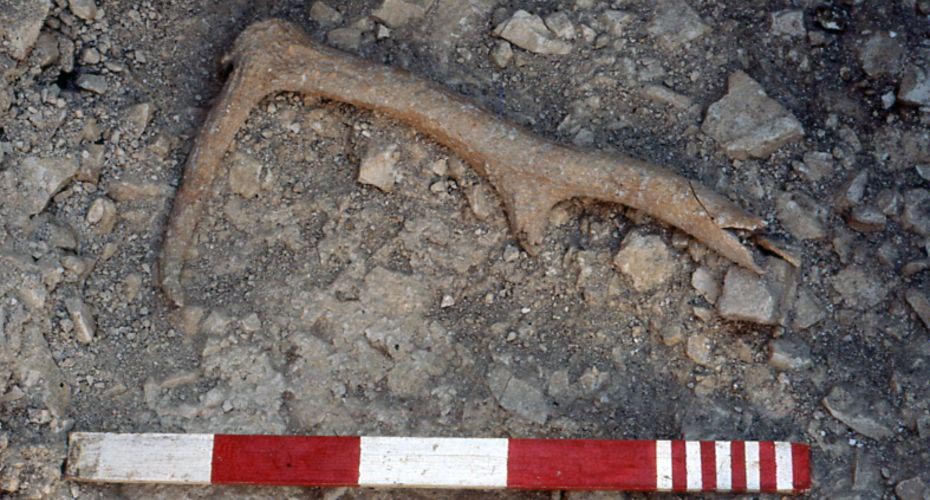
The new scientific dating program, led by Dr Greaney and Dr Peter Marshall, formerly Scientific Dating Co-Ordinator at Historic England, involved collaboration with laboratories at ETH Zürich and the University of Groningen, who provided 23 new radiocarbon measurements.
New Timeline for Neolithic Activity
Combining the radiocarbon dates with archaeological information revealed that early Neolithic activity, including the digging of pits, took place around 3650 BC. After a gap of many centuries, the circular ditched enclosure was created around 3200 BC, with burials placed within it immediately afterward. Intriguingly, a later burial of a young adult male under a large sarsen stone at the center of the enclosure occurred around 1,000 years or so after its initial use.
“The chronology of Flagstones is essential for understanding the changing sequence of ceremonial and funeral monuments in Britain,” said Dr Greaney. “The ‘sister’ monument to Flagstones is Stonehenge, whose first phase is almost identical, but it dates to around 2900 BC. Could Stonehenge have been a copy of Flagstones? Or do these findings suggest our current dating of Stonehenge might need revision?”
Flagstones also reveals connections to other significant sites, including Llandygái ‘Henge’ A in Gwynedd, Wales, and even locations in Ireland, as implied by artifacts and burial practices. The findings highlight the interconnectedness of Neolithic communities across Britain and beyond.
Reference: “Beginning of the circle? Revised chronologies for Flagstones and Alington Avenue, Dorchester, Dorset” by Susan Greaney, Irka Hajdas, Michael Dee and Peter Marshall, 6 March 2025, Antiquity.
DOI: 10.15184/aqy.2025.28
Never miss a breakthrough: Join the SciTechDaily newsletter.
Follow us on Google and Google News.
14 Comments
Did homo sapiens and terrible lizards co-exist together?
You mean iguanas? They’re pretty tasty. If you’re talking about dinosaurs, they were all (except birds) driven to extinction ~66mya. Homo sapiens came into existence about 300kya. See the age gap?
The big dinos are all fake. They just matched up bones of the big extinct land and sea mammals (the teeth typically come from the Sperm Whales), which died at the start of the Ice Age. All by-deception, as they say.
Yes, humans dinosaurs coexisted. Theres way too much evidence to deny that simple truth.
Not dinosaurs, which are fake, but Mammoths and the big land extinct land mammals.
These were all huge timber-roofed dome communal houses prior to the Ice Age, which came on suddenly (global nuclear attack?) around 115k BC and wiped it out and buried everything in snow and ice. The prevailing narratives are all just cover-up for the fact that alien-seeded people arrived after that (e.g., ancient Sumer, and the self-described ‘black-headed people’ and other places) to begin their, still ongoing, attempted conquest over the fair-haired aboriginals, who held strong ONLY in Northern Europe. Of course, this truth always gets mocked by the you-know-whos who always work by age-old tricks and their now easy-to-see deception. But the DNA evidence is there when they want to go there and come clean on it all. Questions?
You say Truth. PROVE IT!
That big circle is really a pterodactyl nest, wot?
we were hunted by the dinosaurs back in the day. we were bite size delicacies. We were just like candy bars to them.
Older then Stonehenge? 🤣🤣🤣
actually not dinosaurs went extinct 60 MYA
There was a documentary TV program you can watch proving that dinosaurs and man co-existed together. It’s call the Flintstones.
In the American Southwest, the ancient ones before the Anasazi came, went to extremes to find refuge from predators. High up in the rocks and canyons.
Hunted by the last sabertooths, American lions(not the current mountain lion), perhaps even the last pterodactyls ( legends of the thunderbird), but definitely predators. The Anasazi too tried to enslave them , sacrifice them and eat them. Later came the Spaniards and white men so the cliff dwellings became their refuge during those times as well.
It makes me feel a bit better to know that there is zero possibility that most of the versions presented in the notes here can be possible. It makes me feel even better that I’m pretty sure they will never happen. In a similar way, people routinely waste time worrying about 3 different problems that can not happen at the same time. On the other hand, it might be a good idea to check with the owners of a few science fiction books to see if people are plagiarizing copyrighted material.