
Close Menu
    Facebook X (Twitter) Instagram
    SciTechDaily
    • Biology
    • Chemistry
    • Earth
    • Health
    • Physics
    • Science
    • Space
    • Technology
    Facebook X (Twitter) Pinterest YouTube RSS
    SciTechDaily
    Home»Space»SpaceX Rocket Creates a Spectacular Glowing “Jellyfish” in the Sky
    Space

    SpaceX Rocket Creates a Spectacular Glowing “Jellyfish” in the Sky

    By NASAOctober 21, 2026No Comments3 Mins Read
    Facebook Twitter Pinterest Telegram LinkedIn WhatsApp Email Reddit
    Share
    Facebook Twitter LinkedIn Pinterest Telegram Email Reddit
    NASA SpaceX CRS-35 Launch Jellyfish
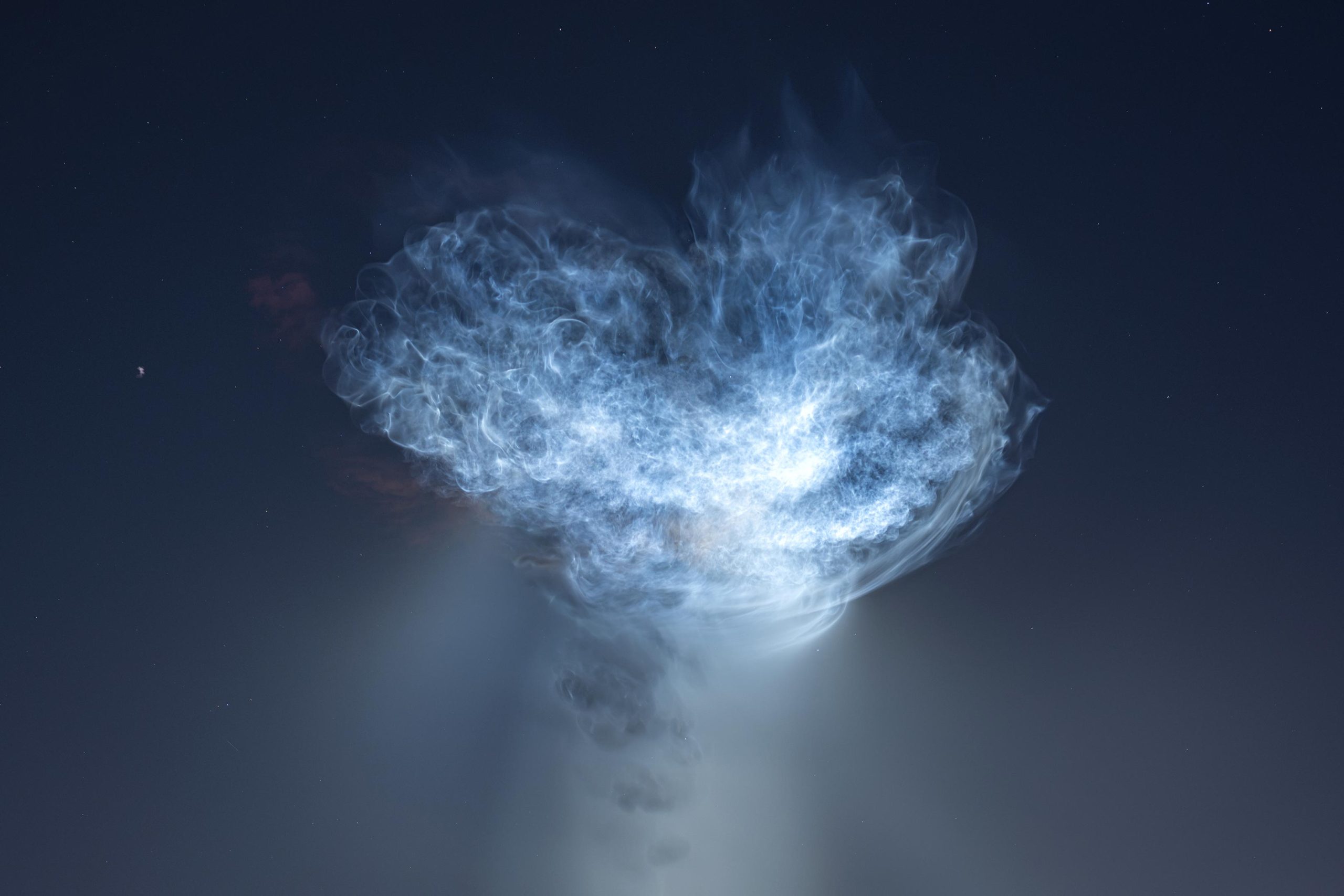
    A SpaceX rocket lit up the morning sky with a spectacular glowing “jellyfish” while carrying potentially groundbreaking medical experiments to the International Space Station. (Close view. See wider view below.) Credit: NASA/John Kraus

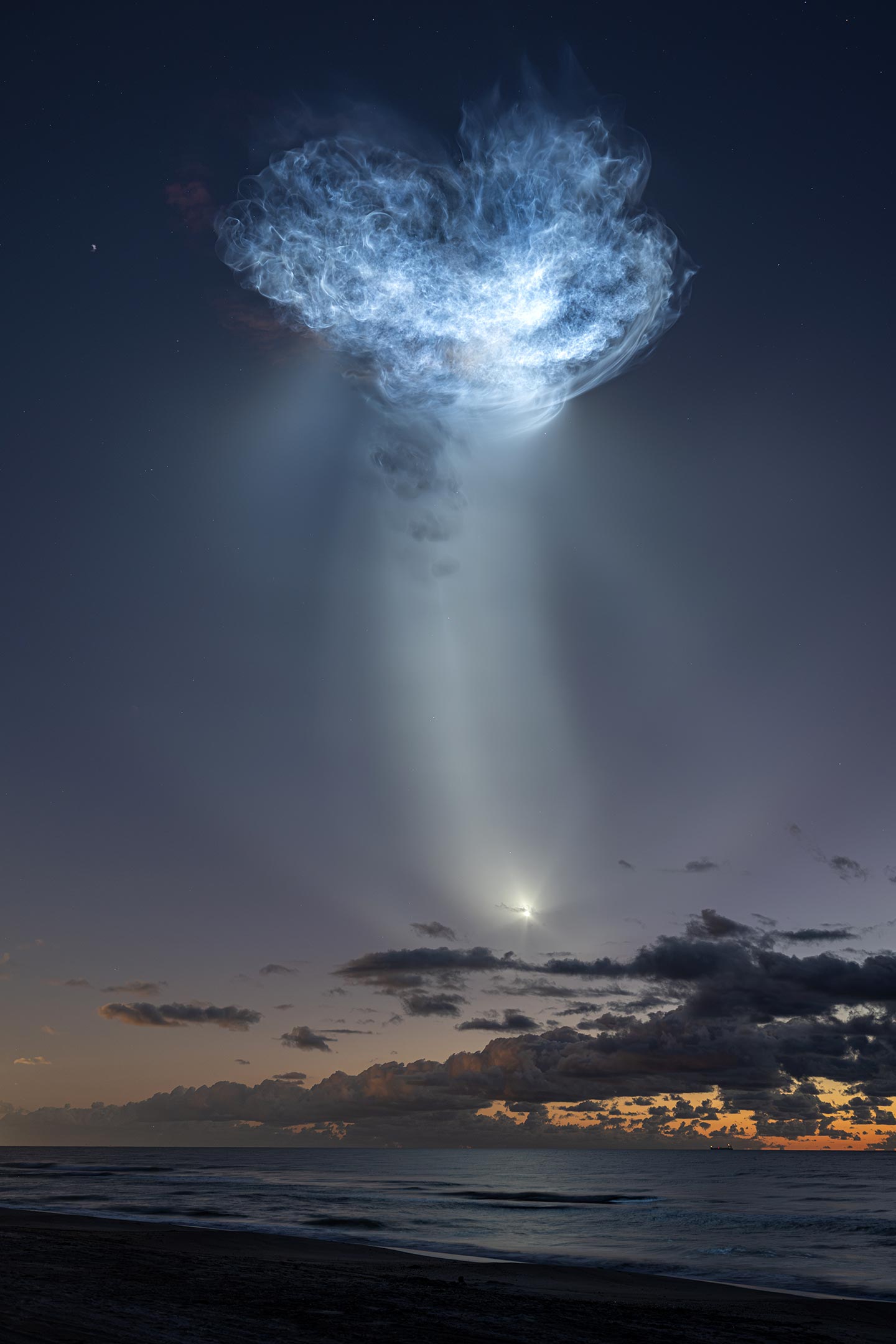
    A SpaceX Falcon 9 rocket created a spectacular glowing “jellyfish” in the sky on October 13, 2026, as sunlight lit up its expanding exhaust plumes during an early morning launch. The unusual display, visible across the eastern United States, formed as the rocket carried SpaceX’s Dragon spacecraft toward the International Space Station.

    Known as a “jellyfish,” this striking phenomenon occurs when a rocket launches near sunrise or sunset. Sunlight illuminates the spreading exhaust high above Earth, producing a bright, glowing cloud that resembles the shape of a jellyfish.

    SpaceX Falcon 9 Launch Lights Up the Morning Sky

    The mission lifted off at 6:33 a.m. EDT from Space Launch Complex 40 at Cape Canaveral Space Force Station in Florida. It marked SpaceX’s 35th commercial resupply mission for NASA, delivering scientific experiments, essential supplies, and equipment to the International Space Station.

    While the rocket’s illuminated exhaust created a spectacular sight across the eastern United States, its cargo could help support important advances in space technology and medical research.
    NASA SpaceX CRS-35 Launch Jellyfish
    A SpaceX Falcon 9 rocket produced a spectacular glowing “jellyfish” across the morning sky, creating an extraordinary light show visible across the eastern United States. Beyond the dazzling display, the mission carried experiments to the International Space Station that could help scientists restore vision, improve drug testing, and uncover new treatments for brain diseases. Credit: NASA/John Kraus

    New Solar Arrays and Medical Experiments Head to the Space Station

    Among the items aboard Dragon is the final set of International Space Station Roll-Out Solar Arrays, or IROSAs. These solar arrays are scheduled for installation later this fall and will help expand the station’s ability to generate electricity.

    The spacecraft is also transporting equipment for producing artificial retinas in microgravity, a research effort that could eventually lead to treatments that restore vision on Earth. Another investigation involves 3D heart tissue models, which could help researchers develop methods for conducting drug testing on a larger scale during future space missions.

    Additional experiments will explore how a new type of glass forms in the near-weightless conditions of space. Scientists will also study brain organoids, miniature models of brain tissue that could help identify potential treatment targets for neurological diseases, including Alzheimer’s, Parkinson’s, and multiple sclerosis.

    Never miss a breakthrough: Join the SciTechDaily newsletter.
    Follow us on Google and Google News.

    NASA Rocket SpaceX
    Share. Facebook Twitter Pinterest LinkedIn Email Reddit

    Related Articles

    Exploring Earth’s Edge: How NASA’s TES-22 Is Tackling Space Debris and the Thermosphere

    Countdown to the Moon: NASA, SpaceX, and Firefly’s Bold Blue Ghost Mission Launches Next Week

    Unlocking the Sun’s Fiery Secrets: NASA’s PUNCH Mission Set for Early 2025 Launch

    Watch Live: SpaceX Dragon Delivering Cutting-Edge Science Back to Earth

    NASA Defies the Elements: SpaceX Crew-9 Rocket Test Success Before the Storm

    Surface Water and Ocean Topography (SWOT) – Live NASA/SpaceX Launch Coverage

    SpaceX Rocket Launches NASA’s IXPE Space Observatory – To Explore the Most Extreme and Mysterious Objects in the Universe

    SpaceX Falcon 9 Launches, Dragon Capsule Headed Towards Space Station

    NASA Confiscates Stolen Rocket Engine

    Leave A Reply Cancel Reply

    • Facebook
    • Twitter
    • Pinterest
    • YouTube

    Don't Miss a Discovery

    Subscribe for the Latest in Science & Tech!

    Trending News

    Scientists Simulated the Universe – And Discovered the Milky Way May Be One of the Best Places for Life

    “Something out of Science Fiction” – Astronomers Discover a Star That Glows a Bizarre Shade of Green

    Scientists Discover a Surprising New Effect of a Popular Blood Pressure Drug

    Scientists Discover a 99-Million-Year-Old Insect With a Bizarre Feature Never Seen in Living Species

    Scientists Discover an Unexpected Problem With a Cancer Drug Already in Human Trials

    NASA Is About to Investigate What Lies Beneath a Giant Hole on the Moon

    NASA Captures a Strange Formation on Earth With a Surprising Lunar Connection

    Scientists Discover a Surprising Shortcut to Nuclear Fusion

    Follow SciTechDaily
    • Facebook
    • Twitter
    • YouTube
    • Pinterest
    • Newsletter
    • RSS
    SciTech News
    • Biology News
    • Chemistry News
    • Earth News
    • Health News
    • Physics News
    • Science News
    • Space News
    • Technology News
    Recent Posts
    • SpaceX Rocket Creates a Spectacular Glowing “Jellyfish” in the Sky
    • New Research Reveals a Hidden Weakness Inside Electric Vehicle Batteries
    • A 58-Million-Year-Old Mammal Is Challenging Long-Held Assumptions About Evolution
    • Stanford Scientists Discover a Remarkable Way To Rescue Dying Corals in Just Seven Weeks
    • 0 to 15 MPH in a Single Swipe: New Research Reveals How Ancient Giant Sea Monsters Ambushed Their Prey
    Copyright © 1998 - 2026 SciTechDaily. All Rights Reserved.
    • Science News
    • About
    • Contact
    • Editorial Board
    • Privacy Policy
    • Terms of Use

    Type above and press Enter to search. Press Esc to cancel.