
Close Menu
    Facebook X (Twitter) Instagram
    SciTechDaily
    • Biology
    • Chemistry
    • Earth
    • Health
    • Physics
    • Science
    • Space
    • Technology
    Facebook X (Twitter) Pinterest YouTube RSS
    SciTechDaily
    Home»Space»NASA’s ICESat-2 Satellite Survives Strongest Solar Storm in 20 Years
    Space

    NASA’s ICESat-2 Satellite Survives Strongest Solar Storm in 20 Years

    By NASAJune 12, 2024No Comments3 Mins Read
    Facebook Twitter Pinterest Telegram LinkedIn WhatsApp Email Reddit
    Share
    Facebook Twitter LinkedIn Pinterest Telegram Email Reddit
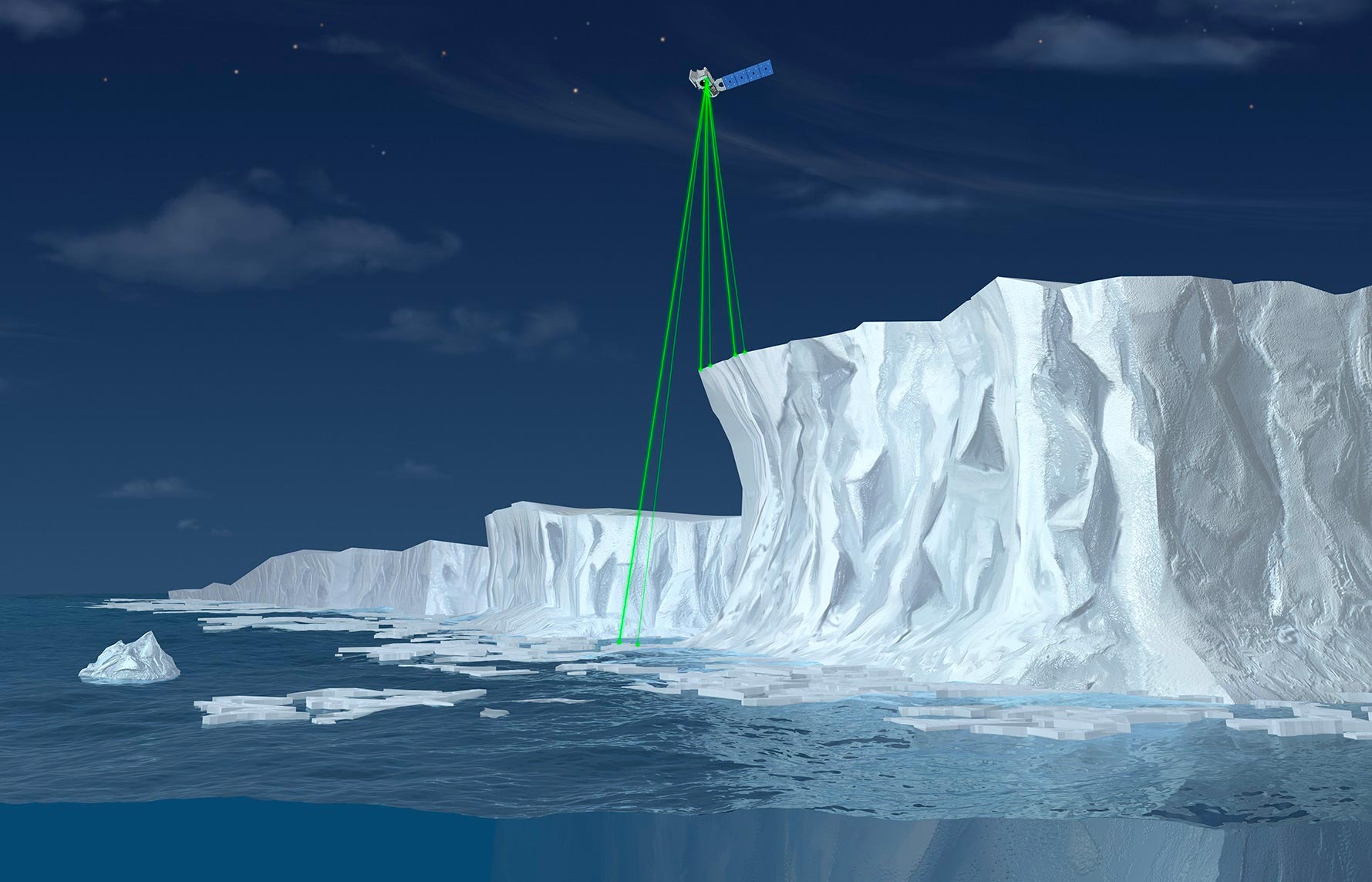
    ICESat-2 Illustration
    Illustration of NASA’s Ice, Cloud and land Elevation Satellite-2 (ICESat-2), a mission to measure the changing height of Earth’s ice. Credit: NASA

    Following the strongest solar storm in twenty years, NASA’s ICESat-2 satellite was put into a safe hold on May 10 due to atmospheric drag from the expanded atmosphere. Recovery actions have since raised its orbit, with operations anticipated to restart on June 17.

    Impact of Solar Storm on ICESat-2 Satellite

    The lidar instrument on NASA’s ICESat-2 satellite is scheduled to resume collecting data around June 17, after going into a safe hold on May 10 due to impacts from the strongest solar storm to hit Earth in two decades. The storm did not cause any detectable damage to the satellite or its instrument.

    Between May 7 and May 11, strong solar flares and coronal mass ejections were released from the Sun and sparked a geomagnetic storm at Earth that caused our planet’s atmosphere to expand in places. This created unexpected drag on ICESat-2, rotating the satellite, and triggering the satellite to enter safe hold, which turned off ICESat-2’s science instrument.

    Resuming Operations at Higher Altitude

    The ICESat-2 team has conducted two thruster burns to raise the spacecraft’s altitude, allowing it to now drift back to its normal orbit around 310 miles (500 kilometers) above Earth. Once there, the team will return the Advanced Topographic Laser Altimeter System instrument to science mode, to continue measuring the height of Earth’s ice, water, forests, and land cover.
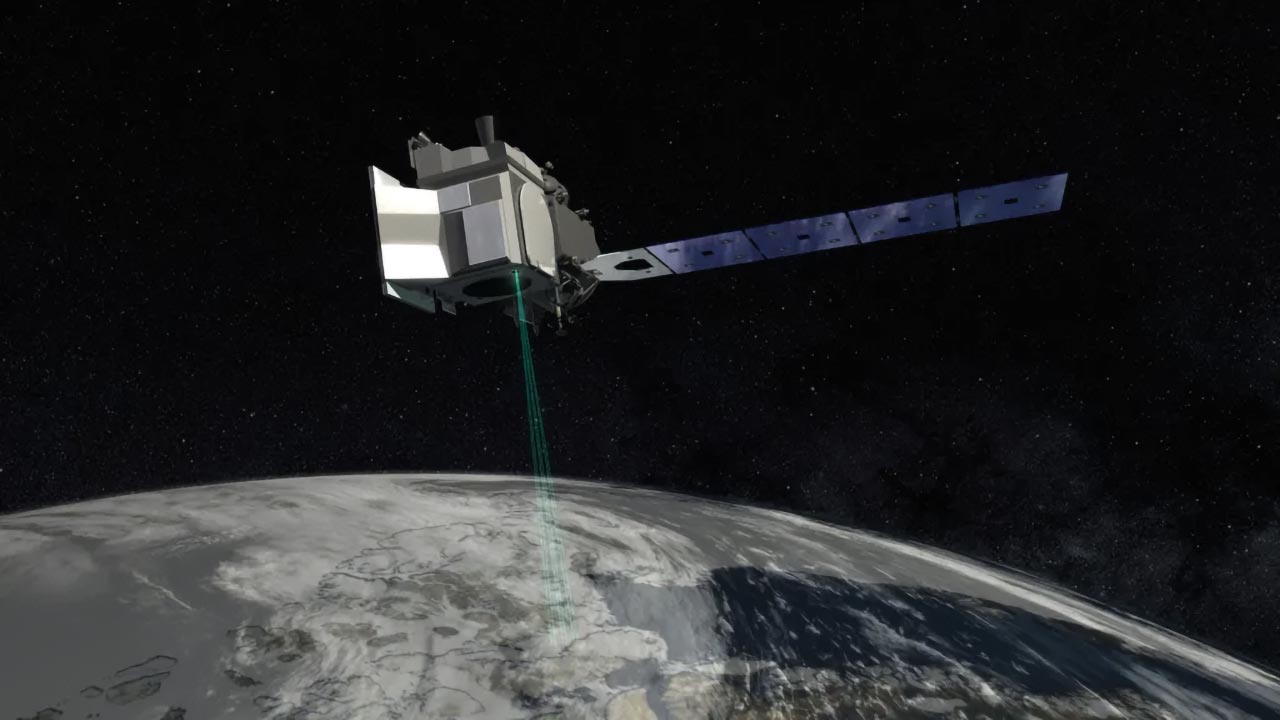
    NASA ICESat-2 in Orbit
    An artist’s rendering of ICESat-2. The satellite went into a safe hold following solar storms in May 2024, and is expected to return to science mode in mid-June. Credit: NASA’s Goddard Space Flight Center

    About NASA’s ICESat-2

    ICESat-2, short for Ice, Cloud, and land Elevation Satellite-2, is a NASA satellite mission designed to measure ice sheet elevation and sea ice thickness, as well as land topography and vegetation characteristics. Launched in September 2018, the satellite employs a sophisticated laser altimeter system called ATLAS (Advanced Topographic Laser Altimeter System) to provide precise and detailed measurements of Earth’s surface.

    ICESat-2’s high-resolution data helps scientists understand changes in ice sheets, glaciers, and sea ice that result from climate change, enhancing our ability to accurately predict future sea level rise and assess changes in Earth’s ecosystems. This satellite is a critical tool in NASA’s Earth Observing System, contributing valuable data for environmental research and climate science.

    Never miss a breakthrough: Join the SciTechDaily newsletter.
    Follow us on Google and Google News.

    ICESat-2 NASA Popular Satellites Solar Storms
    Share. Facebook Twitter Pinterest LinkedIn Email Reddit

    Related Articles

    2.8 Days to Disaster: Low Earth Orbit Could Collapse Without Warning

    Massive Solar Storm Unleashes Mysterious New Radiation Belts

    Radiation Surge on Mars: NASA Watches Red Planet Light Up During Epic Solar Storm

    Mysterious Green Lasers Near Mount Fuji, Japan Have a “Chilling” Explanation

    NASA’s Black Hole Orrery – Spectacular Visualization of 22 X-Ray Binary Systems That Host Black Holes

    This Week @NASA: Crew-3 Astronauts Return to Earth, Boeing’s CST-100 Starliner, Black Holes

    Hubble Reveals Surviving Companion Star in Aftermath of Titanic Supernova Explosion

    Splashdown! NASA SpaceX Crew-3 Astronauts Safely Return to Earth

    Spontaneous Magnetic Reversal of Monster Black Hole Sparks Enigmatic Outburst

    Leave A Reply Cancel Reply

    • Facebook
    • Twitter
    • Pinterest
    • YouTube

    Don't Miss a Discovery

    Subscribe for the Latest in Science & Tech!

    Trending News

    Artificial Sweeteners May Harm Future Generations, Study Suggests

    Splashdown! NASA Artemis II Returns From Record-Breaking Moon Mission

    What If Consciousness Exists Beyond Your Brain

    Scientists Finally Crack the 100-Million-Year Evolutionary Mystery of Squid and Cuttlefish

    Beyond “Safe Levels”: Study Challenges What We Know About Pesticides and Cancer

    Researchers Have Found a Dietary Compound That Increases Longevity

    Scientists Baffled by Bizarre “Living Fossil” From 275 Million Years Ago

    Your IQ at 23 Could Predict Your Wealth at 27, Study Finds

    Follow SciTechDaily
    • Facebook
    • Twitter
    • YouTube
    • Pinterest
    • Newsletter
    • RSS
    SciTech News
    • Biology News
    • Chemistry News
    • Earth News
    • Health News
    • Physics News
    • Science News
    • Space News
    • Technology News
    Recent Posts
    • Geologists Reveal the Americas Collided Earlier Than We Thought
    • 20x Difference: Study Reveals True Source of Airborne Microplastics
    • Scientists Uncover Hidden Force Powering Yellowstone’s Supervolcano
    • This Metal Melts in Your Hand – and Scientists Just Discovered Something Strange
    • Why Losing Too Much Fat Can Be Just As Dangerous as Obesity
    Copyright © 1998 - 2026 SciTechDaily. All Rights Reserved.
    • Science News
    • About
    • Contact
    • Editorial Board
    • Privacy Policy
    • Terms of Use

    Type above and press Enter to search. Press Esc to cancel.