
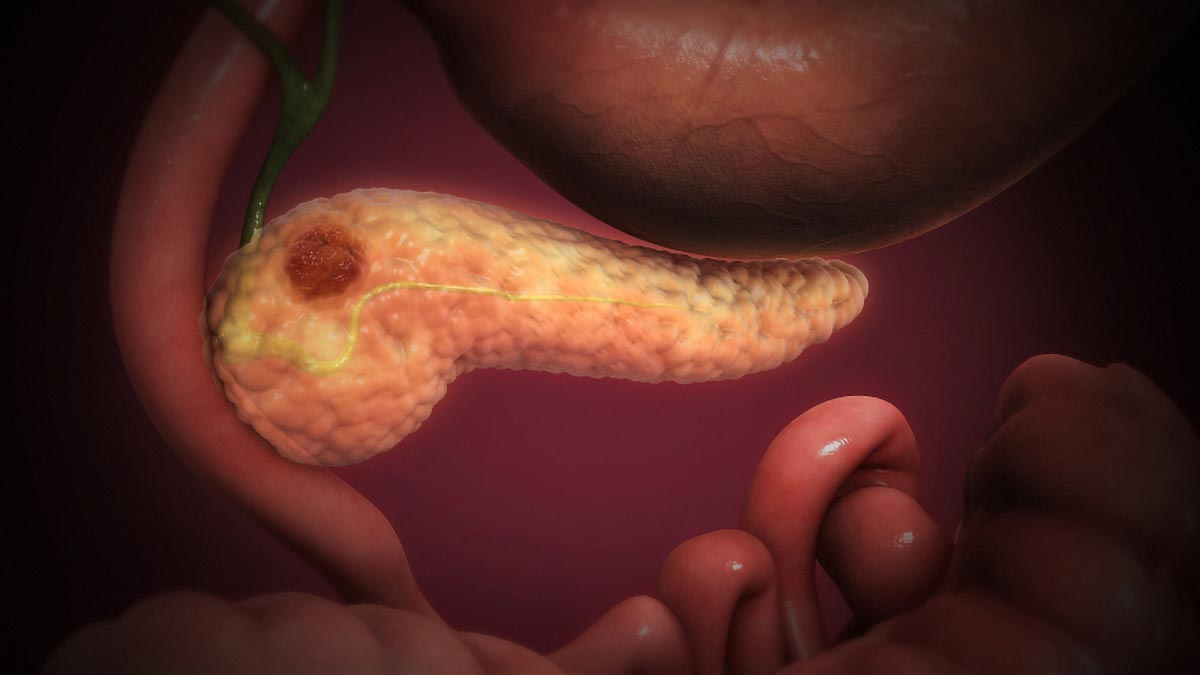
Brazilian researchers have found that stellate pancreatic cells produce periostin, which reshapes surrounding tissue and allows tumors to spread more easily, helping explain why the disease is so aggressive and deadly.
A new Brazilian study published in the scientific journal Molecular and Cellular Endocrinology has identified a critical role for the protein periostin and stellate pancreatic cells in enabling pancreatic cancer to invade nerves and spread at an early stage, raising the likelihood of metastasis.
The findings show that the tumor actively alters nearby healthy tissue to gain a strong invasive ability. This process helps explain why the disease is so aggressive and hard to treat, while also highlighting potential targets for more precise and personalized therapies.
Why pancreatic cancer is so lethal
The most common form of pancreatic cancer is adenocarcinoma, which develops in the glandular tissue responsible for producing pancreatic juice. It represents about 90% of all diagnosed cases. While pancreatic cancer is less common than many other cancers, it is among the deadliest, with a mortality rate that closely matches how often it occurs. Worldwide, there are an estimated 510,000 new cases each year and nearly the same number of deaths.
In Brazil, the National Cancer Institute (INCA) estimates there are about 11,000 cases and 13,000 deaths every year. “It’s an aggressive cancer that’s difficult to treat. Around 10% of patients have a chance of long-term survival, such as five years after diagnosis,” says Pedro Luiz Serrano Uson Junior, an oncologist and one of the authors of the study.
The aggressiveness of this tumor is linked to perineural invasion, a process in which cancer cells infiltrate and spread along nerves. This can cause intense pain and facilitate the spread of the tumor to other regions.
“Perineural invasion is a marker of cancer aggressiveness,” says Uson.
How tumors reprogram surrounding tissue
The research was carried out at the Center for Research on Inflammatory Diseases (CRID), one of FAPESP’s Research, Innovation, and Dissemination Centers (RIDCs), and was led by first author Carlos Alberto de Carvalho Fraga. The team aimed to uncover the molecular and cellular processes behind nerve invasion. To do this, they used advanced methods that make it possible to analyze the activity of thousands of genes within individual cells and determine their precise location in the tissue.
“We were able to integrate data from dozens of samples with extremely powerful resolution,” says Helder Nakaya, principal investigator at CRID, who led the study. Nakaya is also a senior researcher at Einstein Israelite Hospital and a professor at the University of São Paulo’s School of Pharmaceutical Sciences.
After examining data from 24 pancreatic cancer samples, the researchers found that the stroma, meaning the supportive tissue surrounding the tumor, actively contributes to disease progression. A key discovery involved pancreatic stellate cells, which were shown to produce high levels of periostin, a protein that can reshape the extracellular matrix, the framework that supports and organizes healthy tissue.
The study points out that tumor cells depend on intense extracellular matrix remodeling processes to advance through tissue and reach nerves, a complex process involving specific enzymes and tissue disorganization. “Periostin participates in this remodeling, paving the way for tumor cells to invade,” Nakaya explains. The nerve, in turn, functions as a kind of “road” for this expansion.
A microenvironment that fuels invasion and blocks treatment
This altered environment generates a desmoplastic reaction: intense fibrosis around the tumor formed by cells and proteins that harden and inflame the tissue. This hinders the arrival of chemotherapy and immunotherapy drugs because they have more difficulty penetrating the hardened tissue. This creates a “microenvironment” that favors the survival and spread of the tumor. “That’s why pancreatic cancer is still so difficult to treat,” says Uson.
The oncologist emphasizes that this ability to infiltrate is decisive for the poor prognosis of patients with pancreatic cancer. “Perineural invasion is a sign that cancer cells have gained mobility. They escape the tumor mass, travel through healthy tissue, and reach nerve and lymphatic bundles, which carry them to other regions of the body, facilitating the development of metastases.”
He says that more than half of pancreatic cancer cases show perineural invasion in the early stages, which is only discovered during surgery. “Unfortunately, we discover this perineural invasion after it’s already occurred. It’s only seen in the surgical specimen when it goes for biopsy.”
Targeting periostin for precision treatment
Given this complex scenario, the researchers say that periostin emerges as a promising therapeutic target. Blocking its action or eliminating the stellate cells that produce it may reduce perineural invasion and limit the tumor’s metastatic capacity.
“This work points to paths that may guide future approaches to treating pancreatic cancer,” says Nakaya. Clinical trials on other tumors are already testing antibodies against periostin. According to Nakaya, this helps explore whether this pathway may also be relevant in the pancreas.
Uson points out that this strategy is part of the advance toward precision medicine. “If we can develop antibodies or drugs that block these stellate cells, we’ll have tools to prevent the tumor from acquiring this invasive capacity so early.” He notes that there is currently no therapy that specifically targets perineural invasion and stresses that such a drug could be useful in treating several other cancers that share the same mechanism, including intestinal and breast cancers.
In addition to revealing new therapeutic targets, the work demonstrates the power of complex analyses performed using public databases.
“We were able to ask and answer new questions that the original authors hadn’t considered,” says Nakaya. The researchers say the next step is to transform this knowledge into strategies and drugs that act predictively, before invasion occurs. “Precision medicine is advancing. In the future, we’ll treat patients based on genomic and molecular changes rather than tumor type specifically. This is a significant advance in oncology,” Uson concludes.
Reference: “Periostin-positive stellate cells associated with perineural invasion in pancreatic adenocarcinoma” by Carlos Alberto de Carvalho Fraga, Catarina Rosa e Silva Santos, Kayo Felipe Barbosa Lima, Gustavo Henrique Brasil Rodrigues, Caio Cesar Fernandes Nobre Porto, Maria Nathália de Menezes, Gabriel Victor Lucena da Silva, Adriana Simizo, Ana Kelly da Silva Fernandes Duarte, Jussara Almeida de Oliveira Baggio, Amanda Karine Barros Ferreira Rodrigues, Karol Fireman de Farias, Elaine Virginia Martins de Souza Figueiredo, Carolinne de Sales Marques, Pedro Luiz Serrano Uson Junior, Paulo Vidal Campregher and Helder I. Nakaya, 15 October 2025, Molecular and Cellular Endocrinology.
DOI: 10.1016/j.mce.2025.112678
Funding: São Paulo Research Foundation
Never miss a breakthrough: Join the SciTechDaily newsletter.
Follow us on Google and Google News.
13 Comments
Now they need to come up with a
Periostin blocker maybe something like a statin that a patient can take daily to ward off potential pancreatic cancer.
Definitely
I was diagnosed in Aug of 2018. Had a Whipple and am into my 8th year of being cancer-free. Thrilled to say the least. I’ve had no follow up radiation or chemo treatments. I’ve had to change eating habits – a small price to pay.
What were your changes in diet?
I hope !
Keep the faith, I was diagnosed with Pancreatic and Kidney cancer 06-24-2024, I was in the hospital after suffering a stroke at work. It took months before I could return to work. Two weeks later I had a second stroke. It was worse than the first. God was merciful and with a lot of prayers I was able to convince my Doctor to let me go back to work. Had to gave a 100% release, Doctor agreed begrudgingly, but after a year of unpaid medical leave, I was in a financial crisis. My first day back, I walked in and was terminated by my Captain. Two months later I convinced my Chief Deputy to rehire me. Thank God, I been back at work now for five months. I have not received any treatment of any kind for my cancer. 06-24-2024, I was given 6-12 months to live. But God seems to have other plans for me. February 3 is my first Doctor’s visit since June 18th 2025.
Wow Wow wow ! how amazing ! Wish u all the very best , dam 💰! good on u going to work! Keep up the good fight !
Enjoying sun and life everyday in ever way as I am sure u are thanks for sharing !
Deryl,
So glad God answered your prayers. He is faithful. Would you mind contacting me as my cousin was dx with stage 4 pancreatic cancer. I may be reached at:
[email protected]. I welcome any support or words of wisdom.
Blessings my friend,
Cheryl E.
Read book called Gaps diet, very good book, it will change you completely.
Do NOT give up hope!
With the burgeoning marriage of AI & Quantum Computing – the Specific Answers will soon start flooding the Landscape; and, as a Direct Result, the number of Related Deaths will soon start Plummeting.
SO – Hang in There…!!!
Any news that has sound fundamental findings to help better understand and potentially support improved early detection and treatment of pancreatic cancer is akin to a miracle.
My beautiful wife of 43 years who ate well and had healthy blood work complained of persistent back pain only and a simple ultrasound revealed the mass then a subsequent endoscopy and tissue analysis showed she had PC that had had also spread to her liver.
She started chemotherapy/immunotherapy and succumbed to the disease after only 4 months at the age of 63.
In my grief I stated to do research to gather data to lobby using simple ultrasounds as a pre-symptom early section tool after 40+ to try and catch PC earlier since early stage PC has a 40% survival rate where late stage is 3%. 80% of new PC cases are diagnosed at ages 40+.
What I uncovered is that since survival rate for early stage PC is so dire that no pre-symptom tool on asymptomatic patients would be approved since 40% survival rate would still mean 60% would die from the disease.
In our Chicken and Egg world we will ultimately need significant improvement in treatment of early stage PC before we will see improved early detection.
FYI – other abdominal cancers like liver/gallbladder basically mirror closely to PC in survival rates. My research was built around all abdominal cancers not just pancreatic with the hope that combining all in a basic early detection approach would allow it to garner more support.
But the same issue exist that survival rates are too low.
New findings like this article give me hope that we are moving closer….
So what do you recommend in the wsy of testing if asymptomatic?
Doctors should help patients with pre diabetes, often if not recognised as full diabetes, doctors will not treat it. Just said diet and exercises, which in my case did not work, I was starving, did not lose a gram. Then cholesterol, untreated too, as not high enough, then fatty liver, and some burps, not coming out, making me uncomfortable. Nothing bad for doctors…
Then strong pain in belly, Changes in bowel movement. Diagnosed with pancreatic cancer.
So yes scanner for the all belly area, this should be done by doctors automatically. Pre diabetes is dangerous, stopped insuline resistance to work, and blocked enzymes working properly….