
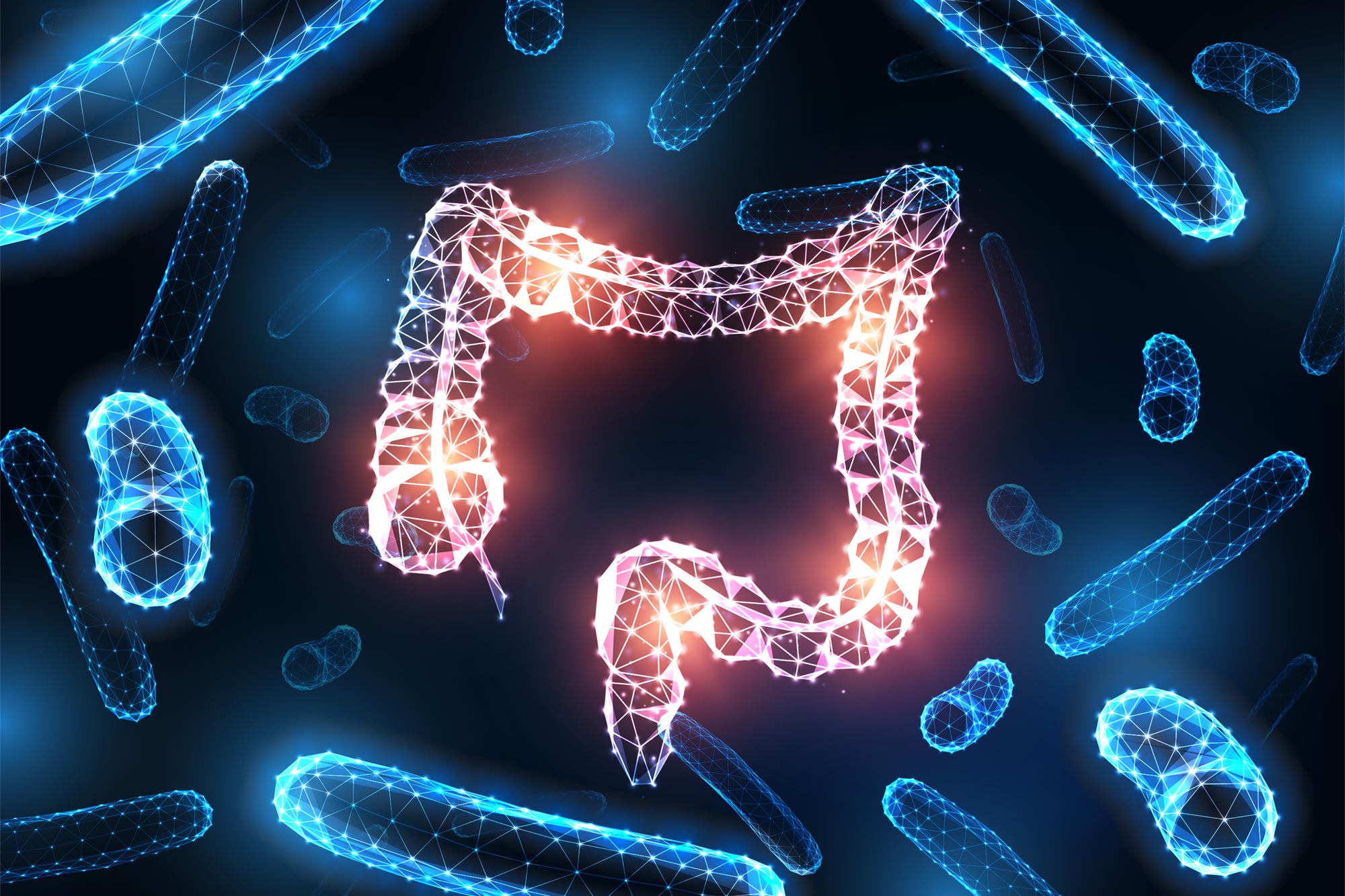
The bacteria already living in our gut produce a molecule our own cells don’t appear to make, and animal studies suggest it could help damaged intestines heal.
Severe intestinal inflammation can leave the gut lining so badly damaged that recovery becomes a matter of survival. Researchers at Rutgers Health have discovered a molecule produced by beneficial gut bacteria that helped mice recover from intestinal damage that proved fatal to untreated animals. The findings raise hope for a new way to treat inflammatory bowel disease (IBD), although the compound has not yet been tested as a treatment in humans.
In mice with inflamed and damaged colons, untreated animals lost 20% of their body weight and died. Those injected with the molecule, called (amide-)N-methylnicotinamide (N-MNA), lost just 5% and recovered. In fruit flies with damaged intestines, treatment increased seven-day survival from 43% to 78%.
The study, published in Science Advances, found that N-MNA helped repair the intestinal lining by stimulating stem cell regeneration. It did so by increasing levels of nicotinamide adenine dinucleotide (NAD), a coenzyme essential for cellular function that declines with age. Scientists suspect this decline plays an important role in aging.
A bacterial molecule cells can reuse
NAD cannot enter cells directly, so researchers have been searching for precursor molecules that cells can absorb and convert into NAD. Some gut bacteria naturally produce these compounds, including species available in dietary supplements.
“Humans do not appear to make this exact precursor molecule N-MNA, but some of the bacteria living in our gut do,” said senior study author Nan Gao, a professor of pharmacology, physiology and neuroscience at Rutgers New Jersey Medical School.
N-MNA closely resembles a molecule human cells produce when disposing of excess NAD building blocks. However, a small chemical difference allows the bacterial version to be converted back into NAD.
“The molecules animal cells and bacteria make are almost identical, but a tiny difference allows the creation of the bacterial compound back into NAD itself,” said senior study author Xiaoyang Su, an associate professor of medicine at Rutgers Robert Wood Johnson Medical School. Su also co-directs the Metabolomics Shared Resource at Rutgers Cancer Institute, New Jersey’s only National Cancer Institute-designated Comprehensive Cancer Center, together with RWJBarnabas Health.
First author Jiangmeng Han, a doctoral student in biological sciences at Rutgers University-Newark, tracked N-MNA inside human colon cells and found that it supplied approximately 22% of their NAD within 24 hours. The compound was also converted into NAD in human neurons, liver cells, and kidney cells, as well as in the bodies and heads of fruit flies given the molecule.
Lower N-MNA linked to gut inflammation
Researchers also examined stool samples from 54 patients with IBD and 20 healthy volunteers. Patients with lower N-MNA levels had significantly higher markers of intestinal inflammation.
“Patients with low levels of this metabolite showed a higher inflammatory activity,” Gao said.
Although the findings suggest a connection between N-MNA and intestinal health, the researchers have not tested the compound as a treatment in people. They also have not determined whether consuming N-MNA-producing bacteria, including Lactobacilli found in yogurt and oral supplements, increases NAD levels in humans.
Gao suggested that stool tests might eventually identify patients who could benefit from certain probiotics, although that possibility remains years away.
“This compound itself may be sufficient, but we cannot rule out the possibility that there are other, better compounds,” said Ching-On Wong, an assistant professor of biological sciences at Rutgers-Newark and a senior study author who contributed expertise in fly genetics.
Scientists pursue the missing enzymes
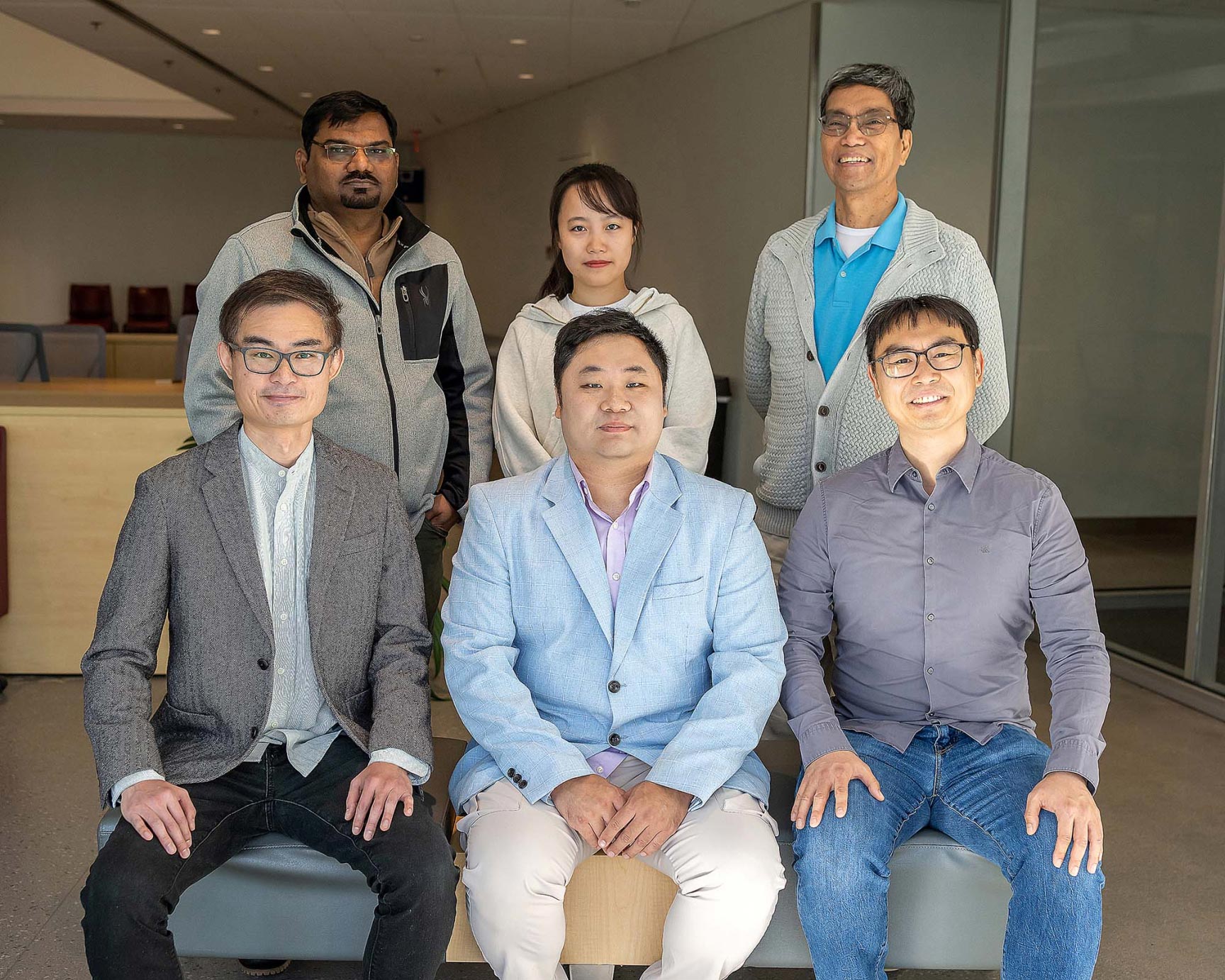
The research brought together doctoral students and postdoctoral fellows from multiple Rutgers campuses and departments.
“Right now, we’re still trying to understand the fundamentals, and this requires a multidisciplinary team of a biochemist, fly geneticist, and intestinal biologist,” Gao said.
Supported by a five-year, $3.6 million National Institutes of Health grant, the team is working to identify the still-unknown human enzymes that process N-MNA. Wong’s laboratory is investigating whether the molecule supports brain-cell health and longevity, while Gao’s laboratory is mapping the bacterial genes responsible for producing it.
Reference: “The (amide-)N-methylnicotinamide is a microbe-derived NAD+ precursor that drives gut stem cell renewal” by Jiangmeng Han, Jayson M. Antonio, Jagannatham Naidu Bhupana, Garam Choi, Jiaxing Yang, Eric Chiles, Yan Tong, Mohamed Asik Rajmohamed, Hung-Ting Wu, Dahui Wang, Vik Meadows, Nicolas Lapaque, Jean-Pierre Etchegaray, Rafal Filip, Ta-Chiang Liu, Pawel R. Kiela, Nicholas Bessman, Ronaldo P. Ferraris, Ching-On Wong, Xiaoyang Su and Nan Gao, 6 November 2026, Science Advances.
DOI: 10.1126/sciadv.aef2882
This research was funded by the National Center for Complementary and Integrative Health, National Institutes of Health, grant number R01AT013333.
Disclosure: Rutgers has filed a provisional patent application on uses of N-MNA, with Han, Ferraris, Su and Gao named as inventors.
Never miss a breakthrough: Join the SciTechDaily newsletter.
Follow us on Google and Google News.