
Mediterranean Diet Promotes Gut Bacteria Linked to ‘Healthy Aging’ in Older People
Eating a Mediterranean diet for a year boosts the types of gut bacteria linked to ‘healthy’ aging while reducing those associated with harmful inflammation in older people, indicates a five-country study, published online in the journal Gut.
As aging is associated with deteriorating bodily functions and increasing inflammation, both of which herald the onset of frailty, this diet might act on gut bacteria in such a way as to help curb the advance of physical frailty and cognitive decline in older age, suggesting the researchers.
Previous research suggests that a poor/restrictive diet, which is common among older people, particularly those in long-term residential care, reduces the range and types of bacteria (microbiome) found in the gut and helps to speed up the onset of frailty.
The researchers therefore wanted to see if a Mediterranean diet might maintain the microbiome in older people’s guts, and promote the retention or even proliferation of bacteria associated with ‘healthy’ aging.
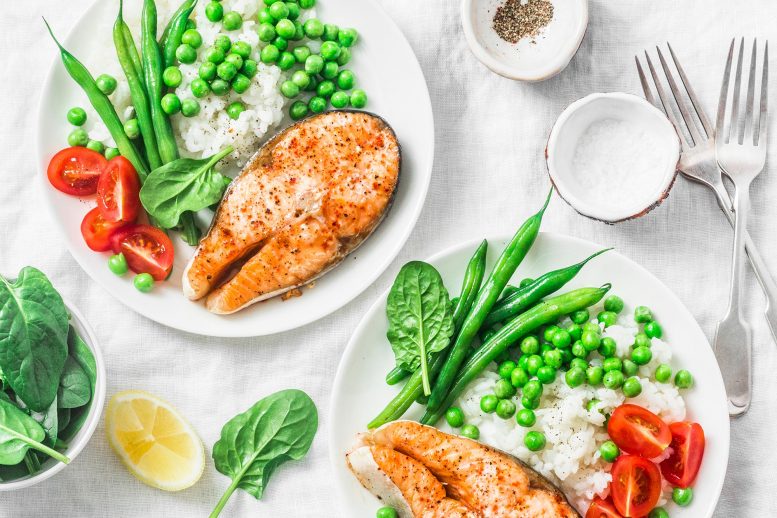
They analyzed the gut microbiome of 612 people aged 65 to 79, before and after 12 months of either eating their usual diet (n = 289) or a Mediterranean diet (n = 323), rich in fruits, vegetables, nuts, legumes, olive oil, and fish and low in red meat and saturated fats, and specially tailored to older people (NU-AGE diet).
The participants, who were either frail (n=28), on the verge of frailty (n=151), or not frail (n=433) at the beginning of the study, lived in five different countries: France, Italy, Netherlands, Poland, and the UK.
Sticking to the Mediterranean diet for 12 months was associated with beneficial changes to the gut microbiome.
It was associated with stemming the loss of bacterial diversity; an increase in the types of bacteria previously associated with several indicators of reduced frailty, such as walking speed and hand grip strength, and improved brain function, such as memory; and with reduced production of potentially harmful inflammatory chemicals.
More detailed analysis revealed that the microbiome changes were associated with an increase in bacteria known to produce beneficial short-chain fatty acids and a decrease in bacteria involved in producing particular bile acids, overproduction of which are linked to a heightened risk of bowel cancer, insulin resistance, fatty liver, and cell damage.
What’s more, the bacteria that proliferated in response to the Mediterranean diet acted as ‘keystone’ species, meaning they were critical for a stable ‘gut ecosystem,’ pushing out those microbes associated with indicators of frailty.
The changes were largely driven by an increase in dietary fiber and associated vitamins and minerals–specifically, C, B6, B9, copper, potassium, iron, manganese, and magnesium.
The findings were independent of the person’s age or weight (body mass index), both of which influence the make-up of the microbiome.
And while there were some differences in the make-up of a person’s gut microbiome, depending on country of origin to start with, the response to the Mediterranean diet after 12 months was similar and consistent, irrespective of nationality.
The study findings can’t establish a causative role for the microbiome in health, added to which some of the implications are inferred rather than directly measured, say the researchers.
“The interplay of diet, microbiome, and host health is a complex phenomenon influenced by several factors,” they emphasize.
“While the results of this study shed light on some of the rules of this three-way interplay, several factors such as age, body mass index, disease status, and initial dietary patterns may play a key role in determining the extent of success of these interactions,” they explain.
Older people may have dental problems and/or difficulty swallowing, so it may be impractical for them to eat a Mediterranean diet, they add. But the beneficial bacteria implicated in healthy aging found in this study might yet prove useful therapeutic agents to ward off frailty, they suggest.
Reference: “Mediterranean diet intervention alters the gut microbiome in older people reducing frailty and improving health status: the NU-AGE 1-year dietary intervention across five European countries” by Tarini Shankar Ghosh, Simone Rampelli, Ian B Jeffery, Aurelia Santoro, Marta Neto, Miriam Capri, Enrico Giampieri, Amy Jennings, Marco Candela, Silvia Turroni, Erwin G Zoetendal, Gerben D A Hermes, Caumon Elodie, Nathalie Meunier, Corinne Malpuech Brugere, Estelle Pujos-Guillot, Agnes M Berendsen, Lisette C P G M De Groot, Edith J M Feskins, Joanna Kaluza, Barbara Pietruszka, Marta Jeruszka Bielak, Blandine Comte, Monica Maijo-Ferre, Claudio Nicoletti, Willem M De Vos, Susan Fairweather-Tait, Aedin Cassidy, Patrizia Brigidi, Claudio Franceschi and Paul W O’Toole, 17 February 2020, Gut.
DOI: 10.1136/gutjnl-2019-319654
Never miss a breakthrough: Join the SciTechDaily newsletter.
Follow us on Google and Google News.