
Close Menu
    Facebook X (Twitter) Instagram
    SciTechDaily
    • Biology
    • Chemistry
    • Earth
    • Health
    • Physics
    • Science
    • Space
    • Technology
    Facebook X (Twitter) Pinterest YouTube RSS
    SciTechDaily
    Home»Health»Meningococci Bacteria Use a Small Protein With Big Pathogenic Impact
    Health

    Meningococci Bacteria Use a Small Protein With Big Pathogenic Impact

    By University of WürzburgJune 4, 2020No Comments3 Mins Read
    Facebook Twitter Pinterest Telegram LinkedIn WhatsApp Email Reddit
    Share
    Facebook Twitter LinkedIn Pinterest Telegram Email Reddit
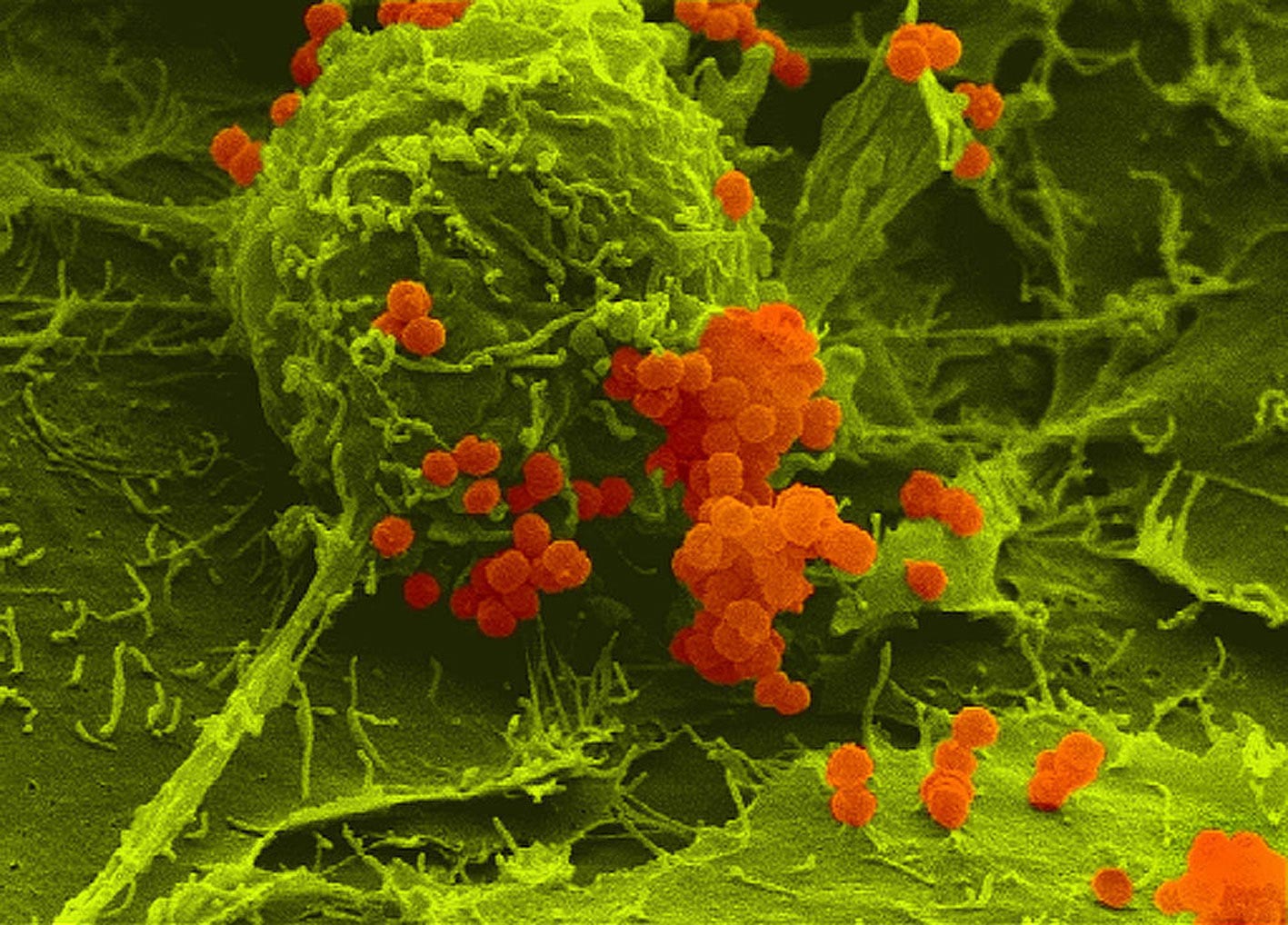
    Meningococci Electron Micrograph
    False color scanning electron micrograph of meningococci (orange) adherent to human host cells (green). Credit: Alexandra Schubert-Unkmeir / University of Wuerzburg

    Meningococci are bacteria that can cause life-threatening meningitis and sepsis. These pathogens use a small protein with a large impact: The RNA-binding protein ProQ is involved in the activation of more than 250 bacterial genes.

    ProQ ensures that meningococci can better repair their DNA if damaged and it makes them resistant to oxidative stress. Both these factors contribute significantly to the bacteria’s pathogenic properties.

    This was reported by research groups led by the Würzburg scientists Christoph Schoen and Jörg Vogel in the journal Nature Communications.

    “We were surprised that a comparatively small protein can have such a great influence on bacterial gene regulation,” says Christoph Schoen, professor at the Institute of Hygiene and Microbiology at Julius-Maximilians-Universität (JMU) Würzburg in Bavaria, Germany.

    ProQ only consists of about 120 amino acids. By comparison, many other proteins are usually made up of several hundred amino acids.

    ProQ interacts with 200 RNAs

    The mini-protein belongs to the group of RNA-binding proteins. RNA molecules play an important role as regulators in many biological processes. They often perform their functions in combination with the binding proteins.

    ProQ is a key player in this respect: “In meningococci, the protein interacts with almost 200 different RNA molecules,” says Jörg Vogel. “It binds to structured regions of the RNA and thus stabilizes its binding partners.”

    The researchers made the discovery using modern high-throughput processes. These methods were developed in Vogel’s group at the Helmholtz Institute for RNA-based Infection Research (HIRI) in Würzburg. Vogel is the director of HIRI and heads the JMU Institute for Molecular Infection Biology.

    Looking for new drugs against bacteria

    The scientists are interested in the processes in bacteria because they hope to find new targets for antibacterial agents. The pathways regulated by RNA and its binding proteins in particular offer a promising field of activity. “We hope to be able to disrupt the binding proteins in their function with small molecules and hence weaken the pathogens,” explains Vogel.

    Objective: to identify all RNA binding proteins

    For two thirds of all RNAs in meningococci, the associated binding proteins have not yet been identified. This raises questions: Is it possible that the majority of RNAs does not need proteins to carry out their regulatory function in bacterial cells? And which processes are actually regulated by RNA-binding proteins?

    “This is what we would like to find out – and meningococci are particularly well suited for this task because of their relatively small genome,” says Schoen. “Our goal is to systematically identify the entire family of RNA-binding proteins in meningococci using established high-throughput methods.”

    Reference: “The minimal meningococcal ProQ protein has an intrinsic capacity for structure-based global RNA recognition” by Saskia Bauriedl, Milan Gerovac, Nadja Heidrich, Thorsten Bischler, Lars Barquist, Jörg Vogel and Christoph Schoen, 4 June 2020, Nature Communications.
    DOI: 10.1038/s41467-020-16650-6

    Never miss a breakthrough: Join the SciTechDaily newsletter.
    Follow us on Google and Google News.

    Bacteria Infectious Diseases Microbiology Molecular Biology University of Würzburg
    Share. Facebook Twitter Pinterest LinkedIn Email Reddit

    Related Articles

    New Defense Against Bacterial Superbugs: Taking Fish Oil May Reduce Antibiotic Resistance

    Staphylococcus: From Harmless Skin Bacteria to Deadly Pathogen

    Harnessing Next Generation Sequencing to Detect SARS-CoV-2 …and Prepare for the Next Pandemic

    Experimental Therapy For Parasitic Heart Disease – K777 – May Also Help Stop COVID-19

    “Hidden” Genes in Bacteriophages Could Be Key in Development of New Antibiotics

    Replication Cycle of SARS-CoV-2 in 3D – “We Can Expect the Coronavirus to Become Seasonal”

    Supercharged Bacterial “Clones” Spark Scarlet Fever’s Global Re-emergence

    Scientists Warn That More Bat Research Is Critical to Preventing Next Pandemic

    Syphilis Alters Its Genetics to Evade the Immune System

    Leave A Reply Cancel Reply

    • Facebook
    • Twitter
    • Pinterest
    • YouTube

    Don't Miss a Discovery

    Subscribe for the Latest in Science & Tech!

    Trending News

    Scientists Discover How Coffee Impacts Memory, Mood, and Gut Health

    Why Did the Neanderthals Disappear? Scientists Reveal Humans Had a Hidden Advantage

    Physicists Propose Strange Experiment Where Time Goes Quantum

    Magnesium Magic: New Drug Melts Fat Even on a High-Fat, High-Sugar Diet

    Weight-Loss Drugs Like Ozempic May Come With an Unexpected Cost

    Mezcal “Worm” in a Bottle Mystery: DNA Testing Reveals a Surprise

    New Research Reveals That Your Morning Coffee Activates an Ancient Longevity Switch

    This Is What Makes You Irresistible to Mosquitoes

    Follow SciTechDaily
    • Facebook
    • Twitter
    • YouTube
    • Pinterest
    • Newsletter
    • RSS
    SciTech News
    • Biology News
    • Chemistry News
    • Earth News
    • Health News
    • Physics News
    • Science News
    • Space News
    • Technology News
    Recent Posts
    • Harvard Scientists Reveal Secret Structure Behind How You Smell
    • Scientists Just Discovered the Hidden Trick That Keeps Your Cells Alive
    • This Simple Movement Could Be Secretly Cleaning Your Brain
    • Male Birth Control Breakthrough: Scientists Find Way To Turn Sperm Production Off and Back On
    • A Common Vitamin Could Hold the Key to Treating Fatty Liver Disease
    Copyright © 1998 - 2026 SciTechDaily. All Rights Reserved.
    • Science News
    • About
    • Contact
    • Editorial Board
    • Privacy Policy
    • Terms of Use

    Type above and press Enter to search. Press Esc to cancel.