
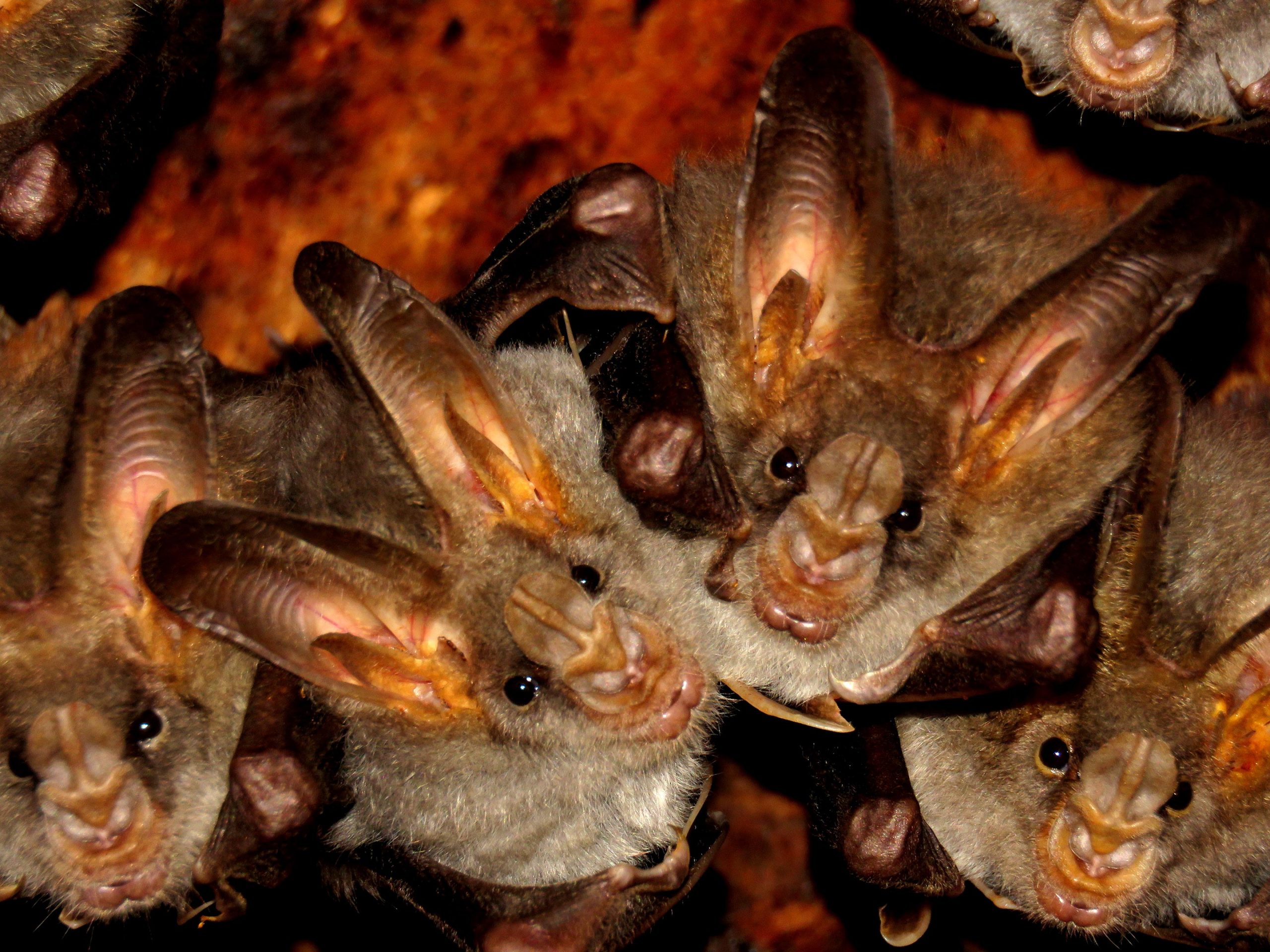
The current SARS-CoV-2 pandemic has a likely connection to bats, and the next viral outbreak probably will too, unless scientists can quickly learn more about the thousands of viruses carried by one of the most diverse mammals on the planet.
Evidence already links different bat species to human outbreaks of SARS, MERS, some Ebola viruses as well as the Marbug, Hendra, Sosuga, and Nipah viruses. Beyond these connections, there is very little known, and a recent article in Nature Reviews Microbiology calls for more research into bats’ molecular biology and their ecology, to help predict, and hopefully, prevent the next pandemic.
“The more researchers have looked, the more we’ve found that a lot of these emerging pathogens, at one point or another, originated in bats,” said Michael Letko, the lead author and an assistant professor of molecular virology at Washington State University’s Paul G. Allen School of Global Animal Health. “Over time, we have accumulated a lot of information about some of the species of bats and some of the viruses they carry, but there are still these huge glaring holes in our knowledge.”
With more than 1,400 species, bats represent an extremely diverse mammalian order, second only to rodents, which are also known viral hosts. However, unlike rats and mice, bats are not great lab animals. Simply keeping flying animals in labs is difficult. Also, most of the mammalian cell lines developed for research came from other animals and cannot be used to study viruses found in bats.
This knowledge gap is dangerous as the current pandemic shows. Bats are found almost everywhere scientists have looked, and with expanding human encroachment on their habitat, viral infection is almost inevitable, Letko said.
“We are coming into more contact with animal species around us in general, and then we find out these species are loaded with viruses,” he said. “The COVID-19 pandemic is unfortunate, but it’s not surprising. We roll the dice for 20 years not doing anything to reduce contact with these animals. It was more or less a matter of time before something like this was going to happen.”
In the paper, Letko, and his co-authors including WSU assistant professor Stephanie Seifert and Vincent Munster from Rocky Mountain Laboratories, outline ways to decrease the odds of the next pandemic by increasing research into bats on the smallest, molecular level and on the broader macro-level of the environment.
While many pathogens have been identified, the authors point out the need to move beyond discovery and use the latest genetic technologies to better understand how viruses can be transmitted. This knowledge can increase the ability to develop medicines quickly after a pathogen has been found—or even better, create vaccines to protect against whole virus groups before they emerge.
Letko has already taken a step in this direction. Before the current crisis, he built a platform using synthetic coronavirus particles to test which were most likely to infect human cells. When the current pandemic began, Letko tested the SARS-Cov-2 genome as soon as the sequence was available and quickly identified the likely receptor on human cells. That study, published in Nature Microbiology on February 24, 2020, was one of the first to provide functional laboratory data on the new virus, providing researchers with necessary information and tools to help determine which existing drugs might work against SARS-Cov-2 and start development on new ones as well as test various aspects of SARS-CoV-2 vaccine efficacy.
Letko is setting up his lab at WSU to continue this work, providing initial screening of bat-borne viruses to help identify those that are most likely to be transmitted to humans.
Beyond the lab, Letko and his colleagues point to the need for better understanding of bat ecology which can lead to solutions that are relatively simple to implement. The researchers cite examples such as the effort to vaccinate horses in Australia to stop the Hendra virus which was spreading from fruit bats to horses and then potentially on to humans. Another intervention in Bangladesh involved simply putting lids on palm sap containers to keep bats out and prevent human outbreaks of Nipah virus.
“Sometimes, you don’t need vaccines or drugs. It’s just a behavioral change that helps mitigate and reduce the contact between people and the animals,” Letko said. “These are some of the kinds of interventions that we can take once we begin to understand what these viruses actually do.”
References:
“Bat-borne virus diversity, spillover and emergence” by Michael Letko, Stephanie N. Seifert, Kevin J. Olival, Raina K. Plowright and Vincent J. Munster, 11 June 2020, Nature Reviews Microbiology.
DOI: 10.1038/s41579-020-0394-z
“Functional assessment of cell entry and receptor usage for SARS-CoV-2 and other lineage B betacoronaviruses” by Michael Letko, Andrea Marzi and Vincent Munster, 24 February 2020, Nature Microbiology.
DOI: 10.1038/s41564-020-0688-y
Never miss a breakthrough: Join the SciTechDaily newsletter.
Follow us on Google and Google News.
2 Comments
Still spreading the hoax that bats were involved in the COVID-19 debacle.
More directly involved were the humans who genetically manipulated bat viruses which became “fine tuned” via passage through genetically engineered humanized mice ….
This type of research is still being done, and funded …