
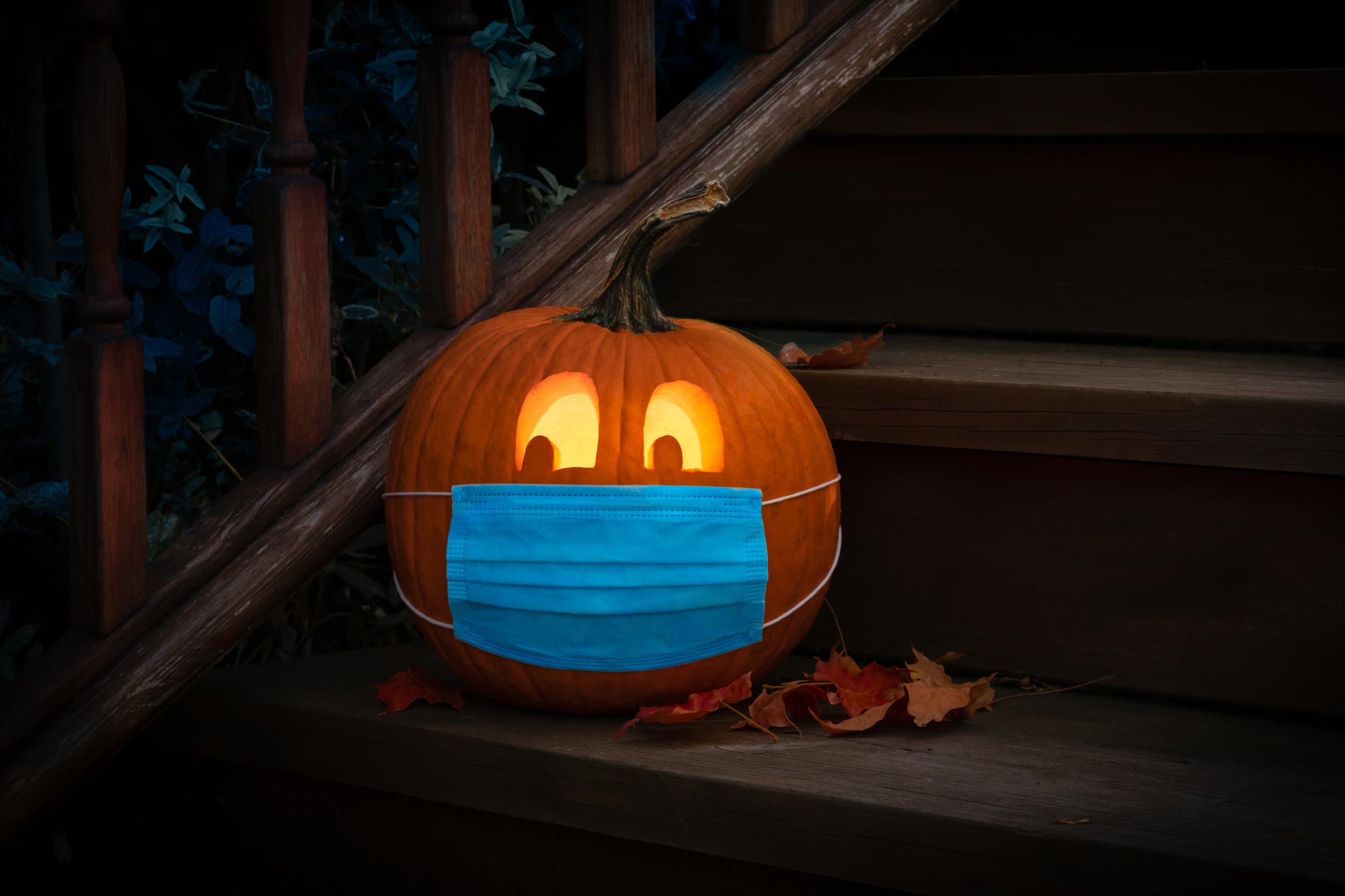
Researchers say viral transmission risk is low, even when candies are handled by infected persons, but handwashing and disinfecting collected sweets reduces risk even further.
Like a specter, the question looms: How risky is trick-or-treating with SARS-Cov-2, the virus that causes COVID-19, in the air — and possibly on the candy?
In a study published on October 29, 2020 in the journal mSystems, researchers at University of California San Diego School of Medicine and San Diego State University analyzed the viral load on Halloween candy handled by patients with COVID-19.
SARS-CoV-2 is primarily transmitted by respiratory droplets and aerosols. The risk of infection by touching fomites — objects or surfaces upon which viral particles have landed and persist — is relatively low, according to multiple studies, even when fomites are known to have been exposed to the novel coronavirus. Nonetheless, the risk is not zero.
“The main takeaway is that, although the risk of transmission of SARS-CoV-2 by surfaces, including candy wrappers, is low, it can be reduced even further by washing your hands with soap before handling the candy and washing the candy with household dishwashing detergent afterward,” said co-senior author Rob Knight, PhD, professor and director of the Center for Microbiome Innovation at UC San Diego. “The main risk is interacting with people without masks, so if you are sharing candy, be safe by putting it in a dish where you can wave from six feet away.” Knight led the study with Forest Rohwer, PhD, a viral ecologist at San Diego State University, and Louise Laurent, MD, PhD, professor at UC San Diego School of Medicine.
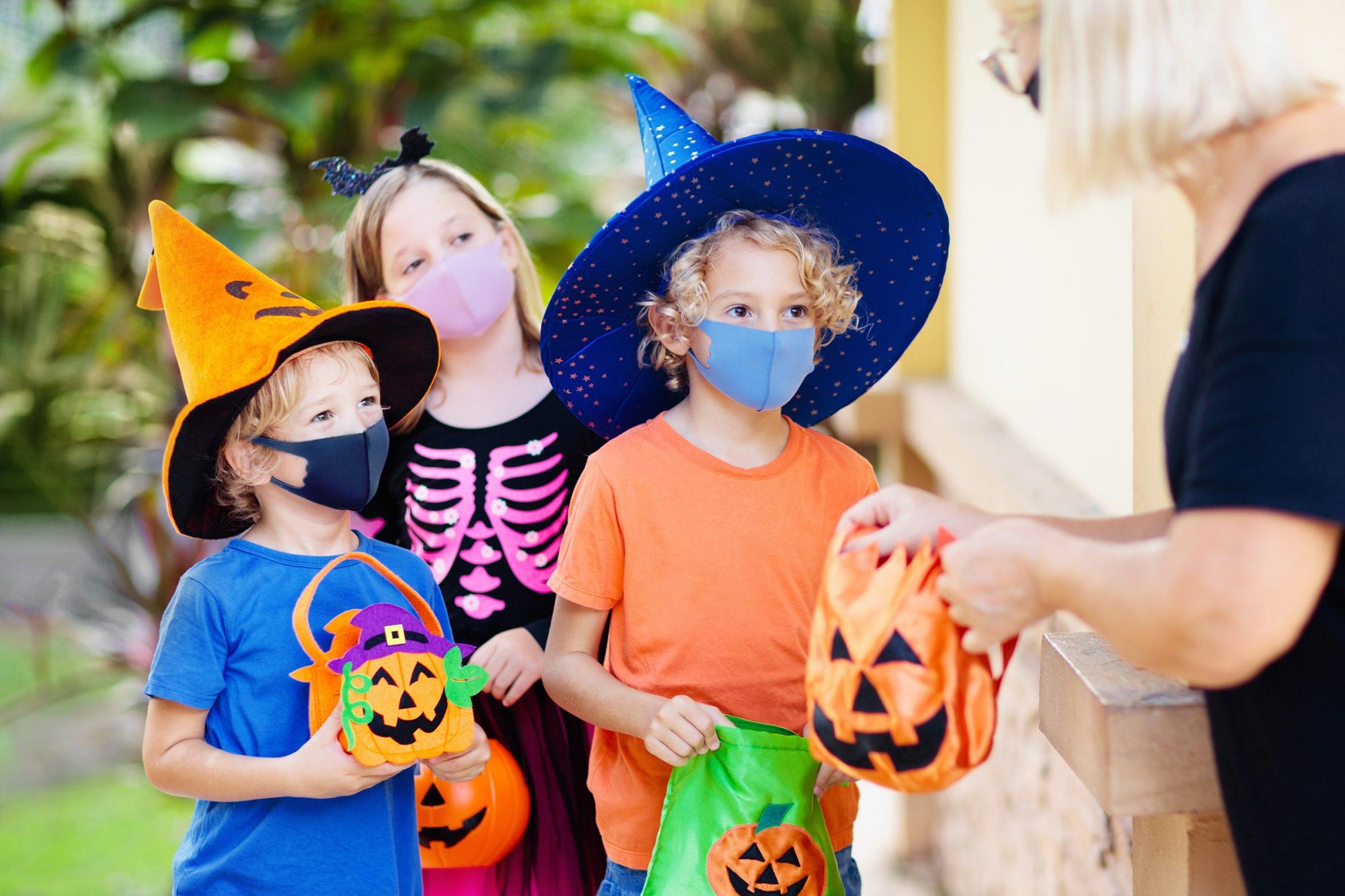
For their study, the researchers enrolled 10 recently diagnosed COVID-19 patients who were asymptomatic or mildly symptomatic and asked them to handle Halloween candy under three different conditions: 1) normally with unwashed hands; 2) while deliberately coughing with extensive handling; and 3) normal handling after handwashing.
The candy was then divided into two treatments — no post-handling washing (untreated) and washed with household dishwashing detergent — followed by analyses using real-time reverse transcription polymerase chain reaction, the same technology used to diagnose COVID-19 infections in people, and a second analytical platform that can conduct tests on larger samples more quickly and cheaply. Both produced similar findings.
On candies not washed post-handling, researchers detected SARS-CoV-2 on 60 percent of the samples that had been deliberately coughed on and on 60 percent of the samples handled normally with unwashed hands. However, the virus was detected in only 10 percent of the candies handled after handwashing.
Not surprisingly, the dishwashing detergent was effective in reducing the viral RNA on candies, reducing the viral load by 62.1 percent.
They had also planned to test bleach, “but importantly, we noted that bleach sometimes leaked through some of the candy wrappers, making it unsafe for this type of cleaning use,” Rohwer said.
The study authors underscored that the likely risk of SARS-CoV-2 transmission from candy is low, even if handled by someone with a COVID-19 infection, but it can be reduced to near-zero if the candy is handled only by people who have first washed their hands and if it is washed with household dishwashing detergent for approximately a minute after collection.
Reference: “Handwashing and Detergent Treatment Greatly Reduce SARS-CoV-2 Viral Load on Halloween Candy Handled by COVID-19 Patients” by Rodolfo A. Salido, Sydney C. Morgan, Maria I. Rojas, Celestine G. Magallanes, Clarisse Marotz, Peter DeHoff, Pedro Belda-Ferre, Stefan Aigner, Deborah M. Kado, Gene W. Yeo, Jack A. Gilbert, Louise Laurent, Forest Rohwer and Rob Knight, 29 October 2020, mSystems.
DOI: 10.1128/mSystems.01074-20
Additional co-authors include: Rodolfo A. Salido, Sydney C. Morgan, Celestien G. Magallenes, Clarisse Marotz, Peter DeHoff, Pedro Belda-Ferre, Stefan Aigner, Deborah M. Kado, Gene W. Yeo, Jack A. Gilbert, all at UC San Diego; and Maria I. Rojas of San Diego State University.
Never miss a breakthrough: Join the SciTechDaily newsletter.
Follow us on Google and Google News.
6 Comments
Please unsibscribe me, I am getting notifications around the clock.
AHAHAHAHA!
Ok critical thinkers – tear it apart. i’ve found at least 3 logical fallacies and 1 lie in this article. Anyone else? (oh and grammatical errors as well. I’m not even a journalist, are journalists required to go to school anymore?)
Easy to claim errors. Let’s see you back that up. What errors? What lies ? Put up or shut up.
Happy Halloween, stranger on the internet.😄🎉🎊🎃
1st word HOG
2nd word WASH
And why are we not discussing the risk of the dirty kids spreading the virus to every house they visit… I think we should be more worried that a single infected kid is going to spread it all across the neighborhood to the elderly and other at-risk persons.