
Close Menu
    Facebook X (Twitter) Instagram
    SciTechDaily
    • Biology
    • Chemistry
    • Earth
    • Health
    • Physics
    • Science
    • Space
    • Technology
    Facebook X (Twitter) Pinterest YouTube RSS
    SciTechDaily
    Home»Space»What Is NASA’s Deep Space Network?
    Space

    What Is NASA’s Deep Space Network?

    By NASA Jet Propulsion LaboratoryOctober 3, 2024No Comments4 Mins Read
    Facebook Twitter Pinterest Telegram LinkedIn WhatsApp Email Reddit
    Share
    Facebook Twitter LinkedIn Pinterest Telegram Email Reddit
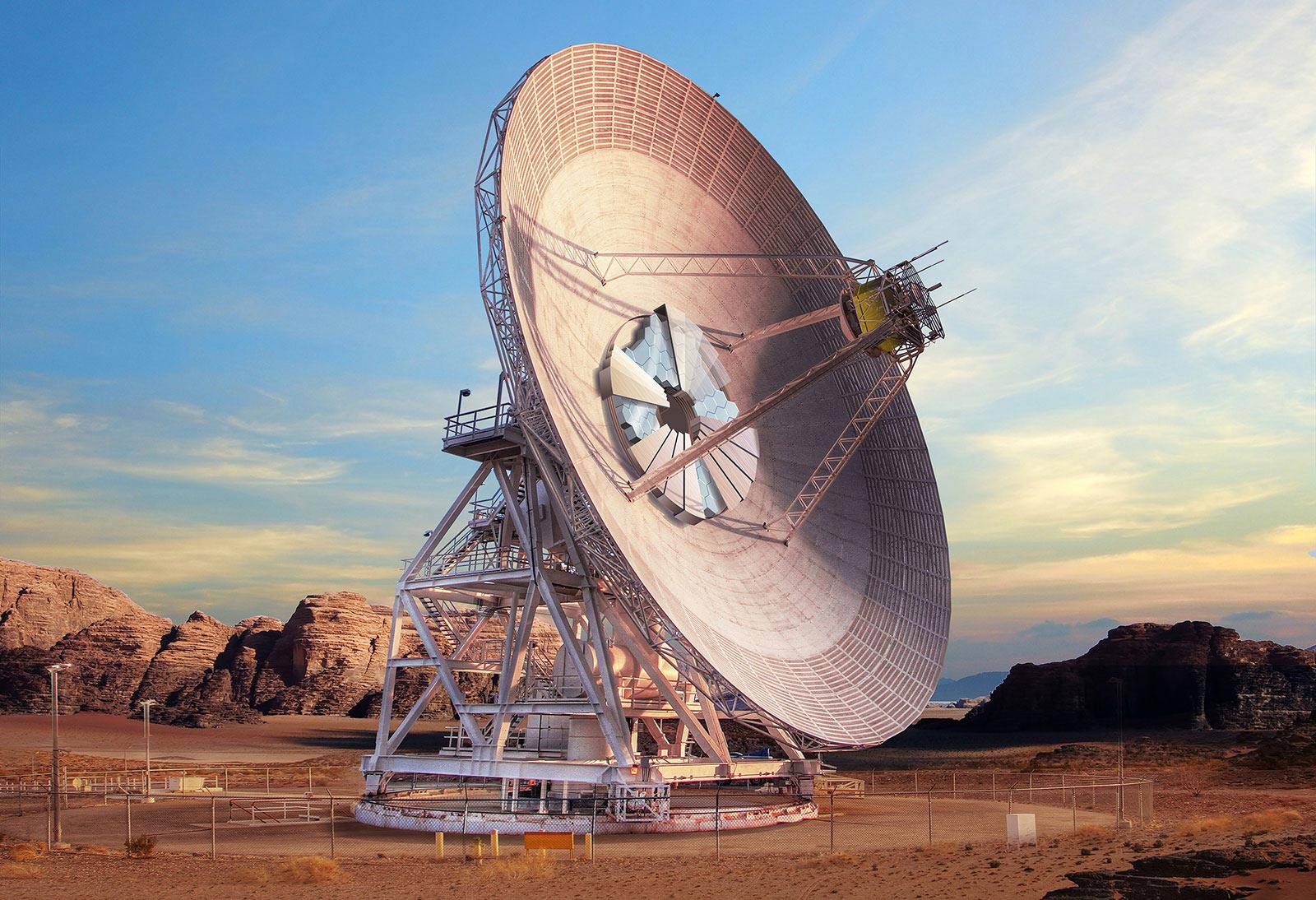
    Deep Space Station 23 Dish
    This artist’s concept shows what Deep Space Station-23, a new antenna dish capable of supporting both radio wave and laser communications, will look like when completed at the Deep Space Network’s Goldstone, California, complex. Credit: NASA/JPL-Caltech

    NASA’s Deep Space Network (DSN) stands as the most extensive and sensitive telecommunications system dedicated to space, operated by the Jet Propulsion Laboratory. Spanning three strategically placed sites across the globe in California, Spain, and Australia, the DSN ensures uninterrupted communication with interplanetary spacecraft through its powerful antennas. These antennas not only maintain contact with distant spacecraft but also facilitate groundbreaking scientific investigations and data retrieval, enhancing our understanding of the universe.

    Overview of the Deep Space Network

    When it comes to making a long-distance call, it’s hard to top NASA’s Deep Space Network. It’s the largest and most sensitive scientific telecommunications system in the world.

    The Deep Space Network – or DSN – is NASA’s international array of giant radio antennas that supports interplanetary spacecraft missions, plus a few that orbit Earth. The DSN also provides radar and radio astronomy observations that improve our understanding of the solar system and the larger universe.

    Deep Space Station 35 (DSS-35)
    Deep Space Network, Deep Space Station 35 (DSS-35) at the Canberra Deep Space Communications Complex near Canberra, Australia. Credit: NASA/JPL-Caltech

    The DSN is operated by NASA’s Jet Propulsion Laboratory (JPL), which also operates many of the agency’s interplanetary robotic space missions.

    The DSN consists of three facilities spaced equidistant from each other – approximately 120 degrees apart in longitude – around the world. These sites are at Goldstone, near Barstow, California; near Madrid, Spain; and near Canberra, Australia. The strategic placement of these sites permits constant communication with spacecraft as our planet rotates – before a distant spacecraft sinks below the horizon at one DSN site, another site can pick up the signal and carry on communicating.

    The antennas of the Deep Space Network are the indispensable link to explorers venturing beyond Earth. They provide the crucial connection for commanding our spacecraft and receiving their never before seen images and scientific information on Earth, propelling our understanding of the universe, our solar system and ultimately, our place within it.

    Charles Elachi Mission Control Center
    Team members at the Charles Elachi Mission Control Center at NASA’s Jet Propulsion Laboratory during the launch of Artemis I on November 16, 2022. Credit: NASA/JPL-Caltech/Ryan Lannom

    What Does the DSN Do?

    The Deep Space Network is much more than a collection of big antennas. It is a powerful system for commanding, tracking and monitoring the health and safety of spacecraft at many distant planetary locales. The DSN also enables powerful science investigations that probe the nature of asteroids and the interiors of planets and moons.

    Learn More

    Madrid Deep Space Communications Complex
    The Madrid Deep Space Communications Complex near Madrid, Spain. Credit: NASA

    Where is the DSN Located?

    Each of the three Deep Space Network sites has multiple large antennas and is designed to enable continuous radio communication between several spacecraft and Earth. All three complexes consist of at least four antenna stations, each equipped with large, parabolic dish antennas and ultra-sensitive receiving systems capable of detecting incredibly faint radio signals from distant spacecraft.

    Learn More

    Deep Space Station 43 (DSS-43) Canberra
    Deep Space Network, Deep Space Station 43 (DSS-43), a 230-foot (70-meter) antenna at the Canberra Deep Space Communications Complex near Canberra, Australia. Credit: NASA/JPL-Caltech

    Antennas of the DSN

    Each Deep Space Network site has one huge, 230-foot (70-meter) diameter antenna. The 70-meter antennas are the largest and most sensitive DSN antennas, capable of tracking a spacecraft traveling tens of billions of miles from Earth.

    Learn More

    Never miss a breakthrough: Join the SciTechDaily newsletter.
    Follow us on Google and Google News.

    Deep Space Network JPL NASA
    Share. Facebook Twitter Pinterest LinkedIn Email Reddit

    Related Articles

    A Gigantic New NASA Dish in Australia Is Set to Transform Space Communication

    Crowning Achievement: NASA’s Massive New Antenna To Revolutionize Deep Space Communication

    What Does NASA’s Deep Space Network Do?

    NASA’s Hybrid Antenna Ushers In a New Era of Deep Space Laser Communication

    From Apollo to Artemis: Celebrating 60 Years of NASA’s Deep Space Network

    NASA’s “Interplanetary Switchboard” Adds Enormous New Dish To Communicate With Deep Space Missions

    DSN Upgrades: NASA’s Deep Space Network Looks to the Future

    NASA’s Deep Space Network Welcomes a Super Powerful New Dish to the Family

    NASA’s New Deep Space Network Dish Will Communicate With Robotic Spacecraft Using Radio Waves and Lasers

    Leave A Reply Cancel Reply

    • Facebook
    • Twitter
    • Pinterest
    • YouTube

    Don't Miss a Discovery

    Subscribe for the Latest in Science & Tech!

    Trending News

    Why Popular Diabetes Drugs Like Ozempic Don’t Work for Everyone: The “Genetic Glitch”

    Scientists Stunned After Finding Plant Thought Extinct for 60 Years

    Scientists Discover Tiny New Spider That Hunts Prey 6x Its Size

    Natural Component From Licorice Shows Promise for Treating Inflammatory Bowel Disease

    Scientists Warn: Popular Sweetener Linked to Dangerous Metabolic Effects

    Monster Storms on Jupiter Unleash Lightning Beyond Anything on Earth

    Scientists Create “Liquid Gears” That Spin Without Touching

    The Simple Habit That Could Help Prevent Cancer

    Follow SciTechDaily
    • Facebook
    • Twitter
    • YouTube
    • Pinterest
    • Newsletter
    • RSS
    SciTech News
    • Biology News
    • Chemistry News
    • Earth News
    • Health News
    • Physics News
    • Science News
    • Space News
    • Technology News
    Recent Posts
    • 100,000-Year-Old Neanderthal Fossils in Poland Reveal Unexpected Genetic Connections
    • Unexpected Hormone Discovery Could Change How We Treat Arthritis
    • Scientists Supercharge “Natural Killer” Cells To Break Through Cancer’s Defenses
    • Simple “Gut Reset” May Prevent Weight Gain After Ozempic or Wegovy
    • 2.8 Days to Disaster: Scientists Warn Low Earth Orbit Could Suddenly Collapse
    Copyright © 1998 - 2026 SciTechDaily. All Rights Reserved.
    • Science News
    • About
    • Contact
    • Editorial Board
    • Privacy Policy
    • Terms of Use

    Type above and press Enter to search. Press Esc to cancel.