
Close Menu
    Facebook X (Twitter) Instagram
    SciTechDaily
    • Biology
    • Chemistry
    • Earth
    • Health
    • Physics
    • Science
    • Space
    • Technology
    Facebook X (Twitter) Pinterest YouTube RSS
    SciTechDaily
    Home»Space»NASA’s Voyager 1 Spacecraft Operating at Coldest Temperature Ever
    Space

    NASA’s Voyager 1 Spacecraft Operating at Coldest Temperature Ever

    By Jia-Rui C. Cook, Jet Propulsion LaboratoryJanuary 17, 2012No Comments2 Mins Read
    Facebook Twitter Pinterest Telegram LinkedIn WhatsApp Email Reddit
    Share
    Facebook Twitter LinkedIn Pinterest Telegram Email Reddit
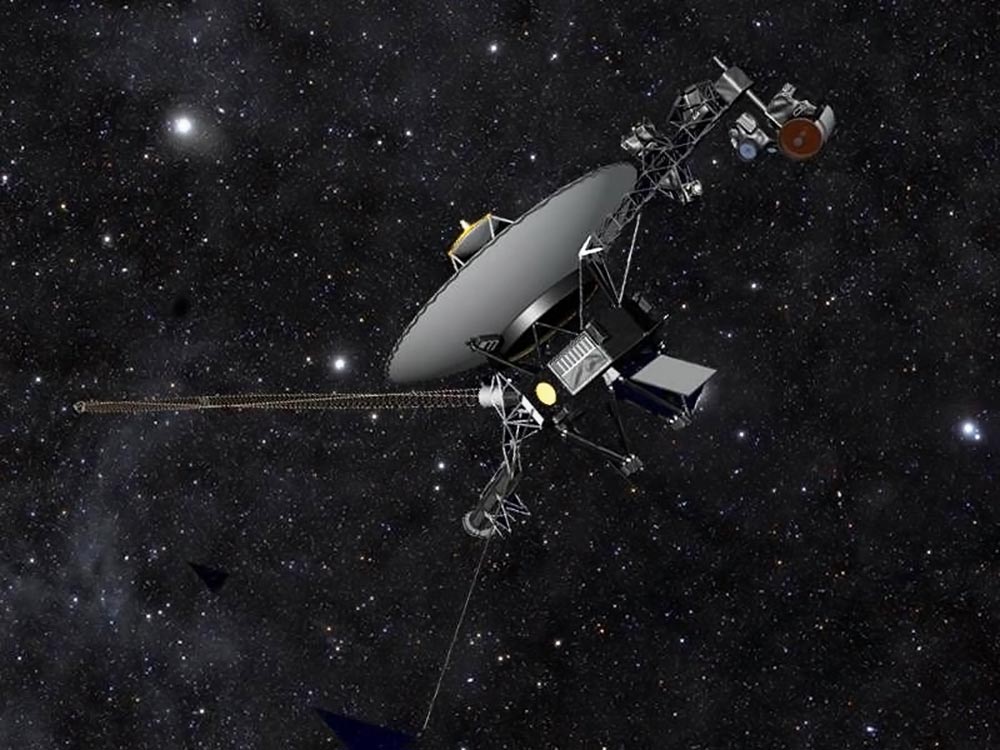
    Voyager Spacecraft Traveling Through Space
    An artist’s concept shows the Voyager spacecraft traveling through space against a field of stars. Credit: NASA/JPL-Caltech

    In hope that NASA’s Voyager 1 spacecraft will be able to transmit data through 2025, NASA has decided they need to further reduce its power consumption. By turning off another heater, they hope to make this possible without jeopardizing the ultraviolet spectrometer. Over the last 17 years, several heaters have been turned off, dropping the temperature below the originally designed minimum operating temperature of minus 35 degrees Celsius (minus 31 degrees Fahrenheit). Currently the operating temperature is slightly below minus 79 degrees Celsius (minus 110 degrees Fahrenheit), the coldest this spectrometer has ever endured, but it continues to collect and return data.

    In order to reduce power consumption, mission managers have turned off a heater on part of NASA’s Voyager 1 spacecraft, dropping the temperature of its ultraviolet spectrometer instrument more than 23 degrees Celsius (41 degrees Fahrenheit). It is now operating at a temperature below minus 79 degrees Celsius, the coldest temperature that the instrument has ever endured. This heater shut-off is a step in the careful management of the diminishing electrical power so that the Voyager spacecraft can continue to collect and transmit data through 2025.

    At the moment, the spectrometer continues to collect and return data. It was originally designed to operate at temperatures as low as minus 35 degrees Celsius, but it has continued to operate in ever chillier temperatures as heaters around it have been turned off over the last 17 years. It was not known if the spectrometer would continue working, but since 2005, it has been operating at minus 56 degrees Celsius (minus 69 degrees Fahrenheit). So engineers are encouraged that the instrument has continued to operate, even after the nearby heater was turned off in December. (The spectrometer is likely operating at a temperature somewhat lower than minus 79 degrees Celsius, but the temperature detector does not go any lower.)

    Scientists and mission managers will continue to monitor the spectrometer’s performance. It was very active during Voyager 1’s encounters with Jupiter and Saturn, and since then an international team led by scientists in France has been analyzing the spectrometer’s data.

    This latest heater shut-off was actually part of the nearby infrared spectrometer, which itself has not been operational on Voyager 1 since 1998.

    Never miss a breakthrough: Join the SciTechDaily newsletter.
    Follow us on Google and Google News.

    NASA Spacecraft Spectrometer Voyager 1
    Share. Facebook Twitter Pinterest LinkedIn Email Reddit

    Related Articles

    NASA’s Galaxy Evolution Explorer Set to be Decommissioned

    Botched Pressure Test of Russian Soyuz Capsule Delays Launch by a Month

    Juno Spacecraft Completes First Trajectory Correction Maneuver

    NASA’s THEMIS Satellite Records Effect of Geomagnetic Storms on Radiation Belts

    NASA’s Cassini Spacecraft Shows Dune Patterns of Titan

    Orion Mockup Takes Final Splash Test

    NASA Plans Trajectory Maneuver for Mars Science Laboratory Spacecraft

    NASA Probe Takes Close-Up Photos of Giant Vesta Asteroid

    NASA’s Voyager 1 in “Cosmic Purgatory”

    Leave A Reply Cancel Reply

    • Facebook
    • Twitter
    • Pinterest
    • YouTube

    Don't Miss a Discovery

    Subscribe for the Latest in Science & Tech!

    Trending News

    Scientists Uncover Potential Brain Risks of Popular Fish Oil Supplements

    Scientists Discover a Surprising Way To Make Bread Healthier and More Nutritious

    After 60 Years, Scientists Uncover Unexpected Brain Effects of Popular Diabetes Drug Metformin

    New Research Uncovers Hidden Side Effects of Popular Weight-Loss Drugs

    Scientists Rethink Extreme Warming After Surprising Ocean Discovery

    Landmark Study Links Never Marrying to Significantly Higher Cancer Risk

    Researchers Discover Unknown Beetle Species Just Steps From Their Lab

    Largest-Ever Study Finds Medicinal Cannabis Ineffective for Anxiety, Depression, PTSD

    Follow SciTechDaily
    • Facebook
    • Twitter
    • YouTube
    • Pinterest
    • Newsletter
    • RSS
    SciTech News
    • Biology News
    • Chemistry News
    • Earth News
    • Health News
    • Physics News
    • Science News
    • Space News
    • Technology News
    Recent Posts
    • Researchers Uncover Source of Strange Deformation in Earth’s Largest Continental Rift
    • Scientists Solve Mystery of Where the Colorado River Vanished Millions of Years Ago
    • Not Just Alzheimer’s: Scientists Uncover Clues to a Second, Overlooked Disorder
    • Scientists Uncover Dangerous Connection Between Serotonin and Heart Valve Disease
    • Scientists Discover a “Protector” Protein That Could Help Reverse Hair Loss
    Copyright © 1998 - 2026 SciTechDaily. All Rights Reserved.
    • Science News
    • About
    • Contact
    • Editorial Board
    • Privacy Policy
    • Terms of Use

    Type above and press Enter to search. Press Esc to cancel.