
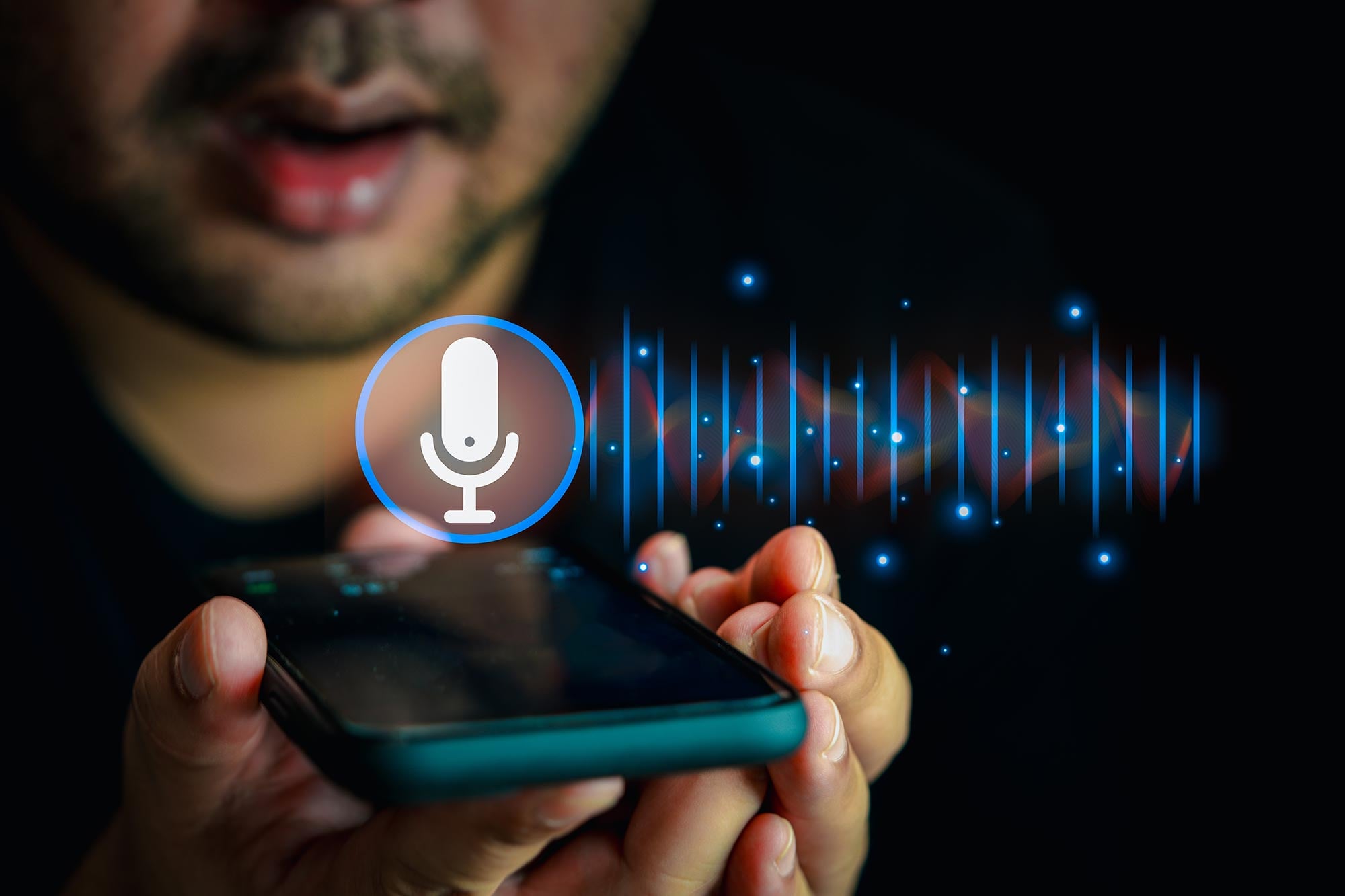
Researchers have developed a machine-learning “speech clock” that estimates age from subtle patterns in how people speak and what they say.
It is possible that people’s voices may contain certain signals of aging that go beyond their chronological age. According to a recent study of nearly 3,000 people from Latin America, machine learning was used to estimate a person’s age based on their speech. Individuals whose voices were older than their actual age were also characterized by faster brain aging, biological aging, and cognitive decline.
The study, published in Science Advances, analyzed hundreds of acoustic and linguistic characteristics of a person’s voice, such as speech rate, pauses, pitch, emotions, vocabulary, semantics, and verbosity.
These parameters were combined to estimate the speech age of a person. The speech age gap, the difference between the chronological age and the estimated speech age, was associated with an independent measure of brain health, molecular aging, cognition, dementia, and social adversities.
Speech Age Signals Aging Beyond Just Chronological Time
A higher speech age gap was associated with increased aging of the brain in both structural and functional neuroimaging. Moreover, the speech age was related to faster epigenetic aging as measured by three independent DNA methylation clocks.
People with greater speech age acceleration also tended to perform worse on measures of global cognition, executive function, memory, and everyday functioning. These relationships extended beyond language tests to nonlinguistic cognitive measures.
“Our voice appears to contain much more information about aging than we previously recognized,” said Agustin Ibanez, Professor in Brain Health at the Global Brain Health Institute and School of Medicine, Trinity College Dublin, and senior author of the study.
Links to Dementia and Alzheimer’s Biology
The study included healthy adults and people with mild cognitive impairment, Alzheimer’s disease, and forms of frontotemporal dementia. Healthy participants had the smallest speech age gaps, while larger gaps appeared in dementia groups.
In Alzheimer’s disease, speech age was also associated with higher levels of plasma p-tau217, an important blood biomarker of Alzheimer’s pathology. The measure also tracked cognitive and clinical functioning.
Speech age was further associated with a more adverse social exposome, including lifelong factors such as education, financial conditions, food insecurity, access to health care, and early life experiences.
A Potential Low-Cost Biomarker
Unlike MRI scans, blood tests, and molecular assays, speech can be collected remotely, repeatedly, and at low cost. That could make it useful for studying aging in populations with limited access to advanced diagnostic tools.
The researchers caution that the speech clock is not a diagnostic test for dementia. Because the study was primarily cross-sectional, it cannot show whether an older-appearing speech profile predicts future cognitive decline.
“The broader finding is nevertheless striking in that a person’s voice may provide a remarkably compact readout of multiple dimensions of aging,” added Prof. Ibanez.
“If confirmed longitudinally and across populations, speech could ultimately become one of the most scalable tools for monitoring healthy and accelerated aging, potentially transforming an everyday human behavior into a window onto the biology of aging.”
Reference: “Speech clocks decode dementia phenotypes, social exposome, and biological aging” by Hernan Hernandez, Lizeth Katherine Pedraza, Hernando Santamaria-Garcia, Sebastian Moguilner, Agustina Legaz, Pavel Prado, Jhosmary Cuadros, Lucía Amoruso, Liset Gonzalez, Damián Dellavale, Juan Pablo Espinoza–Puelles, Javier Palma Espinosa, Cecilia Jarne, Fabio Mattiussi, Matías Caccia, Alejandro Sosa Welford, Nicolás Pelella, Jeremías Inchauspe, Franco J. Ferrante, Gonzalo Pérez, Marcelo Adrián Maito, Guido Rocatti, Maria Eugenia Godoy, Joaquin Migeot, Paulina Orellana, Ariel Caviedes, Martin Bruno, Leonel Takada, Andrea Slachevsky, Maria I Behrens, Bárbara Bruna, David Aguillon, Lina Zapata, Jose Alberto Avila-Funes, Nilton Custodio, Bruce Miller, Maria Luisa Gorno-Tempini, Stefanie Pina Escudero, Pablo Reyes, Kun Hu, Maira Okada de Oliveira, Carlos Coronel-Oliveros, Josephine Cruzat, Juan Felipe Cardona, Michael Corley, Irene B. Meier, Vaibhav A. Narayan, Enzo Tagliazucchi, Sandra Baez, Claudia Duran-Aniotz, Adolfo M. García and Agustin Ibanez, 30 September 2026, Science Advances.
DOI: 10.1126/sciadv.aef9864
Never miss a breakthrough: Join the SciTechDaily newsletter.
Follow us on Google and Google News.