
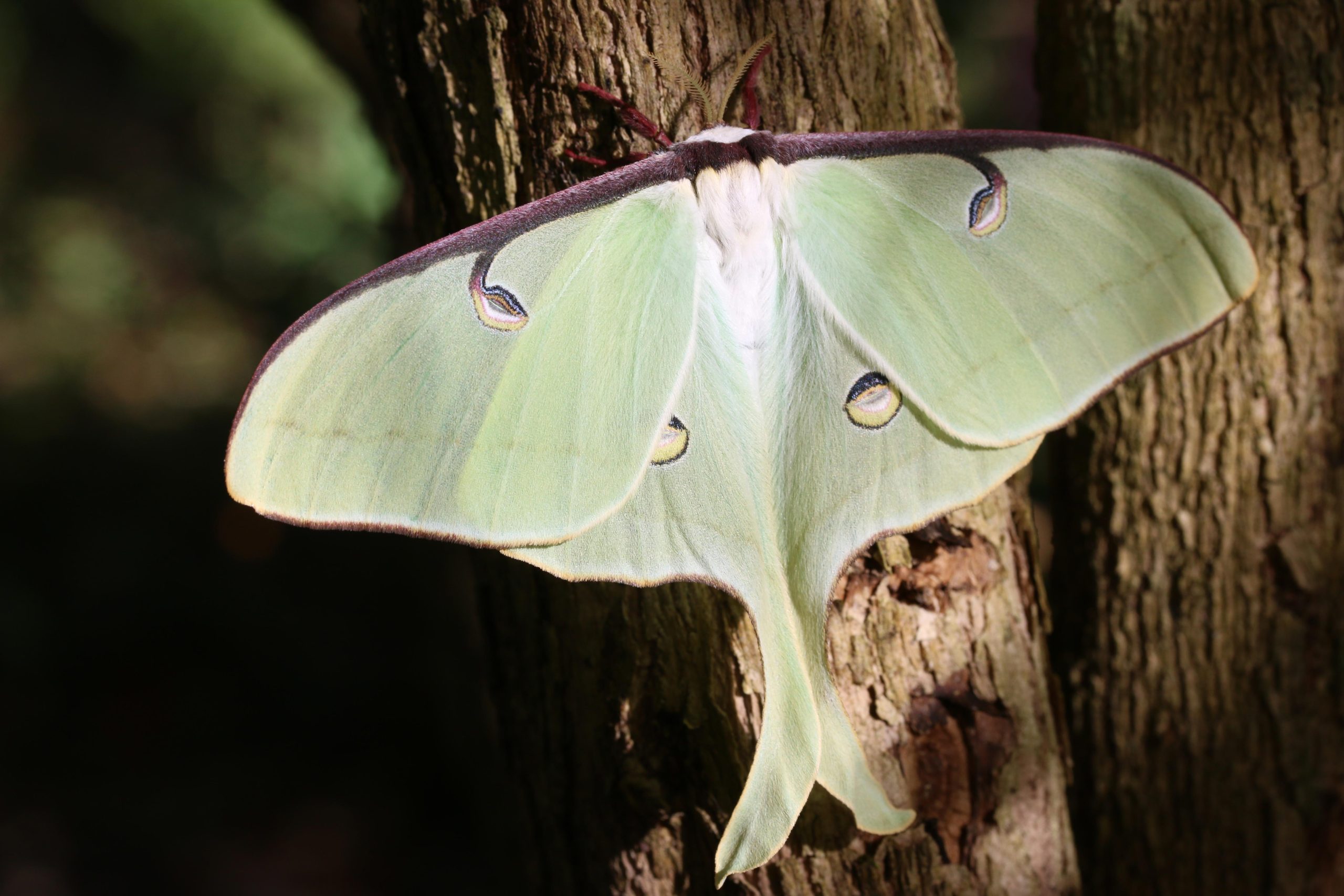
A search to change the patterns on moth wings uncovered something unexpected: wider tails, suggesting that evolution may reshape insects’ defenses by modifying features they already possess.
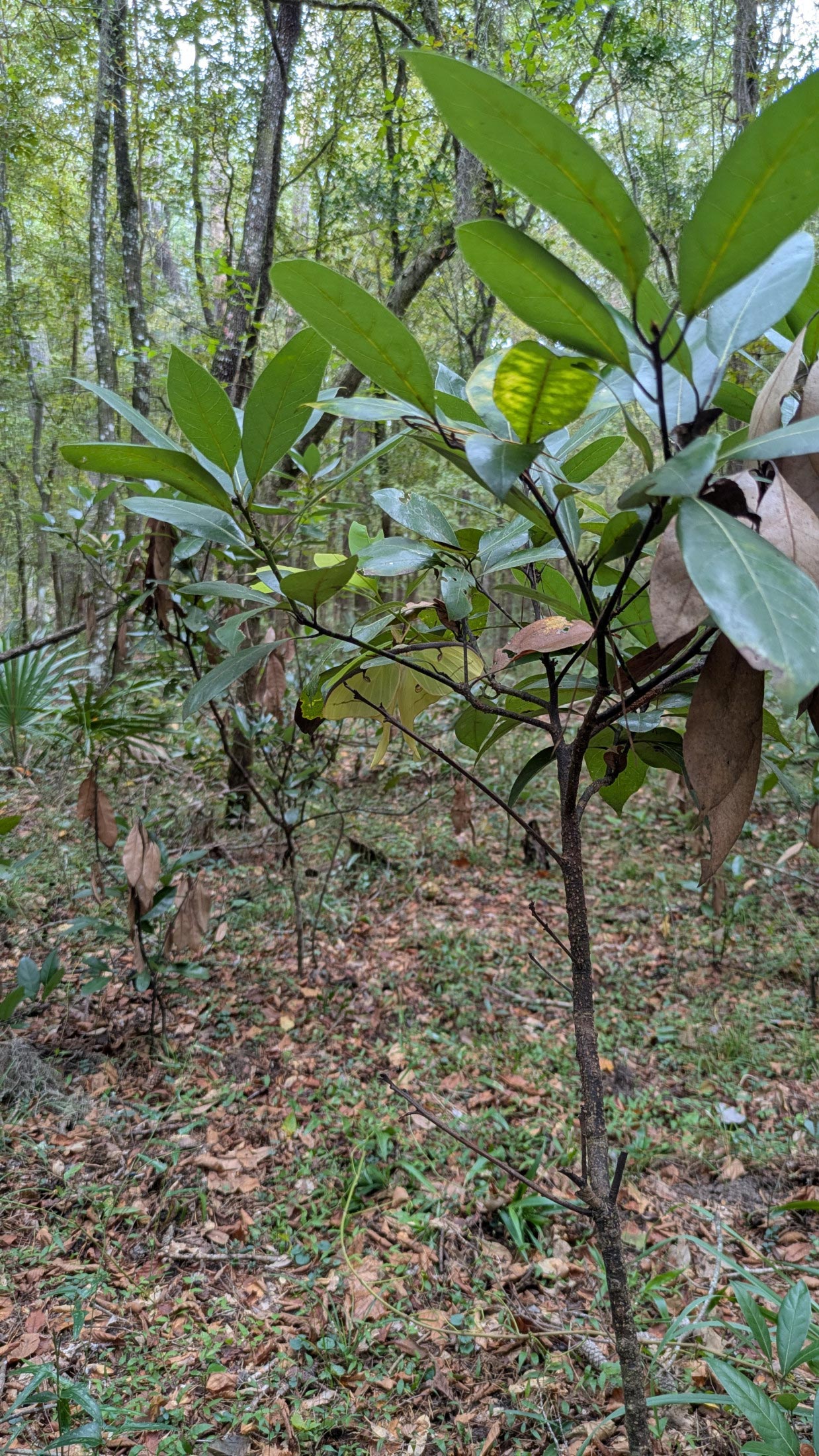
A luna moth’s leaf-like wings help it escape the notice of predators that hunt by sight. Other giant silk moths display prominent eyespots that can make them look threatening. A new study suggests that moving between those appearances can require only a small change in the signals that guide wing development.
Over seven years, Andrei Sourakov hand-reared more than 700 luna (Actias luna) and polyphemus (Antheraea polyphemus) moths from egg to adulthood. Sourakov is the collection coordinator of Lepidoptera at the Florida Museum of Natural History and an affiliate associate professor of entomology at the University of Florida. His findings, recently published in Evolution & Development, reveal how treatments during development can alter both the patterns and shapes of moth wings.
The first surprise was wing shape
Sourakov treated developing moths with small amounts of heparin and dextran sulfate. Both are sulfated polysaccharides, molecules made of linked sugars with attached sulfate groups. They increase the activity of a group of proteins called Wnt, which help direct development.
He administered tiny quantities of heparin shortly before and after pupation, when caterpillars enter the pupal stage and undergo their final transformation into adults. Wing patterns are determined during this period. For two years, the treatments failed to produce the changes he was seeking, so he continued adjusting the concentration and timing of the doses.
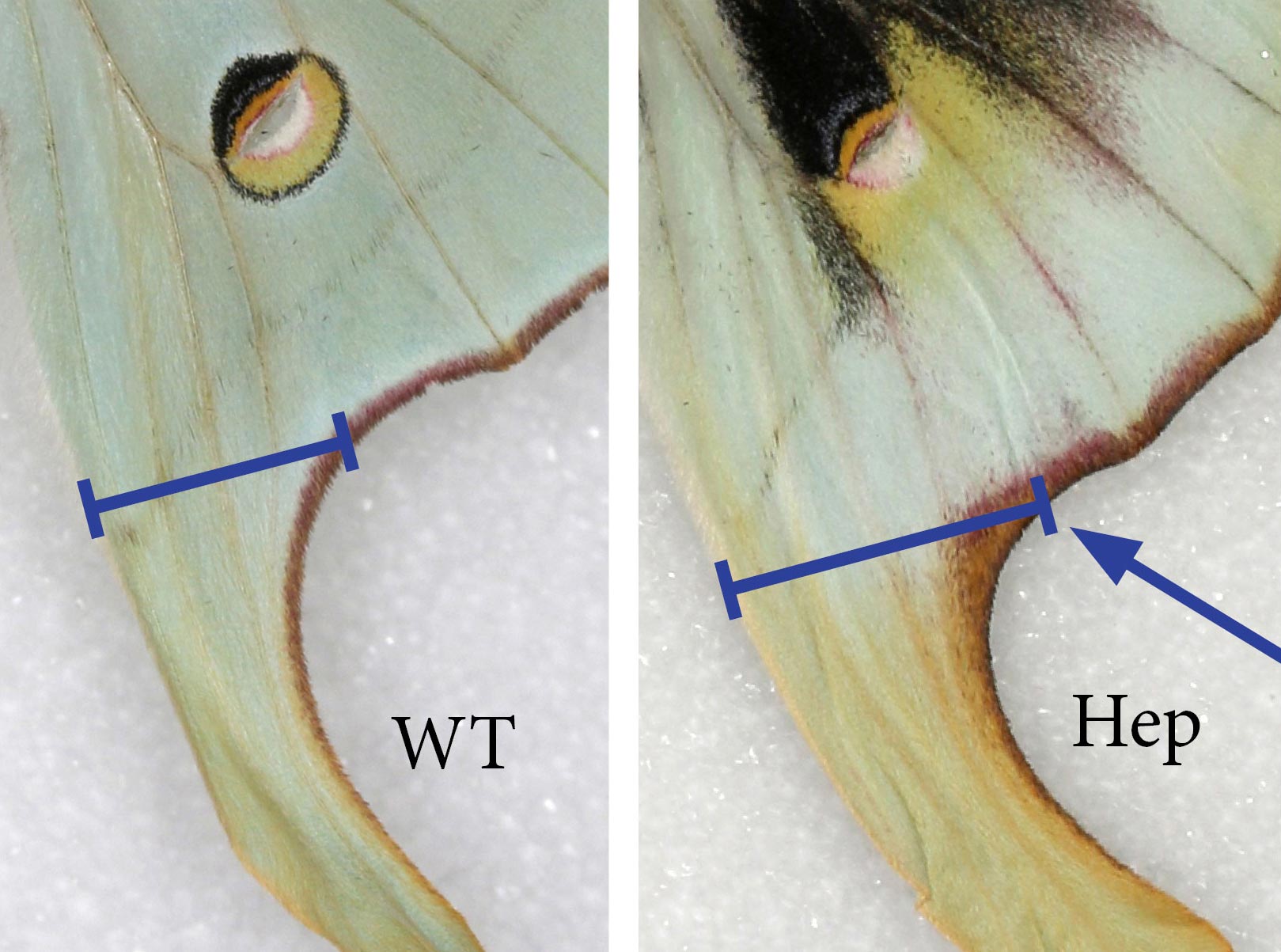
“I kept trying, and eventually, I achieved a single transformation. But it wasn’t of the wing pattern. It was the wing shape. This single specimen was so different that I couldn’t ignore it,” he said.
That specimen was a luna moth whose hindwing tails had grown wider than those of any moth he had previously reared. Scientists think luna moths evolved their long tails to deflect bat attacks away from the main part of their bodies.
“I thought, this is very bizarre. Maybe the genes that are normally responsible for wing patterns are here responsible for wing shape, because that’s seemingly the only thing that was transformed.”
Subtle eyespots become striking displays
Further adjustments to the timing of heparin treatment eventually produced changes in both wing shape and eyespots, overturning that initial explanation.
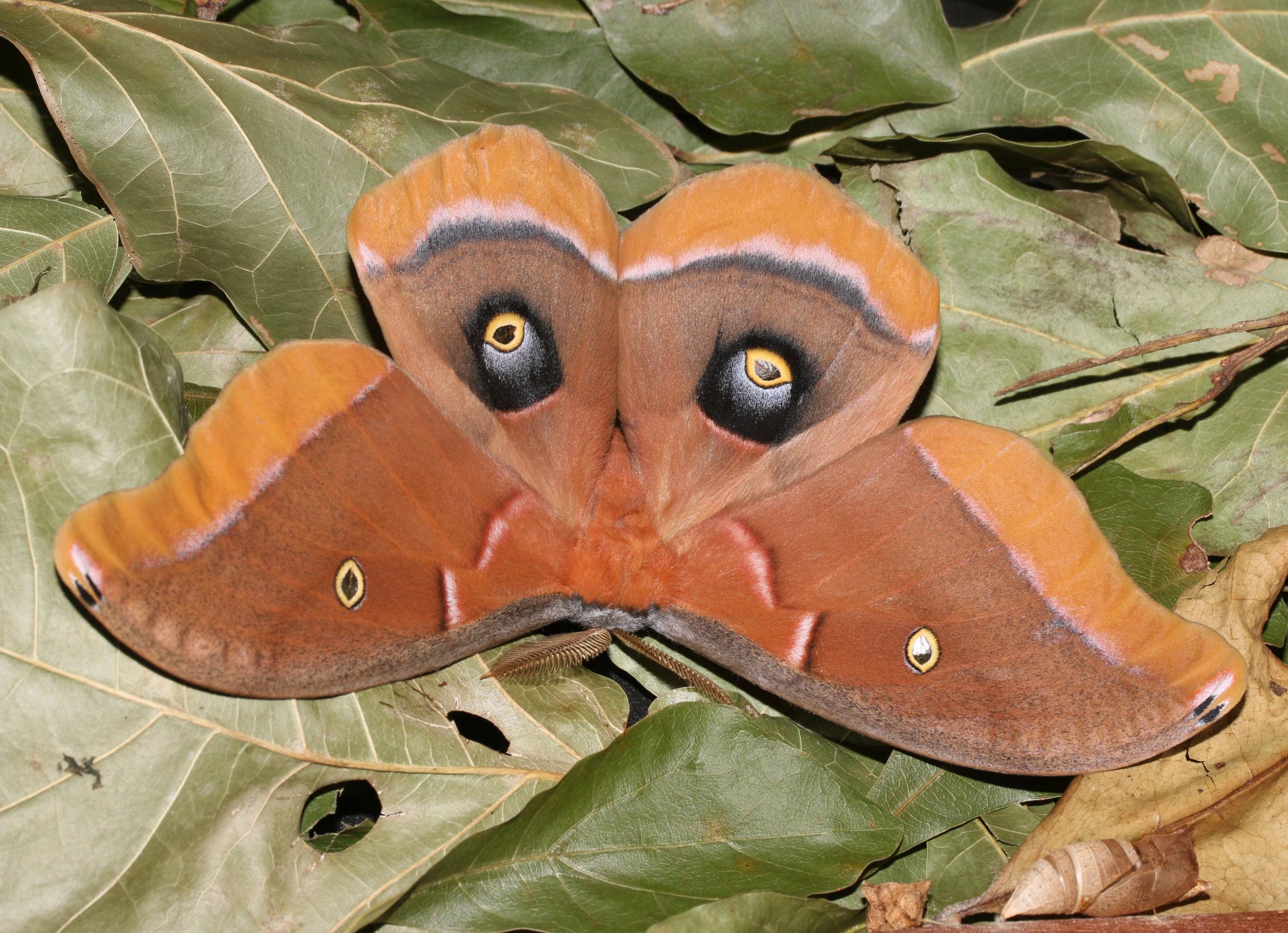
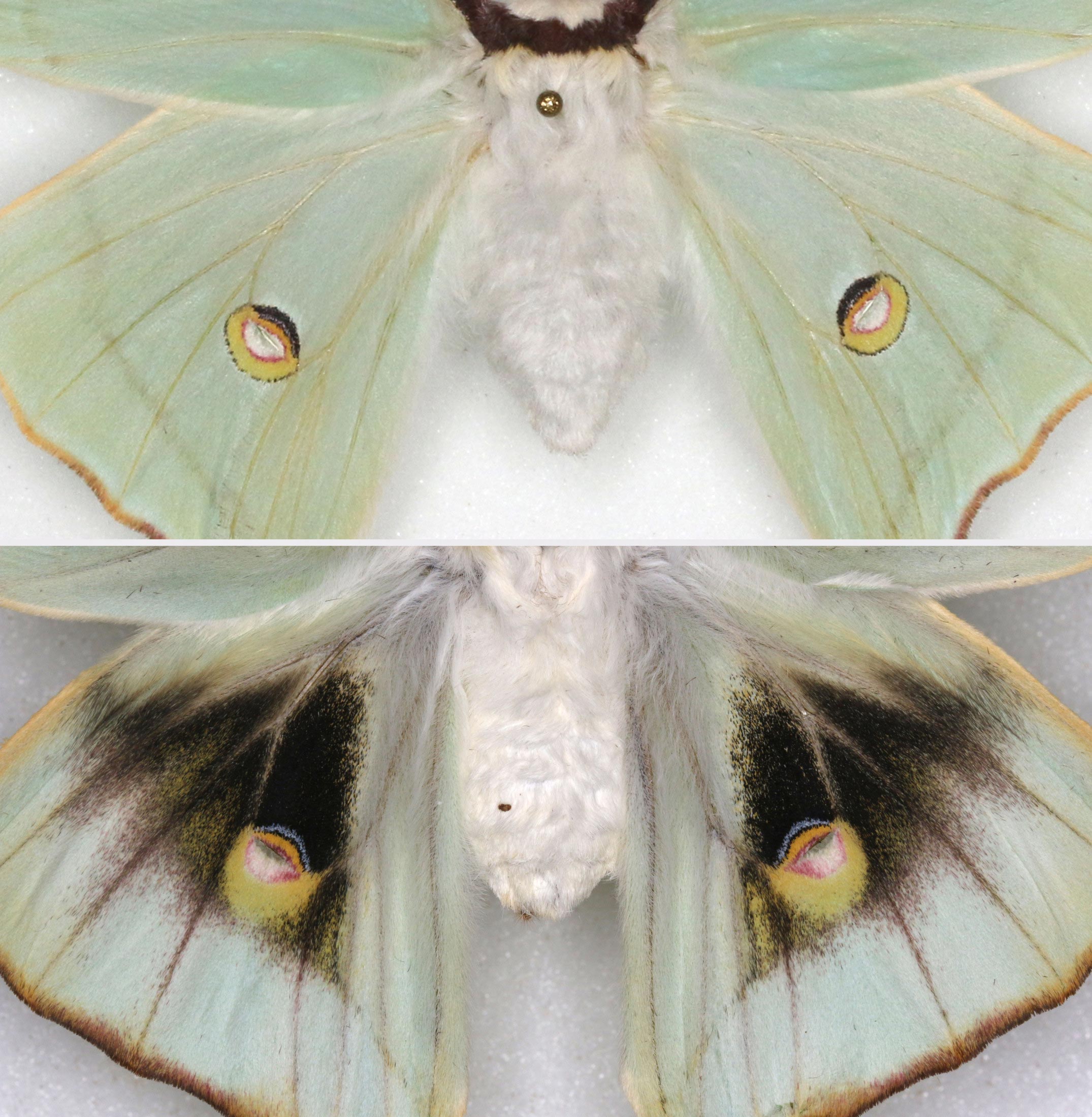
In polyphemus moths, the yellow borders around the two lemon-shaped eyespots on the forewings thickened. Brown scales surrounding those markings, which normally matched the rest of the wings, became whiter. On the hindwings, the black borders around the eyespots expanded. Together, these changes made the markings more conspicuous.
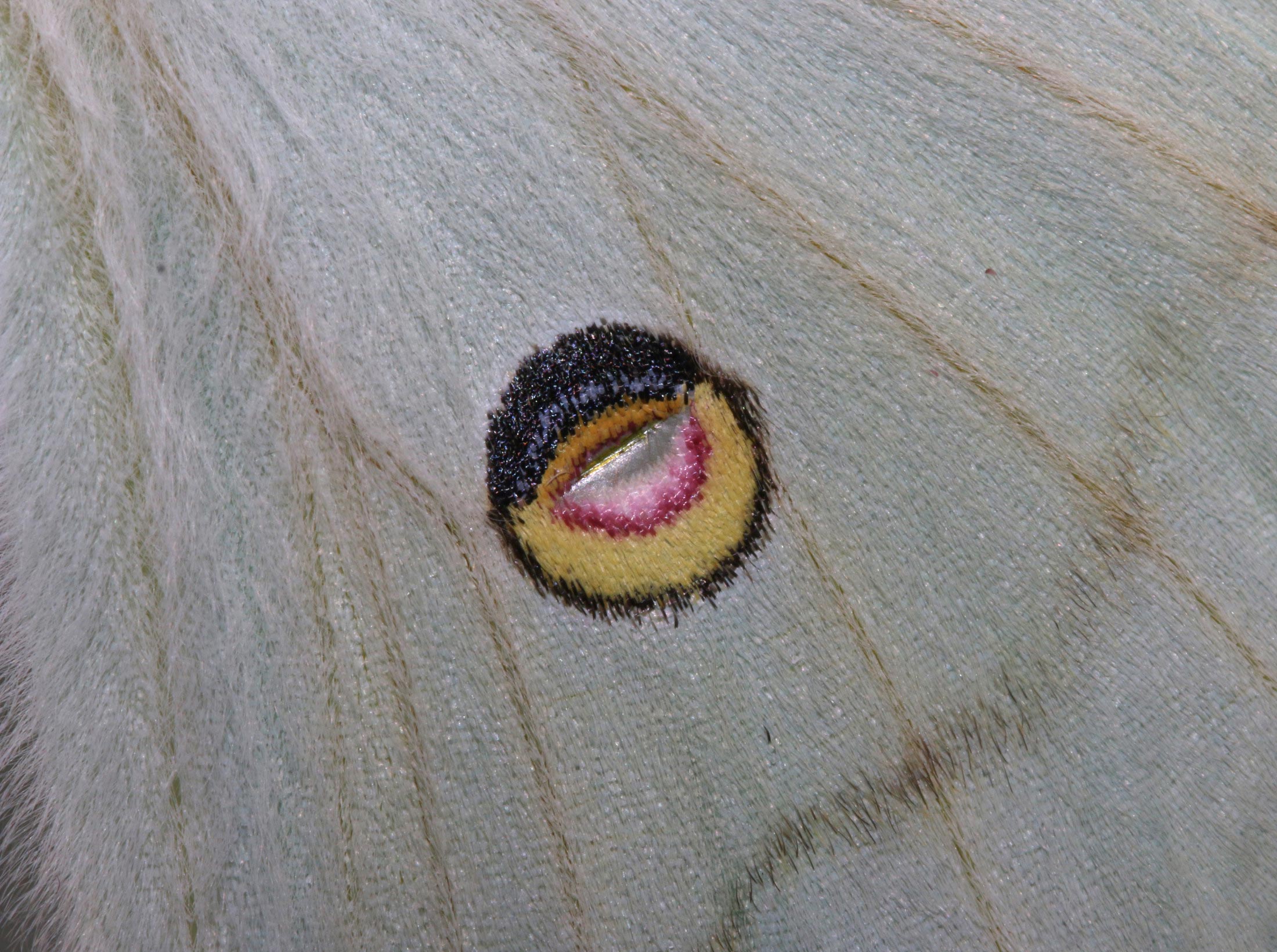
Luna moths underwent a similarly striking transformation. Their round hindwing eyespots took on a squinting appearance and developed thick, dark borders resembling mascara, turning subtle markings into a more noticeable display. Both heparin and dextran sulfate also changed the shape of luna moth wings, something not previously achieved experimentally in Lepidoptera, the group that includes all moths and butterflies.
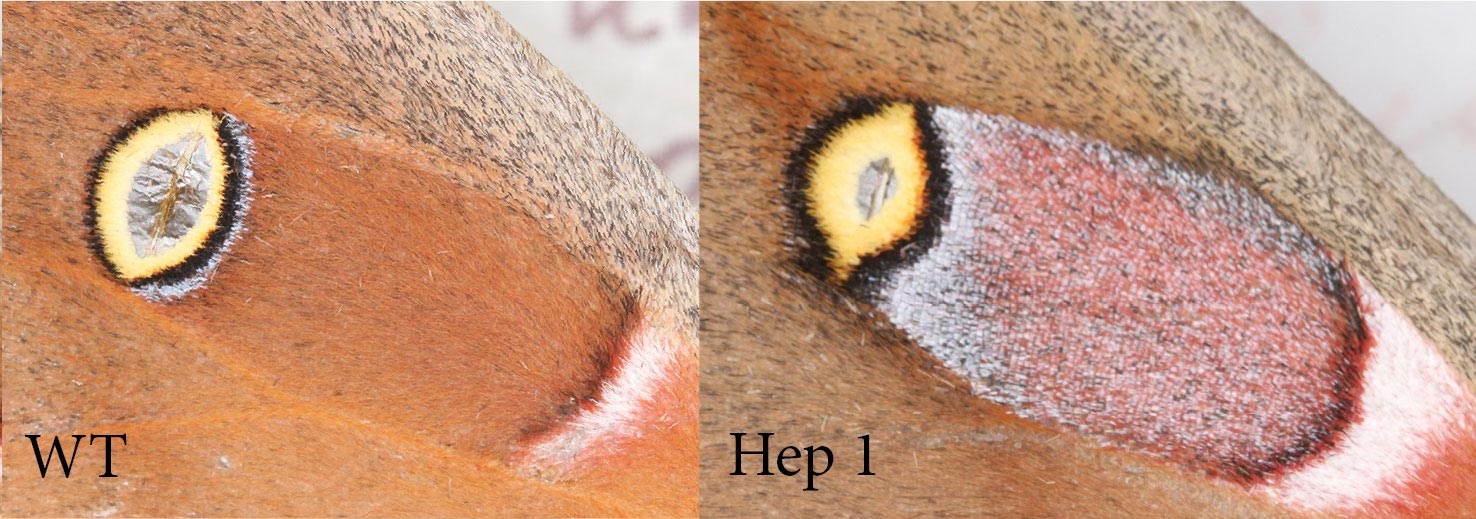
“Some giant silk moths have eyespots that make them appear threatening to would-be predators. Others look like leaves, with translucent eyespots resembling holes to make it more convincing. What’s amazing to me, and what I learned from this study, is how easy it is for these features to go from one state to another. They do this without big inventions by simply expanding or contracting existing elements to the point where eyespots look completely different. All they need is a slight increase in the amount of certain compounds at the right moment,” Sourakov said.
Moths and butterflies respond differently
Moth and butterfly eyespots occupy different parts of the wings, a clue that they evolved independently. Sourakov’s original goal was to investigate whether the two groups used the same genes to create these markings or had independently arrived at similar designs.
He tested the responses of several giant silk moth species to sulfated polysaccharides, reasoning that similar responses in different species could indicate homologous eyespots, meaning markings with a shared evolutionary origin. Further experiments would be needed to confirm that relationship.
In nymphalids, the largest family of butterflies, eyespots sit along the wing margins. Giving these butterflies heparin early in development can eliminate their eyespots entirely. Yet in Sourakov’s earlier experiments with two giant silk moth species, their eyespots grew larger. He interpreted those opposite responses as a clear indication that the moth and butterfly markings evolved separately. After his initial giant silk moth studies were published in 2020, he expanded the work to include luna moths, better known for their long tails than their faint eyespots.
Wingless may help build moth tails
The changes in wing shape remain harder to explain, particularly because they have not been observed in butterflies treated this way. One possibility involves how moth and butterfly wings acquire their outlines.
Unlike the wings of other flying insects, which stop growing when they reach a certain size, Lepidoptera wings undergo a process sometimes described as cookie-cutter growth. Cells along the future wing margins die in a controlled sequence, shaping the edges. A protein called Cut helps mediate the signal for those cells to self-destruct, but it does not respond to heparin or dextran sulfate.
Earlier in development, before those marginal cells die, another signaling protein called Wingless helps control the size of individual wing sections between veins. Wingless does respond to the two compounds. However, the wingless gene is mostly inactive by the time eyespots begin forming, which is when Sourakov starts his treatments. That timing helps explain why experiments focused on eyespots seldom change the size of those wing sections.
The gene can also be activated when damaged wing cells need repair, allowing new cells to grow in wounded areas. In pipevine swallowtail butterflies, it has another role in the development of their tiny wing tails. A landmark study published in 2010 showed that both cut and wingless are active during tail formation in these butterflies.
Sourakov suspects that the same genes may help form luna moth tails. If so, natural selection would have independently recruited wingless for the evolution of wing tails in moths and butterflies. Those tails serve different purposes. The small tails of pipevine swallowtails help visually distract birds by contributing to a false head effect, drawing attention away from the insect’s actual head. Luna moth tails are much longer, and their shape also affects how the moths fly.
“This is just my deduction, but I think it is very plausible and would explain why in butterflies or other moths we don’t see much change to the wing shape in response to heparin– wingless is not turning on at that stage of wing development in most species,” Sourakov said.
The ease of altering wing markings also suggests a possible route for rapid adaptation to a changing environment. If a luna moth’s leaflike disguise stopped protecting it, mutations that made its eyespots more visible could be favored under pressure from hunting birds. In principle, that could shift its appearance within just a few generations.
“If you are a smaller bird or a squirrel, you will think twice before attacking something in the darkness of the forest that looks like the eyes of an owl. Butterflies and moths are masters of such deceptions,” Sourakov said.
Reference: “Wing Shape and Color Pattern Modifications in Giant Silk Moths Using Sulfated Polysaccharides: Understanding Morphogenic Signals in Pupal Wings of Lepidoptera” by Andrei Sourakov, 21 August 2026, Evolution & Development.
DOI: 10.1111/ede.70058
Never miss a breakthrough: Join the SciTechDaily newsletter.
Follow us on Google and Google News.