
Close Menu
    Facebook X (Twitter) Instagram
    SciTechDaily
    • Biology
    • Chemistry
    • Earth
    • Health
    • Physics
    • Science
    • Space
    • Technology
    Facebook X (Twitter) Pinterest YouTube RSS
    SciTechDaily
    Home»Biology»Scientists Have Discovered a Bizarre New Species of Scorpionflies
    Biology

    Scientists Have Discovered a Bizarre New Species of Scorpionflies

    By University of GöttingenJanuary 13, 2023No Comments2 Mins Read
    Facebook Twitter Pinterest Telegram LinkedIn WhatsApp Email Reddit
    Share
    Facebook Twitter LinkedIn Pinterest Telegram Email Reddit
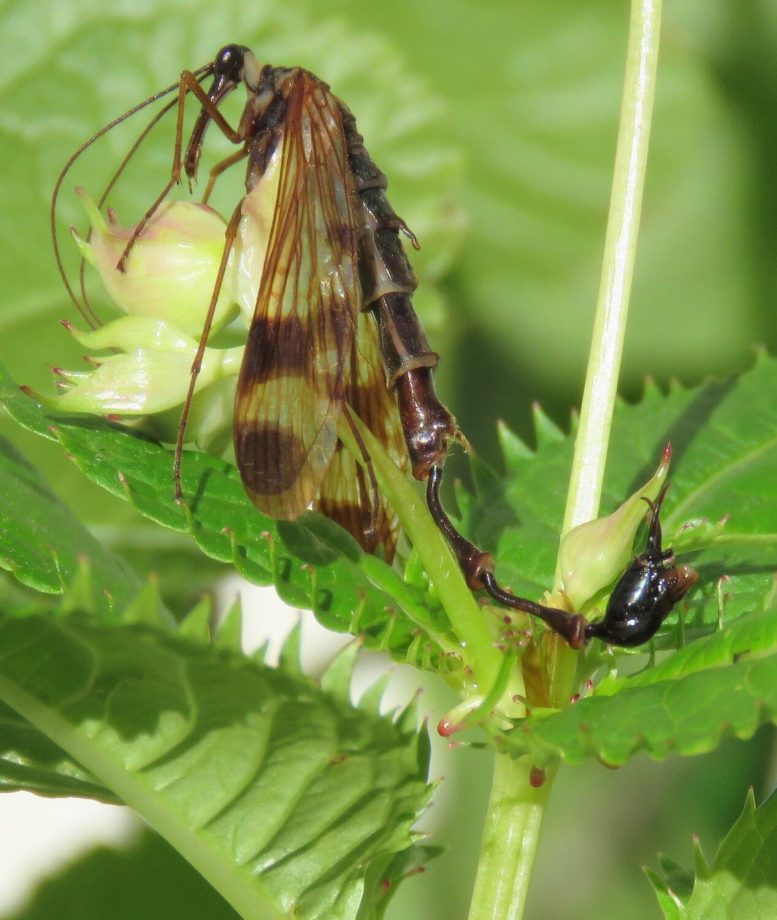
    Large Scorpionfly From Nepal Named Lulilan obscurus
    A newly discovered species of large scorpionfly from Nepal named Lulilan obscurus. Credit:
    University of Göttingen/R Willmann

    An Entomologist Has Identified a New Species of Large Insect From Nepal With Odd Genitalia

    Zoologist Professor Rainer Willmann, previously the head of the Zoological Museum at the University of Göttingen, has identified and classified a new genus of scorpionflies from Nepal, naming it “Lulilan.” His findings have been published in the journal Contributions to Entomology.

    “The appearance of the newly discovered scorpionflies could hardly be more bizarre,” says Willmann. The males have a spindly, extremely elongated abdomen, at the end of which is a large organ – with long, grasping pincers – for mating. The insects have a body length of more than three centimeters (1.2 inches), meaning they are particularly large. The insects were captured by the Mainz zoologist Professor Jochen Martens and his colleague from Stuttgart Dr. Wolfgang Schawaller. Until now, only one such species was known and that was discovered exactly 200 years ago.
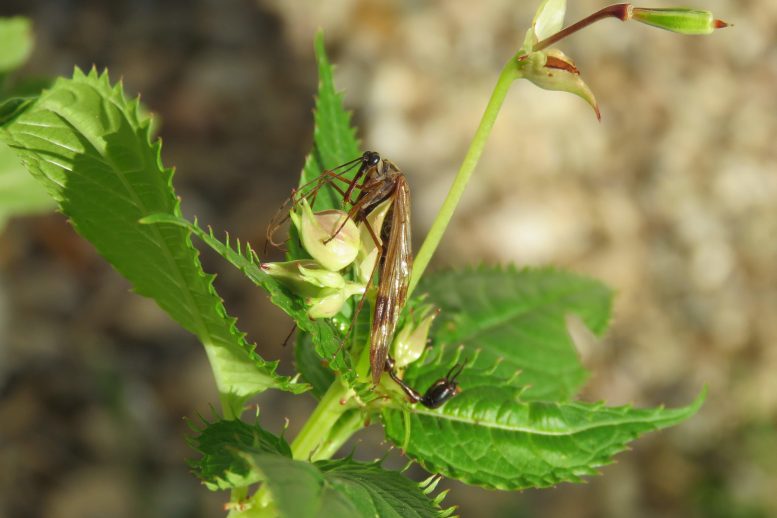
    A Newly Discovered Species of Large Scorpionfly From Nepal Named Lulilan obscurus
    In addition to the long head, characteristic of all scorpionflies, its very elongated abdomen is striking. It is described by Emeritus Professor Rainer Willmann, University of Göttingen, together with other species that make up a new genus of scorpionfly named Lulilan. Credit: University of Göttingen/R Willmann

    “Despite their dangerous-sounding name, scorpionflies are completely harmless to humans,” says Willmann. Their name comes from their spherical genital segment, which looks like the sting of a scorpion. They also have a distinctive, elongated head. In Europe, there are only a few species of scorpionflies. “More species of Lulilan probably exist in Nepal and the surrounding regions,” Willmann says. So far, only the females of some types are known. Unlike the males, however, the females have none of these characteristic features, meaning that classification is more difficult.

    From the scorpionflies that have already been described, only the genus Leptopanorpa, which is native to Sumatra, Java, and Bali, has developed such a distinctive abdomen. However, it is not closely related to Lulilan. “This is an amazing example where similar characteristics emerge independently, perhaps in response to similar evolutionary pressures,” says Willmann.

    Reference: “Neue Skorpionsfliegen (Mecoptera, Panorpidae) aus Nepal” by Rainer Willmann, 5 December 2022, Contributions to Entomology.
    DOI: 10.3897/contrib.entomol.72.e97277

    Never miss a breakthrough: Join the SciTechDaily newsletter.
    Follow us on Google and Google News.

    Entomology Evolution Evolutionary Biology Insect University of Göttingen
    Share. Facebook Twitter Pinterest LinkedIn Email Reddit

    Related Articles

    Mystery Solved: Why Termite Kings and Queens Are Monogamous

    Ancient Insect Mysteries Solved: 312-Million-Year-Old Fossil Sheds Light on Behavior and Evolution

    ”Contrary to All Expectations” – Remote Plant Worlds of Tenerife Challenge Evolutionary Norms

    Scientists Discover 7 “Cryptic” New Species of Walking Leaves

    Meat-Eating “Vulture Bees” Sport Acidic Guts and an Extra Tooth for Biting Flesh

    Without Evolutionary Genetic Variation, Asexual Invasive Species Find New Methods of Adapting to Their Environment

    Aphid-Like Insects Stole DNA From Plants – Gene Shields Them From Leaf Toxins

    A Natural Example of a Functioning Gear Mechanism Discovered in an Insect

    Insects Help Scientists Understand the Predictability of Evolution

    Leave A Reply Cancel Reply

    • Facebook
    • Twitter
    • Pinterest
    • YouTube

    Don't Miss a Discovery

    Subscribe for the Latest in Science & Tech!

    Trending News

    Why Popular Diabetes Drugs Like Ozempic Don’t Work for Everyone: The “Genetic Glitch”

    Scientists Stunned After Finding Plant Thought Extinct for 60 Years

    Scientists Discover Tiny New Spider That Hunts Prey 6x Its Size

    Natural Component From Licorice Shows Promise for Treating Inflammatory Bowel Disease

    Scientists Warn: Popular Sweetener Linked to Dangerous Metabolic Effects

    Monster Storms on Jupiter Unleash Lightning Beyond Anything on Earth

    Scientists Create “Liquid Gears” That Spin Without Touching

    The Simple Habit That Could Help Prevent Cancer

    Follow SciTechDaily
    • Facebook
    • Twitter
    • YouTube
    • Pinterest
    • Newsletter
    • RSS
    SciTech News
    • Biology News
    • Chemistry News
    • Earth News
    • Health News
    • Physics News
    • Science News
    • Space News
    • Technology News
    Recent Posts
    • Hidden Ocean Currents Revealed in Stunning Detail by AI
    • Trees Emit Tiny Lightning Flashes During Storms and Scientists Finally Prove It
    • Forget Chemicals. This Plant Removes Microplastics From Water
    • Breakthrough Crystal Lets Scientists “Write” Nanoscale Patterns With Light
    • Pomegranate Compound Could Help Protect Against Heart Disease
    Copyright © 1998 - 2026 SciTechDaily. All Rights Reserved.
    • Science News
    • About
    • Contact
    • Editorial Board
    • Privacy Policy
    • Terms of Use

    Type above and press Enter to search. Press Esc to cancel.