

Close Menu
    Facebook X (Twitter) Instagram
    SciTechDaily
    • Biology
    • Chemistry
    • Earth
    • Health
    • Physics
    • Science
    • Space
    • Technology
    Facebook X (Twitter) Pinterest YouTube RSS
    SciTechDaily
    Home»Health»Scientists Discover a Surprising New Way To Fight High Blood Pressure – Through the Ear
    Health

    Scientists Discover a Surprising New Way To Fight High Blood Pressure – Through the Ear

    By Queen Mary University of LondonOctober 16, 2026No Comments3 Mins Read
    Facebook Twitter Pinterest Telegram LinkedIn WhatsApp Email Reddit
    Share
    Facebook Twitter LinkedIn Pinterest Telegram Email Reddit
    Measurement of Blood Pressure Heart Cardiology
    A noninvasive device that stimulates nerves in the ear is being investigated as a potential new approach to stubborn high blood pressure. Credit: Shutterstock

    A small ear stimulation device could offer a new way to tackle high blood pressure that stays elevated despite medication.

    Researchers at Queen Mary University of London have tested a device that stimulates nerves through the ear in people whose high blood pressure remained uncontrolled despite medication. The trial, published in the American Heart Association journal Hypertension, found that the treatment was safe and practical to use at home.

    Finding additional ways to control blood pressure matters because many people receiving treatment still exceed recommended targets. Persistently high blood pressure increases the risk of cardiovascular disease, including heart attack and stroke.

    Targeting Blood Pressure Through The Ear

    The approach, transcutaneous autonomic neuromodulation (tAN), delivers electrical stimulation without an invasive procedure. It targets the autonomic nervous system, which helps regulate blood pressure through functions outside conscious control.

    The handheld device, developed by Afferent Medical Solutions, delivers gentle electrical pulses through two clips attached to the tragus, the small piece of cartilage at the front of the ear. Patients can administer the treatment themselves at home.
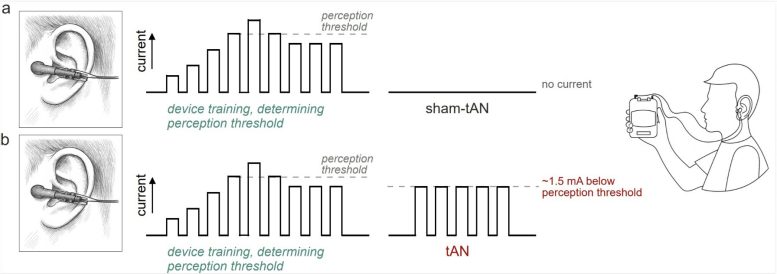
    SCRATCH HTN Treatment for Hypertension
    Illustration of the SCRATCH-HTN treatment for hypertension. Credit: SCRATCH-HTN study team

    The NIHR-funded SCRATCH-HTN trial included 63 participants whose hypertension remained uncontrolled while taking one or more blood pressure medications. They were randomly assigned to receive either active stimulation or a sham device, allowing researchers to compare outcomes between the groups.

    Participants used their devices for 30 minutes daily during the first two weeks, then once weekly for another 10 weeks. They followed the schedule closely, and treatment was safe and well tolerated during the trial. Those findings establish that the approach was practical to use but do not establish that it effectively lowers blood pressure compared to sham devices.

    A Possible Benefit in More Severe Hypertension

    Across the full study population, active treatment did not produce a significantly greater blood pressure reduction than the sham device. However, a subgroup analysis planned before the trial found a larger reduction with active treatment among people who began with more severe hypertension.

    That result provides a direction for further research. Larger trials focused on specific patient groups will need to establish whether the difference holds up and identify who, if anyone, benefits.

    Dr. Ajay Gupta, the chief investigator, a clinical reader at Queen Mary University of London and a consultant physician at Barts Health NHS Trust, said:

    “This is an exciting, highly patient-acceptable technology that could ultimately provide a cheap, scalable solution for millions. Although the trial did not achieve significance across the broad unselected group, those with more severe hypertension exhibited a clear blood pressure reduction in the active group compared to sham.

    “As the first and most thorough study of its kind, this points towards important new research directions that could help us understand whether non-invasive neuromodulation can benefit particular groups of patients with uncontrolled hypertension.”

    Reference: “Safety, Acceptability and Efficacy of Noninvasive Transcutaneous-Autonomic Neuromodulation in Uncontrolled Hypertension” by Ajay Gupta, David Collier, James Steckelmacher, Jane Field, George Collett, Olivier Zongo, Mital Patel, Manish Saxena, Annastazia Learoyd, Amrita Ahluwalia and Peter Sever, 28 September 2026, Hypertension.
    DOI: 10.1161/HYPERTENSIONAHA.126.27847

    Never miss a breakthrough: Join the SciTechDaily newsletter.
    Follow us on Google and Google News.

    Blood Pressure Cardiovascular Hypertension Queen Mary University of London
    Share. Facebook Twitter Pinterest LinkedIn Email Reddit

    Related Articles

    Millions Take Blood Pressure Drugs, but Many May Be Missing Their Heart-Protective Benefits

    New Medication Could Help Millions With High Blood Pressure

    New Treatment Offers Quick Cure for Common Cause of High Blood Pressure

    2,000+ Genetic Signals Linked to Blood Pressure Discovered in Study of Over a Million People

    Cause and Cure Discovered for Common Type of High Blood Pressure

    10-Minute Scan Enables Detection and Cure of Common Cause of High Blood Pressure

    Less Popular Blood Pressure Medication Is the (Slightly) Safer Choice

    Easy 5-Minute Workout Lowers Blood Pressure As Much as Exercise or Medication

    New Research Shows Cannabis Reduces Blood Pressure in Older Adults With Hypertension

    Leave A Reply Cancel Reply

    • Facebook
    • Twitter
    • Pinterest
    • YouTube

    Don't Miss a Discovery

    Subscribe for the Latest in Science & Tech!

    Trending News

    A Hidden Sugar in Red Meat Linked to a 63% Higher Risk of Diabetes

    Something Strange Is Happening Beneath Nicaragua’s Masaya Volcano

    Scientists Discover Aspirin May Slash Dementia Risk by 70% – but Only for Certain People

    The World’s Oldest Land Animal Has a Remarkable Anti-Aging Secret Hidden in Its DNA

    Scientists Discover a Surprising Link Between Obesity and Dementia Survival

    The Fossil Record May Be Missing 200 Million Years of Animal History

    Scientists Predicted Humanity Would End on November 13, 2026. Should We Be Worried?

    Experimental Heart Drug Helps Patients Exercise More and Feel Better

    Follow SciTechDaily
    • Facebook
    • Twitter
    • YouTube
    • Pinterest
    • Newsletter
    • RSS
    SciTech News
    • Biology News
    • Chemistry News
    • Earth News
    • Health News
    • Physics News
    • Science News
    • Space News
    • Technology News
    Recent Posts
    • Scientists Discover a Surprising New Way To Fight High Blood Pressure – Through the Ear
    • Scientists Discover Nature Has Far Fewer Backup Plans Than We Thought
    • Climate Change Could Unleash an African Antelope Invasion Across the American West
    • Scientists Say That a Honey Bee Colony May Actually Be a Single Living Organism
    • Scientists Uncover a 500-Year-Old Secret Hidden in a Book Henry VIII Wanted Destroyed
    Copyright © 1998 - 2026 SciTechDaily. All Rights Reserved.
    • Science News
    • About
    • Contact
    • Editorial Board
    • Privacy Policy
    • Terms of Use

    Type above and press Enter to search. Press Esc to cancel.