
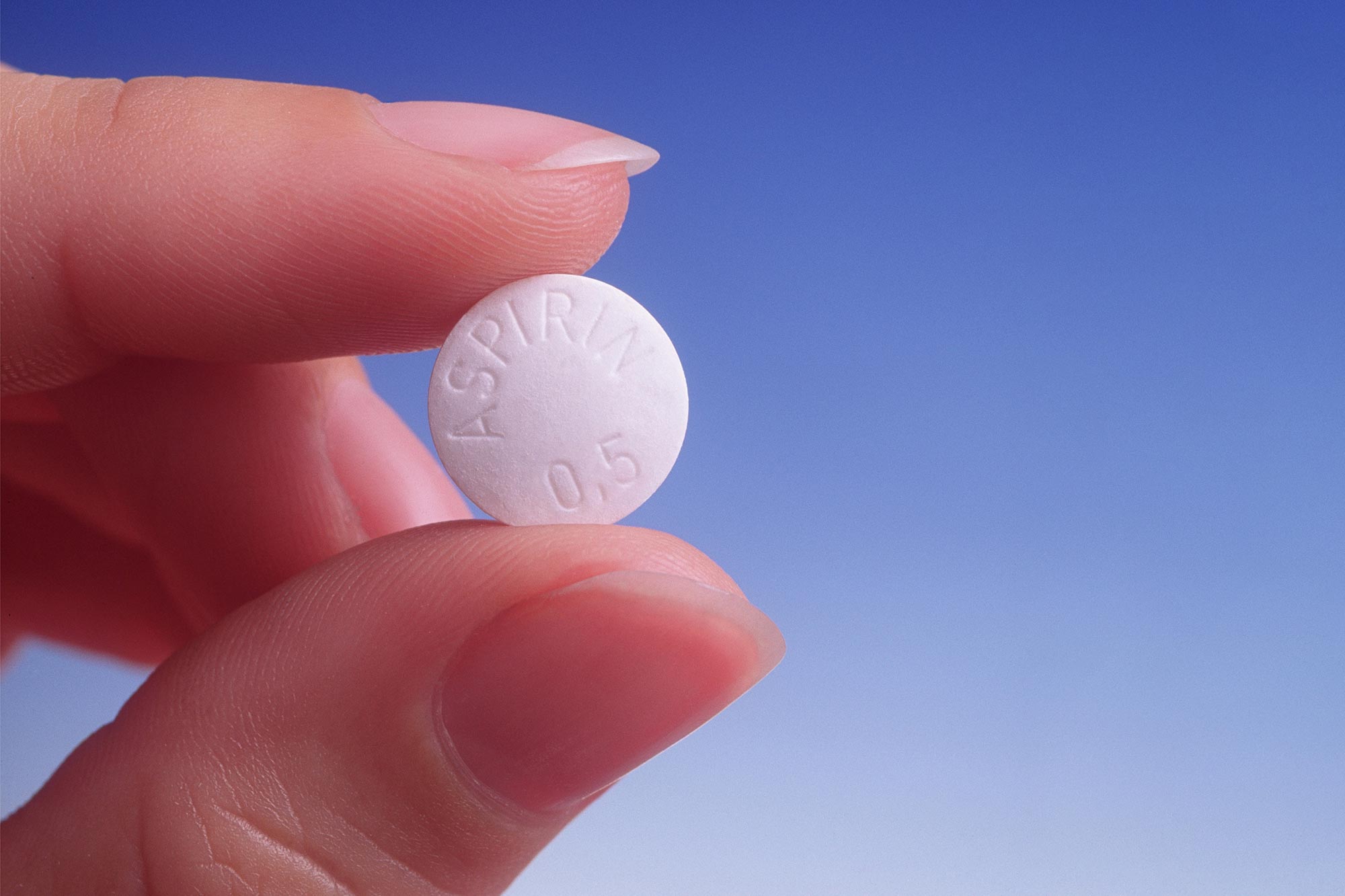
Aspirin was linked to a sharply lower dementia risk in some older adults, and their genes may hold the clue.
A Monash University analysis found that older adults with a particular genetic profile had about a 70 percent lower relative risk of dementia when taking low-dose aspirin. But serious bleeding was also more common in this group, leaving researchers with a promising lead that needs further testing.
The research, published in Alzheimer’s & Dementia: The Journal of the Alzheimer’s Association, examined genetic data from more than 13,500 participants in the ASPREE Trial (Aspirin in Reducing Events in the Elderly). Researchers compared genetic scores to investigate whether inherited differences could help explain who might benefit from aspirin.
A Genetic Signal Linked to Platelets
The strongest finding involved a genetic score associated with platelet count. Researchers ranked participants by that score, then compared dementia outcomes among those assigned aspirin or a placebo.
Among participants in the highest 20 percent, dementia developed in 1 percent of aspirin recipients, compared with 3.3 percent of placebo recipients. Although that represents roughly a 70 percent relative reduction, the absolute difference was 2.3 percentage points, equivalent to about 23 fewer dementia cases per 1,000 people.
Lead author Dr. Peter Fransquet, a research fellow at Monash’s School of Public Health and Preventive Medicine, said the finding could help move prevention toward a more personalized approach.
“Previous trials found aspirin didn’t prevent dementia when everyone was considered together,” Dr. Fransquet said. “Our findings suggest there may be more to the story. In people with this particular genetic profile, we saw substantially fewer cases of dementia among those taking aspirin. It raises the possibility that genetics could one day help us identify who may benefit from a preventive treatment, rather than taking a one-size-fits-all approach.”
Lower Dementia Risk, More Serious Bleeding
The potential protection against dementia came with a higher risk of serious bleeding. In the same genetic group, major bleeding occurred in 4.4 percent of aspirin recipients and 2.1 percent of placebo recipients, a difference equivalent to about 23 additional major bleeding events per 1,000 people.
The results draw attention to how platelets may contribute to dementia. Scientists have previously linked platelet activation and aggregation, or clumping, with dementia, but the role of overall platelet count remains less clear.
“What’s particularly interesting is that the signal wasn’t linked to the established genetic risk factors for Alzheimer’s disease and dementia,” Dr. Fransquet said. “Instead, it’s pointing us towards platelet biology and gives us a new avenue to investigate.”
What Personalized Prevention Would Require
Dementia Australia estimates that 446,500 Australians are living with dementia in 2026 and projects that the number will exceed one million by 2065.
For now, the analysis identifies a group worth investigating rather than establishing a treatment strategy. A trial specifically designed around this genetic profile would help determine whether the apparent dementia benefit is reproducible and how it compares with the bleeding risk.
“We now need to confirm the finding in other studies and ultimately test it in a trial designed specifically for people with this genetic profile. People shouldn’t start taking aspirin to prevent dementia on the basis of this study without consulting with their doctor, particularly given the increased risk of serious bleeding. If it holds up, the fact that aspirin is already cheap and widely available could make personalized dementia prevention a real possibility.”
Reference: “Platelet count polygenic scores may modify the effect of aspirin in primary prevention of dementia” by Peter D. Fransquet, Chenglong Yu, Cammie Tran, Sultana Monira Hussain, Amy Brodtmann, Andrew M. Tonkin, Mark R Nelson, Joanne Ryan, John J. McNeil and Paul Lacaze, 24 September 2026, Alzheimer’s & Dementia.
DOI: 10.1002/alz.71817
Never miss a breakthrough: Join the SciTechDaily newsletter.
Follow us on Google and Google News.