
Close Menu
    Facebook X (Twitter) Instagram
    SciTechDaily
    • Biology
    • Chemistry
    • Earth
    • Health
    • Physics
    • Science
    • Space
    • Technology
    Facebook X (Twitter) Pinterest YouTube RSS
    SciTechDaily
    Home»Health»USC Study Exposes Hidden Culprit of Dementia in Brain’s Blood Vessels
    Health

    USC Study Exposes Hidden Culprit of Dementia in Brain’s Blood Vessels

    By University of Southern CaliforniaJanuary 16, 20256 Comments3 Mins Read
    Facebook Twitter Pinterest Telegram LinkedIn WhatsApp Email Reddit
    Share
    Facebook Twitter LinkedIn Pinterest Telegram Email Reddit
    Bleeding Blood Vessels Art Concept
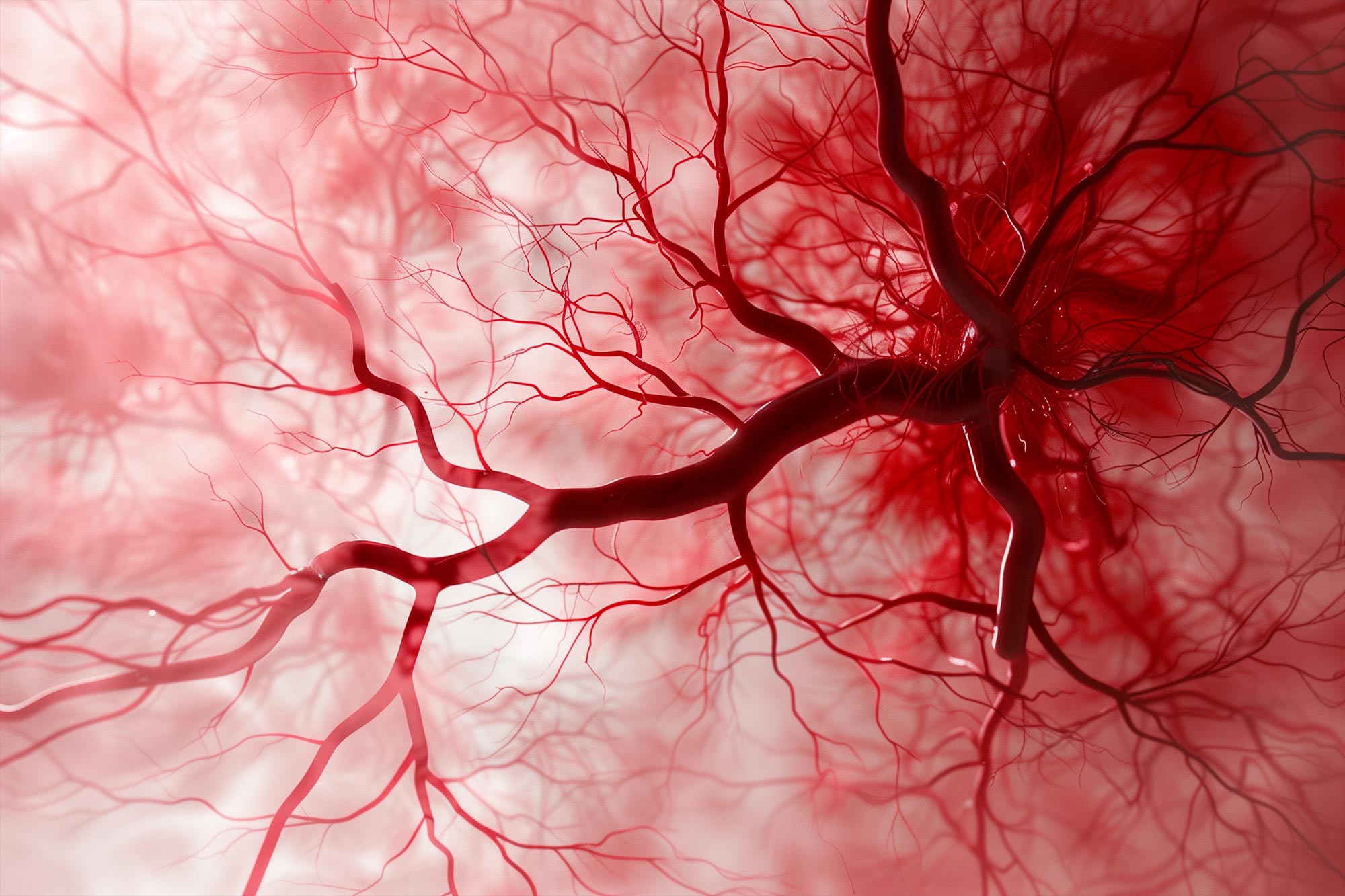
    A USC-led study has found that mild cognitive impairment is linked to blood vessel dysfunction in the brain’s temporal lobes, regardless of Alzheimer’s-related changes. This suggests that vascular issues may serve as an early biomarker for dementia and could be a promising target for treatment. The study highlights the importance of focusing on vascular health in diagnosing and potentially treating memory loss.

    A new USC-led study suggests that assessing blood vessel health should be included in dementia diagnostics.

    A new USC-led study has found that mild cognitive impairment is associated with blood vessel dysfunction in the brain’s temporal lobes, the region responsible for memory.

    This vascular issue was observed in individuals both with and without amyloid buildup in the brain, indicating that microvascular dysfunction could serve as an early biomarker for dementia and a potential target for treatment.

    The study, conducted by researchers from several universities, was published in the journal Neurology.

    “We’re studying the ability of these very small vessels to respond to stimuli and to dilate, and they’re showing dysfunction in people who have memory problems,” said senior author Daniel Nation, a professor of gerontology and medicine at the USC Leonard Davis School of Gerontology. “It could implicate blood vessel dysfunction in a very early stage of memory loss. It happened whether or not people had Alzheimer’s-related brain changes. They still had this blood vessel problem if they had memory issues.”

    New biomarker for dementia

    For the study, researchers recruited a sample of 144 older, independently living adults from the community. The volunteers took a neuropsychological assessment, gave blood samples and underwent brain MRI, or magnetic resonance imaging.

    During MRI, volunteers held their breath for 15-second intervals, an exercise designed to dilate the brain’s blood vessels, a natural process called “cerebrovascular reactivity” which regulates oxygen levels in the brain.

    Researchers paid special attention to blood vessels supplying the temporal lobes, located on the sides of the head, near the ears. Participants whose blood vessels didn’t dilate properly showed signs of cognitive impairment.

    “With this approach, we can pinpoint the problem to the blood vessels and their ability to dilate. That’s not the way people usually think about memory impairment in older adults,” Nation said. “There’s an increasing realization that the main cause of dementia is not actually Alzheimer’s disease, it’s mixed pathology. If you just focus on amyloid, you’re certainly not going to get the full picture. Maybe this technique should be incorporated into our diagnostic approaches.”

    “Our findings underscore the need to focus on vascular health as a critical factor in memory decline,” said first author Arunima Kapoor, a graduate student at the University of California, Irvine.

    Nation said that some blood pressure drugs may potentially protect vascular function in a way that preserves memory, but more research is needed.

    Reference: “Association of Medial Temporal Lobe Cerebrovascular Reactivity and Memory Function in Older Adults With and Without Cognitive Impairment” by Arunima Kapoor, Shubir Dutt, Allison C. Engstrom, John Paul M. Alitin, Trevor Lohman, Isabel J. Sible, Anisa Marshall, Fatemah Shenasa, Aimée Gaubert, David Robert Bradford, Lorena Sordo, Xingfeng Shao, Kathleen Rodgers, Elizabeth Head, Danny Jj Wang and Daniel A. Nation, 9 January 2025, Neurology.
    DOI: 10.1212/WNL.0000000000210210

    The research was supported by National Institutes of Health grants R01AG064228, R01AG060049, R01AG082073, P01AG052350, P30AG066530, and a grant from the American Heart Association, 23PRE1014192.

    Never miss a breakthrough: Join the SciTechDaily newsletter.
    Follow us on Google and Google News.

    Biomarkers Dementia Neurology Popular Public Health USC
    Share. Facebook Twitter Pinterest LinkedIn Email Reddit

    Related Articles

    This Simple Habit Could Cut Your Risk of Dementia by 30%

    Eating the Wrong Carbs May Raise Your Dementia Risk

    Scientists Discover Simple Supplement That Could Help Slow Alzheimer’s

    Even One Drink May Raise Dementia Risk, Landmark Study Warns

    Scientists Discover Alzheimer’s Clues in the Brain Decades Before Symptoms Emerge

    USC Researchers Uncover Hidden “Brain Drain” Responsible for Vascular Dementia

    Are We Evolving? New Research Reveals That Human Brains Are Getting Larger

    New Research Reveals How Vitamin B-Related Amino Acids Could Increase Your Risk of Dementia

    Warning: Use of Popular Acid Reflux Medications Linked to 33% Higher Risk of Dementia

    6 Comments

    1. Char on January 18, 2025 6:14 am

      The best article I have found for me. Thank you!!

      Reply
    2. Pamela Parker on January 18, 2025 6:44 pm

      Very interested thank you.

      Reply
    3. Tina Burns on January 19, 2025 1:28 pm

      Thank you very much for your informative information.

      Reply
      • Marlane Doherty on January 20, 2025 5:43 am

        Thank you for these very interesting and informative articles. Keep up the great work !

        Reply
      • Carole Young on January 24, 2025 3:24 am

        Thankyou for your teams brilliant research and for sharing this informative article.

        Reply
    4. JANE LAWN on January 19, 2025 2:55 pm

      Great thankyou research wonderful I have mild cognitive impairment

      Reply
    Leave A Reply Cancel Reply

    • Facebook
    • Twitter
    • Pinterest
    • YouTube

    Don't Miss a Discovery

    Subscribe for the Latest in Science & Tech!

    Trending News

    Artificial Sweeteners May Harm Future Generations, Study Suggests

    Splashdown! NASA Artemis II Returns From Record-Breaking Moon Mission

    What If Consciousness Exists Beyond Your Brain

    Scientists Finally Crack the 100-Million-Year Evolutionary Mystery of Squid and Cuttlefish

    Beyond “Safe Levels”: Study Challenges What We Know About Pesticides and Cancer

    Researchers Have Found a Dietary Compound That Increases Longevity

    Scientists Baffled by Bizarre “Living Fossil” From 275 Million Years Ago

    Your IQ at 23 Could Predict Your Wealth at 27, Study Finds

    Follow SciTechDaily
    • Facebook
    • Twitter
    • YouTube
    • Pinterest
    • Newsletter
    • RSS
    SciTech News
    • Biology News
    • Chemistry News
    • Earth News
    • Health News
    • Physics News
    • Science News
    • Space News
    • Technology News
    Recent Posts
    • 34-Million-Year-Old Snake Found in Wyoming Rewrites Our Understanding of Evolution
    • Prehistoric “Vomit Fossil” Reveals Never-Before-Seen Flying Reptile
    • Scientists Discover Bizarre Crocodile Relative That Walked on Two Legs
    • How Quantum Mechanics Went From Baffling Theory to Revolutionizing Modern Technology
    • Scientists May Have Found the Key to Jupiter and Saturn’s Moon Mystery
    Copyright © 1998 - 2026 SciTechDaily. All Rights Reserved.
    • Science News
    • About
    • Contact
    • Editorial Board
    • Privacy Policy
    • Terms of Use

    Type above and press Enter to search. Press Esc to cancel.