
Scientists are turning to AI and speech analysis to uncover early signs of Alzheimer’s in ways traditional methods may miss.
More than 7 million Americans age 65 and older are living with Alzheimer’s disease, and that number is expected to climb as the population ages. Detecting the condition earlier could make a meaningful difference in how symptoms are managed and how quickly patients receive support, said Hui Yang, Gary and Sheila Bello Chair in Industrial and Manufacturing Engineering at Penn State.
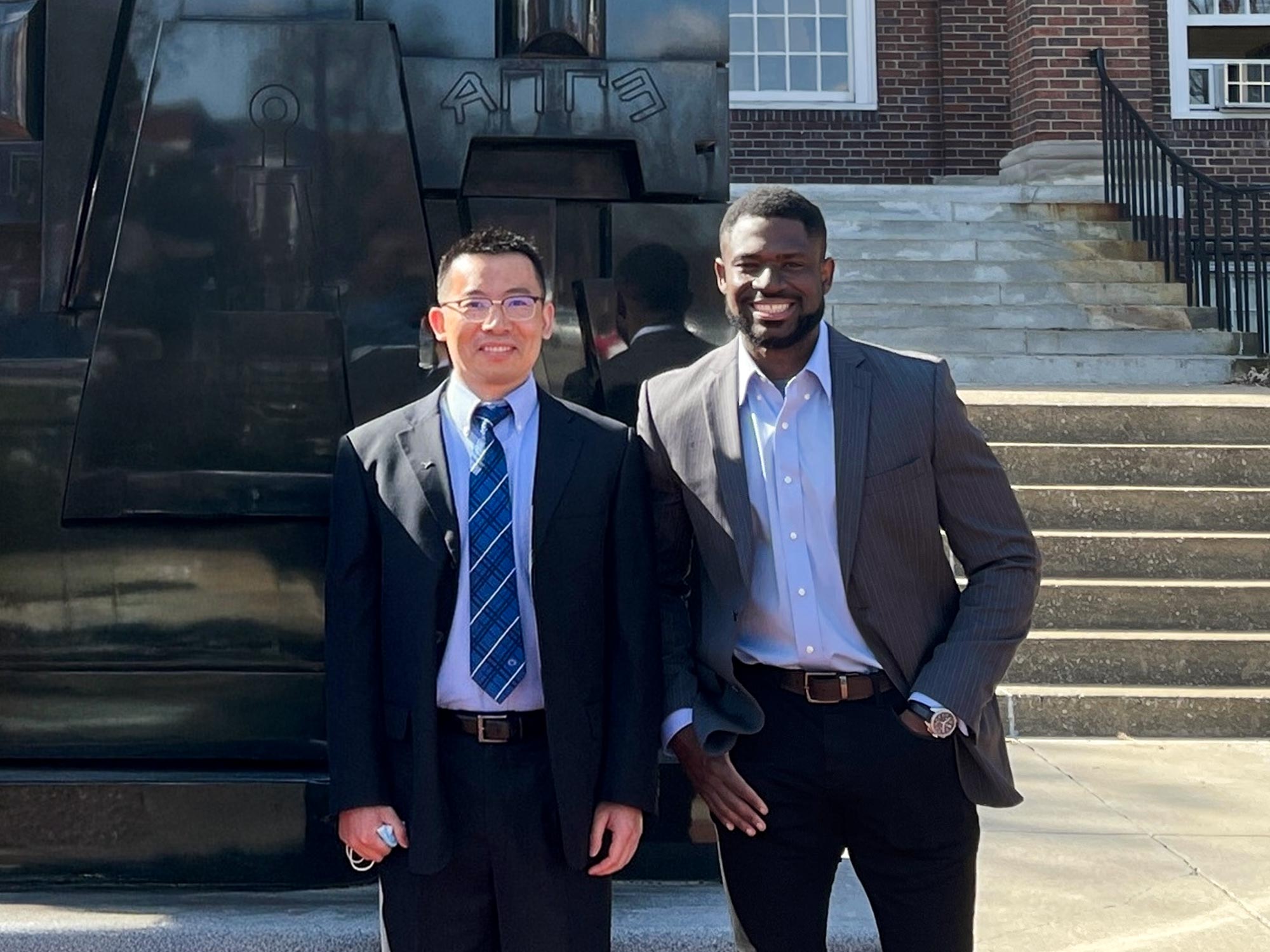
To address this challenge, Yang and doctoral researcher Kevin Mekulu are exploring how artificial intelligence (AI) can spot early warning signs that clinicians might miss.
Their recent studies, published in the Journal of Alzheimer’s Disease Reports and Frontiers in Aging Neuroscience, focus on analyzing subtle patterns in everyday speech. By examining changes in word choice, fluency, and sentence structure, their framework aims to flag cognitive decline earlier and more consistently than standard paper-based tests, which can vary depending on who administers them.
The researchers say this approach could move screening beyond brief clinic visits and toward faster, more accessible tools that fit into routine care. In a Q&A, they explain how AI-driven methods may help clinicians detect changes sooner, monitor patients over time, and ultimately improve outcomes.
Q: What benefits does AI offer over traditional screening approaches for dementia and Alzheimer’s?
Yang: Traditional dementia screening tools are paper-based, subjective, and resource-intensive, requiring 10 to 15 minutes of staff time for administration, while lacking sensitivity to subtle cognitive changes and showing inconsistency between proctors.
With the U.S. facing a shortage of geriatric specialists, having roughly one geriatrician for every 10,000 geriatric patients and high staff turnover in senior care facilities, a scalable AI solution is urgently needed.
Our framework uses interpretable, speech-based biomarkers to capture subtle linguistic changes and cognitive decline years before traditional tools can, offering objective and non-invasive screening for neurodegenerative conditions in under a minute.
Q: What makes your approach different from the “static” AI models already employed in some screening approaches?
Mekulu: Most AI models used today in health care are static, meaning they simply produce an output based on an input. Agentic AI, by contrast, are systems capable of independently planning and executing complex tasks without human oversight.
It is designed to reason over time, adapt its behavior, and interact dynamically with patients or clinicians. In our work, AI agents are not just scoring a test — they guide a screening interaction, adapt prompts based on a person’s responses, and integrate multiple signals, such as language patterns, task performance, and contextual factors into a coherent assessment.
This transforms screening from a one-time measurement to an evolving process that better reflects how cognitive decline occurs in patients.
Q: One paper shows how speech patterns can be used as a tool for diagnoses. Why look at speech patterns? How does your AI do this?
Yang: Speech is one of the most information-dense behaviors humans produce, requiring the coordination of memory, attention, language, executive function, and motor planning — all cognitive systems that are affected early in neurodegenerative disease.
Our AI analyzes complex dynamics and transitions hidden in speech rather than relying on subjective clinical impressions alone, searching for subtle patterns in word choice, repetition, fluency changes and the structural organization of language to reveal cognitive changes long before symptoms become obvious.
This approach allows us to extract objective, quantitative biomarkers from natural patient behavior, which removes a lot of the subjective interpretation associated with traditional tests.
Q: Are there other activities or behaviors AI could analyze to detect neurodegenerative disease? Could AI agents be implemented into other aspects of treatment?
Mekulu: Absolutely. Speech is a powerful starting point, but it’s only one piece of the puzzle. We can use AI to analyze eye-movement patterns, physiological signals, task engagement, motor behavior and even how someone learns or adapts over time during problem-solving tasks. Interpreting all these signals together offers clinicians a more holistic view of cognitive health, not just whether someone passes or fails a test.
AI agents could eventually support care planning, monitor cognitive changes between clinic visits, and help clinicians identify when interventions need to be adjusted. Rather than replacing clinicians, these systems are designed to reduce administrative burden, highlight meaningful patterns and help transform cognitive care from reactive to preventative.
Q: What’s next for this work?
Yang: We are actively evaluating these methods across different populations and clinical contexts to ensure robustness and fairness.
Additionally, we are working with Dr. Nicole Etter, associate professor in the Department of Communication Sciences and Disorders at Penn State, and Dr. Tim Brearly, a neuropsychologist from Penn State Health, to see how these tools can be integrated into assisted living and memory care environments in ways that are practical for patients and clinicians.
These settings are often where subtle cognitive changes first emerge, yet objective screening tools are rarely used at scale. We aim to bridge the gap between academic research and everyday clinical decision-making by validating these methods in real-world care environments.
References:
“Agentic artificial intelligence in cognitive screening: A translational roadmap for dementia care” by Kevin Mekulu, Faisal Aqlan and Hui Yang, 30 November 2025, Journal of Alzheimer’s Disease Reports.
DOI: 10.1177/25424823251407989
“Character-level linguistic biomarkers for precision assessment of cognitive decline: a symbolic recurrence approach” by Kevin Mekulu, Faisal Aqlan and Hui Yang, 29 October 2025, Frontiers in Aging Neuroscience.
DOI: 10.3389/fnagi.2025.1681124
The study was funded by the U.S. National Science Foundation.
Never miss a breakthrough: Join the SciTechDaily newsletter.
Follow us on Google and Google News.
3 Comments
AI can only detect things after the Research Data has been installed with all of the parameters and instructions on how search out and filterthe data in the prompt.
You should looking for a cure and not when that start… more focused in a cure… what the point tell someone you have early alzheimer you will mess that person life. As medication at moment they don’t stop the disease to grow. I don’t agreed with that and I wish you could fine a cure for my mother who is only 76 and looks 96 🙁
Brain power 🧠