
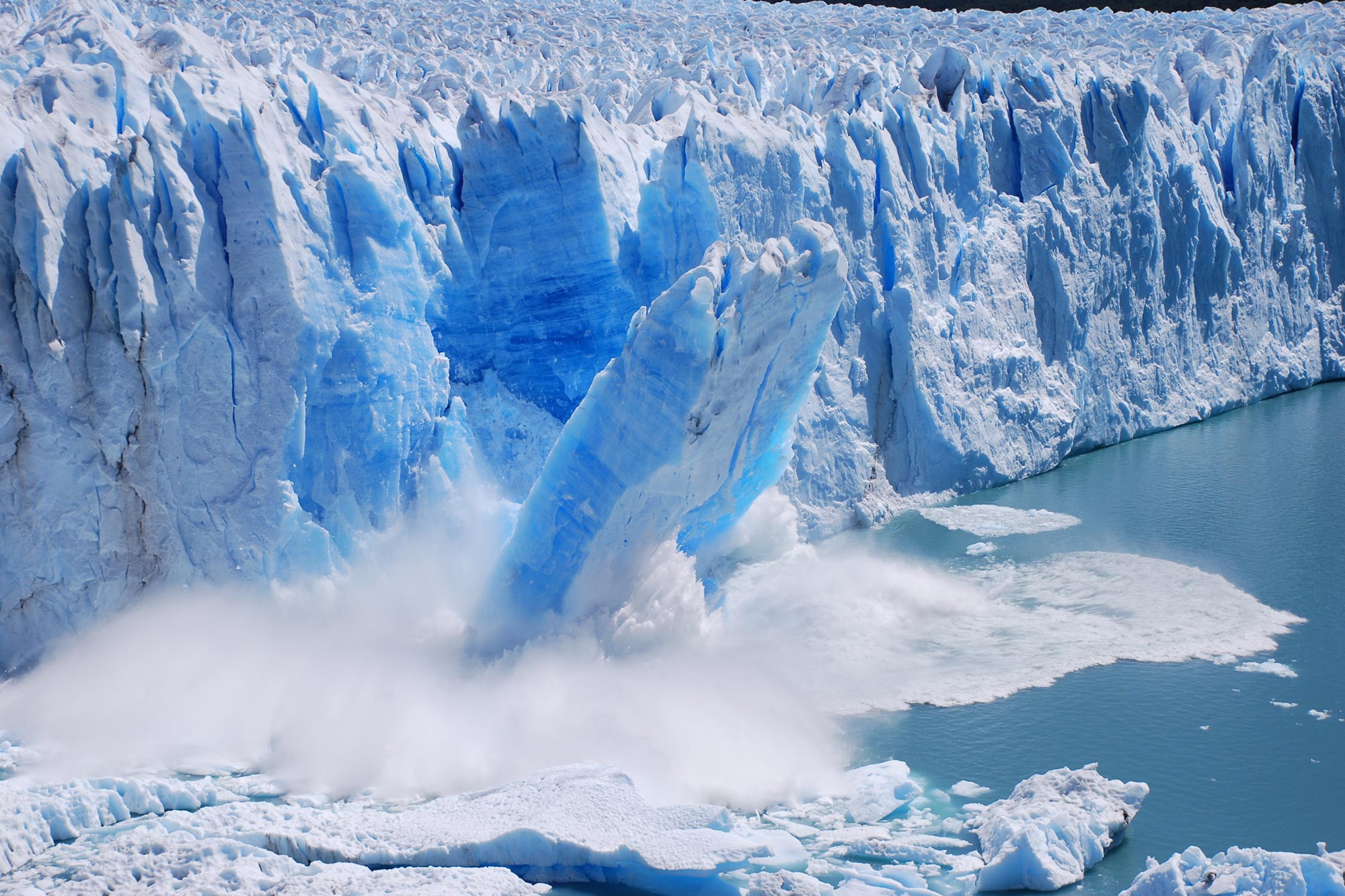
Satellite observations show Antarctic ice cliffs stabilizing after unexpectedly rapid collapse, challenging assumptions about runaway ice loss and its contribution to rising seas.
Antarctica’s ice shelves help hold back the ice sheet behind them, but rising temperatures are causing these supports to melt and break apart at record rates. As sheer ice cliffs are left exposed, scientists have worried that a collapse could reveal a taller cliff farther inland, setting off a chain of failures that eats into the ice sheet and raises seas worldwide.
In a four-year satellite survey of more than 15,000 Antarctic ice cliffs, researchers at MIT and the Woods Hole Oceanographic Institution (WHOI) found that the tallest cliffs they examined closely did collapse, and the ice sheet in those regions retreated faster than models predicted. “But that retreat was short-lived,” says Caroline Needell, a graduate student in the MIT-WHOI Joint Program.
Needell conducted the study, published in Science, with Catherine Walker, an assistant scientist at WHOI, and Jeremy Bassis, an associate professor at the University of Michigan.
Rapid collapse without runaway retreat
The observations came from NASA’s Ice, Cloud, and Land Elevation Satellite-2 (ICESat-2), which passes over Earth’s polar regions. Its laser altimeter measures the height of ice sheets, glaciers, and sea ice, as well as ocean levels in and around Antarctica. The team analyzed measurements collected every three months from 2019 to 2023 to determine how tall the cliffs were and how they changed over time.
Those measurements offered a much broader test of a proposed process called marine ice cliff instability, or MICI. In this scenario, a cliff exceeding a critical height collapses under its own weight. If that exposes a taller cliff, the failures continue inland. Previous studies had investigated this process by modeling ice’s physical properties, scaling those relationships up to entire cliffs, and combining the predictions with a few observations from Antarctica.
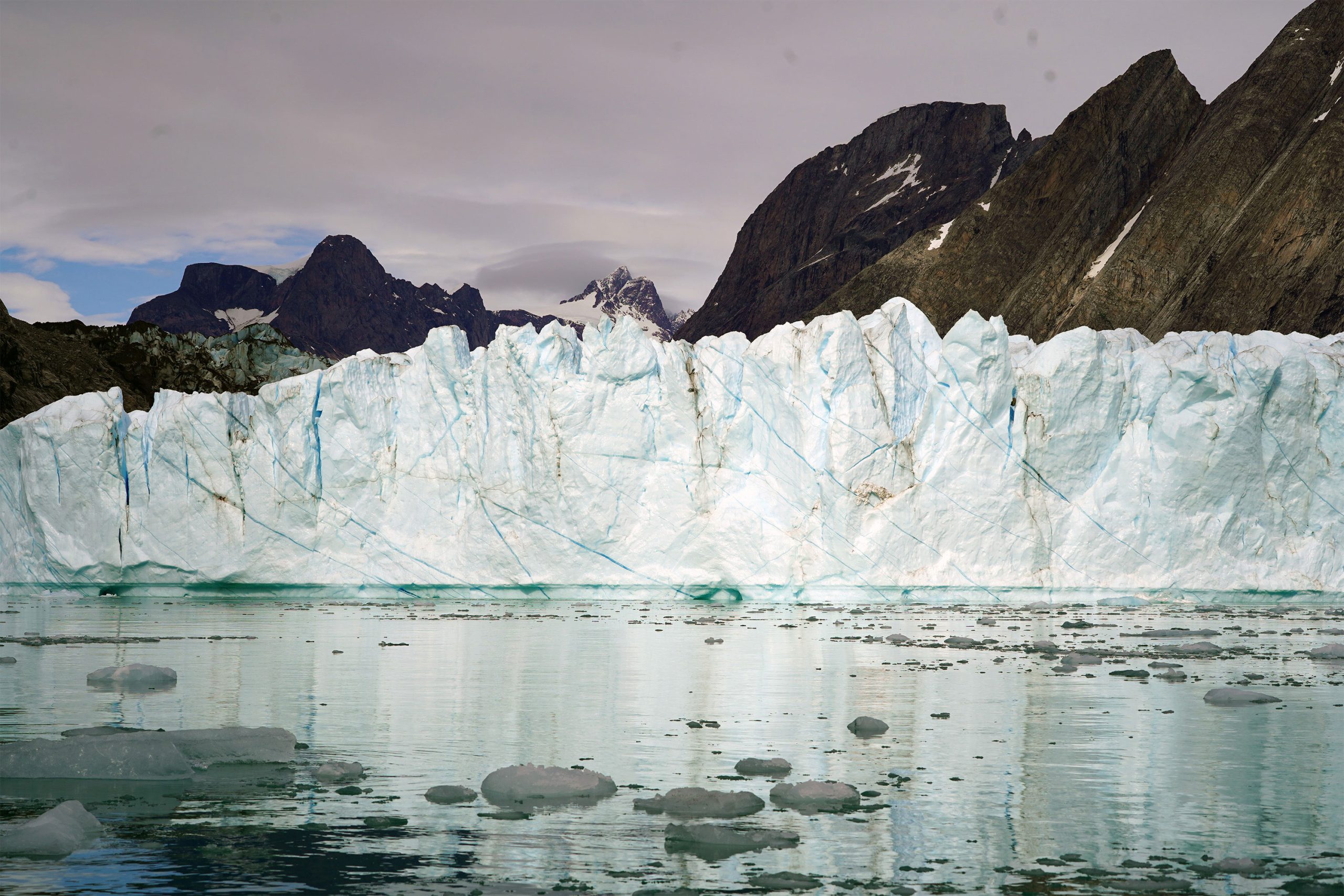
“Predictive ice-sheet models that have been used so far to represent ice cliff instability just take into account cliff height,” Needell notes. “That’s the only variable that matters. And once the cliff height reaches the critical threshold, usually 100 meters, it should initiate this runaway effect of ice sheet retreat.”
Across the satellite survey, the average ice cliff stood about 30 meters (98 feet) tall, well below that proposed threshold. A few rare cliffs exceeded 100 meters (328 feet), roughly the height of the Statue of Liberty, giving the researchers an opportunity to examine what happened near and above the predicted danger point.
“After we did that global analysis, we thought, ok, let’s zoom in on the tallest cliffs and see how they’re behaving,” Needell says.
The team focused on four cliffs in four regions around the Antarctic ice sheet. These cliffs were roughly 100 meters tall, with the tallest reaching 127 meters (417 feet). Tracking them through the same four years of measurements revealed that their rapid collapse and retreat did not continue unchecked. The ice eventually spread back out toward the ocean.
“It’s this rapid retreat, punctuated by periods of stabilization,” Needell says. “That was puzzling to us. Then, we thought: We need to look at all the things that affect cliff height.”
Rising ground can stabilize ice cliffs
The researchers first examined the shape of the land beneath the ice. Over relatively flat ground, changes in the ice surface’s elevation reflect changes in the thickness of the ice itself. Where the ground rises, however, some of that elevation comes from the land underneath, leaving a thinner layer of ice above it. Such a rise could act as a speed bump for retreat by making the overlying ice less prone to collapse. When the team checked Antarctic topographic measurements, they found that cliffs stabilized around places where the underlying land rose.
Taller cliffs also “thin out” faster, the researchers found. As they collapse, they settle into shorter, more stable cliffs, limiting further collapse.
“Now we know what to look for,” Needell says. “We really need to know the bed topography, and we need to know the ice thinning rate, in order to get ice cliff instability right, because this value really matters in the context of projecting sea level rise.”
Support from broken ice and seawater
Conditions in front of the cliffs offered additional clues. In the broader survey, cliffs that stayed roughly in place had thicker mélange, the slushy mixture of broken icebergs and sea ice that collects against a cliff’s ocean-facing edge.
“We measured mélange height and found taller cliffs have thicker mélange, which could be a built-in stabilizing effect,” Needell explains.
The satellite data also indicated that deeper surrounding water could help keep a cliff standing. The water buoys the ice and pushes back against it, providing support that can make collapse less likely.
“We found that when the cliffs were retreating, they were doing so faster than what has been modeled, which would mean more ice loss and higher contributions of sea level rise,” Needell says. “But because we found that the retreat was short-lived, and all the glaciers eventually stabilized, that would suggest that things won’t be so bad. We don’t see this runaway effect.”
Reference: “Empirical constraints on ice cliff calving” by Caroline Needell, Catherine C. Walker and Jeremy N. Bassis, 15 October 2026, Science.
DOI: 10.1126/science.aee0658
This research was supported, in part, by NASA, the U.S. National Science Foundation, and the DOMINOS project, a component of the International Thwaites Glacier Collaboration.
Never miss a breakthrough: Join the SciTechDaily newsletter.
Follow us on Google and Google News.