
Close Menu
    Facebook X (Twitter) Instagram
    SciTechDaily
    • Biology
    • Chemistry
    • Earth
    • Health
    • Physics
    • Science
    • Space
    • Technology
    Facebook X (Twitter) Pinterest YouTube RSS
    SciTechDaily
    Home»Biology»Scientists Discover a Mysterious Giant Deep-Sea Creature Hiding in Plain Sight for 40 Years
    Biology

    Scientists Discover a Mysterious Giant Deep-Sea Creature Hiding in Plain Sight for 40 Years

    By University of TübingenOctober 15, 2026No Comments4 Mins Read
    Facebook Twitter Pinterest Telegram LinkedIn WhatsApp Email Reddit
    Share
    Facebook Twitter LinkedIn Pinterest Telegram Email Reddit
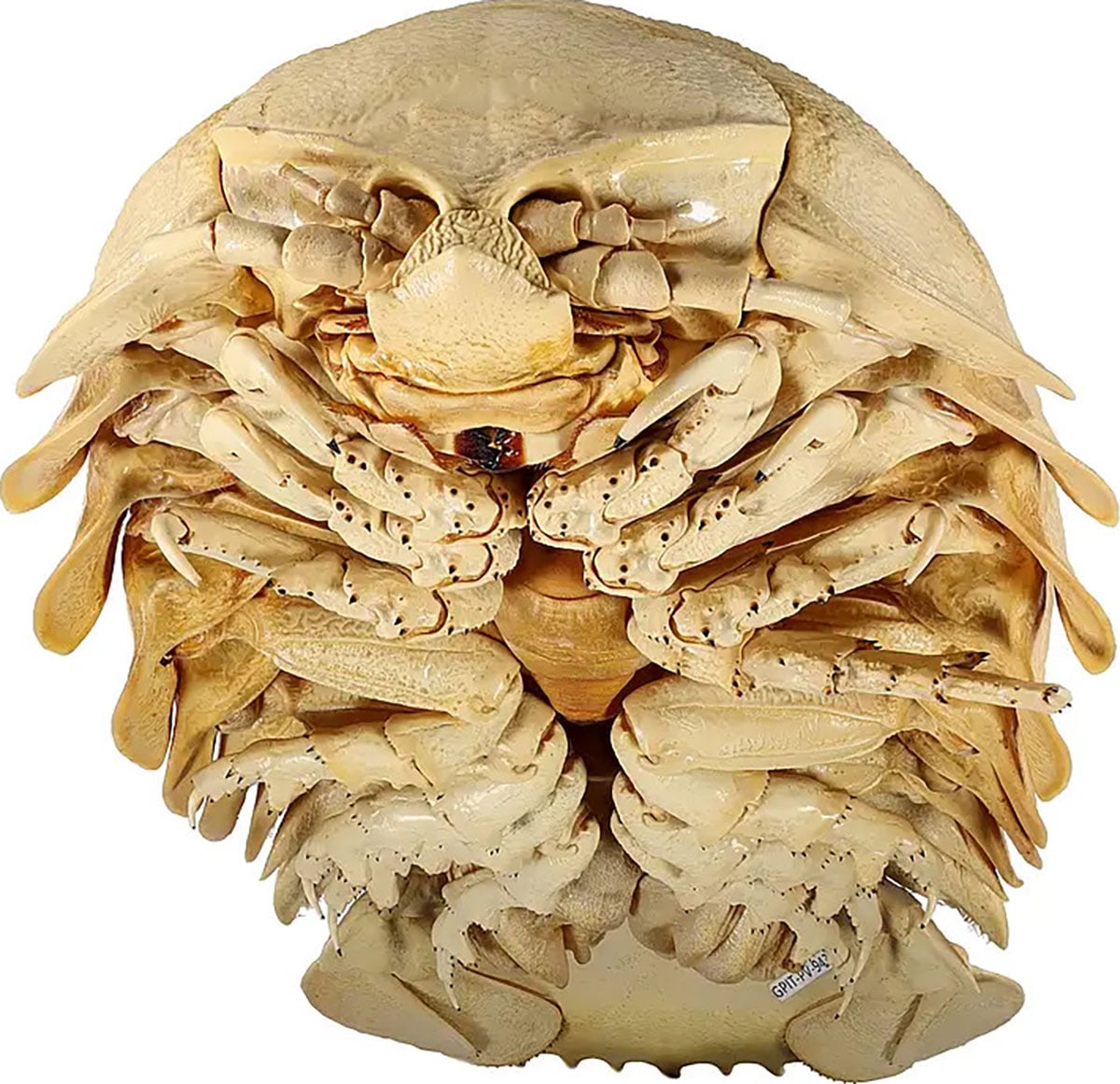
    Underside of the Exoskeleton of Bathynomus Tuebingoborikensis
    Underside of the exoskeleton of the newly discovered giant isopod species Bathynomus tuebingoborikensis, showing several pairs of legs. Credit: Julie Klaess

    A newly identified giant isopod species offers clues to how these deep-sea crustaceans spread around the world, including a possible return to the Americas via Antarctica.

    A giant crustacean brought from Puerto Rico to Germany as a teaching specimen has turned out to belong to a species unknown to science. Tübingen paleontologist Professor Dolf Seilacher (1925–2014) acquired the animal at a research station in Puerto Rico in the 1980s. The dried specimen, rediscovered in storage at the University of Tübingen’s Paleontological Collection, represents a species still living today.

    Paleontology student and isopod expert Benedikt Kästle and the collection’s curator, PD Dr. Ingmar Werneburg of the university’s Senckenberg Center for Human Evolution and Palaeoenvironment, examined the animal using advanced imaging techniques. They identified it as a new species of giant isopod and compared its anatomy with that of other giant isopods around the world.
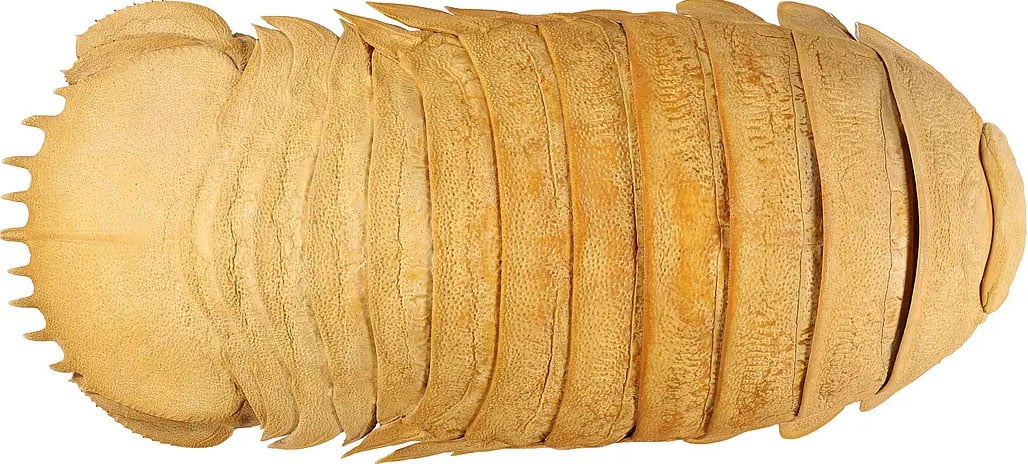
    Dorsal View of Bathynomus Tuebingoborikensis
    Rear view of the exoskeleton of the newly-discovered giant isopod species Bathynomus tuebingoborikensis. Credit: Julie Klaess

    Deep-sea giants that resemble woodlice

    These marine crustaceans resemble the much smaller woodlice found in caves and damp basements. Their bodies are armored with an exoskeleton made of calcium-rich, scale-like segments. Members of their genus, Bathynomus, inhabit all the world’s oceans, living as omnivores at depths reaching 2,500 meters, or about 8,200 feet. They can grow up to 50 centimeters, or nearly 20 inches, long and weigh several kilograms, placing them among the largest invertebrates.

    “Our Tübingen specimen from Puerto Rico, measuring 32.2 centimeters in length, falls into the category of ‘colossogiants’,” says Kästle.

    The researchers named the species Bathynomus tuebingoborikensis, combining a reference to their university town with Boríken, the Indigenous Taíno name for Puerto Rico. Werneburg points to the discovery as evidence of the value of natural history collections as global archives of nature. Their study and species description, published in Scientific Reports, are expected to help scientists understand the broader evolution of deep-sea isopods.
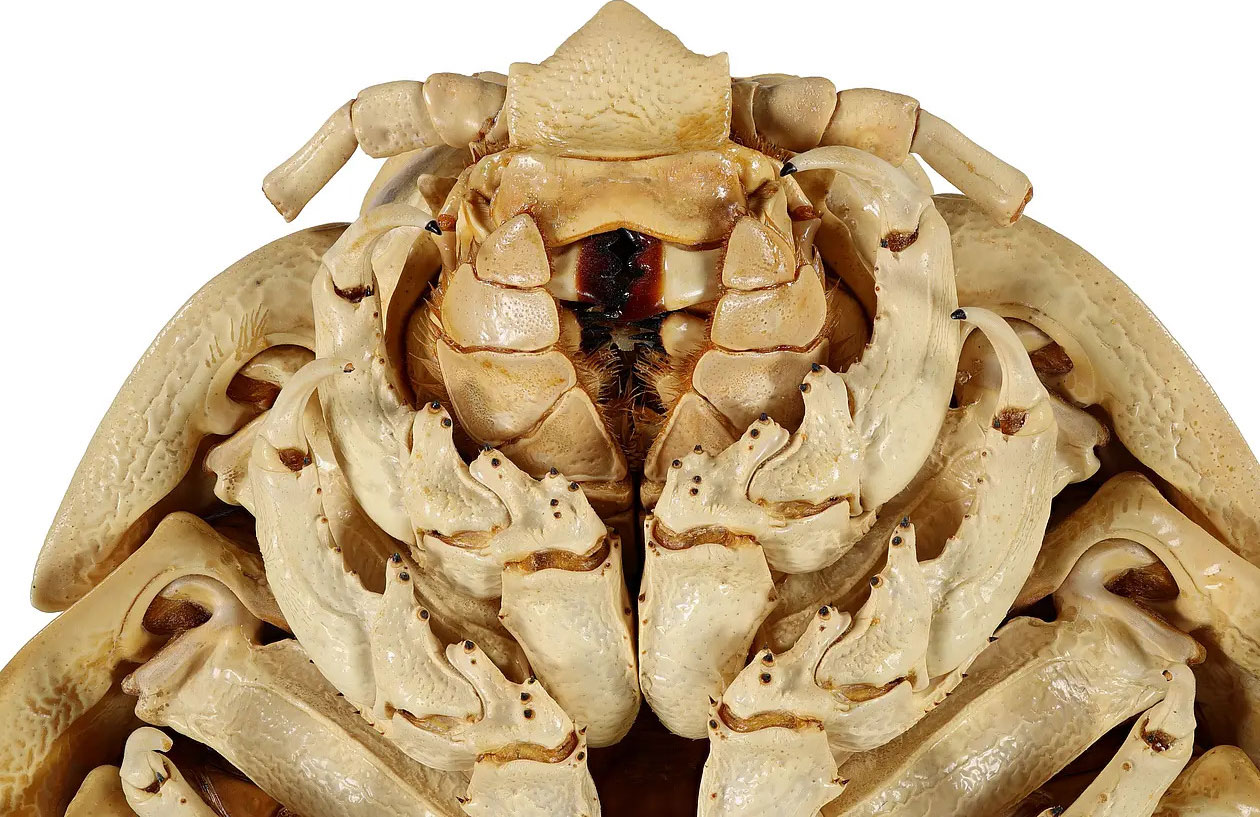
    Mouth Parts of the Species Bathynomus Tuebingoborikensis
    Mouth parts of the newly-discovered giant isopod species Bathynomus tuebingoborikensis. Credit: Julie Klaess

    When Panama was a seaway

    To investigate that history, Kästle and Werneburg carried out a phylogenetic analysis, reconstructing evolutionary relationships among species. Their results suggest that Bathynomus originated in what is now the Gulf of Mexico during the Miocene, more than 15 million years ago. The route out of that region was different from the geography familiar today.

    “At that time, the Isthmus of Panama was open, leaving a strait between North and South America, and the marine animals were able to spread westward, initially as far as Japan,” says Werneburg.
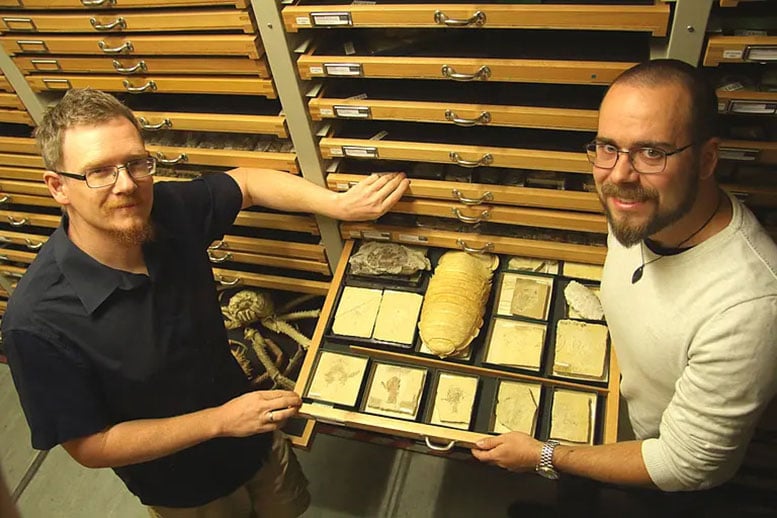
    Ingmar Werneburg and Benedikt Kästle in the Tübingen Palaeontological Collection Archive
    Researcher Ingmar Werneburg (left) and Benedikt Kästle in the Tübingen Palaeontological Collection archive, with Bathynomus tuebingoborikensis surrounded by fossil crabs. Credit: Julie Klaess

    As they spread through the Indian and Pacific Oceans, the isopods diversified into many new species. “This gave rise to the so-called ‘giant’ isopods that are up to 15 centimeters long, and the ‘supergiants’ with a body length of more than 15 centimeters,” adds Kästle. Their expansion also took them to Australia and East Africa, and, before the collision of the Arabian and African continental plates, to Europe, where they became extinct at the end of the Miocene.

    Colossogiants emerge as Earth cools

    A distinct group emerged in the Indo-Pacific as Earth cooled at the boundary between the Miocene and Pliocene epochs, 5.333 million years ago. “These veritable colossi grew to more than 25.2 centimeters in length and were physiologically perfectly adapted to the new climatic conditions,” says Werneburg.

    The researchers propose that these larger isopods spread from Australia via Antarctica to South and Central America. There, they encountered smaller, more distantly related isopods whose ancestors had remained behind during the genus’s original westward expansion. The Puerto Rican specimen belongs to this larger group, and its anatomical relationships connect it to another species in the region.

    “The new species is very closely related to another giant species found off the Yucatán Peninsula in Mexico,” Kästle says.

    Reference: “A new Caribbean species of the giant isopod genus Bathynomus (Crustacea, Isopoda, Cirolanidae) with notes on its evolutionary history” by Ingmar Werneburg, and Benedikt Kästle, 8 October 2026, Scientific Reports.
    DOI: 10.1038/s41598-026-69097-y

    Never miss a breakthrough: Join the SciTechDaily newsletter.
    Follow us on Google and Google News.

    Biodiversity Deep Sea Marine Biology Taxonomy Zoology
    Share. Facebook Twitter Pinterest LinkedIn Email Reddit

    Related Articles

    Researchers Just Found a New Species of Glowing Shark

    The “Popcorn” Parasite: Scientists Discover 14 Bizarre New Marine Species

    Scientists Discover New Golden-Tongued Species of Lizard

    Scientists Discover Unusual New Species of Octopus With Massive Eyes and Blood-Red Tentacles

    Alien Species Predicted to Increase by 36% Worldwide by 2050

    Rare Deep Sea Bigfin Squid Sighted in Australian Waters for First Time

    New Species Found in the Hottest Place on Earth

    Making a List of All Creatures, Great and Small: For the First Time, an Agreed List of All the World’s Species

    Presence of Cryptic and Elusive Tiny Creatures Betrayed by Facebook and Instagram

    Leave A Reply Cancel Reply

    • Facebook
    • Twitter
    • Pinterest
    • YouTube

    Don't Miss a Discovery

    Subscribe for the Latest in Science & Tech!

    Trending News

    Beyond Ozempic? New Weight Loss Drug Shows Stunning Results in Major Clinical Trial

    Scientists Create a Nuclear Clock So Precise It Barely Loses a Second in 30 Million Years

    Scientists Discover Groundbreaking Clues to Tissue Regrowth and “Immortality” in the Ocean

    A New Test Upends a Long-Held Assumption About Dark Matter

    Scientists Discover an Unexpected New Way To Fight Alzheimer’s Before It Starts

    Sleeping Less Than 5 Hours Was Linked to Higher Risk of 37 Diseases

    This 345-Million-Year-Old Fossil Fooled Scientists for Decades

    Scientists Restore Limited Vision in Blind Patients Using Gene Therapy and Special Goggles

    Follow SciTechDaily
    • Facebook
    • Twitter
    • YouTube
    • Pinterest
    • Newsletter
    • RSS
    SciTech News
    • Biology News
    • Chemistry News
    • Earth News
    • Health News
    • Physics News
    • Science News
    • Space News
    • Technology News
    Recent Posts
    • Scientists Discover a Mysterious Giant Deep-Sea Creature Hiding in Plain Sight for 40 Years
    • What’s Really Inside Breast Milk? Scientists Discover 7 Molecules Linked to How Babies Grow
    • Scientists Discover a Surprisingly Simple Way To Relieve Stubborn Carpal Tunnel Pain
    • Same Calories, Same Nutrients – but One Meal Triggered a Surprising Reaction in the Body
    • Researchers Map the Brain’s Mysterious “Blue Place” and Discover a Record-Breaking Neuron
    Copyright © 1998 - 2026 SciTechDaily. All Rights Reserved.
    • Science News
    • About
    • Contact
    • Editorial Board
    • Privacy Policy
    • Terms of Use

    Type above and press Enter to search. Press Esc to cancel.