
A single research expedition in 2022 is helping scientists chart even more remarkable marine species across the ocean.
Researchers have discovered two new deep-sea species—a lanternshark and a porcelain crab—based on specimens collected during a 2022 expedition aboard the CSIRO research vessel (RV) Investigator. Named the West Australian Lanternshark and a new species of porcelain crab, the findings were described by separate research teams in papers published in September 2025.
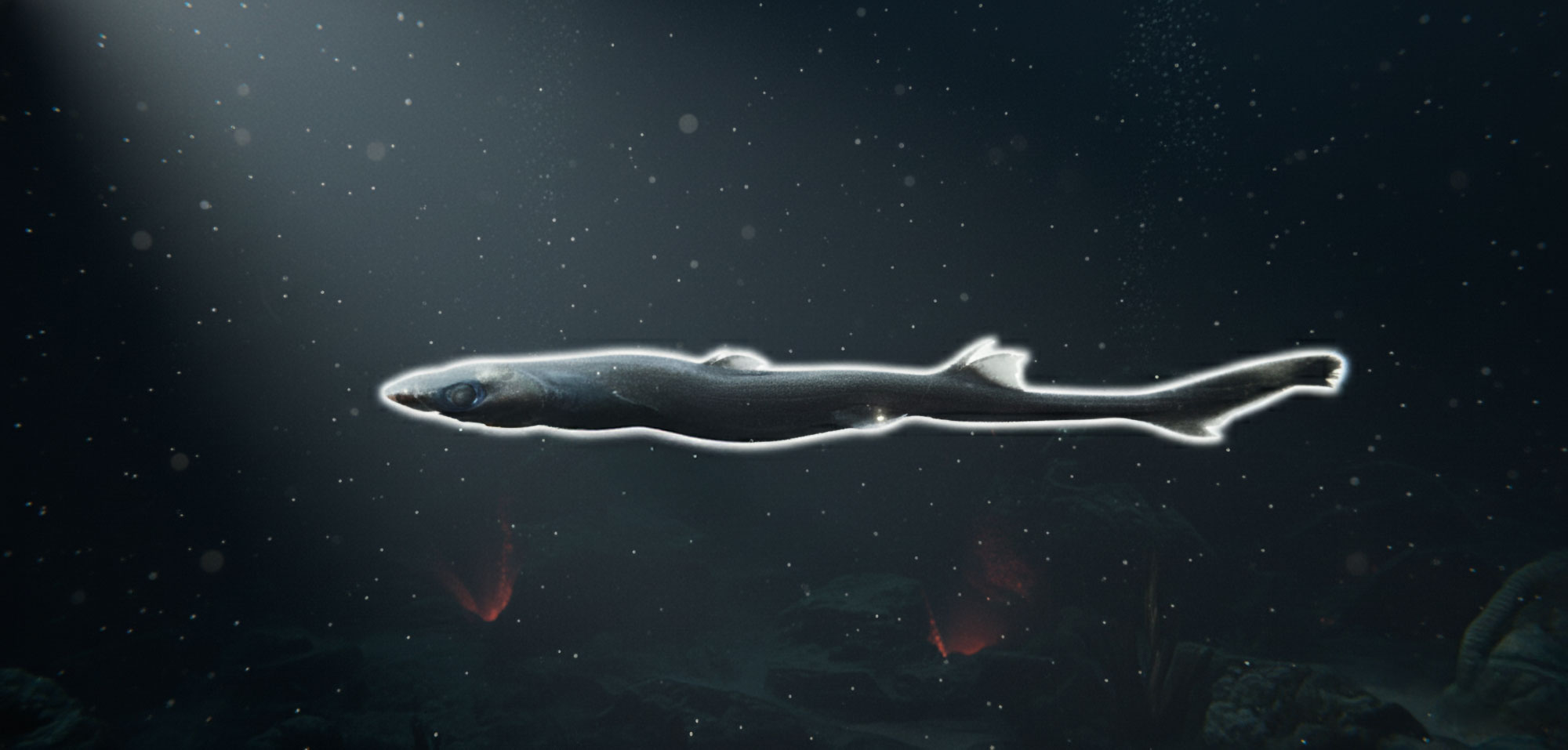
Meet the West Australian Lanternshark Etmopterus westraliensis
Dr. Will White, an ichthyologist with the CSIRO Australian National Fish Collection, contributed to describing the newly identified shark species.
“Lanternsharks are an amazing group of sharks, and this new species was found at depths to 610 meters during biodiversity surveys for Parks Australia in the Gascoyne Marine Park area off Western Australia,” Dr White said.
The West Australian Lanternshark is a small deep-sea species, with the largest specimen measuring only 407 mm long. It has large eyes adapted to the darkness of deep waters and a slim body with two small dorsal fins, each tipped with a sharp spine. One of its most distinctive traits is its ability to emit light, a feature that makes lanternsharks especially remarkable.
“Lanternsharks are bioluminescent, with light produced by photophores located on their belly and flanks, which is where their common name comes from,” Dr White said.
The species name given to the new lanternshark, E.westraliensis, is in reference to Western Australia, where the species is found. This is the third new shark species described using specimens collected on the same 2022 voyage, joining the Painted Hornshark and Ridged-egg Catshark, both announced in 2023.
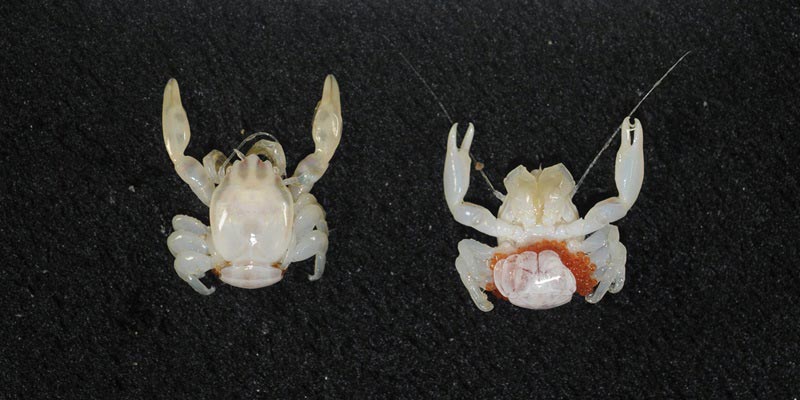
Meet the new porcelain crab Porcellanella brevidentata
Dr Andrew Hosie, Curator of Aquatic Zoology from the Western Australian Museum, was involved in describing the new crab species.
“The new species of porcelain crab lives a symbiotic life with sea pens, which are a group of soft corals related to sea fans, where they will hide among the ‘leaves’ of the host,” Dr Hosie said.
The crab is small, being around 15 millimeters in length, and is opalescent white-yellow in color. This makes it well-adapted to hide within the white leaves of its sea pen host. The new crab was found during surveys along the Ningaloo coast at depths to 122 meters.
“Porcelain crabs are known as filter feeders, feeding on plankton by using modified mouthparts with long hairs to sweep the water for small pieces of food such as plankton, rather than the typical crab method of grabbing and pinching food with their claws,” Dr Hosie said.

Additional specimens used to identify and describe the new species of porcelain crab were collected during another CSIRO-led RV Investigator voyage in 2017.
A bounty of new life
Nearly 20 new species have now been described with the help of specimens collected on the 2022 voyage, including the Carnarvon Flapjack Octopus announced earlier in 2025. Incredibly, researchers estimate that there are potentially up to 600 new species still waiting to be described from the voyage.
The deep-sea is still largely unexplored and biodiversity surveys of these habitats are vital to increase our understanding of the incredible marine life that dwells in the depths of our oceans.
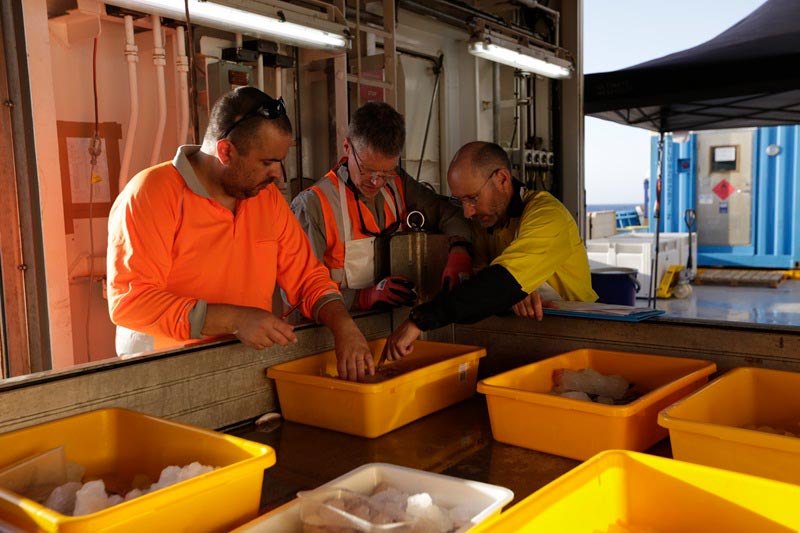
Researchers expect to discover more species new to science during an upcoming CSIRO-led voyage on RV Investigator to survey the deep-sea biodiversity of the Coral Sea Marine Park for Parks Australia. The voyage brings together many of the same researchers from the 2022 voyage, along with new collaborators and partners, to again turn wonder into discovery.
References: “Integrative Phylogenetic and Morphological Analyses Reveal Two New Species of Porcellanid Crabs and Resurrect Porcellanella picta Stimpson, 1858 (Decapoda: Porcellanidae)” by Hai Xin Loke, Bonnie Yuen Wai Heung, Yi-Xuan Li, Yi-Tao Lin, Andrew M. Hosie, Zhi Wang, Marissa McNamara and Jian-Wen Qiu, 29 September 2025, Ecology and Evolution.
DOI: 10.1002/ece3.72131
“Etmopterus westraliensis, a new species of lanternshark (Squaliformes: Etmopteridae) from Western Australia, with redescription of Etmopterus brachyurus” by Shing-Lai Ng, William T. White, Kwang-Ming Liu and Shoou-Jeng Joung, 18 September 2025, Journal of Fish Biology.
DOI: 10.1111/jfb.70162
Funded by the Australian Government and operated by CSIRO, Australia’s national science agency, on behalf of the nation.
Never miss a breakthrough: Join the SciTechDaily newsletter.
Follow us on Google and Google News.