
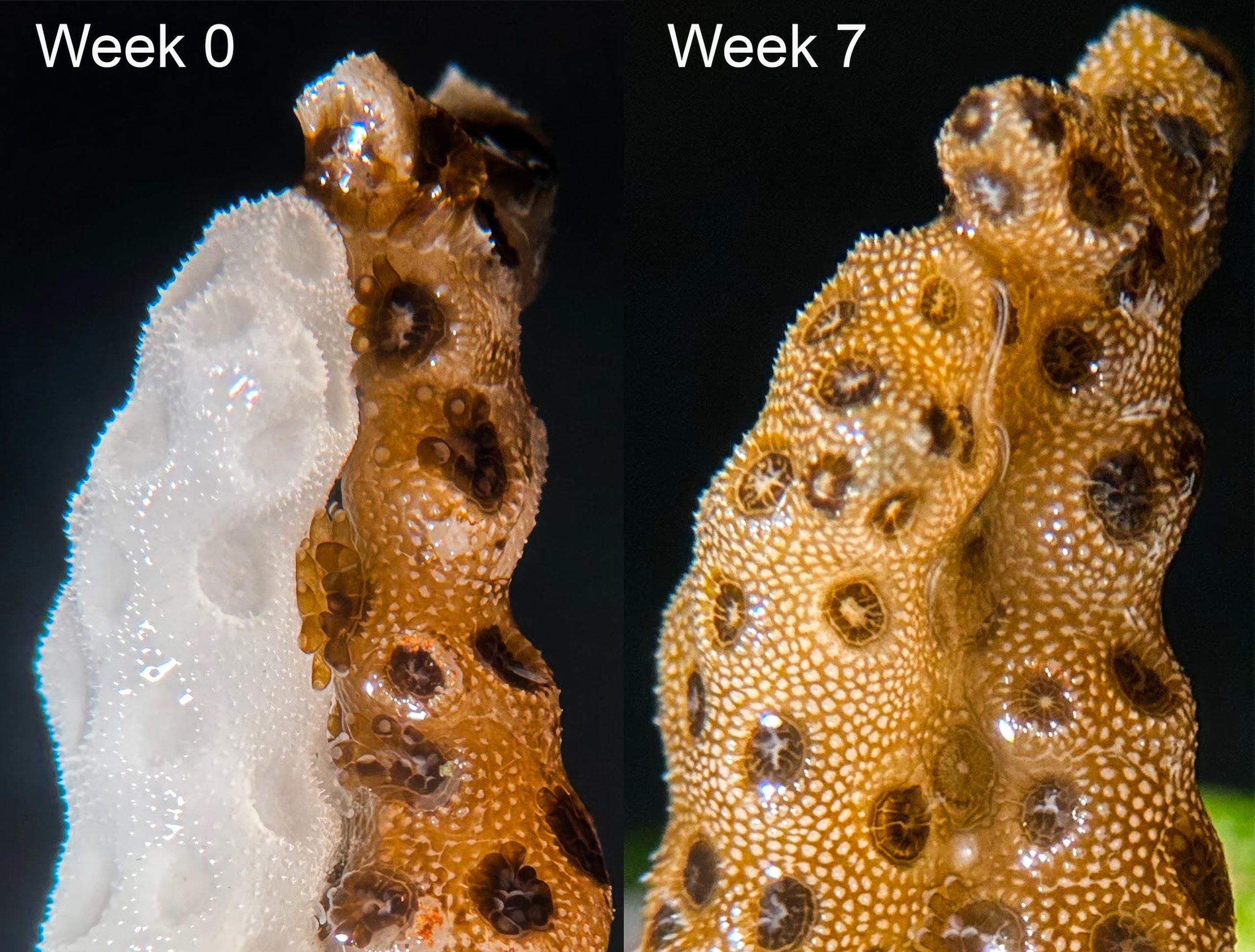
Bleached corals fully recovered within seven weeks after brief contact with healthy clones in laboratory tests, suggesting a possible way to speed reef restoration.
Warm water can leave corals alive but starving. When the animals expel the colorful algae living in their tissues, they lose the energy those partners supply for growth and turn ghostly white. Bleached corals become vulnerable to invasion by harmful algae, and even those that survive can take months or years to recover.
In a laboratory, researchers have now restored bleached corals on the brink of death through brief contact with healthy clones, the first time full recovery has been observed this way. The corals returned to health within seven weeks, the fastest documented recovery to date, according to the study published October 14 in Science Advances.
Coral recovery continues after contact ends
The approach takes advantage of how corals grow. Corals are animals, and in most species, individuals multiply by producing genetically identical copies. These clones grow together into vast colonies that build reefs.
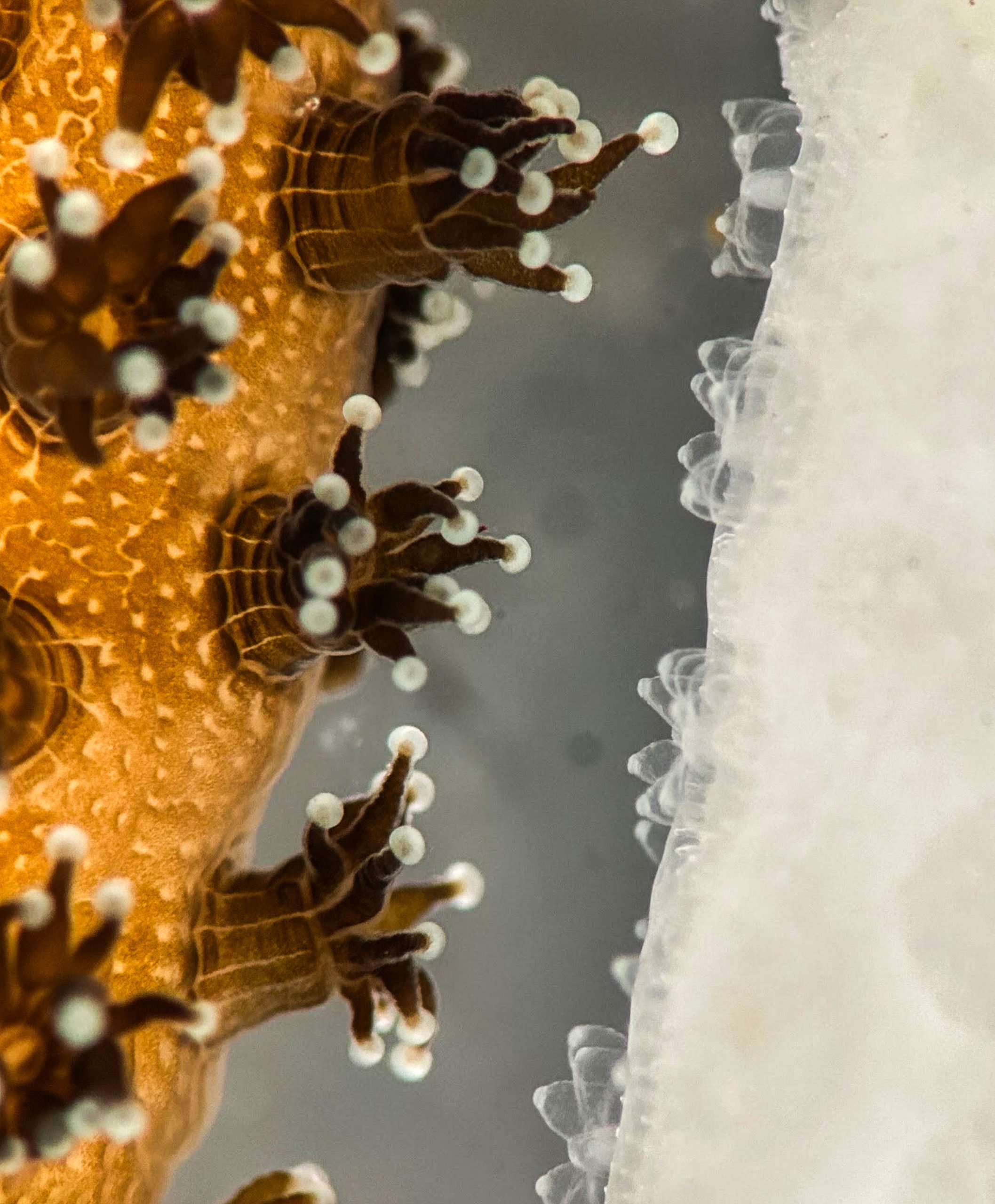
“Genetically identical corals recognize one another when they come into contact,” said study coauthor Steve Palumbi, the Jane and Marshall Steel, Jr. Professor in Marine Sciences. “Their tissues fuse if they are from the same clone. We see something similar in humans. Organ transplants are often successful if the donor is your identical twin.”
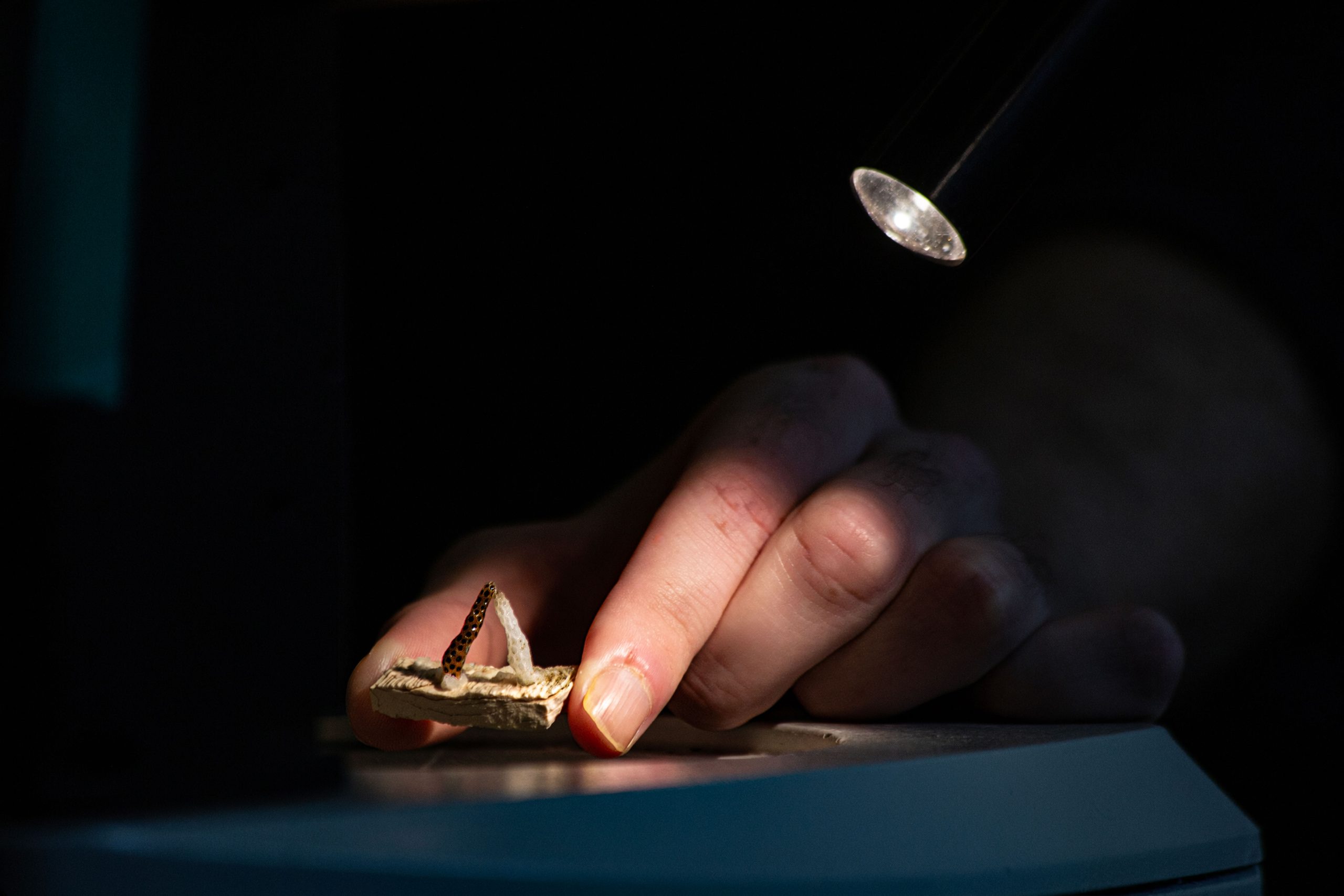
To test whether contact could help a bleached coral recover, lead author Danny Collins, an oceans PhD student at the Stanford Doerr School of Sustainability, assembled 10 pairs of fragments. Each pair contained one healthy fragment and one bleached fragment from the same animal. He placed five pairs close enough to touch and left gaps of just a few millimeters between the fragments in the other five. The bleached fragments that touched their healthy partners fully recovered, while those separated by the small gaps died.
The researchers then tested whether the fragments needed to stay together throughout recovery. By separating pairs at different intervals, they found that one week of contact, and sometimes just five days, supplied enough beneficial algae for the bleached fragments to finish recovering on their own. Recovery after separation took seven weeks, matching the recovery time of pairs left in continuous contact.
An accidental touch restores coral color
The idea of bringing the fragments together originated with two corals that had tipped over in a tank. In 2025, Palumbi noticed that a healthy fragment and a bleached fragment from the same colony were touching in his lab. Color was returning to the bleached fragment where they met, signaling that beneficial algae were returning.
“While bleached corals may be dying, they are not dead yet,” said Collins, who is also a Knight-Hennessy Scholar. “The question we wanted to answer is, once a coral has bleached, what can we do?”
Around the time of Palumbi’s observation, Collins was studying the origins of coral disease, particularly the transmission of bacteria carried on plastic debris that settles onto corals.
“Harmful bacteria enter corals through physical contact,” said Collins. “We were curious about what would happen if we used contact to reintroduce something good – the beneficial algae from healthy corals.”
Algae multiply rapidly inside bleached corals
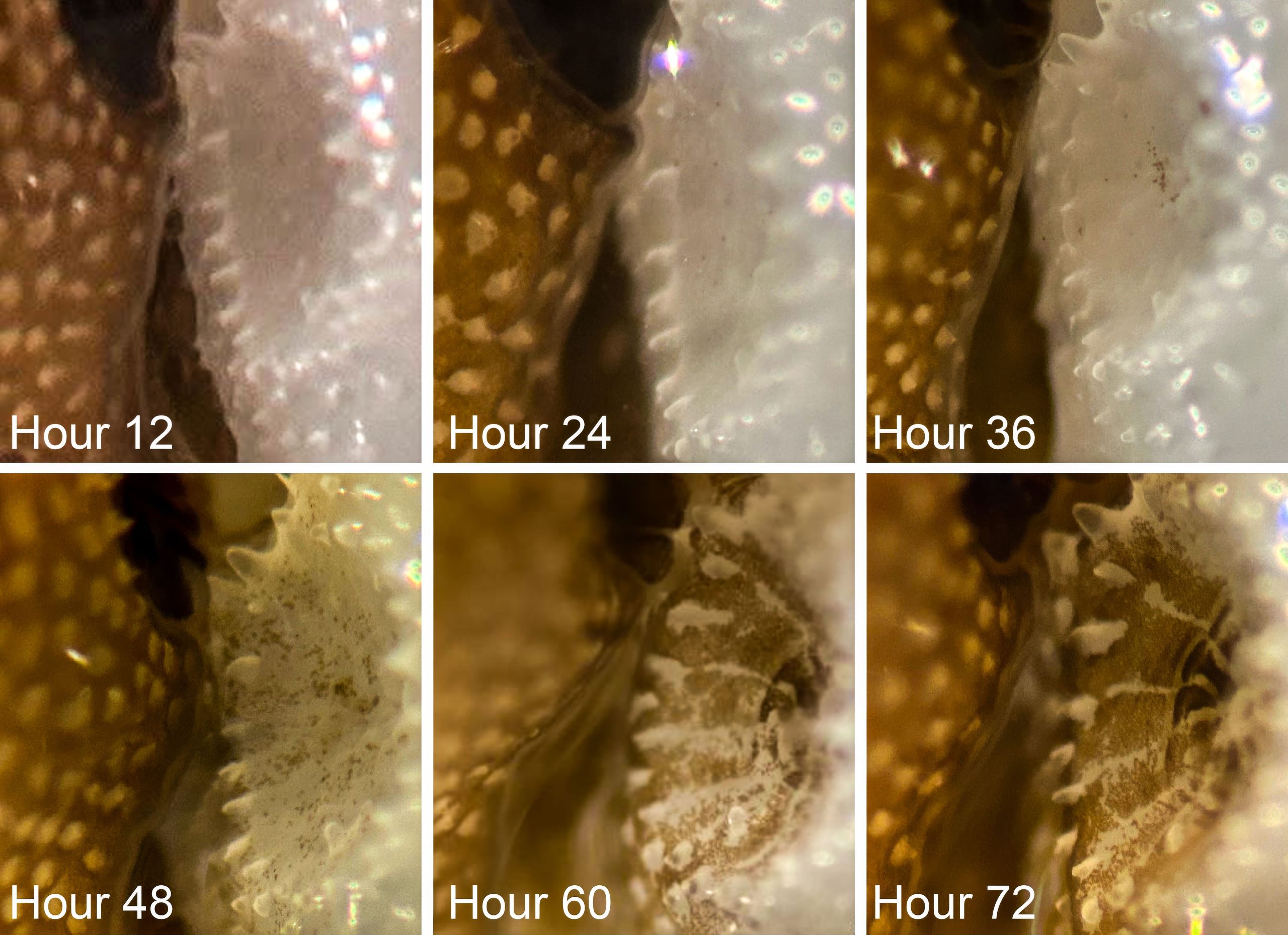
To investigate how that transfer worked, Collins and his colleagues examined the contacting tissues with a powerful microscope. Shortly after the fragments touched, microscopic channels in their tissues aligned, opening pathways through which beneficial algae and the nutrients they produce could flow. Within three days of contact, algae had moved from healthy fragments into bleached ones.
“Once beneficial algae enter bleached corals, they don’t just spread out,” said Palumbi, who is a professor of oceans in the Doerr School of Sustainability and of biology in the School of Humanities and Sciences. “They flood in and start dividing at the fastest rates seen in corals.”
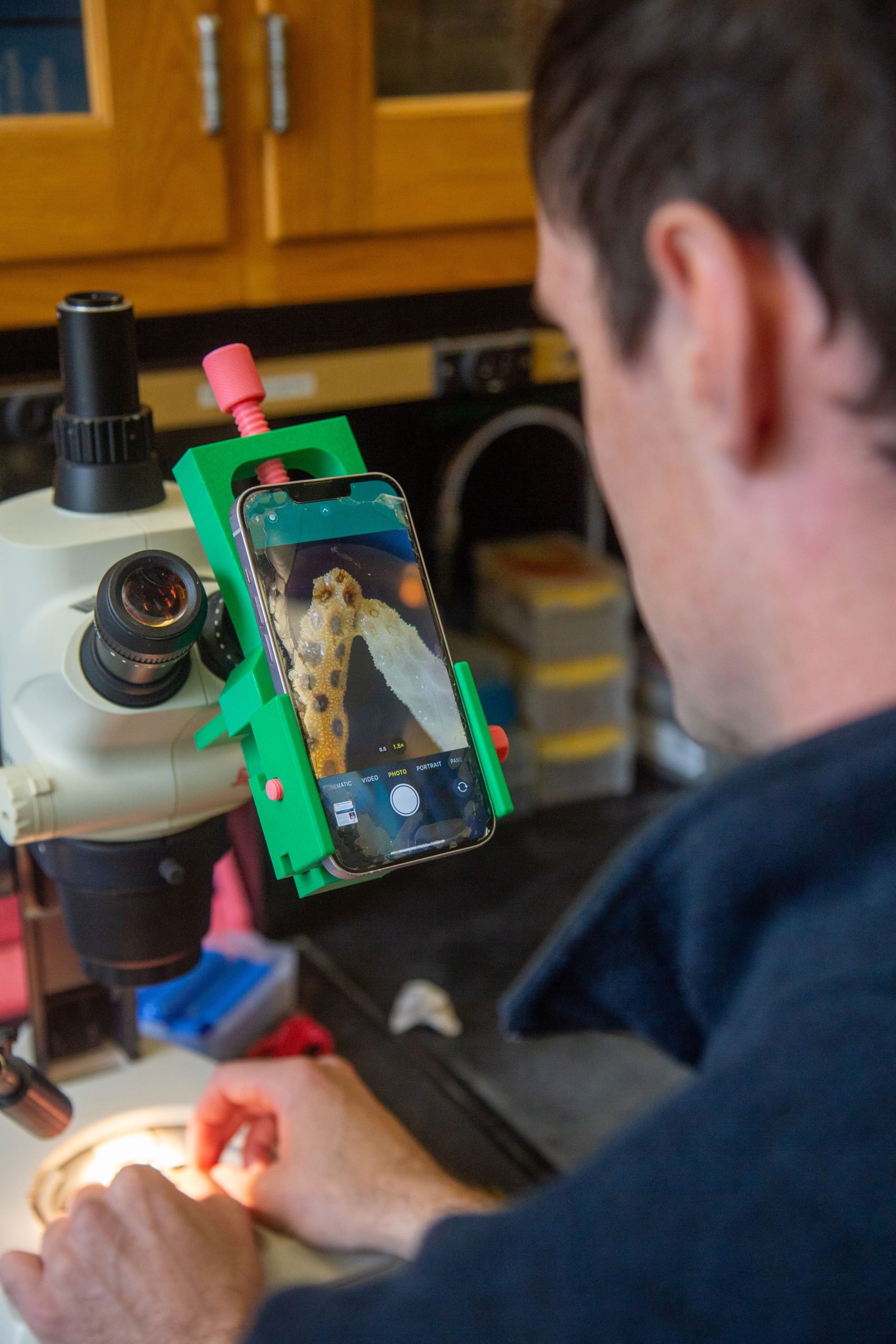
During the second week of contact, the algae inside bleached fragments doubled every four days, roughly ten times faster than the rate observed in wild corals. The ability of fragments to keep recovering after separation led the team to conclude that algae multiplying inside the bleached coral, rather than a continuing supply from its healthy partner, primarily drove the rest of its recovery.
Delivering algae without a matching clone
Translating the laboratory results into reef restoration will require a different way to deliver those algae. The tested approach depends on having a healthy, genetically identical copy of every bleached coral, a requirement the researchers caution is not feasible at the scale needed to restore reefs.
Climate change is driving more frequent and intense marine heat waves, and some estimates suggest corals could disappear within a few decades. Researchers have spent decades developing ways to protect them from bleaching, disease outbreaks, increasingly acidic waters, and other threats. Those efforts include selectively breeding heat-tolerant corals, growing corals in nurseries to restore degraded reefs, and transplanting coral microbiomes, the communities of microorganisms associated with corals.
“Bleached corals are often considered a lost cause because recovery after a heatwave is very slow, if it happens at all,” said Fiorenza Micheli, the David and Lucile Packard Professor in Marine Science and a faculty advisor of Collins. “We hope this new research will inspire solutions that keep corals healthy long enough to enable full recovery after heat waves through slower processes such as growth, reproduction, and recruitment of new colonies.”
Many questions remain about how to turn the findings into a practical treatment. In the coming months, the team plans to explore alternative ways of delivering beneficial algae that do not require continuous contact with healthy corals. One possibility is to collect algae from healthy corals long before heat waves arrive, then deliver them in large batches to bleached corals to accelerate recovery.
“These new insights into how corals can naturally recover give us hope for the future,” said Micheli, who also co-directs the Stanford Center for Ocean Solutions. “They open the door to what’s possible and may lead to the breakthrough we need to accelerate reef restoration.”
Reference: “Rapid coral bleaching recovery via symbiont transfer from healthy corals” by Daniel S. Collins, Jana Sipkova, Nathaniel R. Mollica, Thomas Rolander, Courtney N. Klepac, Gabriel F. Calistro, Vanessa Barone, Fiorenza Micheli and Stephen R. Palumbi, 14 October 2026, Science Advances.
DOI: 10.1126/sciadv.aeh1580
This work was supported by National Science Foundation grant no. 2412742 (S.R.P.), National Science Foundation grant no. 2108566 (F.M.), the Knight-Hennessy Scholars Program at Stanford University (D.S.C.), Start-up funds from Stanford University (V.B.), and a Seed grant from MAC3 Impact Philanthropies and Stanford Woods Institute for the Environment (S.R.P.)
Never miss a breakthrough: Join the SciTechDaily newsletter.
Follow us on Google and Google News.