
Close Menu
    Facebook X (Twitter) Instagram
    SciTechDaily
    • Biology
    • Chemistry
    • Earth
    • Health
    • Physics
    • Science
    • Space
    • Technology
    Facebook X (Twitter) Pinterest YouTube RSS
    SciTechDaily
    Home»Biology»Abundance of Life on Coral Reefs Has Been Puzzling Since Charles Darwin’s Day – New Research Provides Answers
    Biology

    Abundance of Life on Coral Reefs Has Been Puzzling Since Charles Darwin’s Day – New Research Provides Answers

    By Newcastle UniversityFebruary 25, 2021No Comments3 Mins Read
    Facebook Twitter Pinterest Telegram LinkedIn WhatsApp Email Reddit
    Share
    Facebook Twitter LinkedIn Pinterest Telegram Email Reddit
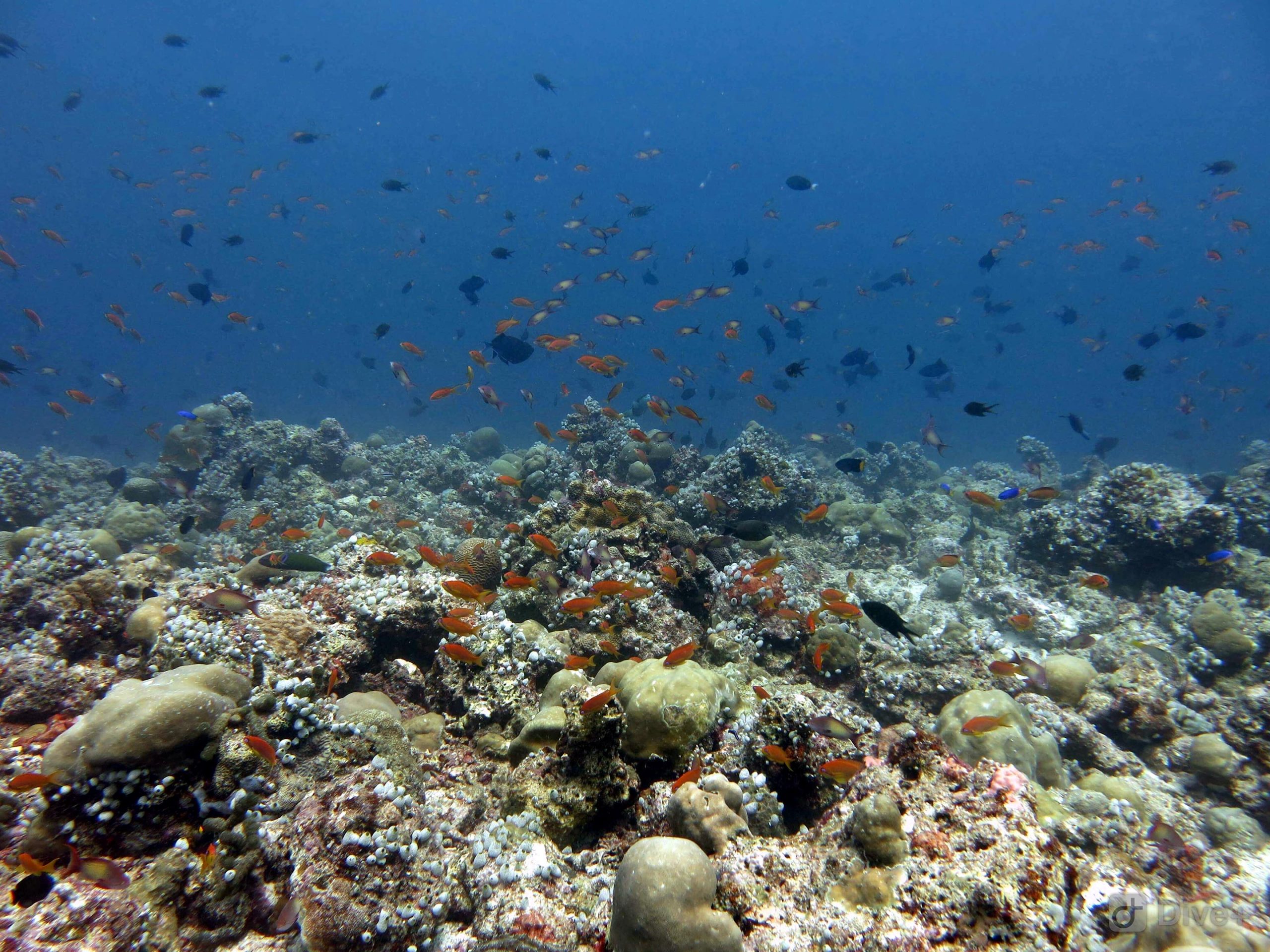
    Plankton-Feeding Fishes
    Plankton-feeding fishes often dominate the fish assemblage on oceanic coral reefs. Credit: Dr. Christina Skinner

    Study reveals open ocean waters once assumed to be unproductive are in fact teeming with an abundance of life on coral reefs.

    Since Charles Darwin’s day, the abundance of life on coral reefs has been puzzling, given that most oceanic surface waters in the tropics are low in nutrients and unproductive.

    But now research, led by Newcastle University and published in the journal Science Advances, has confirmed that the food web of a coral reef in the Maldives relies heavily on what comes in from the open ocean.
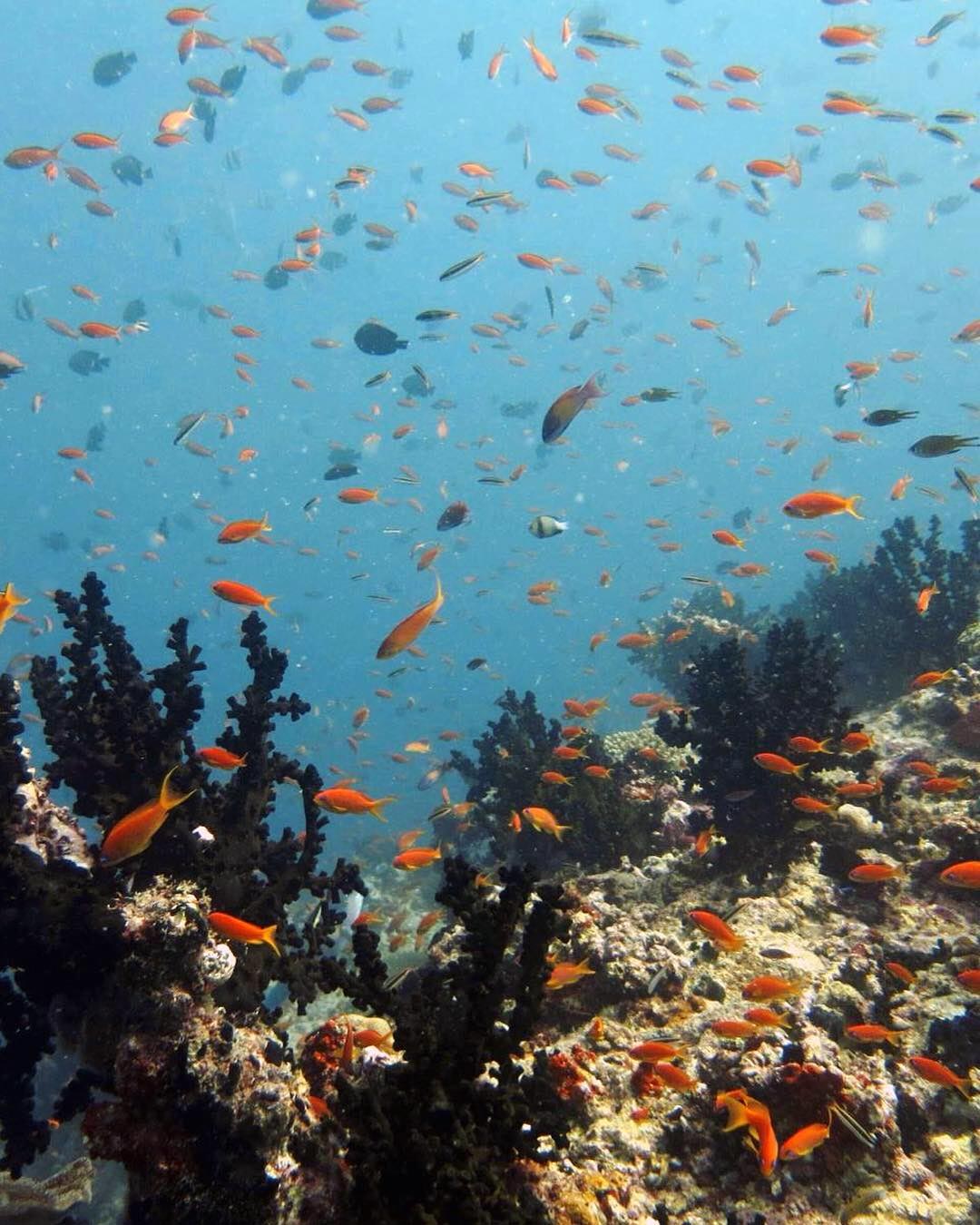
    Plankton-Feeding Fishes Oceanic Coral Reefs
    Plankton-feeding fishes often dominate the fish assemblage on oceanic coral reefs. Credit: Dr. Christina Skinner

    Offshore Nutrients Drive Predator Diets

    The team found that these offshore resources contribute to more than 70% of reef predator diets, the rest being derived from reef-associated sources.

    Led by Dr. Christina Skinner, now based at the Hong Kong University of Science and Technology, the researchers included collaborators from Woods Hole Oceanographic Institution (USA), Banyan Tree Marine Lab (Maldives), and the University of Bristol (UK).

    The team used advanced stable isotope techniques to show that four species of grouper near the top of the food web all rely on offshore resources; this didn’t change between species and was the case on the outside of an atoll and also inside the lagoon, suggesting that the oceanic subsidy is system-wide.

    The scientists believe that this offshore energy may be entering the food web through lower-level plankton feeding fish that the groupers are then feeding on. This is likely to be supported by inputs of nutrient-rich deep water, which are little understood.

    Climate Change Could Disrupt Oceanic Energy Supply

    The findings help explain how coral reefs maintain high productivity in apparently nutrient-poor tropical settings, but also emphasize their susceptibility to future fluctuations of ocean productivity which have been predicted in many climate-change models.
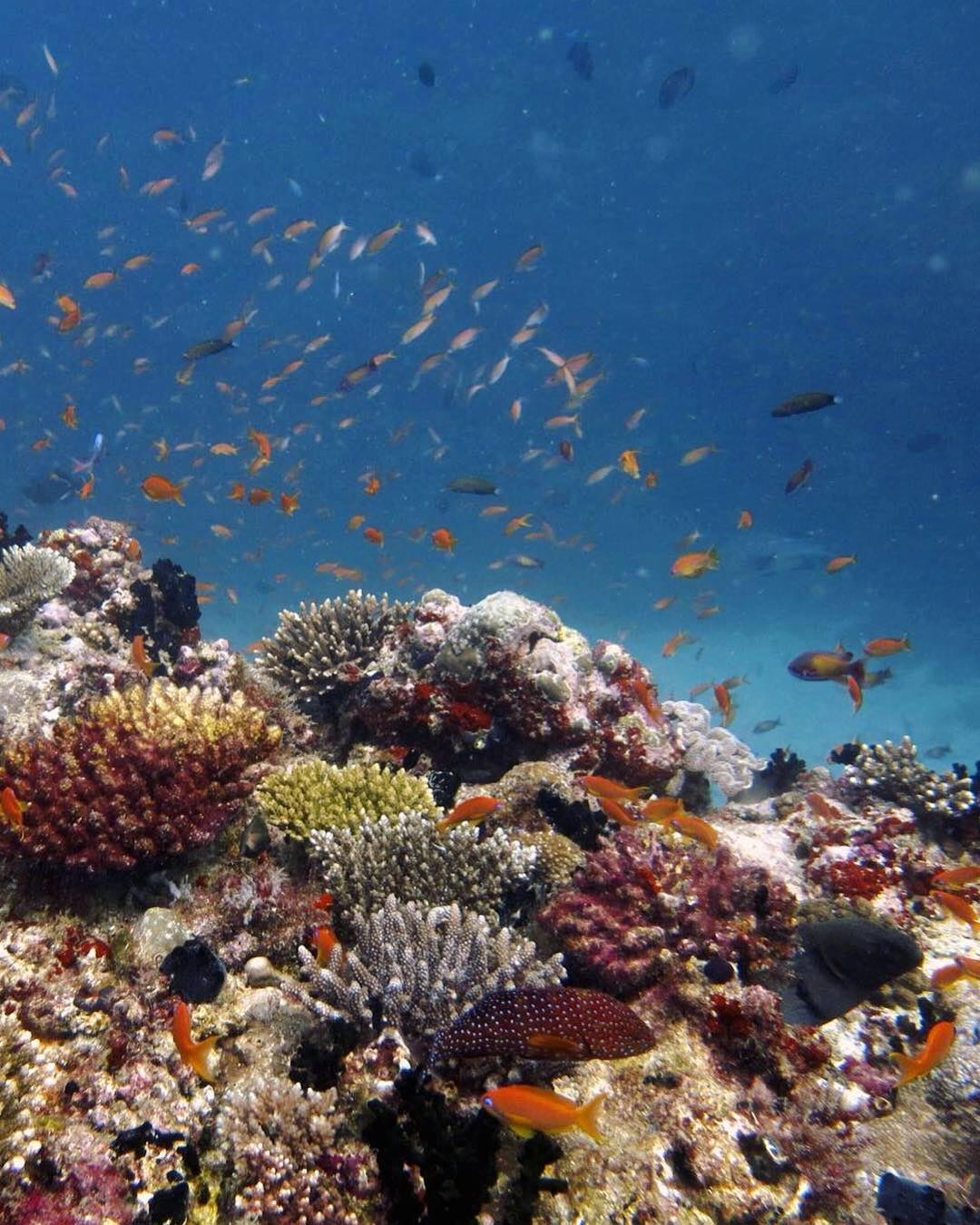
    Oceanic Coral Reefs
    Plankton-feeding fishes often dominate the fish assemblage on oceanic coral reefs. Credit: Dr. Christina Skinner

    Dr. Skinner said: “The study provides key insights into the nutrition of coral reef ecosystems, especially their dependence on offshore production. Detailed knowledge of food web dynamics is crucial to understand the impacts of anthropogenic and climate-induced change in marine ecosystems.

    Potential Resilience and Vulnerability of Reef Predators

    “The results force us to reconsider how we view coral reefs, and they highlight the extent of the connectivity with the surrounding ocean. If these groupers are mostly reliant on offshore energy to support their feeding, then maybe they won’t be so impacted by the loss of live coral, as many fishery studies have predicted; they may be more resilient.

    “On the other hand though, some studies have predicted that ocean production will decline in the future from climate change. If that is the case, and these groupers are reliant on that open ocean energy, they will be impacted by those changes.”

    Study co-author, Professor Nick Polunin, from Newcastle University’s School of Natural and Environmental Sciences, added: “Coral reefs are really suffering across the tropics from climate-related disturbances, particularly oceanic warming.

    “In spite of its tiny area, this ecosystem is a massive contributor to marine biodiversity and this study highlights how little we know about the food web sources sustaining that exceptional wealth of species it sustains.”

    Reference: “Offshore pelagic subsidies dominate carbon inputs to coral reef predators” by C. Skinner, A. C. Mill, M. D. Fox, S. P. Newman, Y. Zhu, A. Kuhl and N. V. C. Polunin, 19 February 2021, Science Advances.
    DOI: 10.1126/sciadv.abf3792

    Never miss a breakthrough: Join the SciTechDaily newsletter.
    Follow us on Google and Google News.

    Climate Change Coral Reefs Fish Marine Biology Newcastle University Oceanography
    Share. Facebook Twitter Pinterest LinkedIn Email Reddit

    Related Articles

    Climate Change Will Reshuffle Marine Ecosystems in Unexpected Ways – “Like Putting Marine Biodiversity in a Blender”

    Tropical Fish Shoals Disrupted by Ocean Acidification and Warming

    Complexity Yields Simplicity: The Shifting Dynamics and Loss of Biodiversity in Temperate Marine Ecosystems

    Climate Change Resilience: Northern Red Sea Corals Pass Heat Stress Test With Flying Colors

    Resilience to Climate Change: Corals Carefully Organize Proteins to Form Rock-Hard Skeletons

    Overfishing of Atlantic Cod Likely Did Not Cause Genetic Changes – Hope for Recovery

    As Oceans Warm, Large Fish Struggle to Extract the Oxygen They Need From Their Environment

    Huge International Effort: Forty Years of Coral Spawning Captured in One Place for the First Time

    Bad News for Nemo: Species Can’t Adapt to Rapid Environmental Changes

    Leave A Reply Cancel Reply

    • Facebook
    • Twitter
    • Pinterest
    • YouTube

    Don't Miss a Discovery

    Subscribe for the Latest in Science & Tech!

    Trending News

    Artificial Sweeteners May Harm Future Generations, Study Suggests

    Splashdown! NASA Artemis II Returns From Record-Breaking Moon Mission

    What If Consciousness Exists Beyond Your Brain

    Scientists Finally Crack the 100-Million-Year Evolutionary Mystery of Squid and Cuttlefish

    Beyond “Safe Levels”: Study Challenges What We Know About Pesticides and Cancer

    Researchers Have Found a Dietary Compound That Increases Longevity

    Scientists Baffled by Bizarre “Living Fossil” From 275 Million Years Ago

    Your IQ at 23 Could Predict Your Wealth at 27, Study Finds

    Follow SciTechDaily
    • Facebook
    • Twitter
    • YouTube
    • Pinterest
    • Newsletter
    • RSS
    SciTech News
    • Biology News
    • Chemistry News
    • Earth News
    • Health News
    • Physics News
    • Science News
    • Space News
    • Technology News
    Recent Posts
    • What if Dark Matter Has Two Forms? Bold New Hypothesis Could Explain a Cosmic Mystery
    • Researchers Expose Hidden Chemistry of “Ore-Forming” Elements in Biology
    • Geologists Reveal the Americas Collided Earlier Than We Thought
    • 20x Difference: Study Reveals True Source of Airborne Microplastics
    • Scientists Uncover Hidden Force Powering Yellowstone’s Supervolcano
    Copyright © 1998 - 2026 SciTechDaily. All Rights Reserved.
    • Science News
    • About
    • Contact
    • Editorial Board
    • Privacy Policy
    • Terms of Use

    Type above and press Enter to search. Press Esc to cancel.