Close Menu
    Facebook X (Twitter) Instagram
    SciTechDaily
    • Biology
    • Chemistry
    • Earth
    • Health
    • Physics
    • Science
    • Space
    • Technology
    Facebook X (Twitter) Pinterest YouTube RSS
    SciTechDaily
    Home»Biology»Crown-of-Thorns Starfish Eat Themselves Out of House and Home
    Biology

    Crown-of-Thorns Starfish Eat Themselves Out of House and Home

    By ARC Centre of Excellence for Coral Reef Studiesof Excellence for Coral Reef StudiesNovember 4, 20201 Comment3 Mins Read
    Facebook Twitter Pinterest Telegram LinkedIn WhatsApp Email Reddit
    Share
    Facebook Twitter LinkedIn Pinterest Telegram Email Reddit
    Crown-of-Thorns Starfish
    A close-up of a crown-of-thorns starfish. The creatures eat Acropora corals until they’re effectively homeless. Credit: Morgan Pratchett

    A world-first study on the Great Barrier Reef shows crown-of-thorns starfish have the ability to find their own way home — a behavior previously undocumented — but only if their neighborhood is stocked with their favorite food: corals.

    Australian researchers observed the starfish emerging from their shelters in the afternoons so they could feed on coral during the night before returning home at dawn.

    “The crown-of-thorns starfish often partied all night, slept-in and only those with a well-stocked larder found their way home — so it’s very much a teenager model of behavior,” said lead author Dr. Scott Ling from the Institute for Marine and Antarctic Studies at the University of Tasmania.

    “Their preferred prey is Acropora corals,” said co-author Professor Morgan Pratchett from the ARC Centre of Excellence for Coral Reef Studies at James Cook University (CoralCoE at JCU). Acropora is an important coral species — for the past two million years they have been the building blocks of reefs across the world.
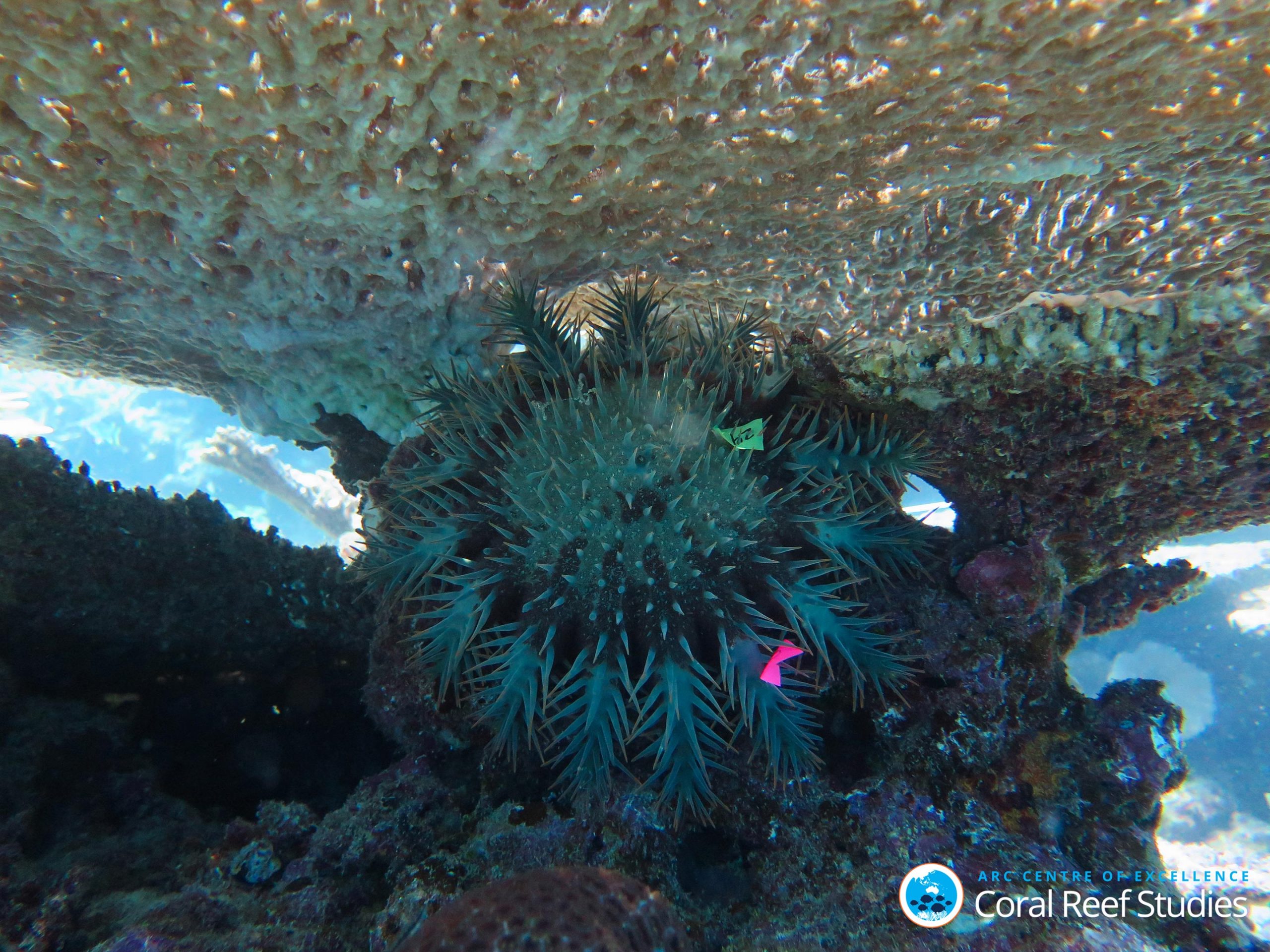
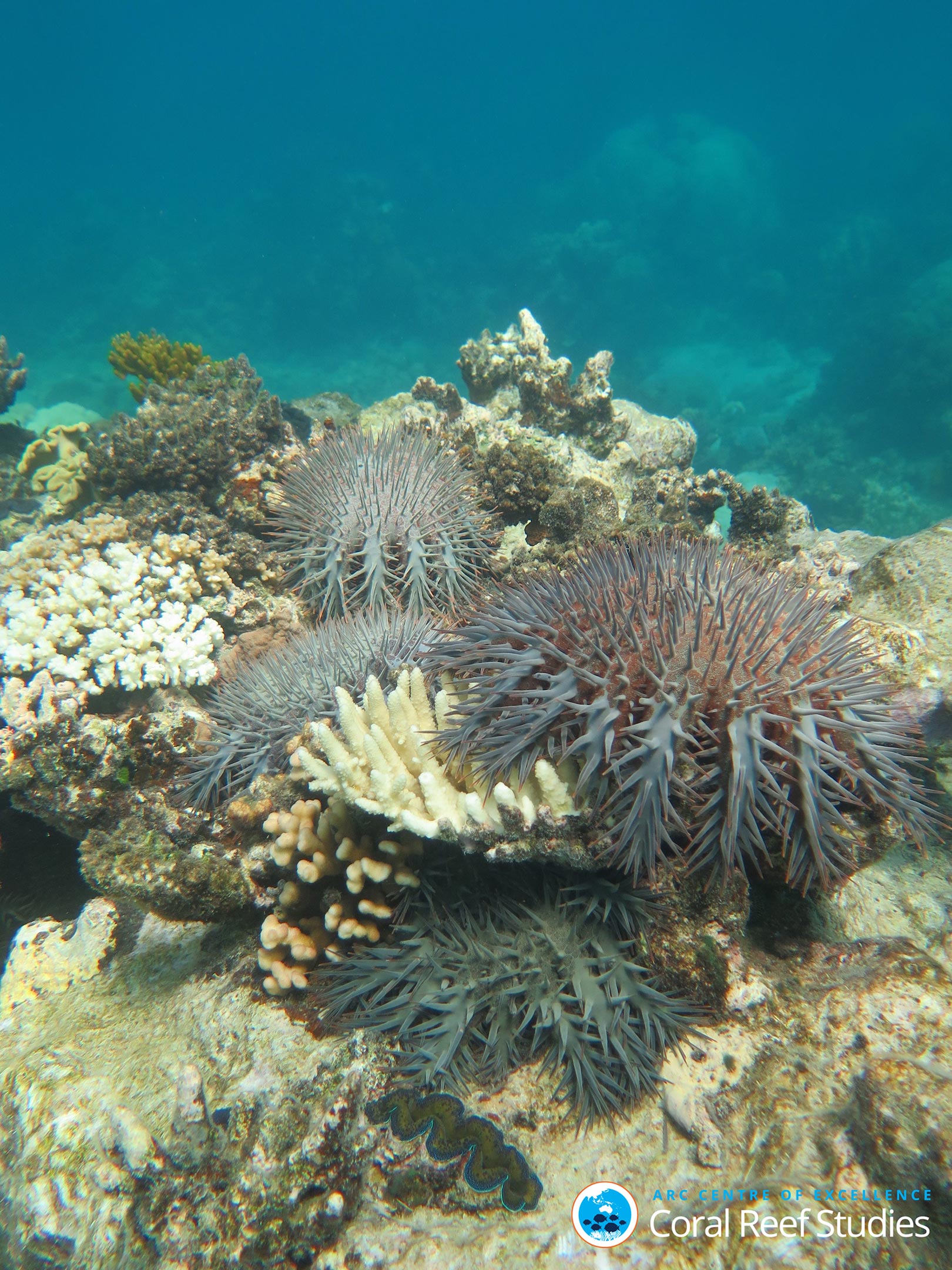
    Tagged Crown of Thorns Starfish
    Tagged Crown of Thorns Starfish. Credit: Morgan Pratchett
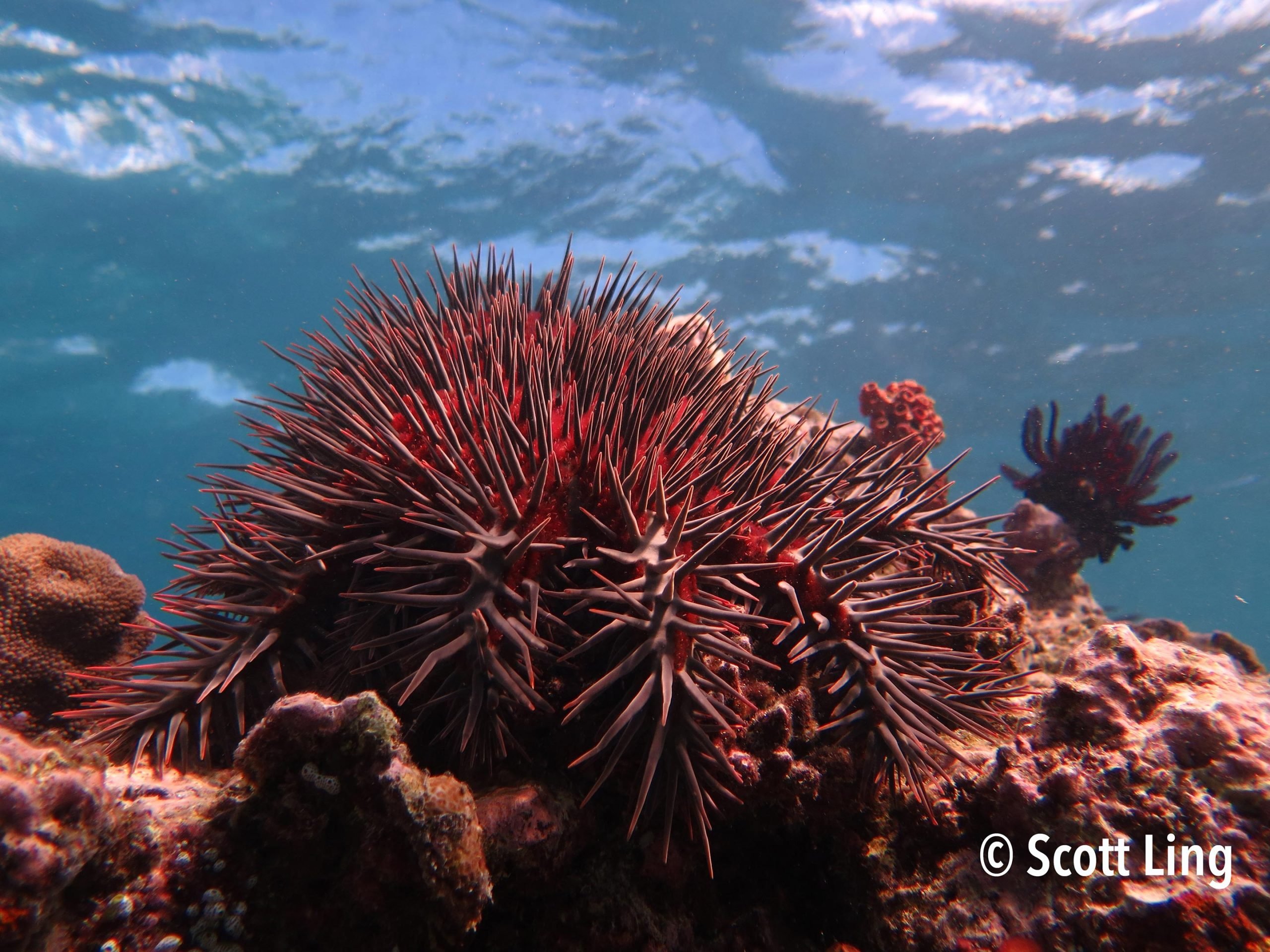
    Crown of Thorns Starfish Macro
    Crown of Thorns Starfish Macro. Credit: Scott Ling
    Crown of Thorns Starfish Feeding on Corals
    Crown of Thorns Starfish Feeding on Corals. Credit: Morgan Pratchett
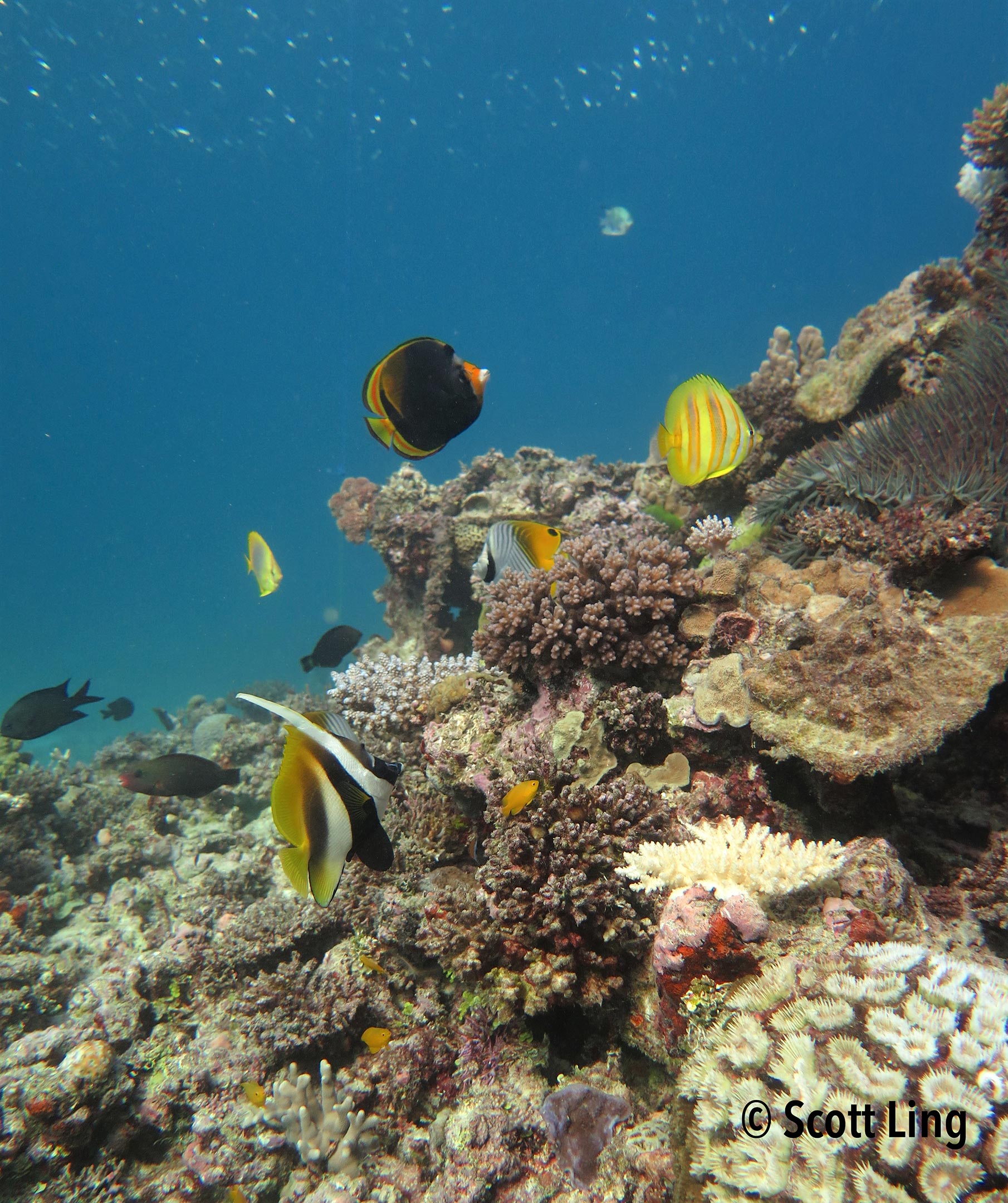
    Crown of Thorns Starfish Butterfly Fish
    Crown of Thorns Starfish Butterfly Fish. Credit: Scott Ling

    “When populations of Acropora dropped, the starfish didn’t return home,” Prof Pratchett said. “Their behavior is directly linked to the local abundance of Acropora.”

    The results of the study show healthy reefs with a high cover of these corals may encourage crown-of-thorns aggregations and outbreaks. The outbreaks cause extensive, widespread and sustained coral loss throughout the Indo-Pacific region.

    Similar examples of predator infestations driving environmental devastation include sea urchins overgrazing on kelp forests and coral reef fishes munching through patches of seagrass.

    The researchers used in-situ time-lapse photography to track the movements of 58 starfish in the northern and southern Great Barrier Reef during an outbreak in 2015. In the absence of their preferred Acropora coral prey, starfish were typically homeless and instead roamed up to 20 meters per day.

    Dr Scott Ling With Crown of Thorns Starfish
    Dr. Scott Ling With Crown of Thorns Starfish. Credit: Scott Ling

    “Unlike sea urchins that can switch diet once they overgraze kelp forests, results of the time-lapse monitoring indicate that the starfish will consume available Acropora and ultimately eat themselves out of house and home before dispersing in search of new feeding grounds,” Dr. Ling said.

    Previous outbreaks on the Great Barrier Reef were recorded in 1962, 1979, 1993 and 2009. Though mass-coral bleaching due to global warming is now the greatest threat to coral reefs worldwide, the combined impact of mass-bleaching and crown-of-thorns outbreaks is potentially catastrophic for coral reefs.

    “By better understanding the behavior of these starfish we can help prevent and control their outbreaks, which will help alleviate the pressures on coral reefs,” Prof Pratchett said.

    Reference: “Homing behaviour by destructive crown-of-thorns starfish is triggered by local availability of coral prey” by S. D. Ling, Z.-L. Cowan, J. Boada, E. B. Flukes and M. S. Pratchett, 4 November 2020, Proceedings of the Royal Society B.
    DOI: 10.1098/rspb.2020.1341

    Never miss a breakthrough: Join the SciTechDaily newsletter.
    Follow us on Google and Google News.

    Climate Change Coral Reefs Ecology Marine Biology Parasite
    Share. Facebook Twitter Pinterest LinkedIn Email Reddit

    Related Articles

    What Stopped Coral Growth for 3,000 Years? Scientists Uncover the Mystery

    Coral Calamity: Scientists Uncover Hidden Perils of Bleaching

    The Great Barrier Reef Has Lost Half Its Corals – Massive Declines in Just 3 Decades

    Decades of Knowledge of Marine Protected Areas Ruined by Climate Change

    Rare Species of Animals and Plants Organize in Ghettos to Survive

    New Hope for Coral Reef Restoration From Playing Sounds of Healthy Reefs on Loudspeakers

    Biologists Explore the Effect of Coral Restoration on Caribbean Reef Fish Communities

    Oxygen Depletion and Acidification Accelerate Coral Death

    Jacques Cousteau Predicted Detrimental Change in Coral Reefs

    1 Comment

    1. ewtte on February 9, 2021 11:52 pm

      hello my name geoff

      Reply
    Leave A Reply Cancel Reply

    • Facebook
    • Twitter
    • Pinterest
    • YouTube

    Don't Miss a Discovery

    Subscribe for the Latest in Science & Tech!

    Trending News

    Scientists Uncover Potential Brain Risks of Popular Fish Oil Supplements

    Scientists Discover a Surprising Way To Make Bread Healthier and More Nutritious

    After 60 Years, Scientists Uncover Unexpected Brain Effects of Popular Diabetes Drug Metformin

    New Research Uncovers Hidden Side Effects of Popular Weight-Loss Drugs

    Scientists Rethink Extreme Warming After Surprising Ocean Discovery

    Landmark Study Links Never Marrying to Significantly Higher Cancer Risk

    Researchers Discover Unknown Beetle Species Just Steps From Their Lab

    Largest-Ever Study Finds Medicinal Cannabis Ineffective for Anxiety, Depression, PTSD

    Follow SciTechDaily
    • Facebook
    • Twitter
    • YouTube
    • Pinterest
    • Newsletter
    • RSS
    SciTech News
    • Biology News
    • Chemistry News
    • Earth News
    • Health News
    • Physics News
    • Science News
    • Space News
    • Technology News
    Recent Posts
    • “Like Liquid Metal”: Scientists Create Strange Shape-Shifting Material
    • Early Warning Signals of Esophageal Cancer May Be Hiding in Plain Sight
    • Researchers Have Discovered a THC-Free Cannabis Compound That May Replace Opioids
    • Common Blood Pressure Drug Shows Surprising Power Against Deadly Antibiotic-Resistant Superbug
    • Students Build Dark Matter Detector and Set New Experimental Limits
    Copyright © 1998 - 2026 SciTechDaily. All Rights Reserved.
    • Science News
    • About
    • Contact
    • Editorial Board
    • Privacy Policy
    • Terms of Use

    Type above and press Enter to search. Press Esc to cancel.