
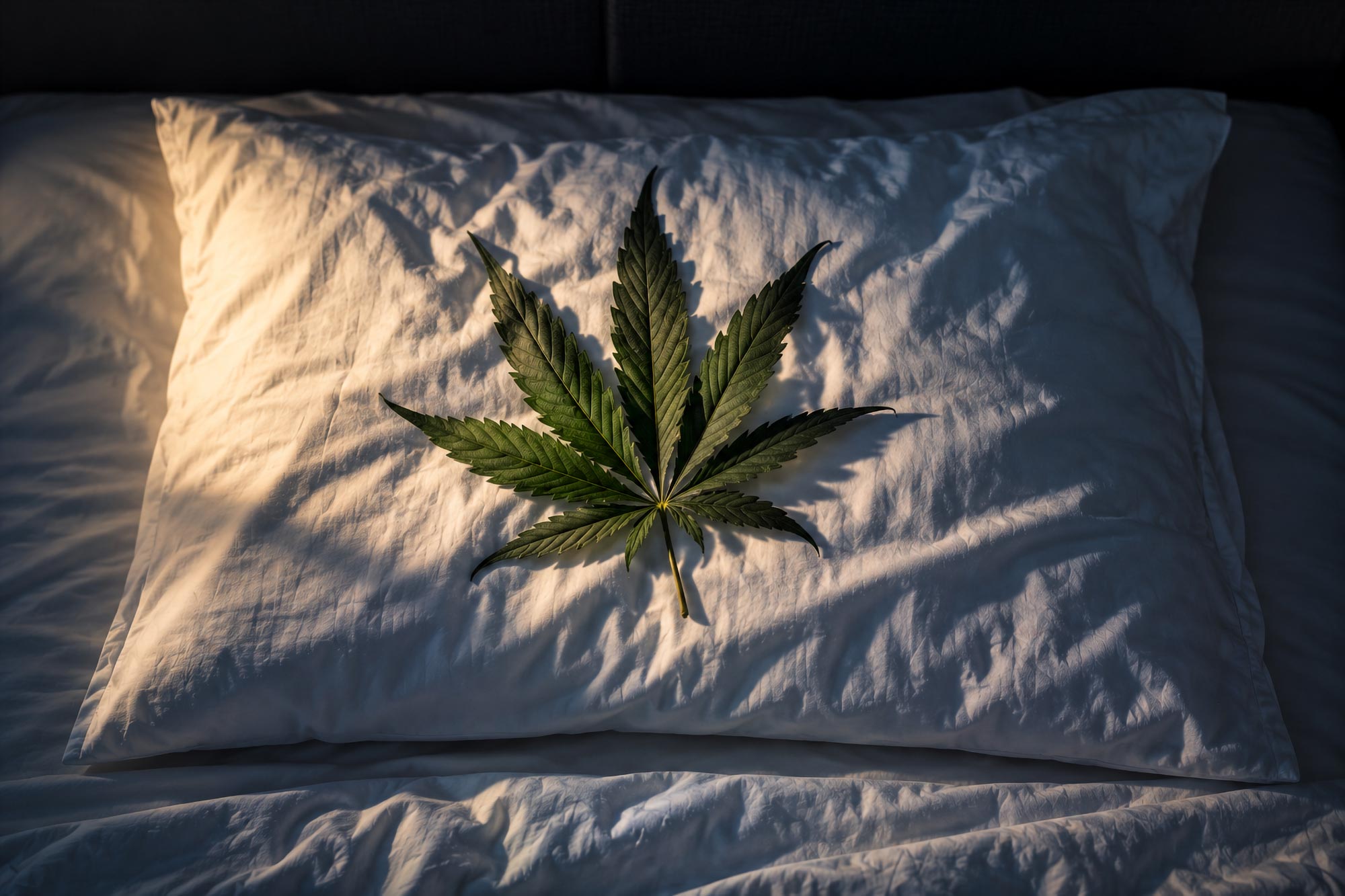
Nearly 35 years of observational data link greater lifetime cannabis use to poorer sleep in middle age, challenging its reputation as a sleep aid.
More than eight hours of sleep might sound like a good night’s rest, but a new Northwestern Medicine study linked recent cannabis use to both a greater likelihood of sleeping that long and more disrupted nights. The fragmented sleep and longer stretches awake recorded by wrist-worn monitors were not reflected in participants’ own sleep ratings, suggesting that people may not notice these disturbances.
The study, published October 9 in JAMA Network Open, analyzed data from 1,266 participants in the Coronary Artery Risk Development in Young Adults (CARDIA) Study. This community-based study began in 1985–86 and follows Black and white adults across the U.S.
Researchers repeatedly tracked participants’ cannabis use over nearly 35 years, from young adulthood into middle age. In middle age, participants wore a wrist-based sleep monitor for a week and completed sleep surveys, allowing the team to compare recorded sleep patterns with people’s impressions of their own sleep.
Cannabis users may miss sleep disruptions
Millions of Americans use cannabis as a sleep aid. “This study challenges the common belief that cannabis helps people sleep better,” said corresponding author Dr. Thanh-Huyen T. Vu, research associate professor of preventive medicine (epidemiology) at Northwestern University Feinberg School of Medicine. “Our findings suggest cannabis may actually be associated with poorer sleep quality, even if people don’t perceive those changes.”
Greater cumulative cannabis use was associated with lower sleep efficiency, meaning participants spent a smaller percentage of the night asleep. Their sleep was also more fragmented, and they spent more time awake after initially falling asleep. Compared with people who had never used cannabis, recent users showed similar patterns and were significantly more likely to sleep longer than eight hours a night.
“This was one of the most interesting findings,” Vu said of the comparison between the monitor readings and participants’ sleep surveys. “The wearable device detected more nighttime disruption among participants with long-term cannabis exposure, but the participants themselves generally did not report worse sleep.”
Does cannabis cause the sleep disruptions?
The associations with poorer objectively measured sleep remained after researchers accounted for numerous factors known to affect sleep, including age, sex, race, cigarette smoking, alcohol use, physical activity, depression, chronic health conditions, and use of other substances. The study was not designed to determine whether cannabis directly causes sleep problems, so the findings establish an association rather than a causal effect.
“Our data do not support the belief that cannabis is helpful as a sleep aid,” said senior author Mercedes R. Carnethon, chair of the department of preventive medicine at Feinberg. “As cannabis becomes increasingly available and accepted, it’s important to better understand its long-term associations with health behaviors such as sleep.”
The analysis of long-term recreational cannabis use did not distinguish between consumption methods such as smoking and eating edibles. Patterns of cannabis use likely changed over the decades participants were followed, making consumption methods an especially important question for future studies, the authors said.
Regular routines can support better sleep
For people seeking better sleep, well-established strategies can improve sleep quality, said study co-author Kristen L. Knutson, associate professor of neurology (sleep medicine) and preventive medicine (epidemiology) at Feinberg.
“Keep a regular bedtime, make your bedroom cool, dark and quiet, and avoid looking at phones and other screens right before bed,” Knutson said. “It can also help to establish a calming routine before sleep, such as reading, meditating or taking a shower. If sleep problems persist, or if you’re a loud snorer, talk with your health care provider to rule out an underlying sleep disorder.”
Reference: “Recent and Cumulative Cannabis Use and Sleep in Middle-Aged Adults” by Thanh-Huyen T. Vu, Kristen L. Knutson, Reto Auer, Julian Jakob, Donald M. Lloyd-Jones and Mercedes R. Carnethon, 9 October 2026, JAMA Network Open.
DOI: 10.1001/jamanetworkopen.2026.38303
The Coronary Artery Risk Development in Young Adults (CARDIA) study is conducted and supported by the National Heart, Lung, and Blood Institute (NHLBI) in collaboration with the University of Alabama at Birmingham (grants 75N92023D00002 and 75N92023D00005), Northwestern University (grant 75N92023D00004), University of Minnesota (grant 75N92023D00006), and Kaiser Foundation Research Institute (grant 75N92023D00003). The CARDIA Sleep Ancillary Study is funded by grant R01HL152442 from the NHLBI.
Never miss a breakthrough: Join the SciTechDaily newsletter.
Follow us on Google and Google News.