
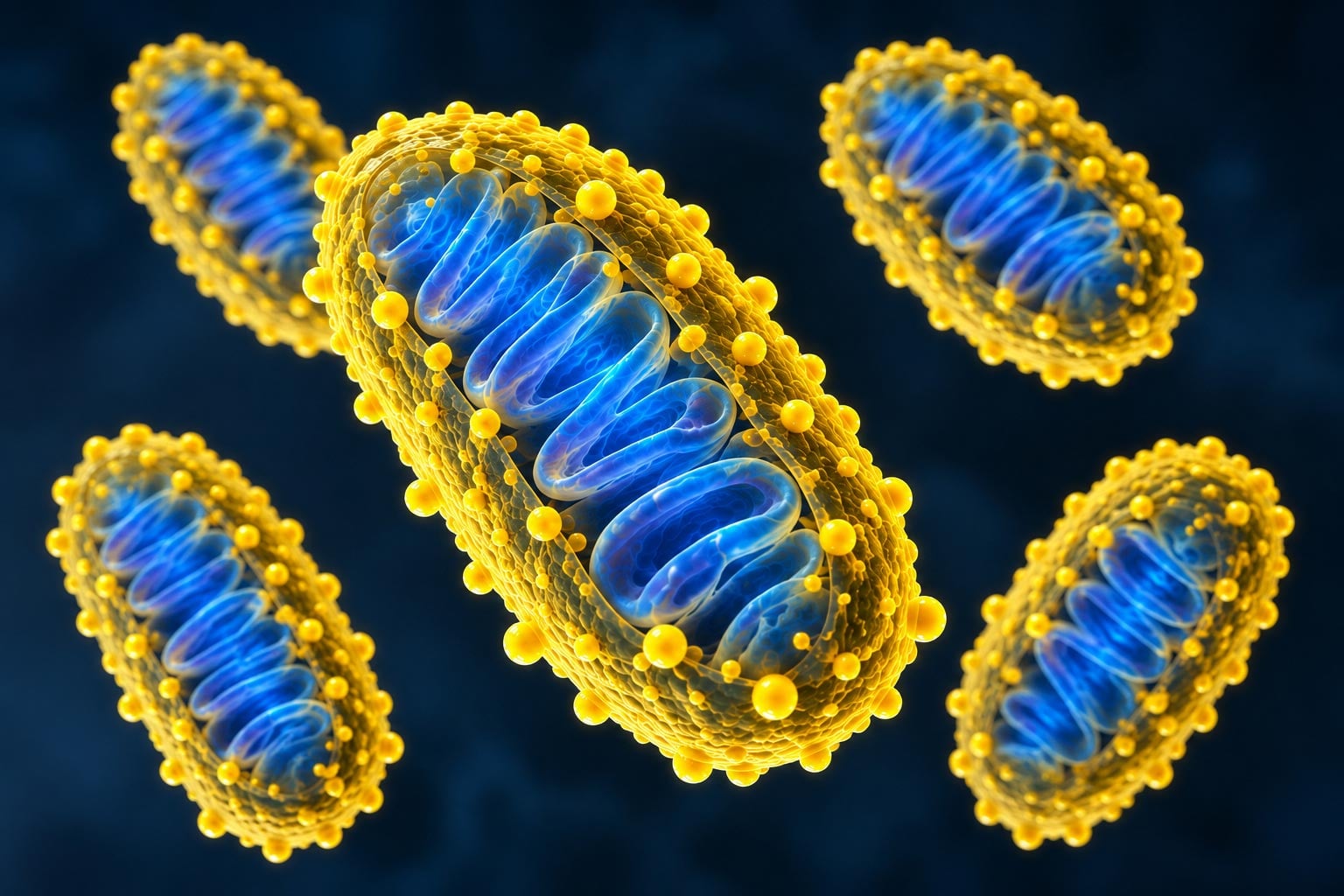
Scientists have given the tiny powerhouses of our cells a remarkable high-tech makeover that preserves their energy production and could pave the way for future treatments.
Scientists have developed a way to coat mitochondria, the tiny structures responsible for producing energy inside cells, with advanced materials without interfering with their ability to function. The breakthrough could eventually help researchers develop new approaches to treating diseases caused by malfunctioning mitochondria.
The discovery comes from a collaboration between IRCCS Fondazione Istituto Neurologico Carlo Besta (FINCB) and Politecnico di Milano. The work was conducted through the BraiNs joint laboratory and published in the Journal of the American Chemical Society (JACS).
The project combines the expertise of two research teams. One is led by Dr. Valeria Tiranti (FINCB), who works in the Medical Genetics and Neurogenetics Complex Unit (SC) and heads the Fondazione Mariani Center for Pediatric Mitochondrial Diseases. The other is led by Professor Pierangelo Metrangolo (Politecnico di Milano), whose team specializes in chemistry and materials engineering.
Why Mitochondria Are So Important
Often described as the powerhouses of cells, mitochondria generate the energy needed to keep essential cellular processes running. When they malfunction, they can contribute to a range of medical conditions, including rare mitochondrial diseases.
These disorders are particularly harmful to tissues that require large amounts of energy, such as the brain and muscles. Treatment options remain limited, making new strategies for working with mitochondria especially valuable.
The researchers focused on a class of advanced materials known as Metal-Organic Frameworks (MOF). These materials can be customized for different purposes by adjusting their properties. Their scientific importance was recognized with the 2025 Nobel Prize in Chemistry, awarded to Susumu Kitagawa, Richard Robson and Omar Yaghi.
A New Coating That Keeps Mitochondria Working
Applying these materials to mitochondria presents a considerable challenge because the cellular structures are extremely delicate. Even small changes to their surroundings could potentially interfere with their essential functions.
To overcome this difficulty, the researchers developed a technique that allows them to apply very small quantities of the materials directly to the mitochondrial surface.
Most importantly, the mitochondria continued producing energy after receiving the coating. This demonstrates that their surfaces can be modified with these materials without compromising their energy generating function.
Could This Breakthrough Lead to New Treatments?
The ability to customize the coating could make the technique useful for a variety of future applications. By changing the material’s properties, researchers may eventually be able to create coatings designed to carry out specific tasks.
“The possibility of modifying the coating now opens up new research prospects: in the future, it will be possible to develop MOF with different characteristics depending on the objective, creating coatings capable of performing specific functions,” observes Prof. Metrangolo.
One potential application involves mitochondrial transplantation, an experimental strategy that seeks to introduce healthy mitochondria into cells whose existing mitochondria are not functioning properly.
“A specifically designed coating could, in the future, facilitate this transfer and the interaction between mitochondria and cells,” emphasizes Dr. Tiranti.
Although the findings offer a promising direction for further research, the potential benefits for mitochondrial transplantation have not yet been demonstrated. Additional experiments will be necessary to establish whether coated mitochondria perform better during transplantation than those without coatings.
Reference: “Engineered Metal-Organic Frameworks Preserve Mitochondrial Bioenergetics at Micromolar Concentrations” by Marco D’Amato, Ivano Di Meo, Maria Nicol Colombo, Chiara Santanatoglia, Francesca Baldelli Bombelli, Valeria Tiranti and Pierangelo Metrangolo, 18 September 2026, Journal of the American Chemical Society.
DOI: 10.1021/jacs.6c11154
The study was conducted as part of the doctoral research project of Marco D’Amato. Funding came through the “CALabria HUB per Ricerca Innovativa ed Avanzata (Cal.Hub.Ria)” project, supported under the Ministry of Health’s Health Operational Plan (Piano Operativo Salute, POS).
Never miss a breakthrough: Join the SciTechDaily newsletter.
Follow us on Google and Google News.