
Close Menu
    Facebook X (Twitter) Instagram
    SciTechDaily
    • Biology
    • Chemistry
    • Earth
    • Health
    • Physics
    • Science
    • Space
    • Technology
    Facebook X (Twitter) Pinterest YouTube RSS
    SciTechDaily
    Home»Chemistry»Yale Study Reveals Why BRCA Gene Resists Cancer Treatment
    Chemistry

    Yale Study Reveals Why BRCA Gene Resists Cancer Treatment

    By Bill Hathaway, Yale UniversityJuly 3, 2015No Comments3 Mins Read
    Facebook Twitter Pinterest Telegram LinkedIn WhatsApp Email Reddit
    Share
    Facebook Twitter LinkedIn Pinterest Telegram Email Reddit
    New Discovery Reveals Why BRCA Gene Resists Cancer Treatment
    Researchers have identified the crucial role of a molecular assistant in the BRCA2 gene, which in some mutant forms can lead to ovarian and breast cancer in as many as 6 in 10 women.

    A newly published study from Yale University reveals how biochemists might be able to decrease drug resistance to existing therapies that target ovarian and breast cancer.

    Yale University researchers have discovered why a key molecular assistant is crucial to the function of the BRCA2 gene, which in some mutant forms can lead to ovarian and breast cancer in as many as 6 in 10 women.

    The findings suggest how biochemists might be able to decrease drug resistance to existing therapies that target this form of cancer, the authors report in the July 2 issue of the journal Molecular Cell.

    “We can design specific targets for drug development only if we fully understand the key players and how they work in the pathway for repairing DNA breaks,” said Patrick Sung, professor in the Department of Molecular Biophysics and Biochemistry, researcher at the Yale Cancer Center, and senior author of the paper.

    BRCA genes normally act to repair damaged DNA and suppress tumor formation. Variants of BRCA genes, however, are hijacked by cancer and have been recognized for decades as markers for increased risk of breast cancer, but they also play a role in ovarian, prostate, and pancreatic cancer.

    Drugs that target DNA repair pathways in patients with BRCA mutations have proved effective in attacking cancer, but these patients tend to develop resistance to the drug. The cancer returns because the BRCA proteins develop secondary mutations, which continue to promote cancer growth.

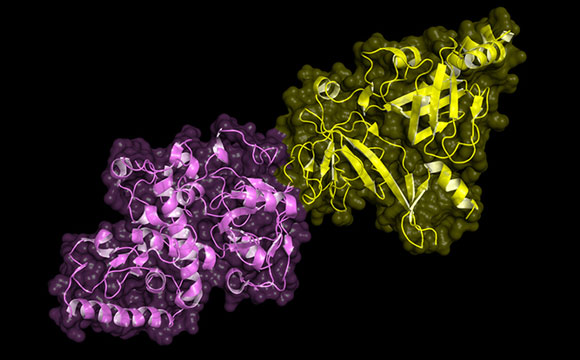
    The new paper establishes the crucial role played by co-factor DSS1, which mimics DNA that aids in the repair damage of cells. Without DSS1, BRCA2 variant cannot fulfill its normal duty of DNA repair crucial to the survival of cancer. Drugs that interfere with DSS1 function could be developed and used in conjunction with existing drugs like Astra Zeneca’s Lynparza to overcome this resistance, Sung said.

    The work was done in collaboration with Walter Chazin at Vanderbilt University, Claudia Wiese at Colorado State University, and Yale colleague Ryan Jensen and was funded by research grants from the National Institutes of Health

    Other Yale authors include Weixing Zhao, Joseph San Filippo, Youngho Kwon, Judit Jimenez-Sainz, and Lucy Lu.

    Reference: “Promotion of BRCA2-Dependent Homologous Recombination by DSS1 via RPA Targeting and DNA Mimicry” by Weixing Zhao, Sivaraja Vaithiyalingam, Joseph San Filippo, David G. Maranon, Judit Jimenez-Sainz, Gerald V. Fontenay, Youngho Kwon, Stanley G. Leung, Lucy Lu, Ryan B. Jensen, Walter J. Chazin, Claudia Wiese and Patrick Sung, Molecular Cell.
    DOI: 10.1016/j.molcel.2015.05.032

    Never miss a breakthrough: Join the SciTechDaily newsletter.
    Follow us on Google and Google News.

    Biochemistry Cancer Disease Molecular Biology Yale University
    Share. Facebook Twitter Pinterest LinkedIn Email Reddit

    Related Articles

    Scientists Discover Tiny Protein Has Big Impact in Times of Stress

    Biochemists Discover A New Target For Patients With Diabetes

    Biochemists Reveal Secrets of a Little-Known Cancer Ally

    Biochemists Reveal New Insight on Bacterium That Protects Plants From Disease

    Scientists Identify Specific Enzyme Related to Colon Cancer

    DNA2 Molecule Helps Repair Chromosome Rearrangements Linked to Cancer

    Yale Researchers Develop Method to Attack Cancer at Its Source

    Newly Discovered Protein Offers Vast Potential for Cancer Treatment

    DNA Sequencing Technologies Help Characterized the Mutational Landscape of Melanoma

    Leave A Reply Cancel Reply

    • Facebook
    • Twitter
    • Pinterest
    • YouTube

    Don't Miss a Discovery

    Subscribe for the Latest in Science & Tech!

    Trending News

    Just a Few Breathless Minutes a Day Could Slash Your Risk of 8 Major Diseases

    This Simple Habit Could Cut Your Risk of Dementia by 30%

    Scientists Debunk Rattlesnake Myth That Fooled Hikers and Doctors for Decades

    Scientists Discover Plants Can “Count” – and May Be Smarter Than We Thought

    New Research Reveals Ancient Mars May Have Been Warm, Wet – and Possibly Alive

    This Surprising Daily Habit Could Cut Dementia Risk by 35%

    Just 10 Minutes a Day: Scientists Say This Ancient Chinese Practice Shows Powerful Blood Pressure Benefits

    Scientists Say This Popular Food Could Help Your Body Get Rid of Microplastics

    Follow SciTechDaily
    • Facebook
    • Twitter
    • YouTube
    • Pinterest
    • Newsletter
    • RSS
    SciTech News
    • Biology News
    • Chemistry News
    • Earth News
    • Health News
    • Physics News
    • Science News
    • Space News
    • Technology News
    Recent Posts
    • Surviving Burns May Have Changed Human Evolution
    • Scientists Discover Hidden “Footprint of Death” That Could Transform How We Fight Disease
    • Blood-Sucking Parasites Could Revolutionize Treatment for Autoimmune Diseases
    • Scientists Uncover Massive Climate Secret Beneath Sweden’s Forests
    • Scientists Unlock 3 Million Years of Climate Secrets Hidden in Antarctic Ice
    Copyright © 1998 - 2026 SciTechDaily. All Rights Reserved.
    • Science News
    • About
    • Contact
    • Editorial Board
    • Privacy Policy
    • Terms of Use

    Type above and press Enter to search. Press Esc to cancel.