
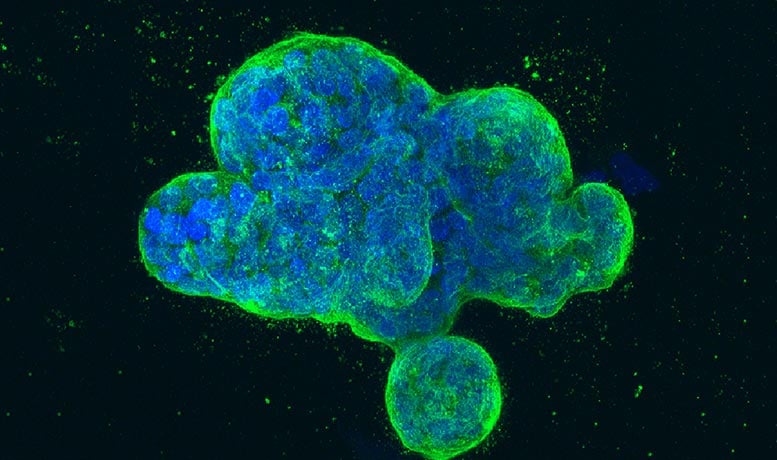
Approach exploits tumor weaknesses when 2 genetic defects are combined.
With advances in genome sequencing, cancer treatments have increasingly sought to leverage the idea of “synthetic lethality,” exploiting cancer-specific genetic defects to identify targets that are uniquely essential to the survival of cancer cells.
Synthetic lethality results when non-lethal mutations in different genes become deadly when combined in cells. In a new paper published online July 27, 2020 in the Proceedings of the National Academy of Sciences (PNAS), researchers at the San Diego branch of Ludwig Institute for Cancer Research and University of California San Diego School of Medicine report that inhibiting a key enzyme caused human cancer cells associated with two major types of breast and ovarian cancer to die and in mouse studies reduced tumor growth.
The research team, led by senior study author Richard D. Kolodner, Ph.D., Distinguished Professor of Medicine and Cellular and Molecular Medicine and member of the Ludwig Institute for Cancer Research San Diego Branch, studied Saccharomyces cerevisiae, a species of yeast used in basic research, to search for synthetic lethal relationships.
They zeroed in on Flap Endonuclease 1 (FEN1), a DNA structure-specific endonuclease involved in DNA replication and repair. Turning their attention to cancer cells, they found that when they blocked functions of FEN1 using either a small molecule inhibitor or genetic ablation, BRCA1 and BRCA2 mutant cancer cell lines were preferentially killed. Notably, normal cells were able to recover from FEN1 inhibition.
BRCA1 and BRCA2 genes normally act to prevent breast and ovarian cancer as well as other cancers, but when mutated, may cause a person to be more likely to develop breast or ovarian cancer or develop cancer at a younger age. Less than 10 percent of women diagnosed with breast cancer have a BRCA mutation, but it’s estimated that 55 to 65 percent of women with the BRCA1 mutation will develop breast cancer before age 70 while approximately 45 percent of women with a BRCA2 mutation will develop breast cancer by age 70, according to the National Breast Cancer Foundation.
Similarly, women with inherited BRCA mutations have an increased risk of developing ovarian cancer, and men with inherited BRCA mutations have increased risk of developing breast and prostate cancer.
Breast cancer is the most common type of cancer in the United States, with approximately 276,000 new cases per year, according to the National Cancer Institute. Prostate cancer is the fourth most common, with 191,930 new cases and ovarian is 17th, with an estimated 21,750 new cases annually, according to the National Cancer Institute. Kolodner and colleagues then tested the approach in an immune-compromised mouse xenograft model, and found that FEN1 inhibition significantly reduced tumor growth.
The researchers say their findings are significant in two ways: They underscore the value of using S. cerevisiae yeast as a genetics tool for discovering synthetic lethality relationships and identify FEN1 inhibitors as a possible therapeutic agent to further develop for treating certain cancers with targeted vulnerabilities.
Reference: “FEN1 endonuclease as a therapeutic target for human cancers with defects in homologous recombination” by Elaine Guo, Yuki Ishii, James Mueller, Anjana Srivatsan, Timothy Gahman, Christopher D. Putnam, Jean Y. J. Wang and Richard D. Kolodner, 27 July 2020, Proceedings of the National Academy of Sciences.
DOI: 10.1073/pnas.2009237117
Co-authors of the study include: Elaine Guo, Yuki Ishii, James Mueller, Anjana Srivatsan, Ludwig Institute for Cancer Research, San Diego Branch; Timothy Gahman, Ludwig Institute for Cancer Research; Christopher D. Putnam and Jean Y.J. Wang, Ludwig Institute for Cancer Research, San Diego Branch and UC San Diego.
Never miss a breakthrough: Join the SciTechDaily newsletter.
Follow us on Google and Google News.