
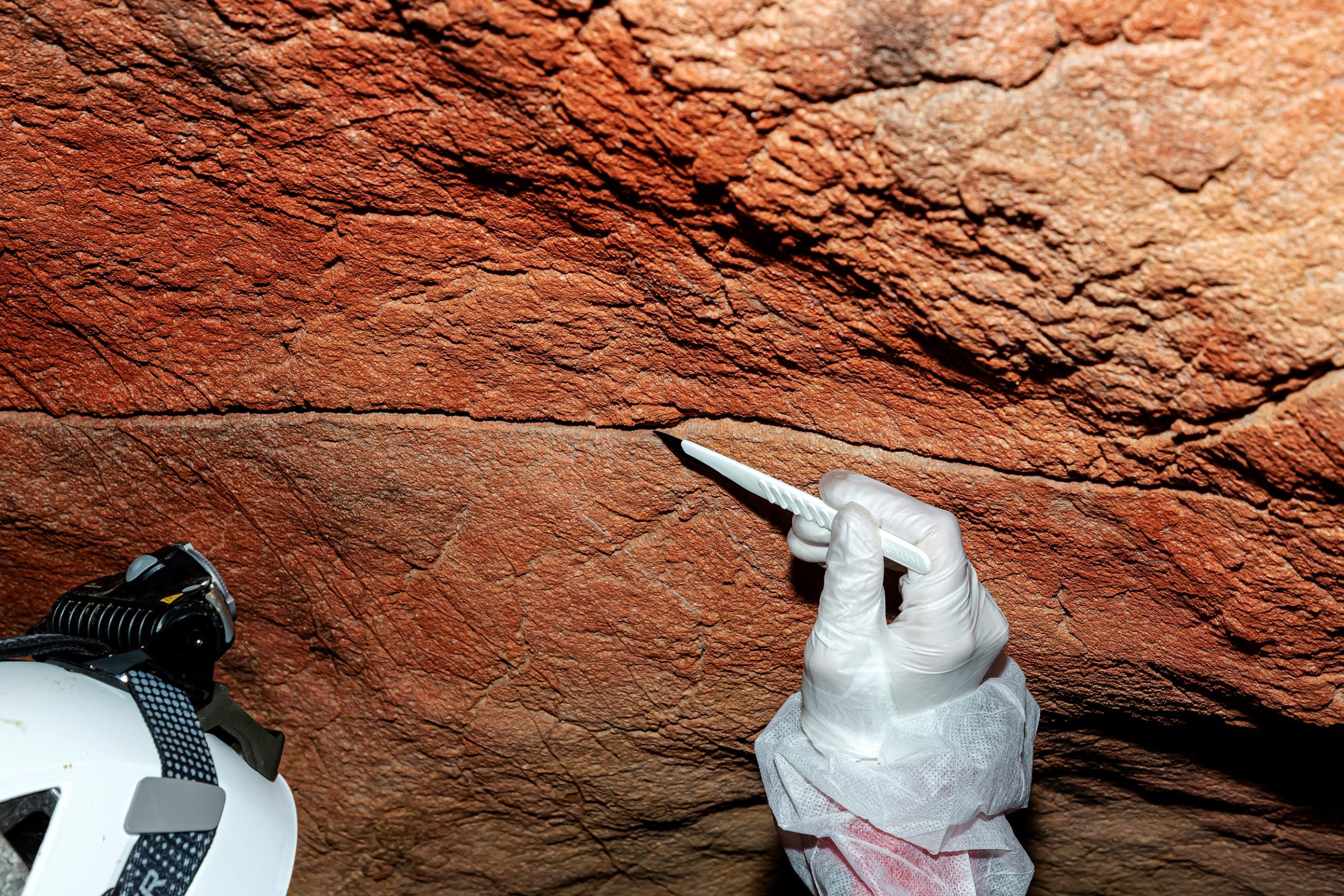
Ancient DNA from cave walls offers clues to prehistoric visitors’ sex and ancestry, potentially allowing scientists to investigate who used these spaces without disturbing archaeological deposits.
A cave wall can hold traces of prehistoric visitors even when it has no paintings or other visible signs of human activity. Scientists have recovered ancient human DNA from cave walls for the first time, showing that genetic material can survive on these surfaces for thousands of years. Several positive results came from unpainted areas that researchers had sampled as negative controls.
The search began with an interest in the people who made prehistoric art. The interdisciplinary First Art project aims to date the earliest cave art and characterize its chemical composition. Led by researchers from Spain and Portugal, it involves institutions across those countries, the UK, China, and Germany. Collaboration with researchers at the Max Planck Institute for Evolutionary Anthropology extended that work to DNA analysis, taking the search for ancient genetic material beyond bones, sediments, and, more recently, bone artifacts.
“We know that some of the art was applied to cave walls by blowing or rubbing pigment onto the surface. Given the enormous sensitivity of current ancient DNA analysis techniques, we were eager to see if this type of contact could leave traces of DNA in the rock art, potentially allowing us to obtain genetic profiles from the makers of the art,” says Hipólito Collado Giraldo, an archaeologist and rock art specialist from the Extremadura Government in Spain, who brought together the First Art team.
Unpainted walls hold ancient human DNA
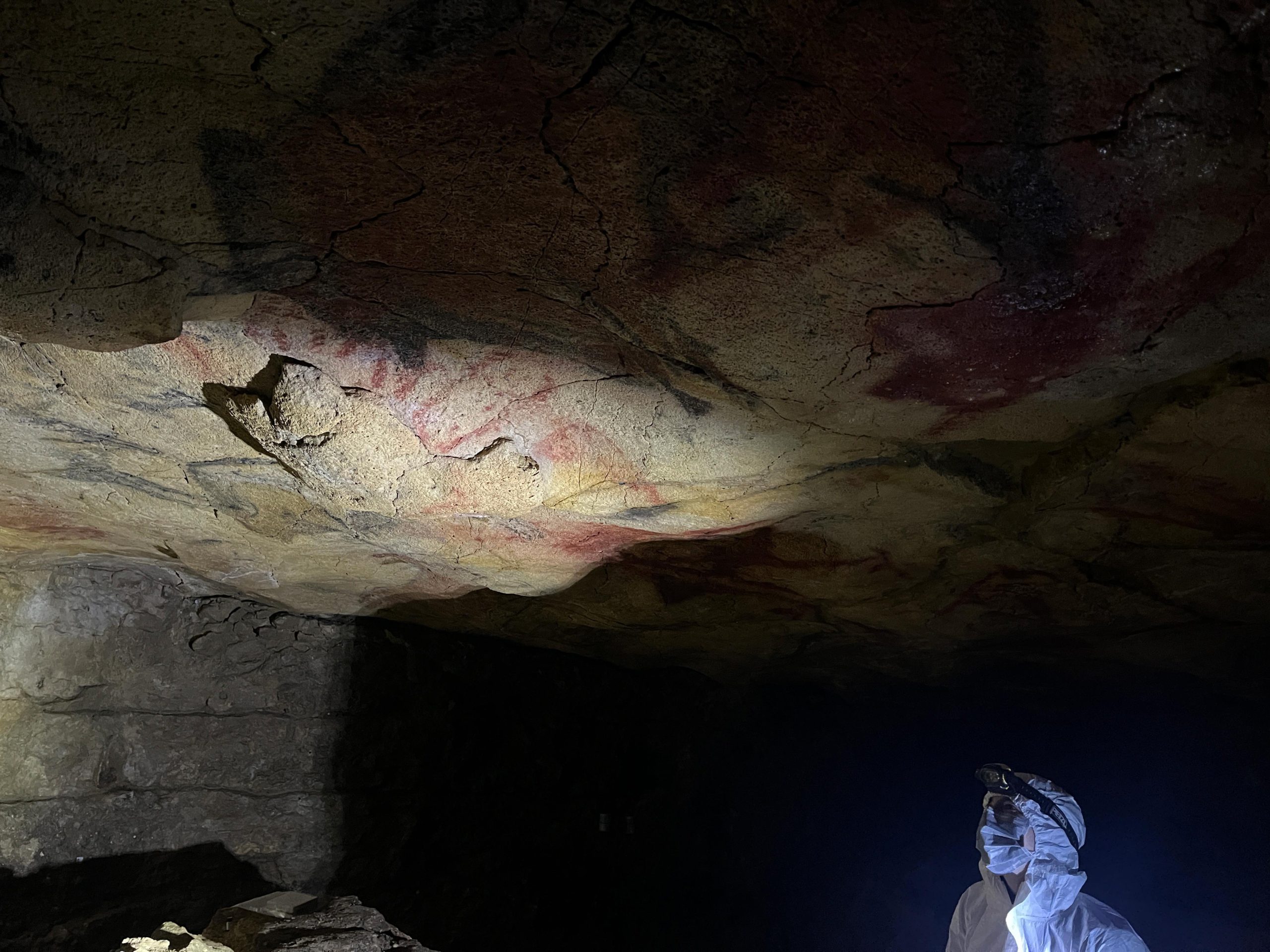
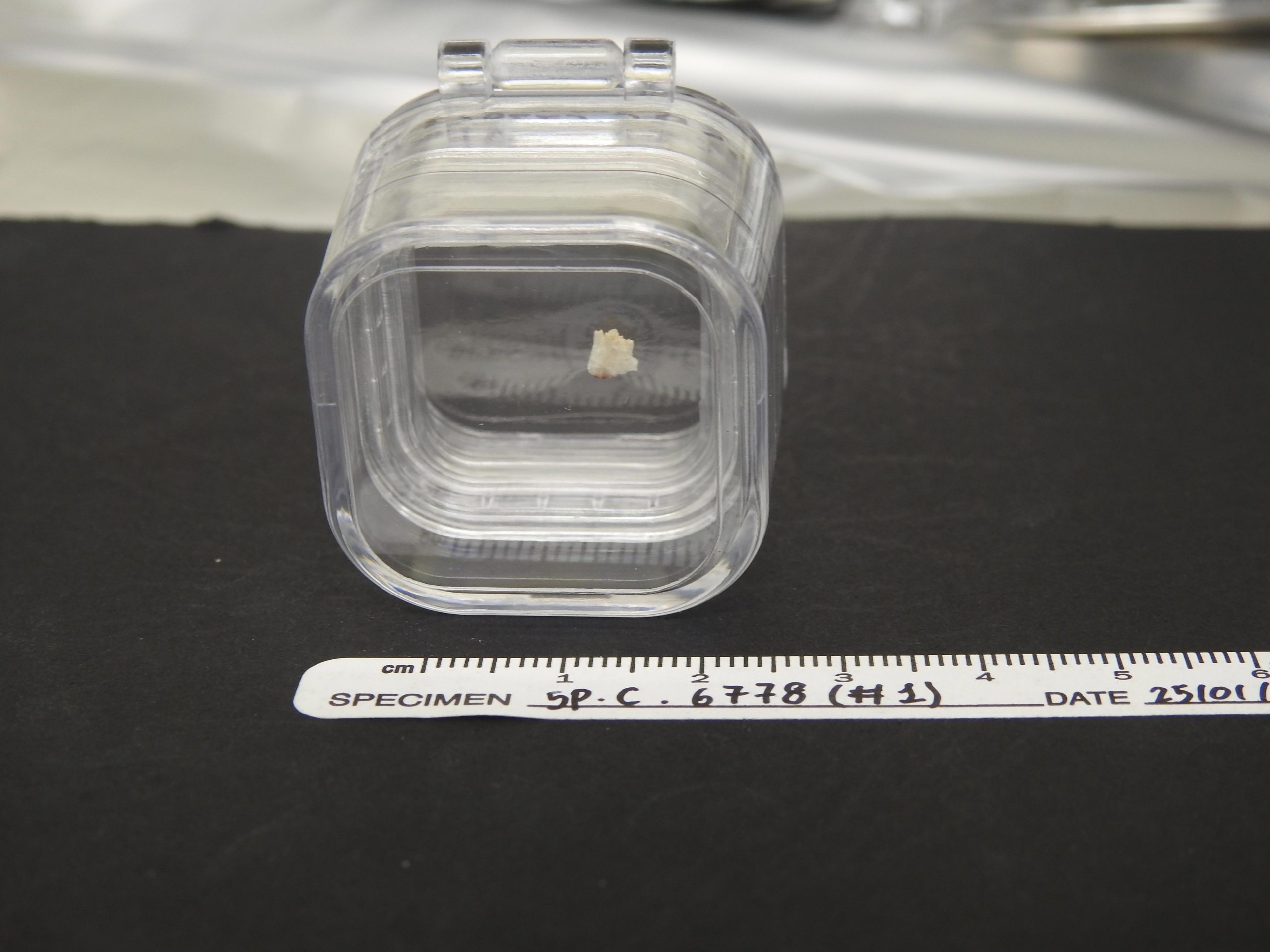
The researchers examined 24 rock art panels from 11 caves, including simple marks and hand stencils, along with pigment that had naturally fallen from figurative paintings in the famous Cave of Altamira. Using advanced DNA extraction and sequencing methods, they analyzed pigmented and unpigmented cave wall fragments, sediments, bones, and a rare prehistoric bird bone airbrush used to blow red ochre onto cave walls.
Of the 54 samples collected, only five yielded authentic ancient human mitochondrial DNA, genetic material found in the energy-producing structures inside cells. One came from a calcite crust with pigment underneath it on Panel 11 in Escoural Cave, Portugal. Two came from unpigmented walls in a deeper gallery of the same cave, and two others came from unpigmented surfaces beside rock art in Covarón Cave in northern Spain. The unpigmented areas had initially been sampled as negative controls, making their positive results unexpected.
Two of the five samples contained no detectable mitochondrial DNA from other animals. That rare pattern strongly suggests that humans deposited the DNA directly, through saliva or other bodily fluids. The other three positive samples, all from unpigmented walls, contained both human and animal DNA. This mixture suggests an indirect route, likely involving sediment transfer or water movement carrying genetic material onto the surfaces.
“Although we cannot directly connect the traces of ancient human DNA we have found to the creation of rock art, this is the first evidence for human DNA preservation on cave walls for thousands of years,” says first author Alba Bossoms Mesa, a doctoral researcher at the Max Planck Institute for Evolutionary Anthropology in Leipzig. “It is exciting to think that we may have uncovered a new way to study prehistoric human presence.”
DNA links cave visitors to hunter-gatherers
The recovered DNA nevertheless provided information about some of the people who had been in the caves. Human DNA in three samples came mostly from females, while one sample contained DNA mostly from males. The fifth remained undetermined. Further analysis of the two unpigmented samples from Covarón showed that their DNA came from modern humans, or Homo sapiens. Nuclear DNA, the genetic material housed in cell nuclei, placed them within the Western hunter-gatherer genetic cluster, consistent with findings for other ancient Iberian populations.
“This study fundamentally changes how we think about where ancient DNA can be found,” says senior author Matthias Meyer, a paleogeneticist at the Max Planck Institute for Evolutionary Anthropology who co-led the work with Collado Giraldo. “We were surprised to see that ancient DNA can be recovered not only from pigmented samples, but also from cave walls that show no visible evidence of past human activity. We can now ask new questions: Who touched this wall? Was it a man or a woman? Which population did they belong to? How far did ancient humans venture into deep cave systems?”
Sampling cave walls could offer a way to investigate prehistoric human behavior without disturbing archaeological deposits. Genetic evidence from these surfaces could help researchers establish the biological sex and ancestry of people who used caves, even where their activities left no recognizable images or objects.
“This is not just about rock art,” says Collado Giraldo. “It’s about understanding how people used caves and where they left their marks.”
The cave artists remain unidentified
Recovering that evidence remains difficult, even from an object expected to have been in contact with saliva. The bird bone airbrush from Altamira yielded no ancient human DNA. The most likely explanation was extremely high contamination by present-day human DNA, combined with the minimal amount of material sampled. The result highlights the difficulty of recovering ancient genetic traces from material that has been heavily handled over decades of study.
Despite favorable preservation conditions at many sites, ancient DNA was detected in only one of the 24 rock art panels examined and in two additional locations adjacent to other panels. That rarity suggests pigment surfaces seldom retain enough DNA to survive for thousands of years, particularly without protection from mineral crusts or sealed environments.
“The preservation of human DNA on cave walls is highly variable,” says Bossoms Mesa. “But when it does survive, it tells a powerful story. And while these first results are promising, I think our priority now should be to refine the methods and to understand under what conditions we can expect a higher success rate.”
Identifying the makers of particular artworks remains a possibility for future research, rather than something this study has achieved.
“This is just the beginning,” adds Meyer. “We now know that cave walls are archives of past human presence. The next step is to test more sites, art styles and techniques, especially hand stencils and figurative art in caves with good molecular preservation, as far as minimally invasive sampling allows.”
Reference: “Investigating ancient human DNA preservation on cave walls and in rock art” by Alba Bossoms Mesa, Elena Essel, Louisa Jáuregui, Aurore Galtier, Elena I. Zavala, Kevin Nota, Merlin Szymanski, Julia Zorn, Hugo Gomes, George H. Nash, Pierluigi Rosina, Virginia Lattao, Luiz Oosterbeek, Carlos Carpetudo, Nelson A. Almeida, Carmen de las Heras, Pilar Fatás, Alfredo Prada, Lucía M. Díaz-González, M. Elena Sánchez-Moral, Alberto Martínez Villa, Mario Menéndez Fernández, José Julio García Arranz, Genevieve von Petzinger, Pedro Cantalejo, Luis-Efrén Fernández, José Ramos-Muñoz, Diego S. Fernández Sánchez, Hugo A. Mira, Emilio Muñoz Fernández, Ramón Montes-Barquín, Roberto Ontañón, Janet Kelso, Kay Prüfer, Benjamin Vernot, Mateja Hajdinjak, Qingfeng Shao, Sara Garcês, Hipólito Collado Giraldo and Matthias Meyer, 23 June 2026, Nature Communications.
DOI: 10.1038/s41467-026-74234-2
The First Art project was initially supported by INTERREG POCTEP funded by the European Regional Development Fund (ERDF) (Grant N°: 0497_FIRST_ART_4_E), by the Bradshaw Foundation (2025) and by a National Geographic Society Grant (No. NGS-68383R-20).
Never miss a breakthrough: Join the SciTechDaily newsletter.
Follow us on Google and Google News.